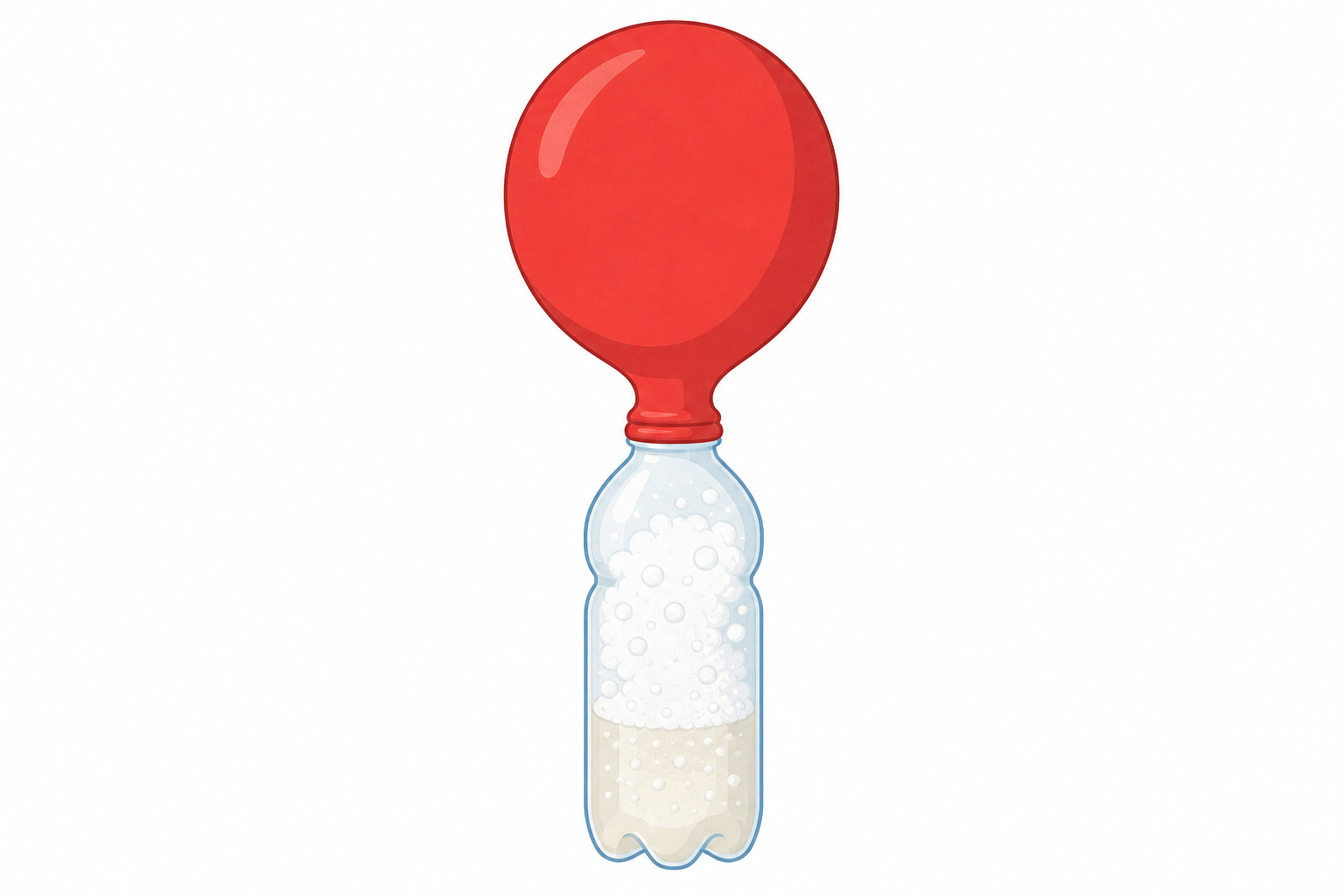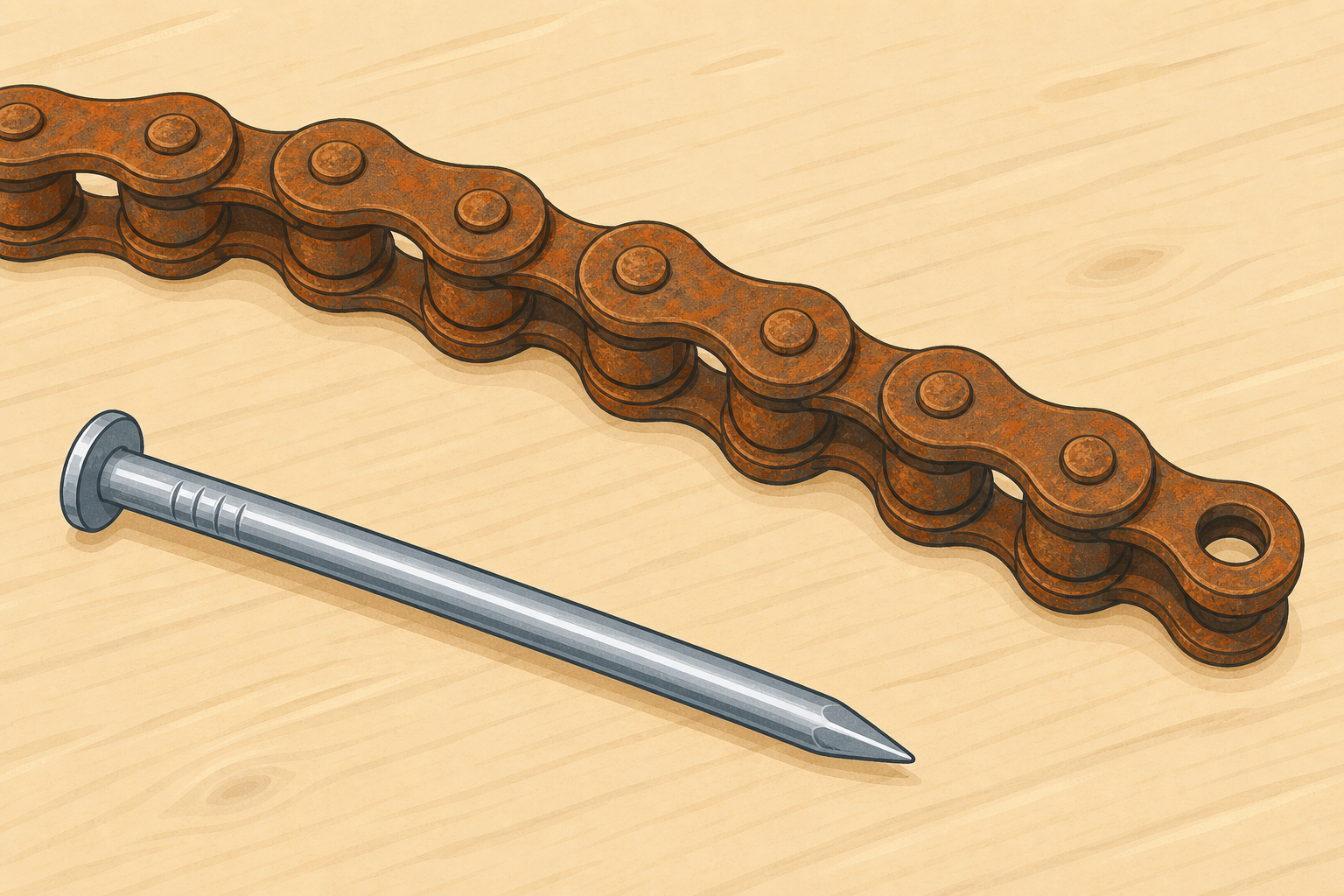
Look at this iron nail. Outside, old metal gates and bike chains often turn a dusty orange-brown. What do you think is happening to the metal, and can that change ever be undone?
Today we will catch a new gas in a balloon, set up nails to watch over the coming days, and sort changes into ones we can undo and ones we cannot.
Hold up one clean iron nail (or show a photo of a rusty gate if you prefer). Keep the hook as a curiosity beat only: do not set out the full apparatus or name variables yet.
Key question: Can rusting be undone, the way melting ice can?
Surface prior ideas briefly. Pupils already know that some changes can be undone and some cannot; use that as a durable capability, not a dated recall of an earlier session.
Have the baking-soda kit and three nail jars ready behind the desk for later, but do not lay them out yet. Pre-portion baking soda (about two teaspoons per balloon or small dish) and vinegar measures (about 50 ml each) so Catch the gas can start without long scooping queues.
Today's evidence split: pupils will gather strong evidence of a new material from the balloon fizz in this lesson. The nail jars are a light set-up only; orange-brown rust is judged on later short checks, using everyday rusty gates and bike chains as prior knowledge, not as proof collected today.
Some changes can be undone. Melting ice can be frozen again. The orange-brown on an old bike chain does not turn back into shiny metal.
Other changes stick: you cannot get the starting materials back the way they were. What clues might tell us a brand-new material has appeared?
Stay in question mode on the board. Do not dump the three formal terms as a glossary. Collect two or three quick clue ideas (bubbles, a new smell, a colour change, heat, a gas filling a balloon). Name each term only when it earns its keep: new material after pupils offer gas/bubbles/colour; irreversible change after the balloon when they cannot get the powder and vinegar back; Chemistry in the make-sense talk.
| Concept | Why it matters | Example |
|---|---|---|
| Irreversible change — a change that cannot be undone; you cannot get the starting materials back the way they were | Knowing which changes stick helps us cook, clean, build, and stay safe with everyday materials | Toasting bread or rusting a nail cannot be reversed the way melting ice can |
| New material — something made during a change that was not there at the start, such as a gas or rust | Evidence of a new material (fizz, smell, colour change, a balloon filling) is how we know a real chemical change happened | The gas that inflates a balloon when baking soda meets vinegar was not in the bottle before |
| Chemistry — the science of what materials are made of and how they change when combined or reacted | Making and studying new materials is everyday work for chemists in Ireland and worldwide | Baking powder in bread and cakes is a controlled fizz that helps dough rise; chemists also study how to slow rust on bikes and bridges |
Misconception to head off: pupils often say a change is irreversible only if it looks dramatic. Stress that the test is whether you can get the same starting materials back, not how noisy the change was. Dissolving salt looks quiet but can be reversed by evaporating water; fizzing baking soda looks lively and cannot be undone.
Board talk: invite two or three quick ideas for clues. Do not run the demo yet.
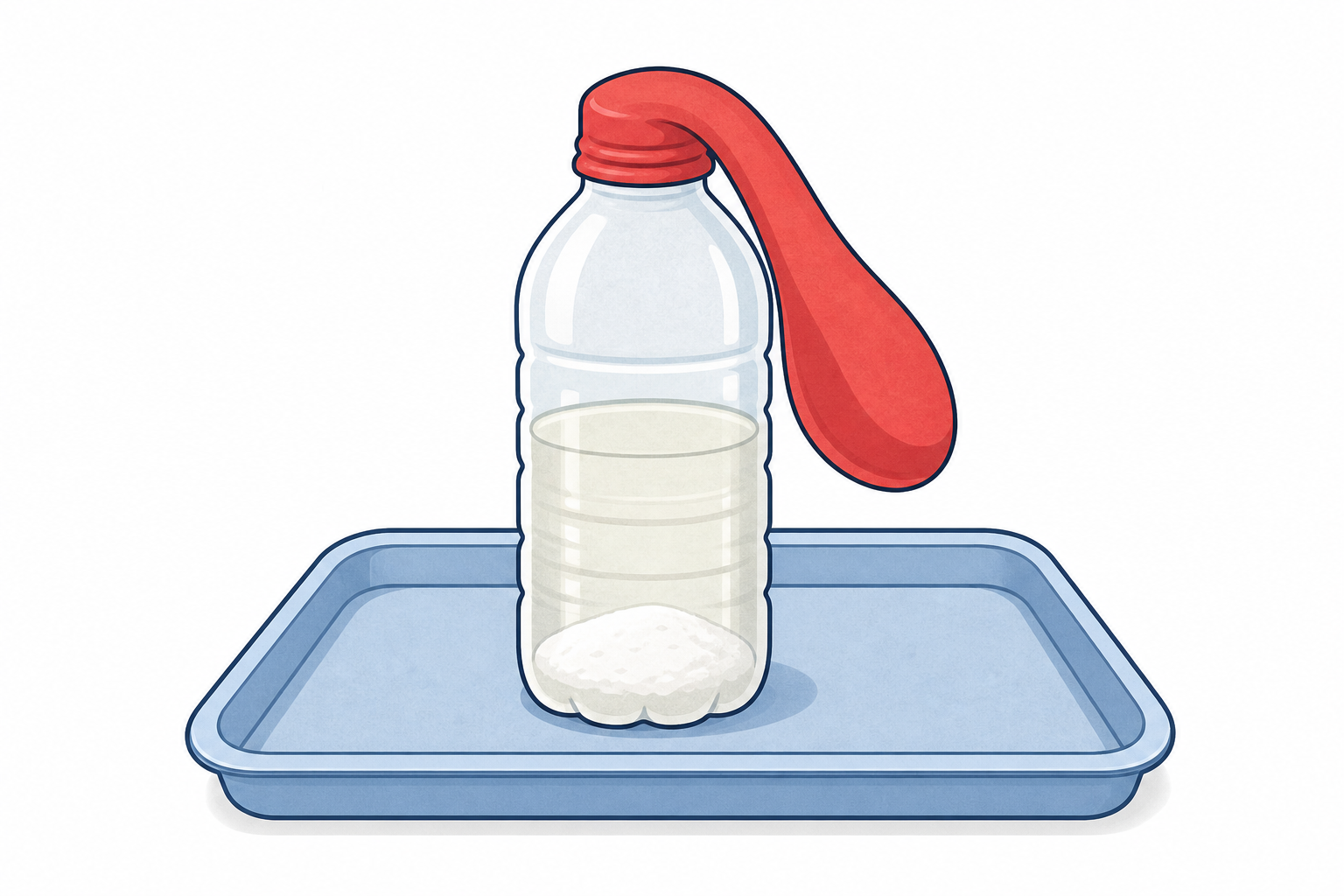
We will mix baking soda with vinegar and trap whatever forms in a balloon. We will also put clean nails into three different places: dry air, water, and oil.
What do you think will happen to the balloon, and which nail do you think will change most over the coming days? Say why.
Write your balloon prediction and your nail prediction on your Investigation Journal page now, before we start the mix.
Keep this as talk plus a short written prediction on the Investigation Journal page. No apparatus in pupils' hands yet. The balloon prediction must be on paper before Catch the gas so it is a genuine pre-test claim.
Focus questions:
Predictions are never wrong; they are the start of the science. Ask pairs to share one prediction for the balloon and one for the nails. Note a few on the board so you can return to them later.
Journal now (predictions only): balloon prediction; which nail will change most and why. Observations and conclusions come after the practical work.
In your group you will mix baking soda and vinegar so any new gas is caught in a balloon. Watch closely: what do you see, hear, and feel? Can you get the dry powder and vinegar back afterwards?
Follow the steps on the board. One person holds the bottle steady. Do not taste anything. Keep vinegar away from eyes.
As a group, decide which piece of evidence you will use first to judge that a new material has formed (for example the fizz, the balloon filling, a smell, or a change you can feel). Be ready to share that choice.
Straight after your run, jot two quick observation notes or a tiny sketch on your Investigation Journal page while the fizz is fresh in your mind. We will tidy the full conclusion later.
Non-negotiable outcome: every pupil sees one successful inflated balloon and names evidence of a new material. Protect that over a second run or extra kit fuss.
Model one full cycle at the front so every group sees the pattern before they run their own. Time-box the model to about 2 minutes (seal, tip powder, watch, one sentence of notice). Pre-portioned powder and vinegar measures should already be on trays from before the lesson.
Worked example (say the beats aloud, keep it tight):
Group decision (agency): before or just after the run, each group chooses which evidence they will prioritise as proof a new material formed. They still follow the safe method, but they own the judgement criterion.
On-the-spot capture (1–2 minutes, still in this slot): before wipe-down talk finishes, every pupil writes two bullet notes or a quick sketch (what happened to the balloon/mixture; which evidence the group chose). Do not wait until after the nail set-up — sensory detail fades. Full conclusion wording comes in the later journal beat.
Explicit pacing if kit or class size is tight: run half the groups while the others watch and answer your questions (What do you notice? Is that gas new?), then swap for a second short round. Watching is participation; do not invent a separate desk task for the watchers. Aim for one successful run per pupil experience, plus wipe-down, inside this 16-minute slot. A second run only if the first seal failed and time remains.
What to expect: a lively fizz and a clearly inflated balloon within seconds. If the balloon barely moves, the seal is loose or there was too little powder or vinegar. Re-seat the balloon and try again with a fresh pinch of powder only if time allows.
Each group on a tray: small bottle or sturdy cup, balloon, pre-portioned baking soda, vinegar measure, funnel or paper scoop if needed. Same steps as the model.
Look-fors: pupils naming the gas as evidence of a new material; pupils saying the change cannot be undone; groups able to name their chosen evidence; two quick notes or a sketch already on the journal page; nobody tasting or pointing bottles at faces.
Differentiation: less confident groups can watch one successful run beside a neighbouring group and then describe what they saw. Confident groups can gently feel the balloon and bottle and note any firmness or temperature change without squeezing hard, still recording only what they notice.
Safety: vinegar away from eyes; wipe spills; wash hands after. No tasting.
Rusting is slow, so we set it up today and watch it over the coming days. First wipe trays and wash or dry hands so oil and vinegar do not mix into the jars.
As a class we will prepare three clean nails in three labelled jars (one shared set is enough). Help with the steps on the board:
Remind yourself what you predicted for the nails. You will test that prediction on later jar checks when we look for a new orange-brown material on the metal. We are not expecting rust to appear in this lesson.
This is a light observation-over-time set-up only, not a second full investigation cycle. The result will not finish in this lesson; the class will check the jars across the next several days (a short look at the start of later sessions is enough). Do not claim pupils have observed rust form today.
After the fizz: build in a brief wipe-and-clean-hands beat first so sticky trays and oily fingers do not rush a messy second practical. Keep this whole step light (about five minutes including that clean-up).
Default kit model: one shared class set of three clear containers labelled Dry, Water, Oil, and three clean iron nails. Groups can help place and pour under your lead. Per-group jars only if you already have plenty of kit and time; the board wording assumes the shared set.
Keep the jars somewhere safe and labelled. Agree a simple check routine (for example, look on two or three later mornings and note colour and any flaky coating).
Prediction language: ask pupils to remind themselves what they predicted — do not say "check" your prediction yet, because nothing new has appeared on the nails. The test of the prediction comes on later jar checks.
Key questions while setting up: What would count as evidence of a new material on the nail later? Why might oil change what happens compared with water?
What to expect over days: the water nail usually shows orange-brown rust first; the dry nail changes little; the oil nail stays closer to clean. If the water nail barely changes, check it stayed partly wet with air still able to reach it (jar open or loose, not sealed full). If all three look the same after several days, also check that the oil really covered the third nail.
Safety: mind sharp nail points; wipe oil spills so floors are not slippery; wash hands after handling.
You're previewing this lesson. Get full access to this lesson and hundreds more — each one ready to teach, with interactive activities, printable resources and pupil progress tracking built in.