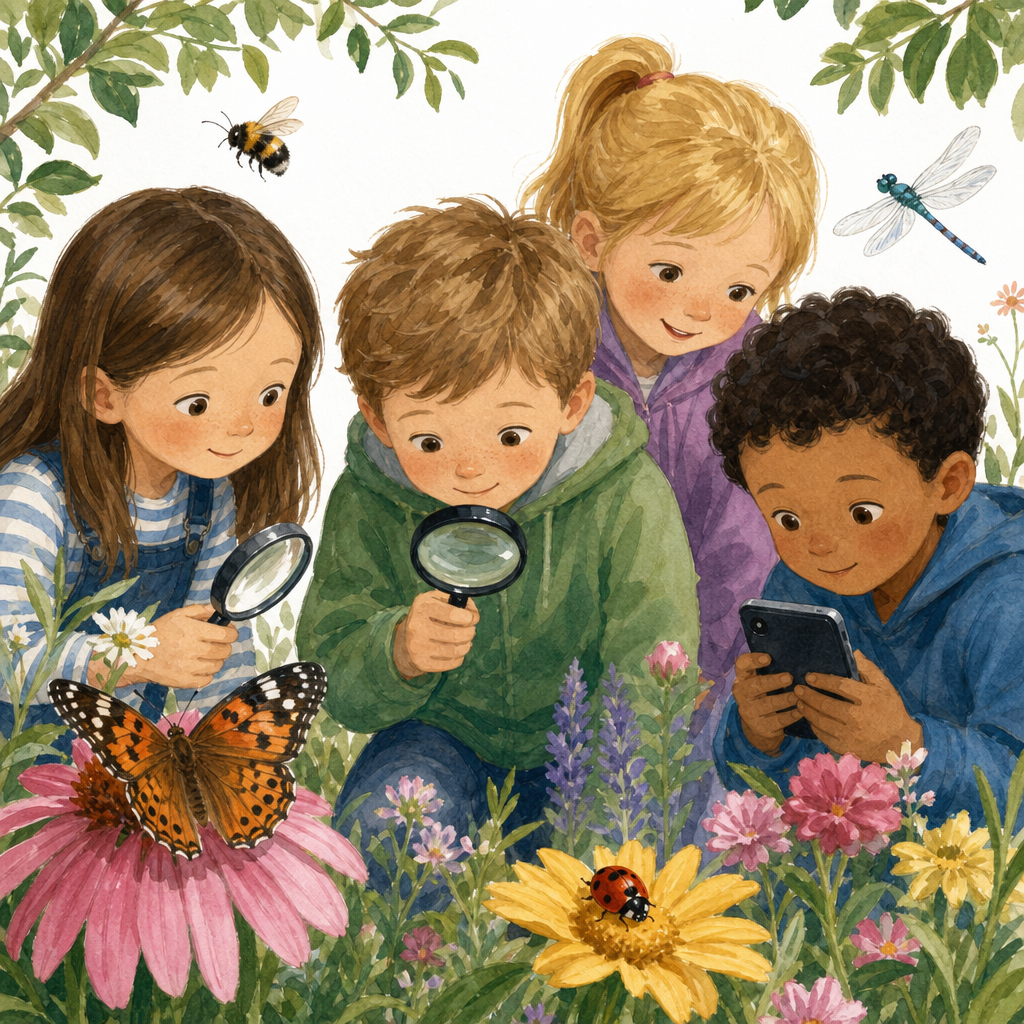
 How many legs does an insect have? Six. Now, how many of these insects can you name in English in twenty seconds: bee, butterfly, ant, caterpillar, beetle, wasp, ladybird, dragonfly?
By the end of this lesson, you will be able to:
- Name eight insects in German with der or die
- Say the longer words clearly, even the tricky ones
- Spot insect words quickly in a whole-class game
Listen first. You will hear and see each German insect name with its article, then repeat it together. We start with five shorter words, then tackle the three longer ones in small chunks.
After one full modelled pass, try again from the English side and flip to check.
You are in a Schrebergarten (allotment garden) near Munich. The wheel shows an insect you spot in the flower bed. Say the German name with its article, then add one true thing about it in English (where you have seen it or what colour it is).
Before the first spin, the class will whisper-repeat all eight words once more. A small word bank stays on the board if you need a glance.
Open your copy. The eight German insect names (with der or die) stay on the board for you to copy from. Write four of them carefully, then underline the part of each word that is hardest to say.
- die Biene — bee
- der Schmetterling — butterfly
- die Ameise — ant
- die Raupe — caterpillar
- der Käfer — beetle
- die Wespe — wasp
- der Marienkäfer — ladybird
- die Libelle — dragonfly
You will get a printed bingo card with insect words on it (or copy six of the eight words on the board into your copy, choosing which two to leave out). Listen as the teacher calls each insect in German. When you hear a word that is on your card, cross it off. When every word on your card is crossed off, call Bingo! Listen carefully for the article as well as the noun.
Unlock the full learning experience
You're previewing this lesson. Get full access to this lesson and hundreds more — each one ready to teach, with interactive activities, printable resources and pupil progress tracking built in.
This lesson is copyright of Coding Ireland 2017 - 2025. Unauthorised use, copying or distribution is not allowed.