 Same words, four totally different designs. Today you will meet one short public message dressed four ways: a newspaper layout, a short social video, a primary-school poster, and a stark public notice. You will agree what to judge, weigh each design, and write a Design Choice Analysis for your Communication Portfolio.
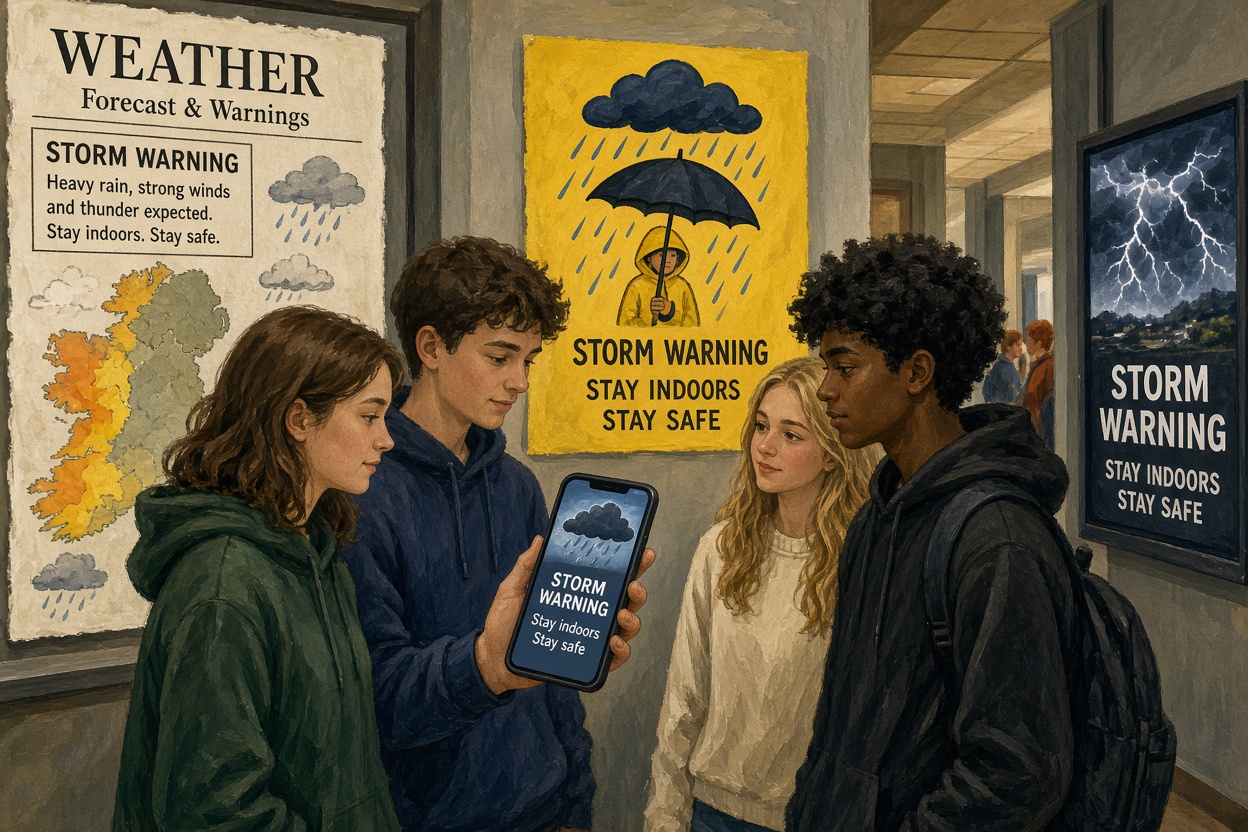 The shared message is: Storm warning. Stay indoors tonight.
These four versions were built for class: same words, different design jobs. Study each design below before you judge colour, imagery, sound or type.
| Term | What it means for you | Real example |
|---|---|---|
| Typography | Name the type choices on each design and what they signal | Block capitals on a Garda-style notice vs soft rounded type on a kids' poster |
| Imagery | Say what each picture or graphic does to the reader | Cartoon umbrella on a kids' poster vs thin lightning silhouette on a public notice |
| Design choice | Your analysis will name at least three deliberate choices per design | Yellow/black urgent notice style vs soft pastels on a calm school poster |
Design A: broadsheet weather column. Dense grey body text under a black serif headline. Small monochrome weather map bottom right. No sound. Aimed at adults reading a morning paper.
Design B: short social video. Full-screen dark storm still. White bold sans-serif text flashes in three beats. Low wind roar under a slow pulse beat (sound is part of the design brief). Aimed at a phone feed at night.
Design C: primary-school corridor poster. Bright yellow ground, blue cartoon umbrella character, rounded friendly type, one clear sentence. Sound note on the mock: soft rain-patter under the image. Aimed at children aged 6–10.
Design D: monochrome public notice. Black field, white condensed capitals only, single thin lightning silhouette, no decoration. One short alarm tone, then silence. Aimed at any adult who needs the fact, fast.
Keep each criterion to a few clear words. The list does not save, so keep this page open: you will use your criteria in the next step.
What will we judge these designs on?
Use the criteria you agreed in the last step to write each note. The comparison does not save, so keep this page open: you will use your notes to write your Design Choice Analysis in the next step.
Same warning, four designs
Unlock the full learning experience
You're previewing this lesson. Get full access to this lesson and hundreds more — each one ready to teach, with interactive activities, printable resources and pupil progress tracking built in.
This lesson is copyright of Coding Ireland 2017 - 2026. Unauthorised use, copying or distribution is not allowed.