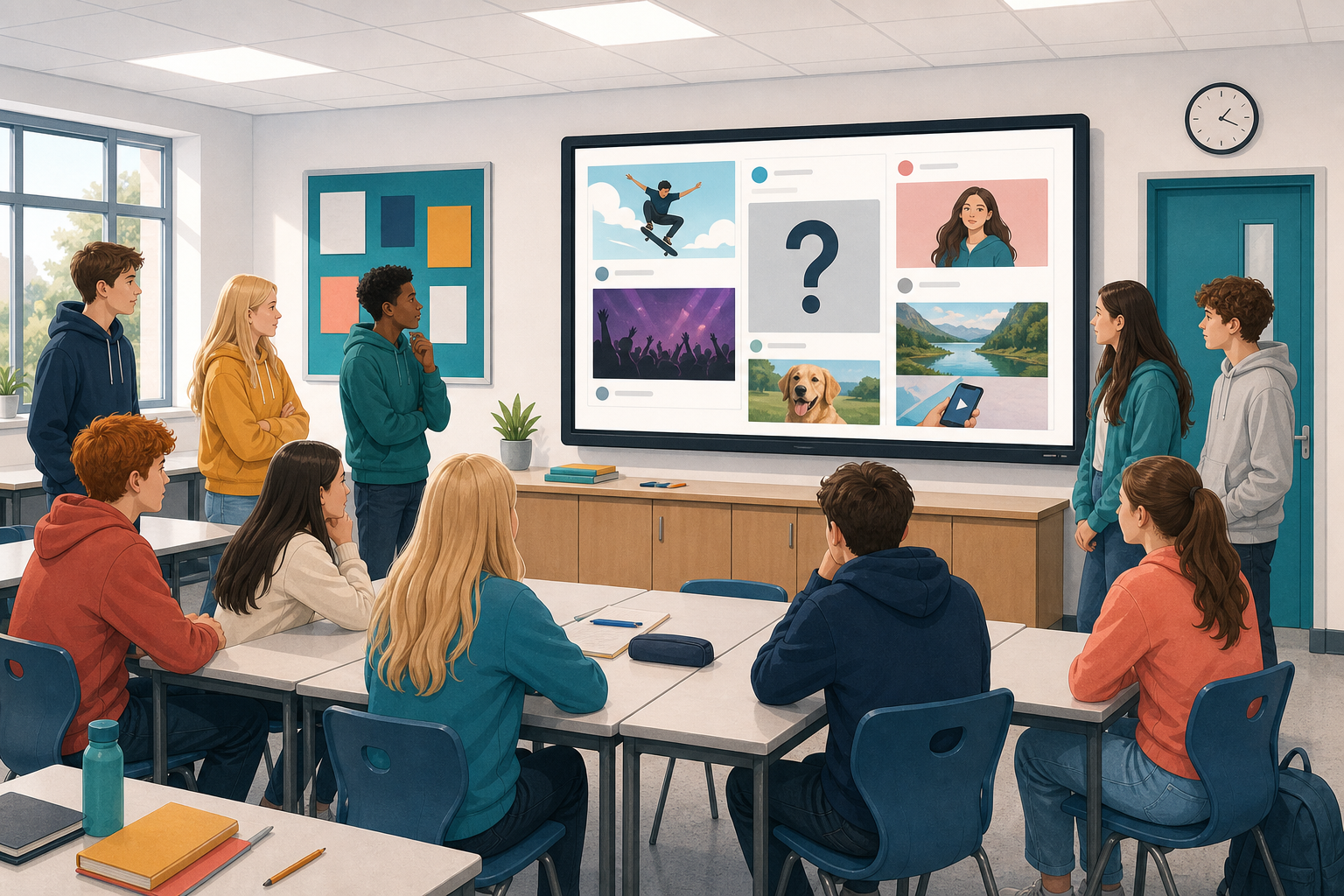
 You already know that digital content can look and move differently from newspapers and TV. Today's question is different. Who can publish things online, and what happens now that machines can publish too?
First you will do a short detective challenge on made-up posts, captions and images. Then you will check one real piece of content for yourself.
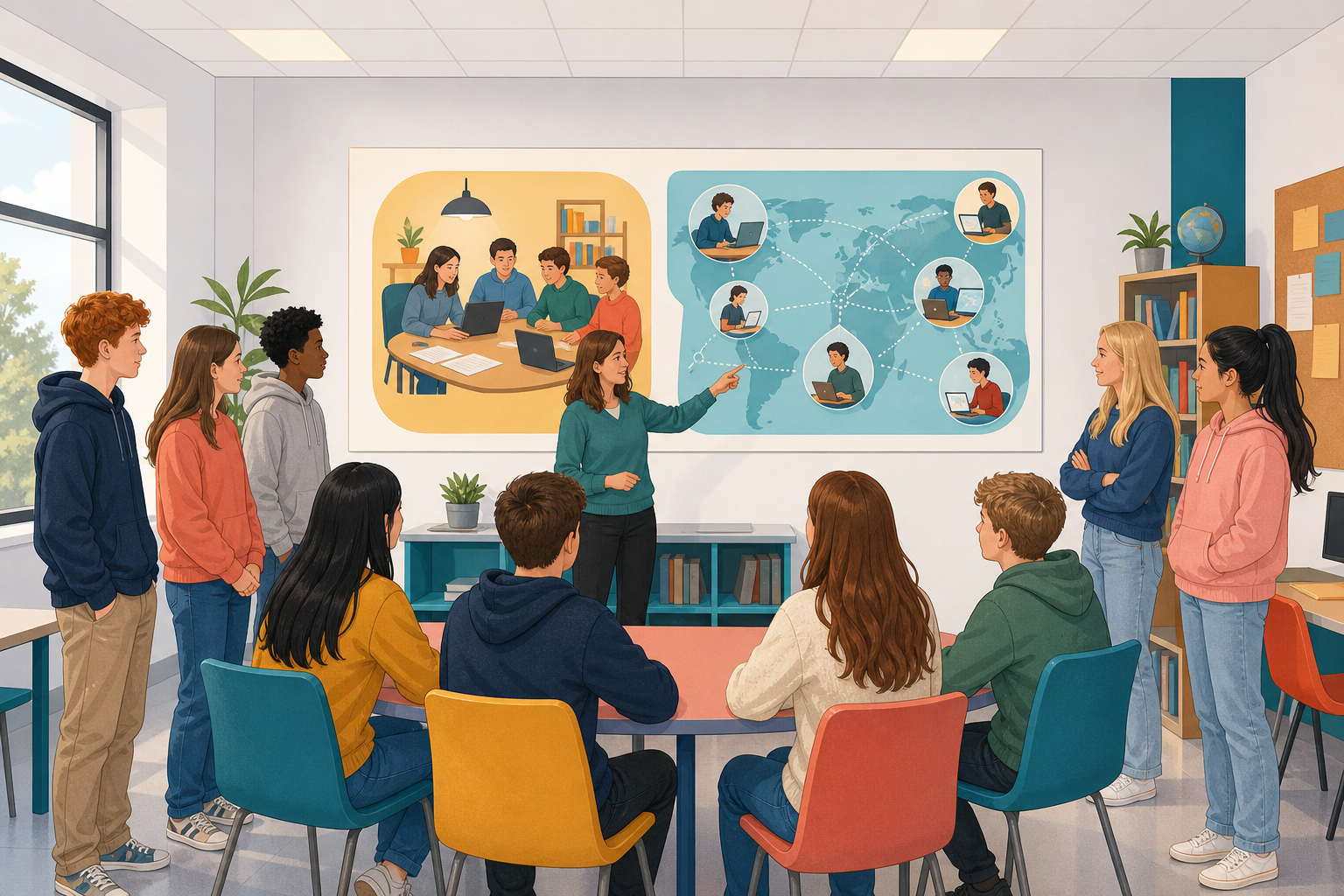 In a newspaper or on TV news, a few people called editors check and choose what goes out. Online, almost anyone can publish in minutes, and AI (artificial intelligence) tools can write text and make pictures too.
Do not just go by a feeling. Always ask yourself: who made this, and what evidence can I point to?
As a class, look at the first item together on the board. Look for tells, which are clues you can point to, and then decide on your verdict, which means how you think it was made:
- Human: probably made by a person, with little or no machine help
- Machine: probably made mainly by an AI tool
- Both: a person and a machine both left their mark on it
First, talk for 20 seconds with the person beside you, and agree on a verdict and the strongest tell you found. Your teacher then shows the reasoning. After that, everyone votes in the class poll on their own device, starting with this same item.
Human, machine, or both?
Now everyone votes on all the items, each on your own device. Join with the code on the board. Round 1 is the item you just worked through together.
There is no score and no clock. When the class has voted, the board shows how the class split, and then the answer with the reasoning. After the discussion, your teacher can open the vote again to see who changed their mind.
- For each item, read it and make your choice.
- When the reasoning comes up, compare it with the reason you gave.
Every item has an answer, but being able to explain your choice matters more than getting it right.
Class Poll
Now you will judge one real piece of content on your own. Unless your teacher puts something else on the board, use the community notice below.
The notice is called "Library study spaces open late during exams". It was posted this week on the county council website. It says the study spaces will be open late, from 6pm to 9pm on weekdays, from the start of the exam period. It is signed by the county librarian, who is the person in charge of the libraries in the county, and it links to the council's own opening-hours page.
If you have already found a post, article, review, image or short clip of your own on your device, you can judge that instead, as long as it is suitable for school.
Make sure you can say:
- Who published it. This could be a person, an organisation or an account, or you can say it is unclear.
- Your verdict: human, machine, both, or cannot tell.
- One tell that led you to that verdict.
- One more check you would do if you needed to be more sure.
Be ready to share your piece and your verdict in one sentence.
Unlock the full learning experience
You're previewing this lesson. Get full access to this lesson and hundreds more — each one ready to teach, with interactive activities, printable resources and pupil progress tracking built in.
This lesson is copyright of Coding Ireland 2017 - 2026. Unauthorised use, copying or distribution is not allowed.