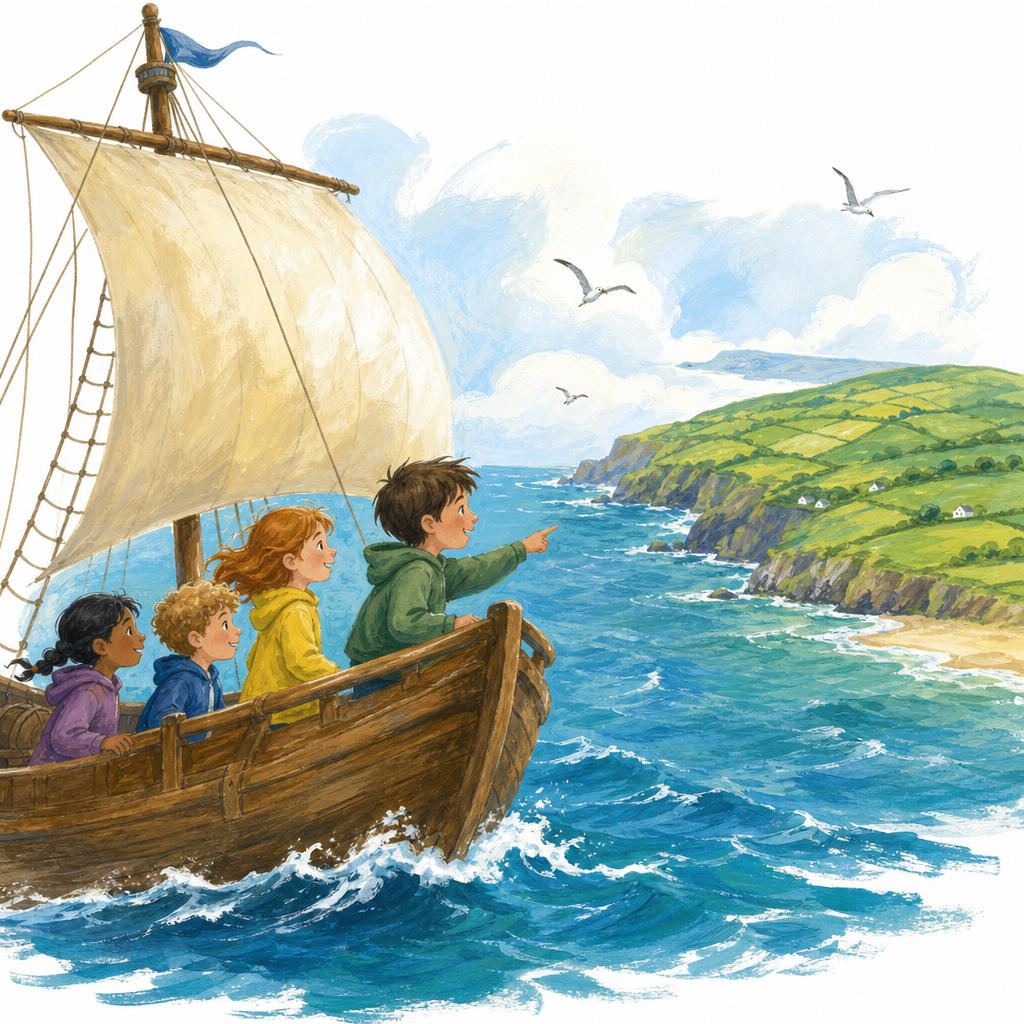
 More people speak Spanish in Mexico than in Spain. How did that happen? Take a quiet guess before we look.
That is millions more speakers: the language really did cross an ocean!
By the end of this lesson, you will be able to:
- Explain how a language can travel far from where it started
- Find Spanish-speaking places on a map of South America
- Say what a country learns by asking which languages people speak at home
People crossed oceans by boat: that is how a language can land on a new continent. Later, faster travel helped languages move even farther.
Watch the board. We will tap each travel word and listen in different languages. When I pause, thumbs up if two words sound almost the same.
Spanish did not stay put: it crossed the ocean with people. On the board is a map of South America. Watch as we tap countries and see where Spanish shows up.
Mexico (from our starter) is further north. Same idea: Spanish travelled with people. Today we will check that story on the South America map. Did Spanish stay in Spain, or did it travel with people?
Open your copy. Write the name of a country where Spanish is spoken. Then write one sentence on how you think Spanish got there.
Ideas from the map: Argentina, Chile, Colombia, Peru. Remember the idea: people brought Spanish with them.
The languages in these clips also travel with people: same idea as Spanish on our map.
Listen carefully to each short clip on the class speakers. When the choices appear on the board, show me on your fingers which language you think it is, or hands up when we choose together. These clips are not easy, so trust your ear, and we can play one again if you need it.
Unlock the full learning experience
You're previewing this lesson. Get full access to this lesson and hundreds more — each one ready to teach, with interactive activities, printable resources and pupil progress tracking built in.
This lesson is copyright of Coding Ireland 2017 - 2026. Unauthorised use, copying or distribution is not allowed.