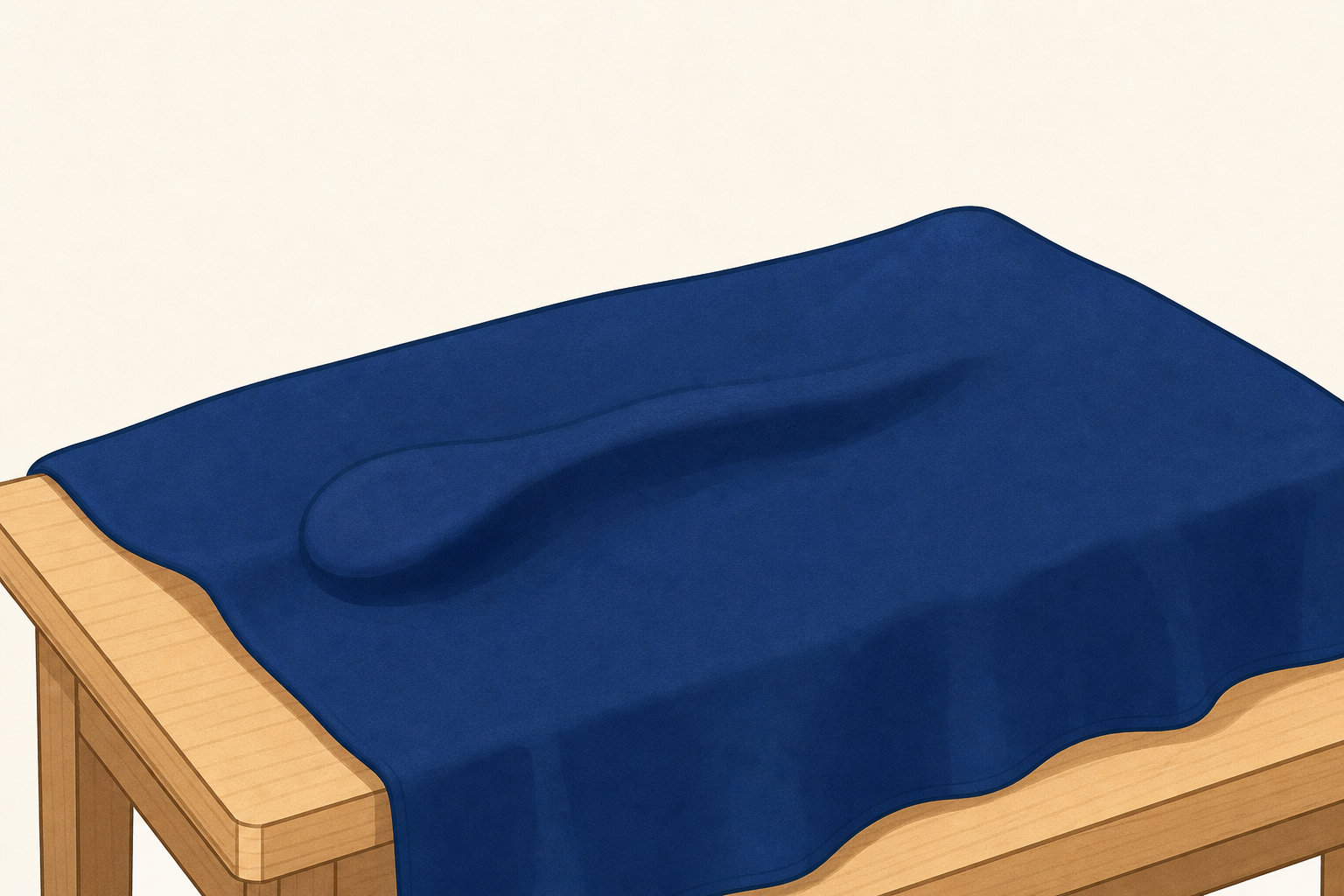
Look! Something is hiding under this cloth. What job might this little thing help us do?
Have one everyday helper (a spoon works well) under a cloth or in a feely-bag. Lift the cloth for a moment so the class peeks, then cover it again. Ask: What job might this help us do? Take two or three spoken guesses. Do not name "technology" yet. Keep the rest of the tray hidden until the explore step.
Before the lesson: gather the helper tray; check scissors are round-tip infant scissors; test the torch; write or print the two picture labels for the sorting hoops; clear a small floor space for acting out.
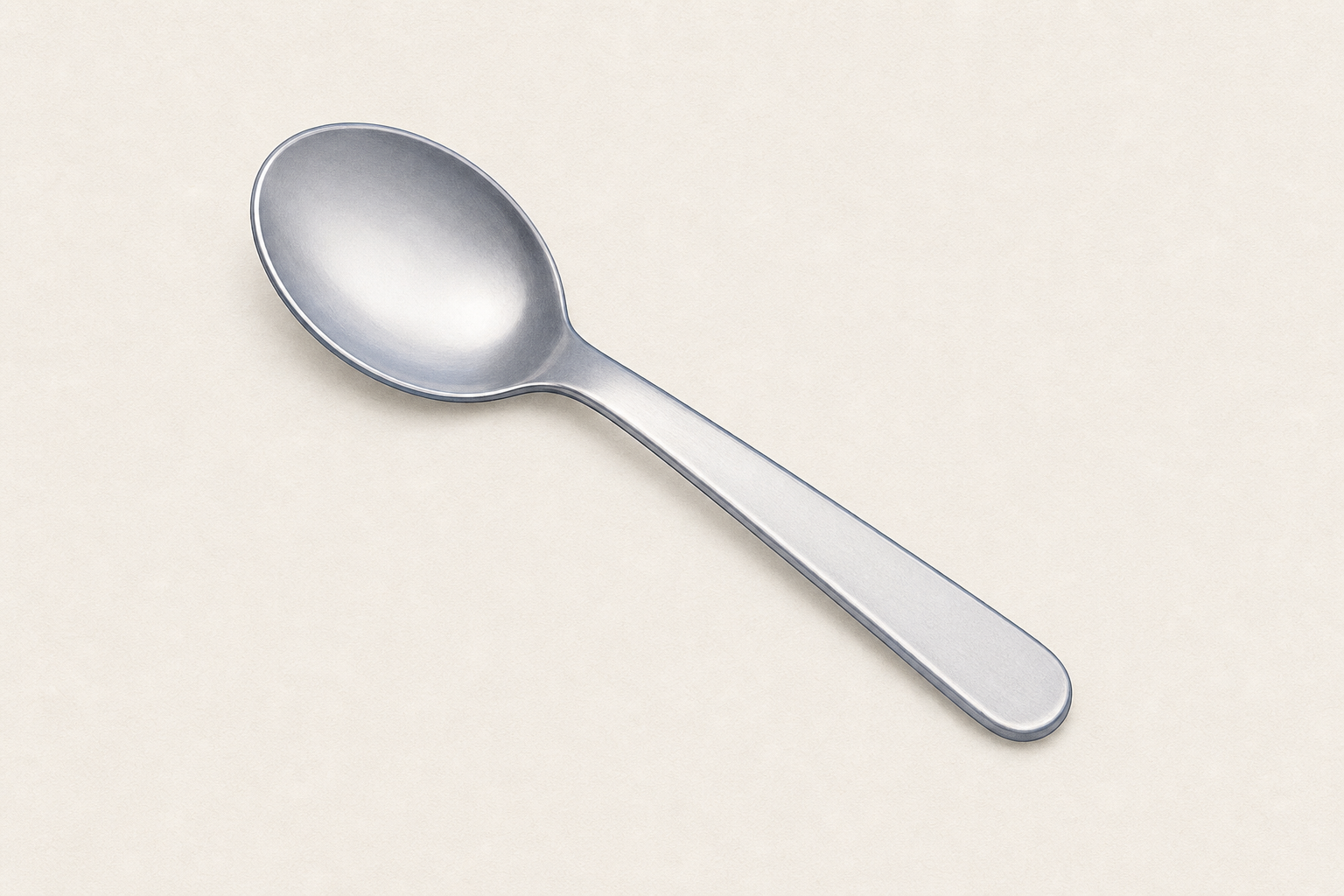
Today's word is helper. A spoon is a helper. It helps us eat.
Hold up the spoon from the hook. Keep the board text tiny; you say the fuller idea in small chunks. Model one full look-and-say cycle so children hear the pattern before they try it:
Say aloud once: A helper is anything people make to help us do a job. Do not ask yet who makes new helpers; that comes after the tray explore.
| Concept | Why it matters | Example |
|---|---|---|
| Helper (technology) — anything people make to help us do a job | Helpers are all around school and home, and noticing them helps us see how people solve little problems | A torch helps us see when it is dark in the hall |
Misconception to head off: children may think "technology" only means screens and tablets. Gently say: a spoon is a helper too, because a person made it to help with a job. Keep the word helper on the board; use "technology" once in your talk if it fits, then return to helper.
Nature of STEM: people think of new helpers to make jobs easier. Save the word inventor for the later circle talk.
Some friends will visit the helper tray. Watch carefully. When they show a helper, say its job with us and copy the mime.
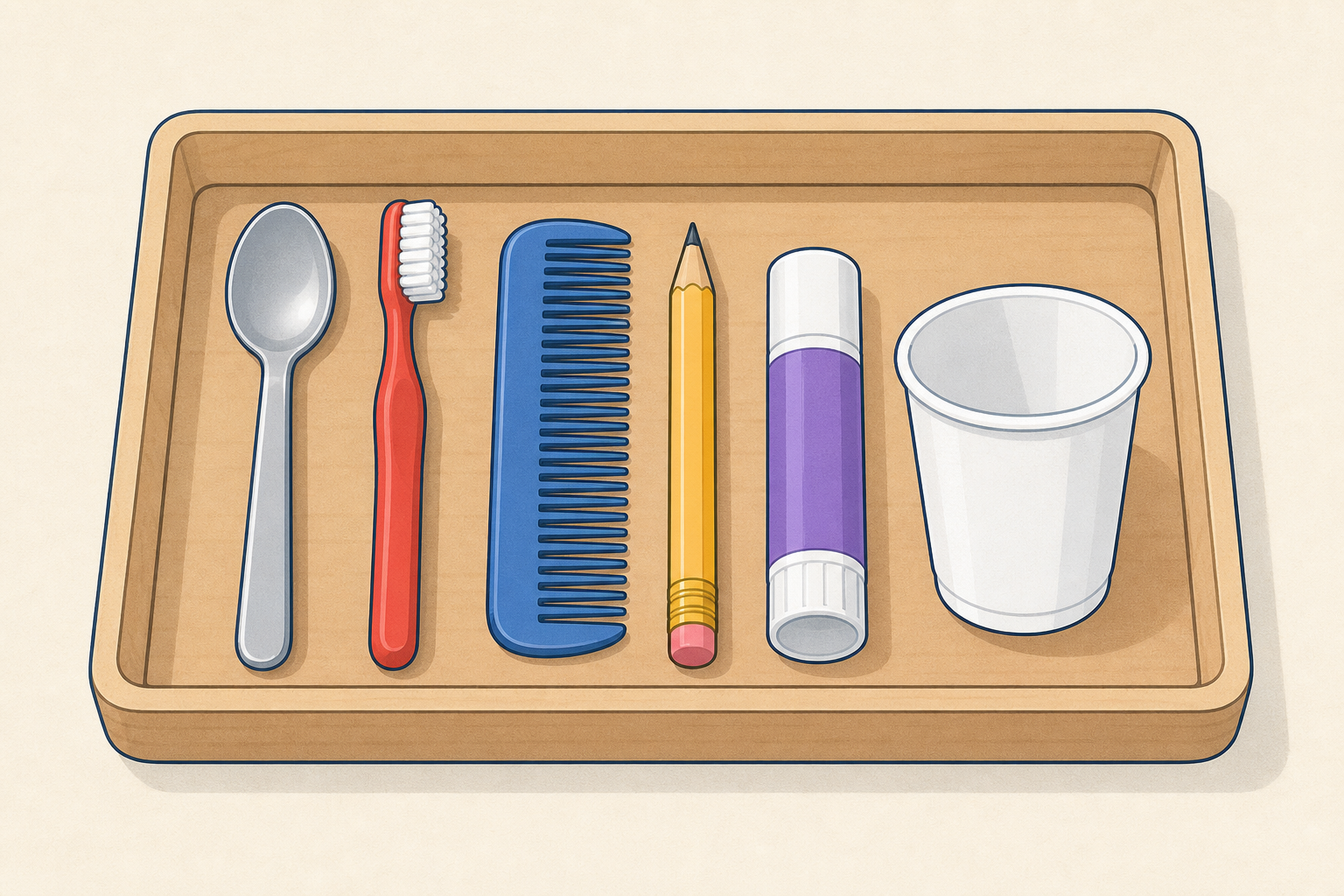
Set one shared tray as the default (add a second identical tray only if you have a large class and a second adult). Tray objects: a spoon, a zip on a fabric scrap or zip pouch, a small torch, round-tip scissors, a pencil, and a hairbrush or small brush. Children visit in short bursts of about two minutes in small groups, then you regroup so several groups meet a few helpers. Do not leave scissors unattended.
Model once more with the torch: switch it on, mime looking under a table, say the torch helps me see. Invite one small group to the tray while the rest of the class stays seated facing them. For each object the visitors choose, prompt the whole class: What is it? What job does it help with? Can we all show it with our bodies?
Whole-class fold-in (watchers are part of the explore):
Look-fors:
Differentiation: offer a choice of two objects for a less confident visitor; invite a confident child to show a second helper while the class copies. If a child only names the object, revoice: Yes, a brush. It helps us tidy our hair.
Safety: round-tip scissors only, used with an adult nearby; no walking with scissors; torch beam never pointed at eyes; zip tabs stay attached to fabric.
Two hoops. One is helpers that help us eat or get ready. One is helpers that help us with school jobs. Which hoop for this helper?
Place two sorting hoops (or two trays) on the floor with the two picture labels ready. Read each label aloud every time you hold up a helper:
Hold up one helper at a time. Ask the class to point to a hoop, then place it together. Keep the talk light: Why does the spoon go here? Accept simple reasons that match the label ("we eat with it", "we write with it at school"). If a reason does not match the label, guide gently: Listen to the label again. Which job does this helper help with?
Agreed homes for each object: spoon, zip and brush in eat or get ready; torch, scissors and pencil in school jobs.
If time is short: sort only three objects as a whole class on the carpet.
Common mix-up: children may sort by colour or size. Redirect: Today we sort by the job it helps with.
Watch your friends show a helper. Copy the job with your body. People who think of new helpers are called inventors. What new helper would you invent for tidy-up time or for rainy playtime?
Sit in a circle. Run this step as two clear beats.
Beat 1: mime and guess (about 3 minutes). Invite three or four children to stand, hold one helper (or point to it), and mime the job. After each mime, fold the whole circle in: everyone copies the action once, then the class whispers the job. Revoice each idea: Yes, the zip helps us do up our coat quickly.
Beat 2: inventors (about 2 minutes). Say one simple oral line: An inventor is a person who thinks of new helpers to make jobs easier. Offer a tightly framed choice: What new helper would you invent for tidy-up time or for rainy playtime? Take two or three spoken ideas only. No writing. Celebrate every idea.
Make-sense points to draw out:
Strand note: keep the learner-facing word inventor in this technology lesson. Later engineering lessons will meet makers and engineers with a bridging line.
You're previewing this lesson. Get full access to this lesson and hundreds more — each one ready to teach, with interactive activities, printable resources and pupil progress tracking built in.