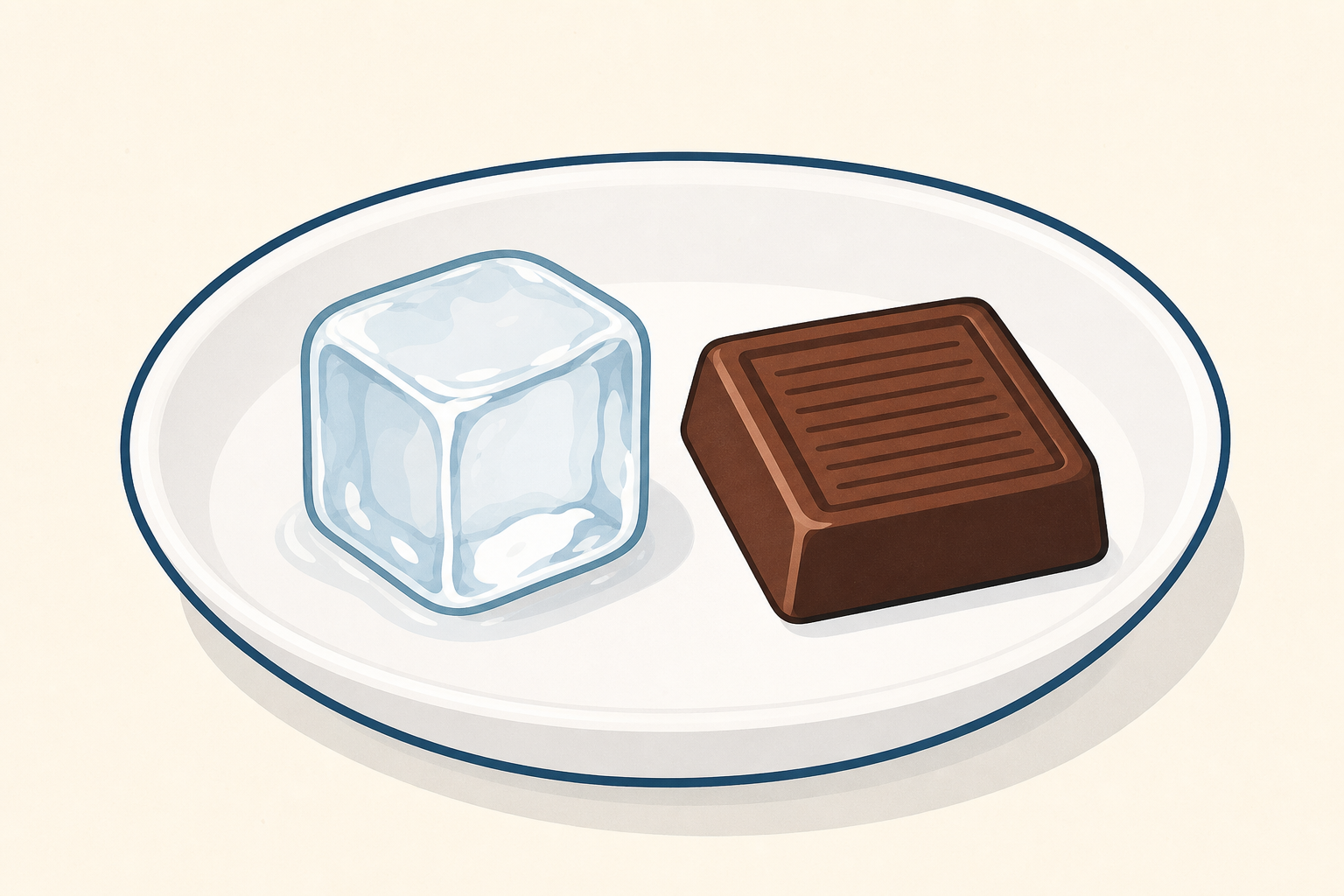
Your teacher is holding up an ice cube and a square of chocolate. What do you think will happen if we warm them gently? And once they have changed, can we ever get them back the way they were?
Hold up one ice cube and one square of chocolate so the class can see the real objects. Do not set up the group warm-water trays yet. Keep the hook as a curiosity beat only.
Take three or four quick guesses. Do not confirm answers. The point is to surface the idea that heating changes materials, and that some changes might be undone.
Have ready to show only: one ice cube and one square of chocolate.
Also ready by the next step (not yet on show): one teacher front-bench warm-water dish and a spare ice cube for the short modelled melt in Key Concepts. Group trays, dishes and chocolate stay packed away until the group investigation.
Today's words: reversible — a change you can undo so the original material comes back. Irreversible — a change you cannot undo because a new material has been made. Melting — a solid turning into a liquid when it is heated.
Watch what happens when I melt a little ice at the front. Which do you think melting ice is: reversible or irreversible?
Project only the short board version. Use the table below as your reference while you teach.
| Concept | Why it matters | Example |
|---|---|---|
| Reversible change — a change that can be undone so you get the original material back | Knowing a change is reversible helps us recover materials instead of wasting them | Ice melts to water; put the water in the freezer and you get ice again |
| Irreversible change — a change that cannot be undone; a new material has been made | Once a new material forms, you cannot simply cool or reverse the process to get the old one back | Bread toasted brown stays toast; you cannot un-toast it into soft white bread |
| Melting — when a solid turns into a liquid because heat is added | Melting is one of the most common heating changes we meet every day in Irish kitchens and classrooms | A chocolate square goes soft, then runny, in a warm water bath |
Live model (keep tight — about 2 minutes of watching): One ice cube in your front warm-water dish only. Name the beats quickly rather than a long monologue:
Misconception to head off (one line): Melted ice is not "gone"; only its state changed. Heat can drive both reversible and irreversible changes.
Prep reminder: Group warm-water trays stay closed until the investigation step. Only this front demo bath is in use now.
We will warm ice and chocolate in a gentle warm-water bath. Before anything goes in the water, open your Investigation Journal page. Write one prediction for ice and one for chocolate: will each melt, and can we get the solid back again? Talk with your group, then be ready to share one prediction.
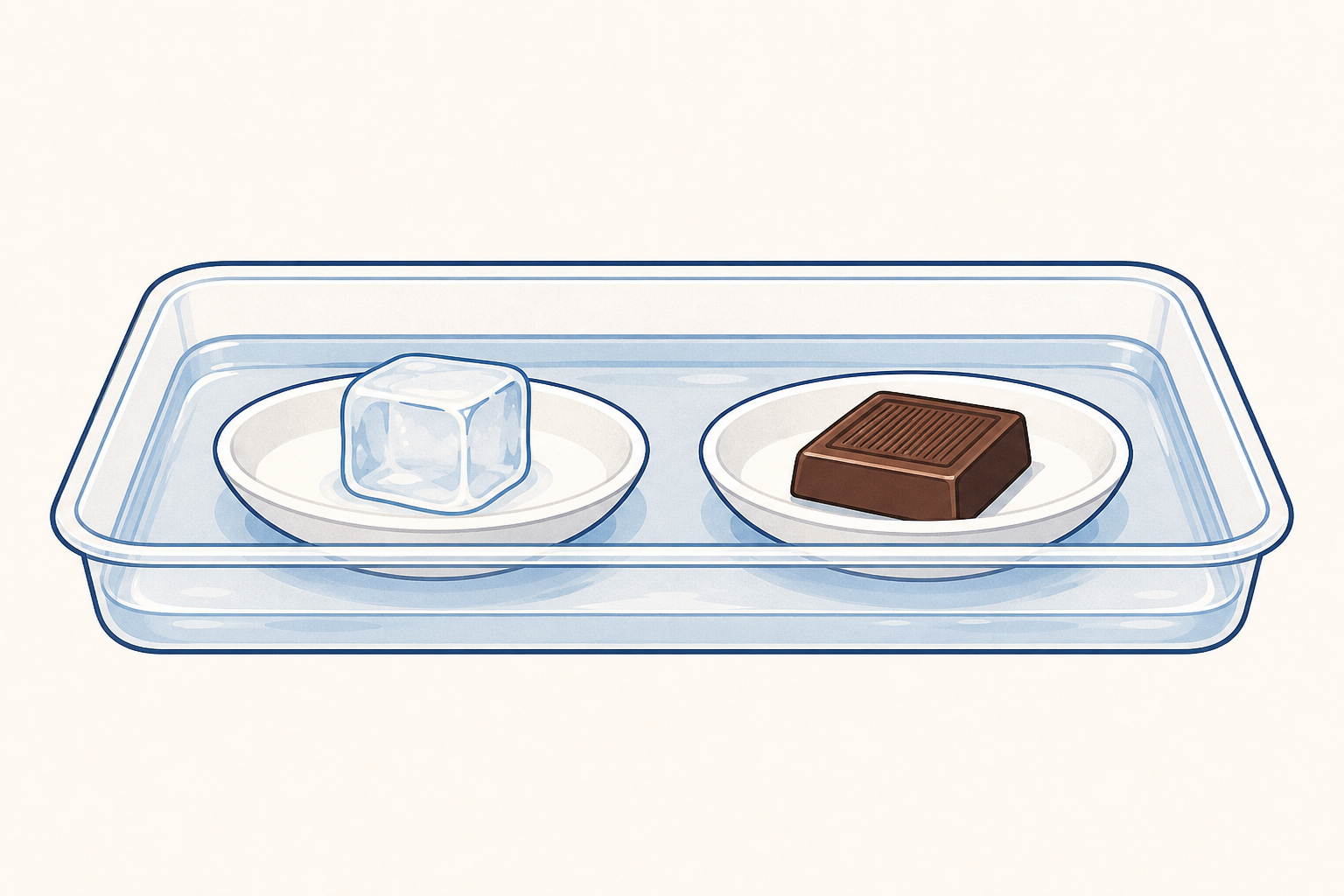
Hand out Investigation Journal pages now. Predictions for ice and chocolate are written before any group melting starts.
Use think-pair-share. Each group says one prediction out loud for ice and one for chocolate, with a short reason.
Key questions:
Write a few group predictions on the board so you can return to them later. Predictions are never wrong; they are the start of the science.
Keep the toaster out of sight until the demonstration step so attention stays on melting first.
Work through these beats with your group:
You already modelled melting ice briefly in the Key Concepts step. Groups now run ice and chocolate side by side.
Suggested split of the 15 minutes: set up (2) → hands-off watch and record (7–8) → name focus choice (1–2) → chocolate cool-back on cool saucer (2) → reversible or not decision (1–2).
Circulate and push observation language: solid, liquid, soft, runny, clear, brown, faster, slower. Hands stay off the materials; looking only.
Group design choices (both on the journal): (1) how the group judges "melted enough"; (2) which reverse check they will trust more — ice inferred from known freezing, or chocolate cool-back clues. Those are their decisions inside the shared method.
What to expect: Ice usually melts faster than chocolate in the same bath. Melted ice is clear water. Melted chocolate is a brown liquid. On a cool saucer, melted chocolate often begins to firm or lose its runny shine within a minute or two — that is the visible reversible check for chocolate.
Reversibility — say this clearly: We will not freeze the melt water in class. Ice is judged reversible because we already know freezing turns water back into ice (inference from known freezing). Chocolate reverse is checked by the cool-back you just ran. Keep those two evidence standards distinct when groups write reasons.
Safety: Water is warm only. Wipe spills at once. No tasting. Hands off materials. Wash hands after handling chocolate dishes.
Differentiation: Less confident groups watch ice first, then chocolate. Confident groups also suggest why speeds differ (different melting points).
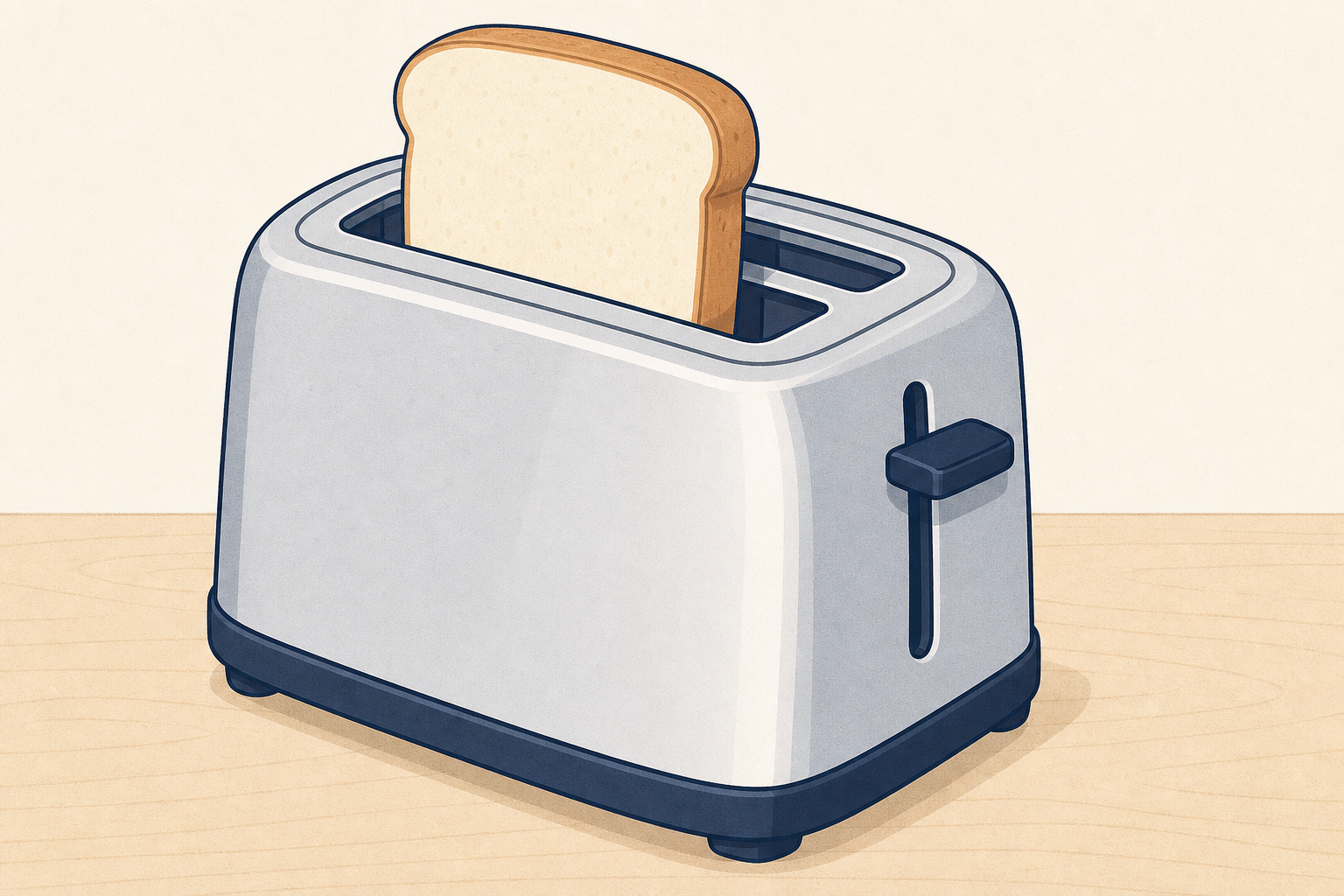
Before the toaster starts, write one prediction on your Investigation Journal page: what will happen to the bread, and could we ever turn it back into soft white bread? Then watch the demonstration carefully.
Teacher-demo only. Pupils stand well back. Use a classroom toaster or toast one side lightly under adult control. Do not let pupils operate the toaster or touch hot surfaces.
Give 30–60 seconds for the toast prediction line on the journal. Then take a quick class tally on the prediction options. Run the toast. After the reveal, pupils may jot one observation word or phrase; full sense-making comes in the next step.
Talk track after the reveal: The bread went brown and firmer. Tiny bits may smell different. This is not just warmer bread — heating has made a new material we call toast. Cooling the toast will not bring soft white bread back. That is why this change is irreversible.
Link: Compare with melting. Melted ice is judged reversible from known freezing. Melted chocolate had a cool-back check. Toast cannot un-toast.
Safety: Heat source is teacher-only. Keep leads tidy. No pupils near the toaster. Let toast cool on a plate before anyone looks closely.
You're previewing this lesson. Get full access to this lesson and hundreds more — each one ready to teach, with interactive activities, printable resources and pupil progress tracking built in.