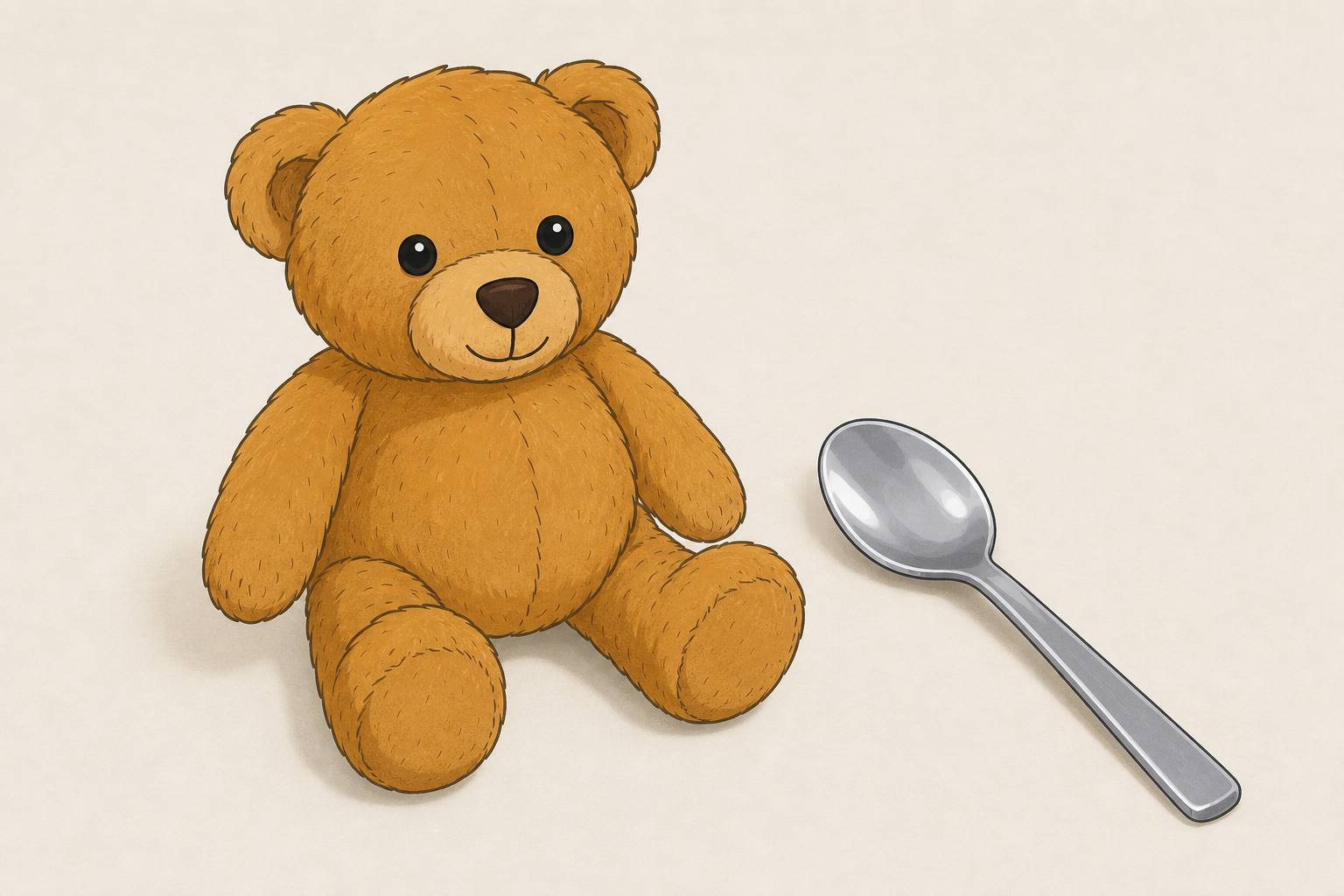
Watch and listen. Here is a teddy and a spoon. Which one looks squashy? Which one looks firm? Some friends will help us feel.
Hold up one soft teddy and one metal spoon. Pass them to a few children or walk them around the circle so a small number can have a quick feel while the rest watch.
Fold the watchers in: Who thinks the teddy will feel squashy? Show me with a thumbs-up. Who thinks the spoon will feel firm? Then ask the children who felt them: What did you notice? Take two or three answers. Do not name hard and soft yet if you can help it. Leave that for the next step.
Keep it light: this is only the curiosity beat. Do not set out the full touch table or start sorting yet.
Today's words: hard means firm and does not squash. soft means squashy.
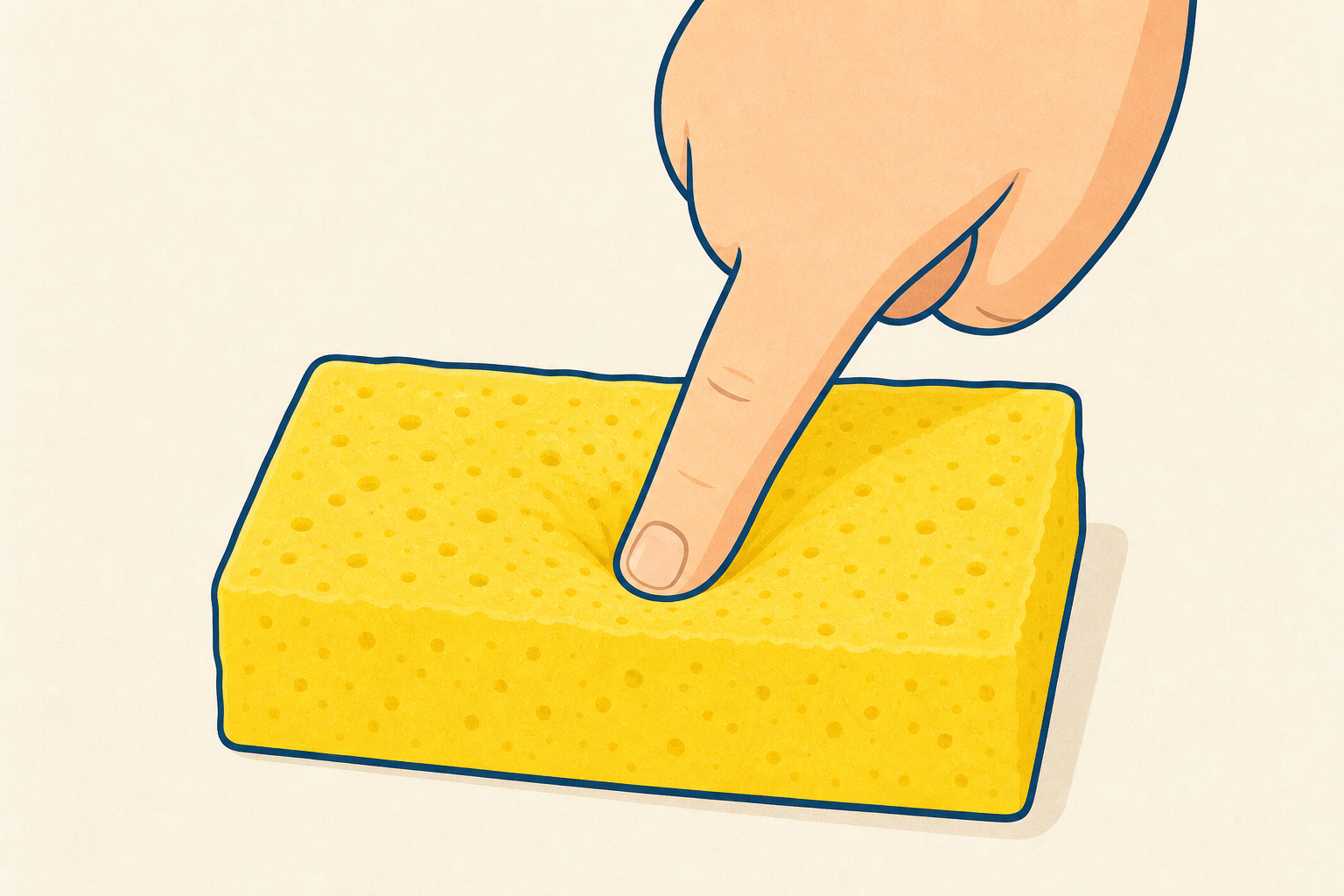
Will the sponge feel hard or soft? Watch what happens when I try.
Project only the short board text. Keep the full table for yourself.
| Concept | Why it matters | Example |
|---|---|---|
| Hard — a material that feels firm when you press it and does not squash in | Hard materials are useful when we need something strong, like a spoon or a block to build with | A wooden block stays firm under your finger; a stone does too |
| Soft — a material that feels squashy or squishy when you press it | Soft materials are nice to cuddle and gentle on skin, so toy-makers often choose them for soft toys | A sponge or a teddy squishes a little when you squeeze it |
Modelled cycle (do this live before children explore):
Misconception to head off: children may say something is soft because it is small, or hard because it is big. Size is not the rule. A tiny pebble can be hard and a big cushion can be soft. Keep bringing them back to what happens when you press.
Who helps us: a toy-maker chooses soft materials so toys are nice to cuddle.
At your group's touch tray, squeeze, press and feel each thing. Does it squash, or does it stay firm?
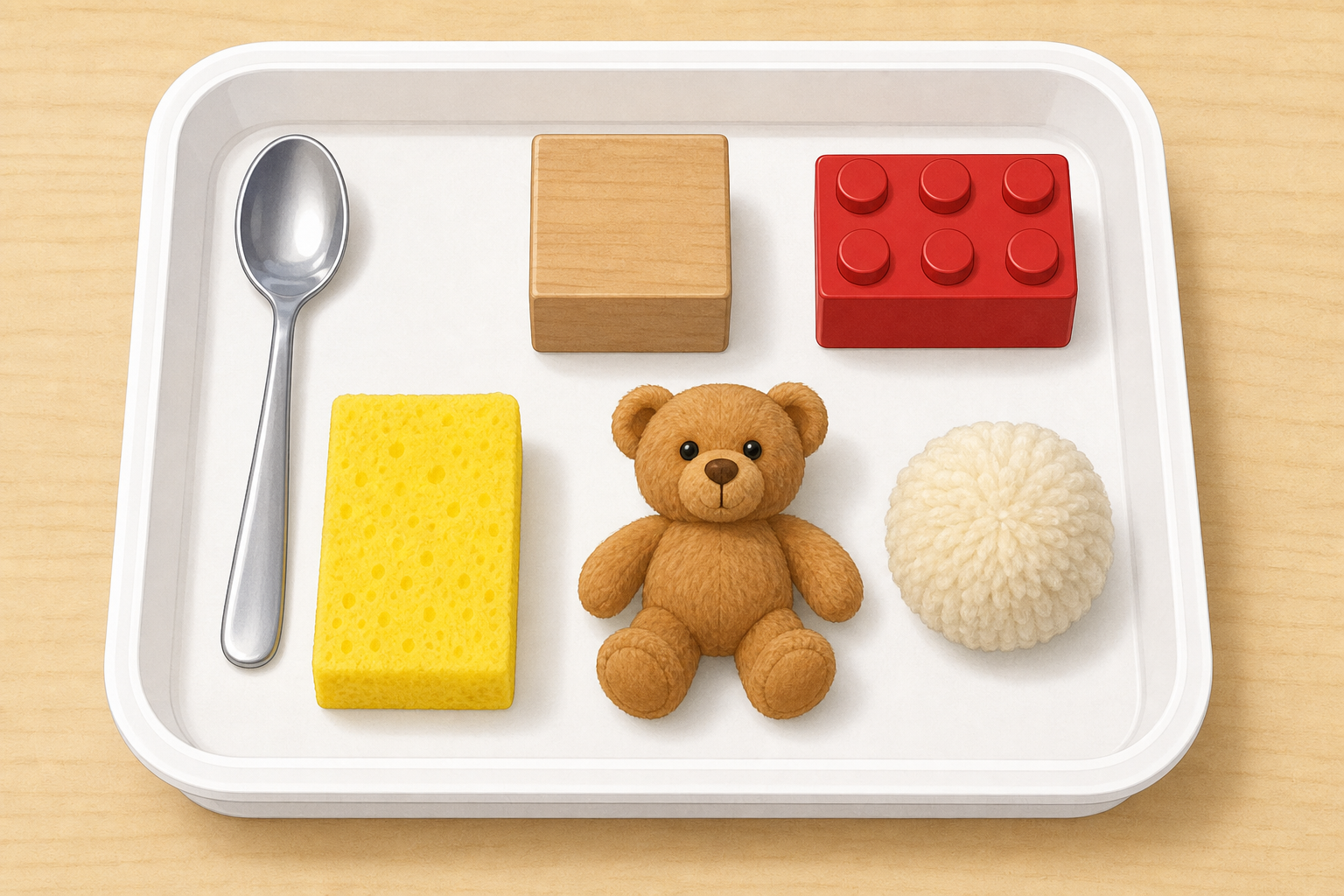
Set out one touch tray per small group so every group works at the same time. On each tray put: a smooth stone or pebble, a clean sponge, a wooden block, a cotton wool ball (or a soft foam piece), a metal spoon, and a small soft teddy or soft toy. Two empty sorting trays or hoops stay to the side for the next step.
All groups explore their own trays together for this slot. Children use fingers only. Model once more: press, notice, say soft or hard out loud. Circulate so every group gets a prompt and a safety check.
Look-fors:
Differentiation: offer hand-over-hand pressing for children who need motor support. For children ready for more, ask Is there anything else on our tray that feels like the teddy?
Soft items and the press test: choose soft objects that clearly go in under two fingers (sponge, teddy, cotton wool, soft foam). If you only have a thin wool scrap, it can feel gentle without squashing much. If children are unsure, compare it side by side with the sponge and ask which one goes in when you press.
Safety: nothing near mouths; keep the stone on the table (no throwing); wipe the sponge if it will be shared across groups later.
Pick one thing. Press it. Tell a friend: did it squash, or did it stay firm?
This is a quick oral observation beat after the first feel. Stay at the group trays or gather on the carpet with two or three objects still in view.
Prompt pairs: Pick one thing. Press it. Tell your friend what you noticed. Then take three whole-class shares. Revoice their words with hard and soft: You noticed it stayed firm. We can say that one feels hard.
What good noticing sounds like: “It went squashy.” “My finger could not push in.” “It feels like the teddy.” Celebrate pointing and showing as much as full sentences.
Keep moving. Do not turn this into a long sit-down talk before the sort. No writing or journal page in this step.
Sort each thing into the hard tray or the soft tray. Press first if you are not sure.
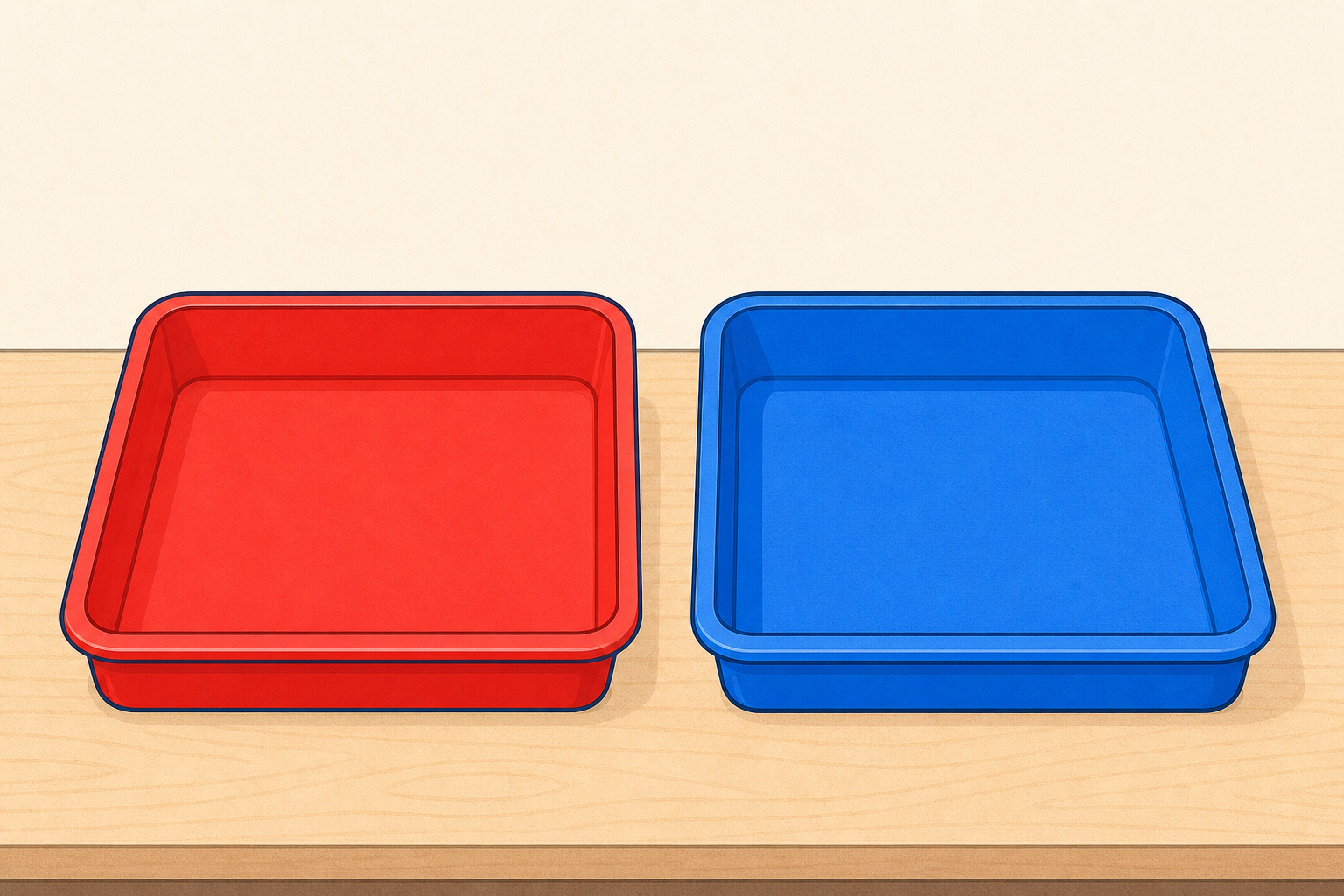
Place two trays or hoops where everyone can see (or one pair per group if trays allow). Label them simply with a picture cue if you like (a block picture for hard, a teddy picture for soft). Children bring one object at a time from the touch tray and place it in hard or soft.
If the class disagrees, press together and decide as a group. Typical sort: hard — stone, wooden block, metal spoon; soft — sponge, cotton wool, teddy. If a child is unsure about the sponge or cotton wool, press it again together.
Who helps us: when most objects are sorted, say: A toy-maker chooses soft materials so toys are nice to cuddle. Which tray would help the toy-maker?
Common mix-up: calling the spoon soft because it is shiny or small. Bring them back to the press test.
You're previewing this lesson. Get full access to this lesson and hundreds more — each one ready to teach, with interactive activities, printable resources and pupil progress tracking built in.