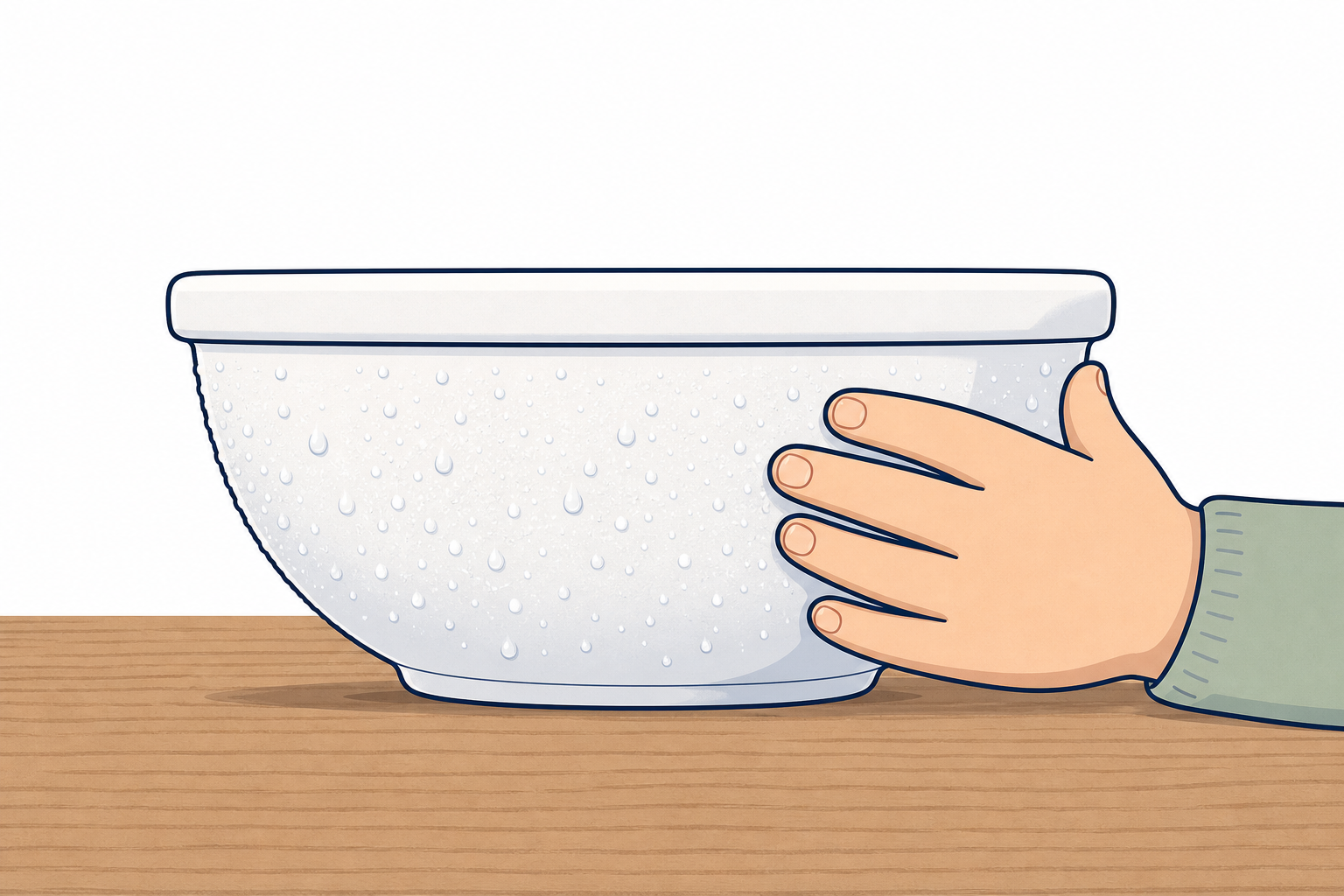
I have something very cold and hard in this bowl. A few friends can feel the outside of the bowl while we all watch. What do you think is inside?
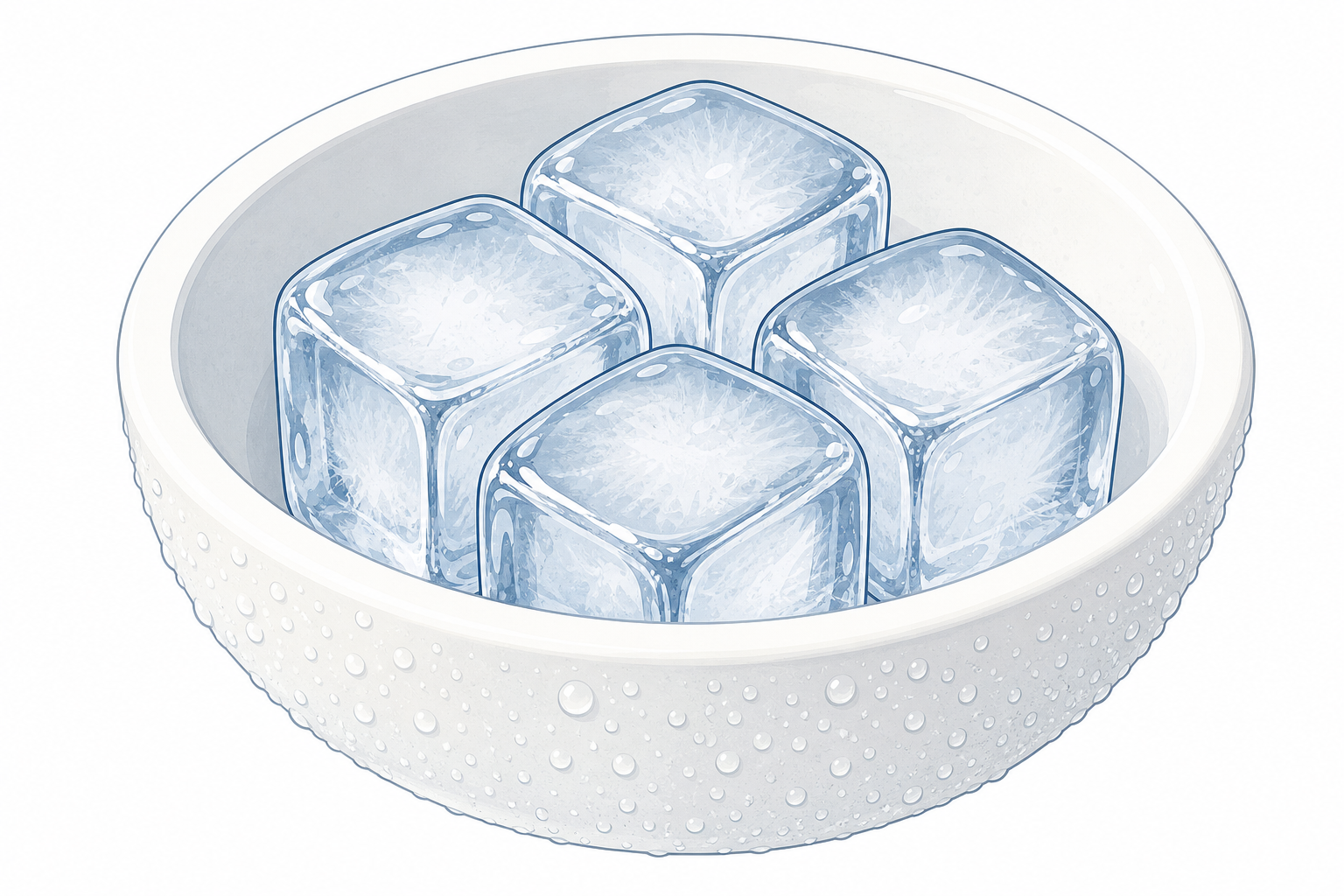
Hold a clear bowl of pre-frozen ice cubes so the class can see the frost or feel the cold bowl, but do not tip the ice out yet. Keep the reveal short and playful.
Invite only two or three children to touch the outside of the bowl while everyone else watches and guesses. Accept any idea kindly. Then lift or tip so they can see the ice: Ice! Frozen water.
Before the lesson: freeze ice cubes overnight (colour a few with a drop of food colouring if you wish). Prefer smaller cubes or break a few larger ones so the demo melt is visible within a few minutes. Have towels ready beside the demo space. Keep a spare clear bowl and a few extra small cubes ready in case the room is cold. Keep the group ice cold until step 4 (in a cool bag, insulated box, or still in the freezer) so it is still hard when children handle it.
Look at the ice with me. Ice is water that has gone hard and cold.
What do you notice about the ice? How does it look?
Keep the board to one short phrase and the ice in view. Name only ice now. Hold the words melting and freezing until children have watched or felt the change (melting after the demo; freezing lightly in the make-sense talk).
Use the table below for yourself across the lesson when you later name the words.
| Concept | Why it matters | Example |
|---|---|---|
| Ice — water that has gone hard and cold when it freezes | Ice feels different from water: hard, cold and slippery to touch | An ice cube from the freezer sits hard in the bowl until it warms |
| Melting — when ice warms up and turns back into water | Warmth in the room is enough to change ice; we do not need a flame or hot water | Ice left on the table slowly becomes a puddle of water in the bowl |
| Freezing — when cold turns water into ice | The change can go both ways: cold makes ice, warmth makes water again | Water left in a freezer overnight becomes hard ice cubes |
Misconception to head off: children may say ice and water are two different things. Gently revoice: ice is water that has frozen; when it melts it is water again.
Take a few oral notices only (look and feel words: hard, cold, shiny, slippery). Do not ask the warm-room prediction here; that beat lives in the next step so it has one clear home. Guesses and notices are never wrong; they are the start of finding out.
What do you think will happen to the ice if we leave it in our warm room? Watch carefully together.
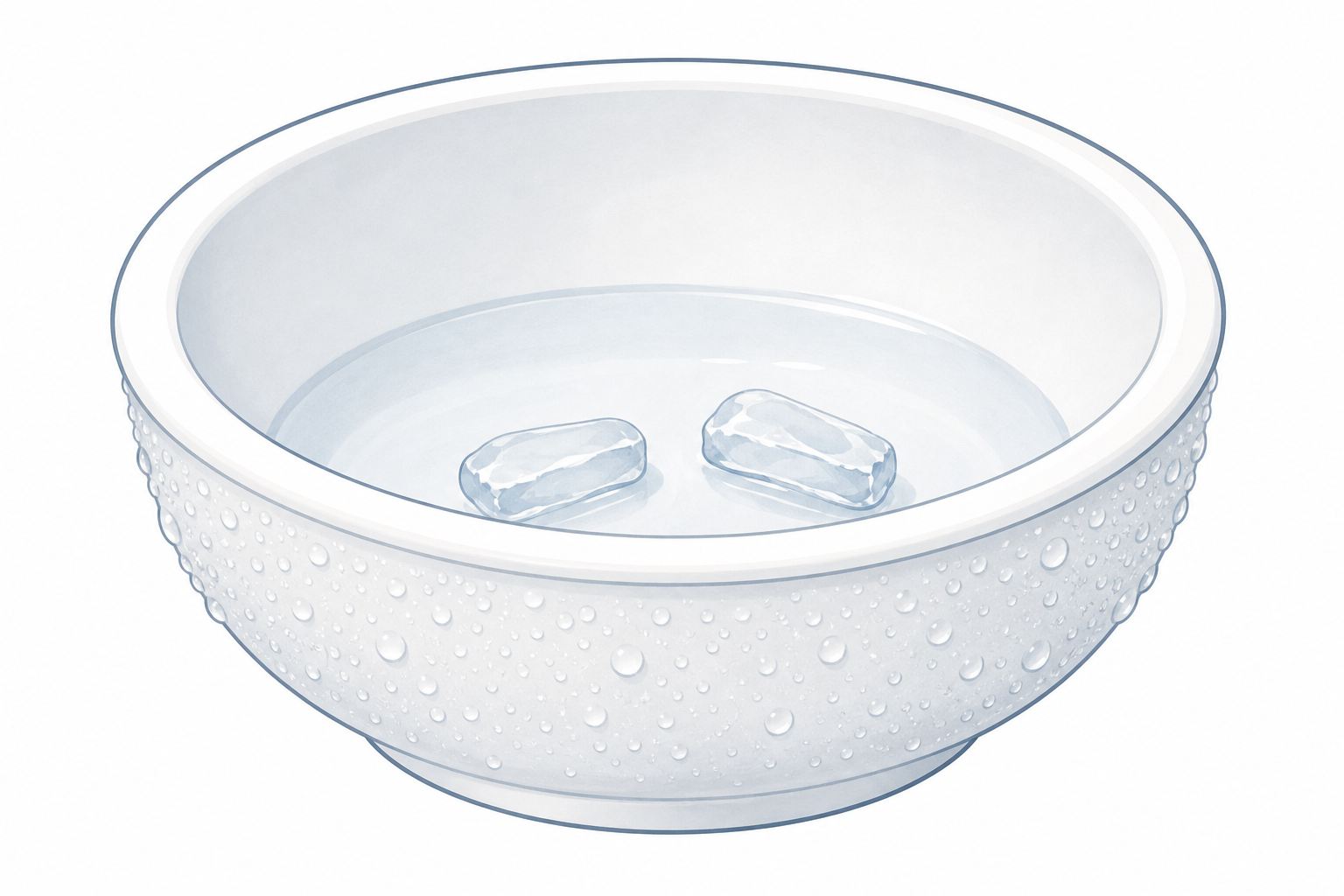
Run this as a whole-class predict-and-reveal. Place a few ice cubes in one clear bowl on the demo table where everyone can see. Use only the warm classroom air. No hot water, no radiator contact, and no flame.
Slow-melt contingency (prime this before you start): on a cold day a large cube may not show a clear puddle in five minutes. Use smaller cubes from the start, or hold the bowl gently in your hands (warm, never hot) so water appears sooner. Have the smaller cubes ready on the demo table so you are not hunting mid-demo.
Modelled cycle (say the beats out loud):
Mid-watch pacing (keep folding the class in while you wait): do not leave a silent five-minute stare. Every half-minute or so, point and ask one short notice question tied only to what is visible: Are the edges still sharp or getting wet and round? Is the cube the same size as when we started? Can you see any water at the bottom yet? Who can spot a shiny wet patch? Invite a quick thumbs-up or a one-word call-out, then look again. Keep attention on the change, not on sitting still. If little has changed after a minute, use the hand-warm contingency and keep the same noticing questions going.
Name melting only after children have watched the change. Tap the prediction options as hands go up. Reveal what happened only after children have watched.
At your bowl, gently feel and look at the ice. How does it feel? What is happening as you hold it?
Send children to tables in small groups. One helper per group collects a clear bowl with a few ice cubes that are still hard and cold (mix plain and coloured if you prepared them) and places a towel beside it. Do not plate group ice on a warm side table at the start of the lesson; keep cubes in a cool bag, insulated box, or freezer and fetch them only now so the hard/cold contrast is still there to feel. Sleeves rolled up before anyone touches the ice. You stay at the front until every group has a bowl and a towel, then begin the explore prompts. This set-up is part of the step time so the looking and touching still has a clear window.
Children take short turns touching the ice gently and looking closely. Keep hands on the ice only briefly if fingers get too cold. Prompt with: Is it hard or soft? Cold or warm? What do you see under the ice?
Circulate and revoice: You noticed it is hard and cold. You noticed water on your fingers. That water came from the ice melting.
Differentiation: less confident children point to hard ice and to the water in the bowl; more confident children say one difference between ice and water in their own words.
Safety: no tasting; wipe spills straight away; stop if hands are uncomfortably cold.
Look carefully at your bowl now. What is happening to the ice? Where is the water coming from?
Bring the class back to still looking rather than busy handling. Each group watches their own bowl for a short quiet look.
Prompt with the senses they are using: eyes and careful touch only. Draw out: the ice is smaller; there is more water; the ice is not as hard at the edges.
Ask two or three children to say one careful observation to the class. Separate what we see (water in the bowl) from what we think it means (the ice is melting because the room is warm). Reuse the word melting if children offer it.
If some bowls still hold a lot of ice, that is useful: compare a bowl that melted faster with one that is slower and wonder why (smaller cubes, warmer hands, place in the room).
You're previewing this lesson. Get full access to this lesson and hundreds more — each one ready to teach, with interactive activities, printable resources and pupil progress tracking built in.