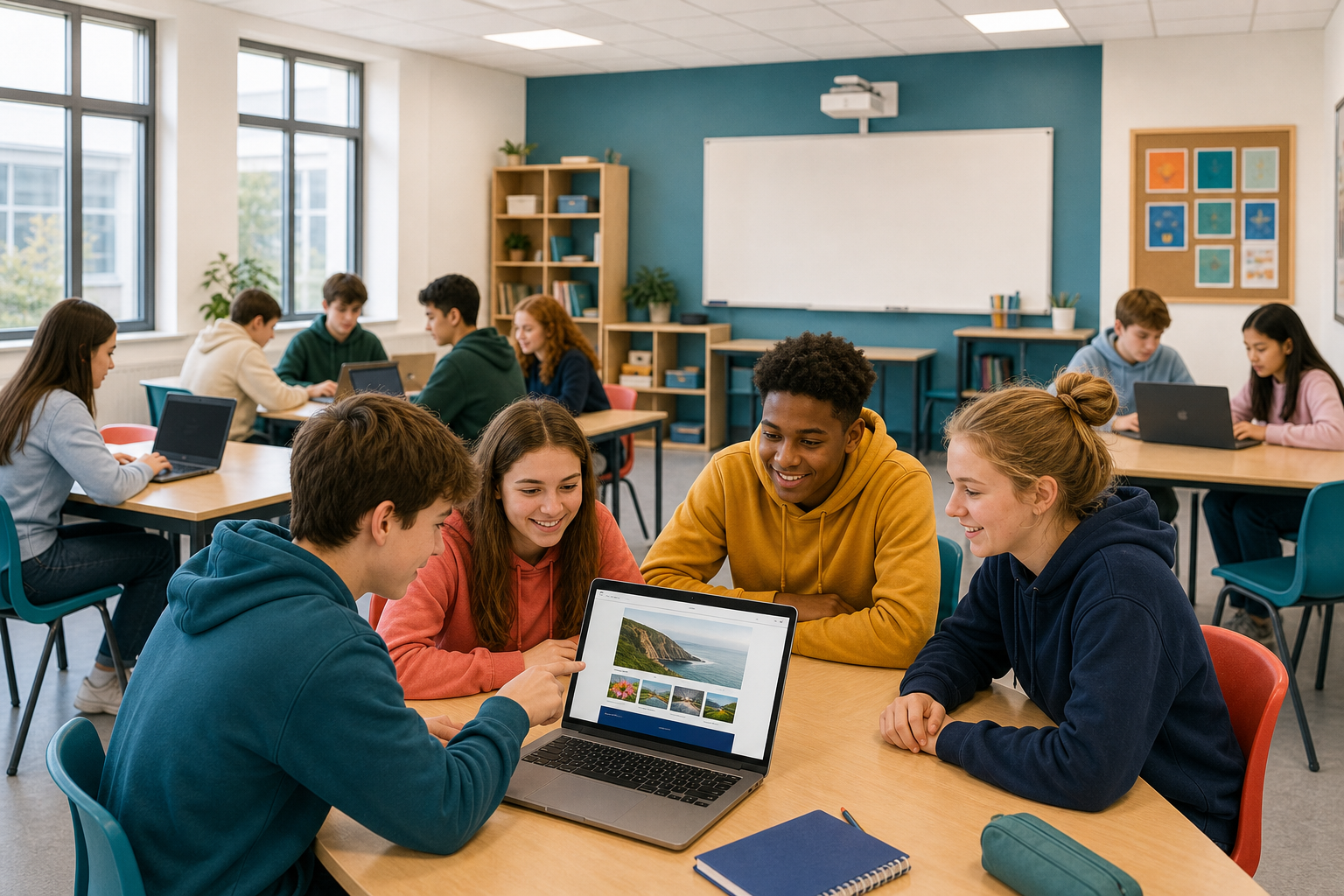
 You have been building things that connect: a website, a model that watches a camera, devices that talk over radio. When your work goes online, or when you use other people's work, two questions come up at once. What are you allowed to expect from others? And what do others get to expect from you?
Today you sort those into rights and responsibilities, fix one concrete line on a project of your own, and write the right and responsibility you will stand over.
A right is something you are entitled to. A responsibility is something you are expected to do. Online, the two travel together.
Three issues matter most for a connected creator:
- Privacy. Your personal details, photos, location and messages are yours to share or keep private, and other people have the same claim on theirs.
- Ownership of work. The code, writing, images and designs you make are your creative work. Copying someone else's work and presenting it as your own is not allowed. You may use other people's work only when a licence or clear permission lets you, and you still give credit when that is required.
- Staying safe. Passwords, what you post, who you talk to, and which links you open all affect you and the people around you. Safety is both a right and a responsibility.
Before you sort situations, look briefly at a real project on the board with your teacher. Spot what a visitor can already see about who made it, or about their data, and what is missing. You will fix a line like that on your own work later.
Work in pairs. For each situation below, decide:
- Which issue is it mainly about: privacy, ownership, or safety?
- What is the fairest thing to do, and why?
- Is a right being ignored, a responsibility being skipped, or both?
Spend about three minutes per situation. Be ready to defend one answer to the class.
The situations
- You built a short animation for your website. A classmate downloads it, removes your name, and puts it on their own page as if they made it.
- A group chat from your year is screenshot and posted on a public account. Someone in the chat is clearly identifiable and did not agree to be shared.
- A friend asks for your school account password "just to check one thing". They promise to log out straight away.

Open a project you have already built that goes online or shares data: your website, a page about your investigated problem, or notes tied to your micro:bit work. If that file is missing, open the class template page your teacher has ready (a simple page with a placeholder footer) and work on a copy of that instead.
Before you change anything, look at what a visitor or classmate would see right now, the same way you did with the project on the board. Then replace or add one visible line that puts a right or responsibility into the work itself:
- Ownership: a short credit or licence line (for example, "Created by [your name]. Images used under [licence name]."), or
- Privacy: a plain privacy note (for example, "This page does not collect your name or location." or "Camera data stays on this device.").
Preview or run the project so the new line is visible on screen. Leave the project open; you will need it in a moment.
Unlock the full learning experience
You're previewing this lesson. Get full access to this lesson and hundreds more — each one ready to teach, with interactive activities, printable resources and pupil progress tracking built in.
This lesson is copyright of Coding Ireland 2017 - 2025. Unauthorised use, copying or distribution is not allowed.