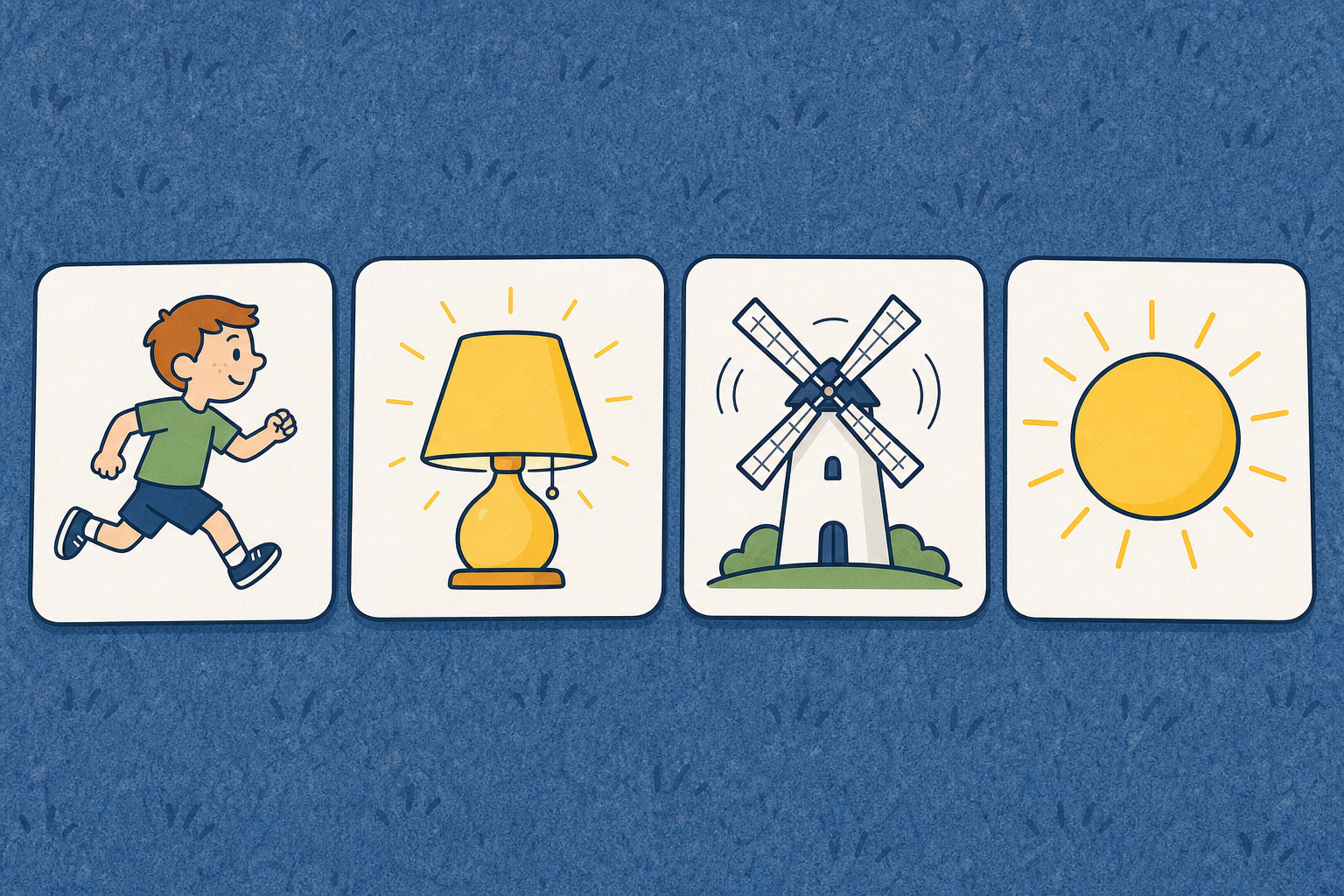
Watch this! When I clap, you hear a sound. When I jump, my body moves. What do you think is making those things happen?
Keep this beat light and joyful. Clap once, then jump on the spot. Invite two or three quick guesses only. Do not name energy yet if you can hold it; let curiosity lead. Have the energy-in-action picture cards face down and ready for the next steps, but do not spread the full hunt materials yet.
Key question: What do you think is making the clap and the jump happen?
Energy is what makes things move, light up or make a sound.
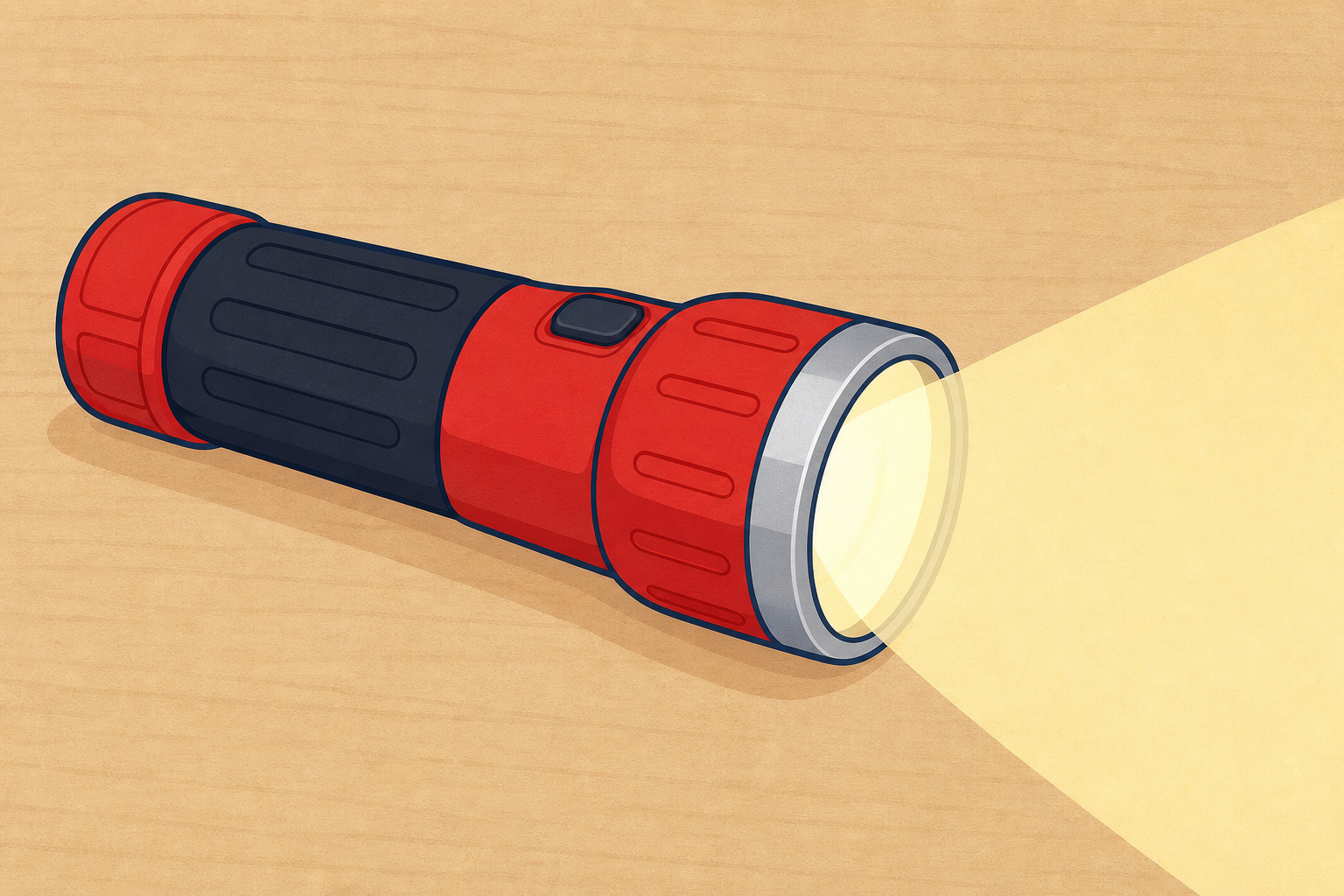
Watch this torch. Energy helps it light up. What else in our classroom do you think needs energy to work?
Project only the short board text about energy. Model one concrete example first (torch or lamp card), then open the classroom look-around. Do not put the words energy source or work on the board today. Food, wind and the sun come later as friendly examples after children have acted them out.
| Concept | Why it matters | Example |
|---|---|---|
| Energy — what makes things move, light up or make a sound | Children meet energy as something real they can point to and act out, not as a hard word to learn by heart | A torch lights up, turbines spin in the wind, and a clap makes a sound: energy is at work in each one |
Friendly examples (after the hunt, not board terms): food fuels our bodies at playtime; wind spins farm turbines; sunshine warms the school yard and helps plants grow. Name food, wind and the sun in simple talk without asking children to hold the label energy source. You may mime spinning blades like a pinwheel if it helps, but there is no pinwheel card in the set.
Nature of STEM (teacher line later with the turbine card): engineers at wind farms help turn wind into power so lights and heaters can work in our homes and school. Keep it human and helpful, not a formal pupil term called work.
Misconception to head off gently: children may say only batteries or plugs are energy. Keep the idea wider: our bodies, the wind and the sun count too. Do not introduce electricity circuits or heat investigations.
Model one line aloud: Energy is what makes things move, light up or make a sound. Watch the torch: energy helps it light up. Then ask the classroom look-around question.
We are going on an energy hunt! When I show a card, freeze like a statue of that thing.
Print the provided energy-in-action picture cards (one class set). Clear a safe open floor space. Optional real props help if you have them: a small hand fan or paper fan, a battery torch, and space to clap and jog on the spot. No mains appliances.
Hold up Card B (lamp). Think aloud: I wonder what makes a lamp work. I think it needs energy to light up. Watch me be the lamp… click… glow! Ask: What did the energy make the lamp do? Draw out light up. Then: I think energy is what made the lamp work. That full wonder–guess–act–notice–think cycle is what children copy next.
Keep the board on the one freeze-game line only. Reveal one card and one question at a time so the next action is always obvious. Show Cards A–D one at a time. Whole class acts each one for a few seconds, then freezes. Call on different children: move, light up, or sound? Keep turns short and playful. Use Cards E–G more gently near the end as talk-and-action prompts about where energy can come from (spin like a turbine, stretch like sunshine, mime eating lunch). Keep the child labels as move, light and sound; when the sun card appears you may add, in teacher language only, that the sun's energy also helps plants and can warm the yard, without forcing warmth into the three labels children use.
Differentiation: less confident children can point to the card and copy your action; more confident children can say food, wind or sun too.
Safety: spacious freeze spots; no bumping; gentle claps and jogs only.
Look at our picture cards again. We have four places on the carpet: food, wind, sun, and energy at work. Which place does each card belong?
Sit the class on the carpet. Reuse the same printed set. This is a calm sorting beat after the active hunt, not a repeat of move / light / sound alone.
Before you start: Lay out four clear floor or carpet spots using the printed pile labels (or four trays): food, wind, sun, and energy at work. Name all four places with the class before the first card so every card has an agreed home.
How to run: Hold up one card at a time. Children chorally or by turn say which spot it belongs to, then one child places or points it there. Mix in a teacher prompt match too: Find me a card that shows energy from the wind.
Agreed homes for every card:
Do not sort the classroom fan with wind. Keep Card A firmly in energy at work so food / wind / sun stay clean. Turbines are the only wind-sort example (you may mime spinning blades if a child needs another wind picture, but there is no extra pinwheel card).
Concrete noticing (only on cards that show move, light or sound): after a card that clearly shows a job is sorted (fan, lamp, clap, running, turbines), ask a child to point to the part that is moving, lighting up, or making a sound, then name which of those three the energy is helping it do. Skip this prompt on the lunch card and keep it light on the sun card (plants / warm yard in teacher language only), so nobody freezes looking for something that is not on the picture.
Look-fors:
Prompts to use: Which place for this card: food, wind, sun, or energy at work? Then, only on a clear job card: Point to the part that is moving, lighting up, or making a sound. Which of those three is the energy helping it do?
Keep it oral. There is no Investigation Journal page for this lesson.
Look at this card. How does food help our bodies?
Whole-class carpet talk. Display-only and oral. Keep only one short focus question on the board at a time, each tied to a card already in hand. Change the board text as you move card to card so children never see a stacked list.
Sequence (reveal one board line at a time):
Helper beat (teacher-led, not an open quiz): Keep the turbine card up. Say: Engineers at wind farms help turn wind into power for our homes and school. Optional Irish touch: Some of you may have seen tall turbines on hills or by the coast in Ireland — same idea. Invite a simple chorus repeat of turn wind into power or a thumbs-up if they have seen turbines. Do not ask an open who question children cannot answer from experience, and avoid the phrase make energy; prefer turn wind into power or help get power to our homes.
Nature of STEM weave: keep it human and helpful, not technical.
Misconception: if a child says “heavy things have more energy,” smile and steer back to move, light and sound with everyday examples.
Optional home noticing (oral only): tonight, notice one thing at home that moves, lights up or makes a sound, and tell an adult what energy is helping it do.
You're previewing this lesson. Get full access to this lesson and hundreds more — each one ready to teach, with interactive activities, printable resources and pupil progress tracking built in.