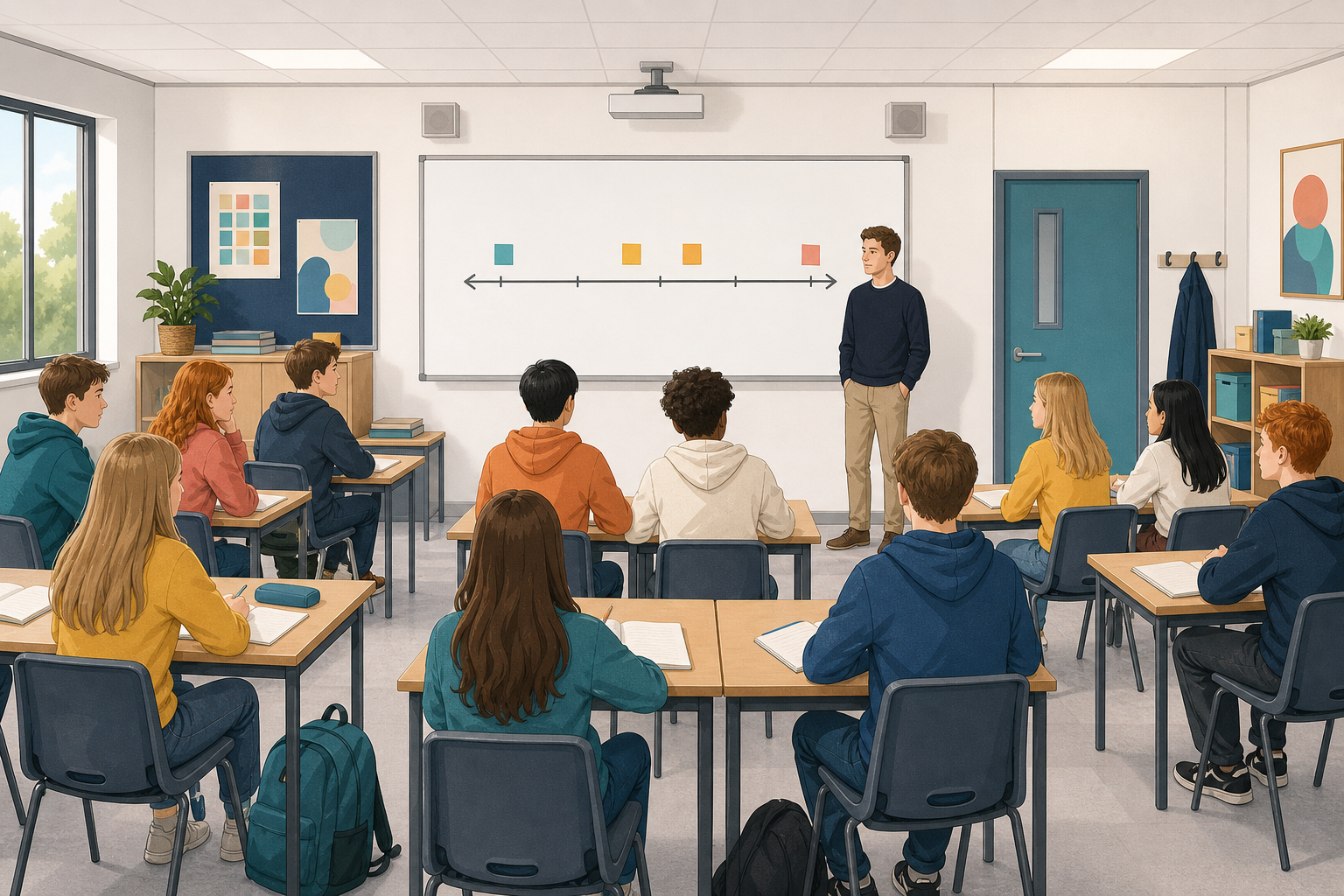
 You have practised judging whether a post helps you decide something or mainly stirs up feelings. Today's question is bigger. Does digital media make democracy stronger, or does it put democracy in danger?
You will hear the best case for each side and show where you stand on a line. You can move if you change your mind. There is no right answer, so your job is to weigh both sides fairly and say what you think.
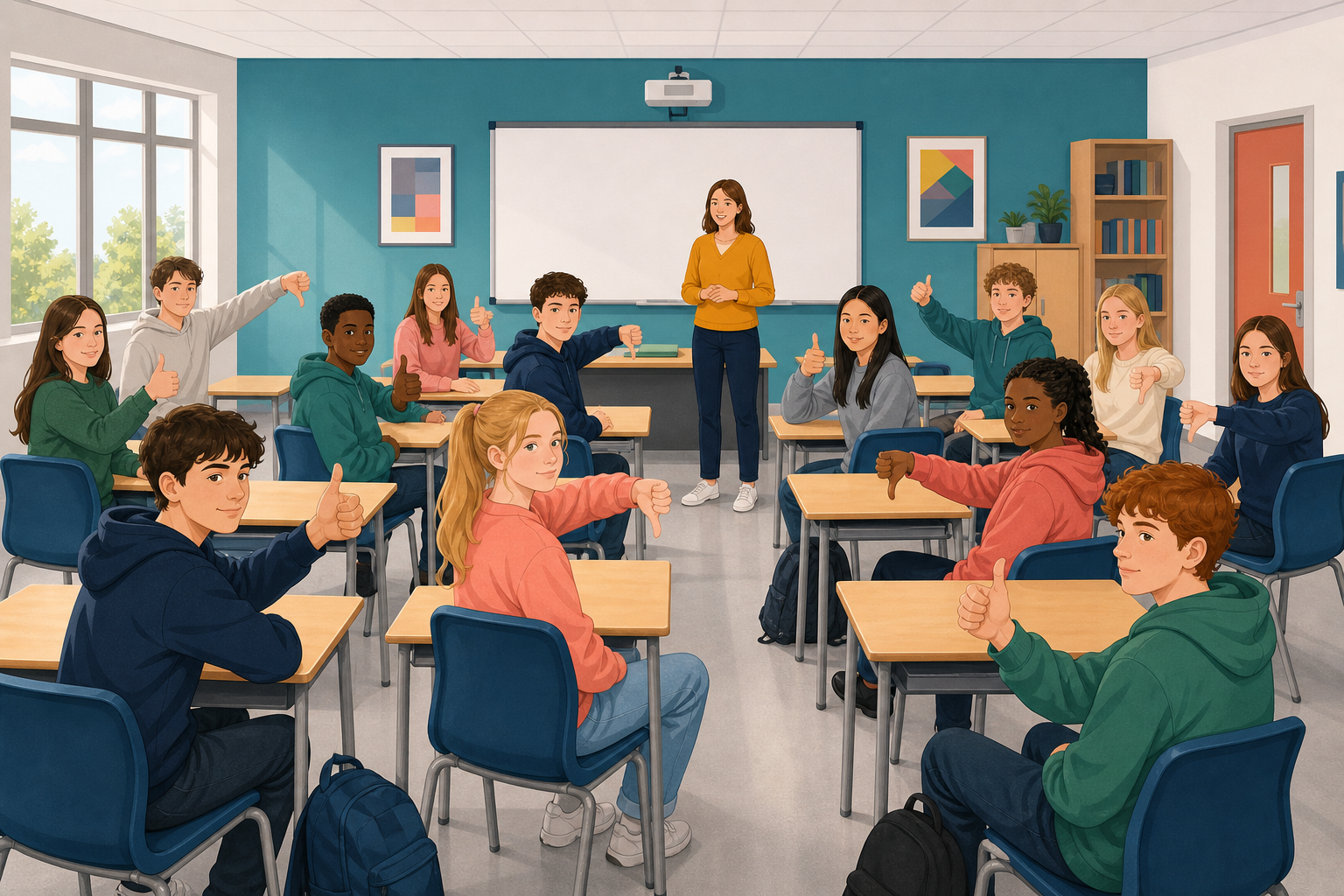 A democracy needs people who can find out what is going on, share their views and keep a check on people in power. Digital technology has changed all three.
Today you will debate the statement in the box below. A statement that people debate is called a motion.
Digital media strengthens democracy more than it threatens it.
Take ten quiet seconds to decide where you stand on it. Do you agree, disagree, or are you not sure? You do not need reasons yet.
Decide where you stand on the motion, from Disagree to Agree, and go to that part of the room. Your teacher will mark where the class stands on the line on the board, and no position is scored.
Next, read the case for each side. Each case is steelmanned, which means each side's argument is put in its strongest honest form, not a weak version that is easy to knock down.
Digital media strengthens democracy more than it threatens it.
- Access and voice. News and different points of view are easier to find than when people relied on a few newspapers or TV channels. People who never had a newspaper column or a TV slot can now share their views with a wide audience.
- Scrutiny and organising. Scrutiny means checking closely on people with power. Phone videos and reports from ordinary people can catch things that officials or companies would rather keep quiet. Groups can also organise petitions, meetings and local action quickly and cheaply.
Optional: more on the strengthen case
- Someone in a small town can read the same sources as someone in a capital city.
- Young people, local campaigners and minority groups can put an issue in front of a wide audience without waiting for a newspaper or TV channel to let them.
- Public figures face questions faster, and evidence can spread before it is buried.
- Cheaper organising makes it easier for ordinary people to take part in their community.
- Disinformation and manipulation. Disinformation means false information spread on purpose, and it often travels faster than the corrections. Manipulation means pushing people towards a view with tricks, such as targeted ads, edited clips or posts designed to stir up strong feelings, often without people noticing.
- Division and silencing. Apps choose what to show each person based on what they clicked on before. This means two people can see very different news and posts, and end up with very different ideas of what is going on. Online abuse, or the fear that a short clip of you will be shared in a way that twists what you meant, can push people out of public debate instead of into it.
Optional: more on the threaten case
- When people vote or protest on the basis of something that is not true, public decisions get worse.
- Some posts are designed to get around careful thinking.
- Shared facts get harder to find, and opponents look more extreme than they are.
- Politicians and ordinary people who post can be driven offline when lots of people gang up on them.
With a partner, pick the single strongest point on each side. Be ready to share one of them with the class. You have about 90 seconds.
Place yourself on the line again. You can stay where you are, and moving is fine too, because it shows you heard something that mattered.
Opinion Line
Take turns with a partner to work through these three steps.
- Say where you stand. Say in one sentence whether digital media strengthens democracy more, threatens it more, or is balanced.
- Put the other side fairly. Give the best point for the side you do not fully agree with. Say it so well that people on that side would agree it is their argument.
- Say what would change your mind. Finish the sentence I would move towards … if …
I would move towards agreeing if major apps had to show who paid for political ads.
I would move towards disagreeing if deepfake election clips became common in Ireland.
A deepfake is a fake video made with AI.
Before you finish, make sure you have both done all three steps.
Look at where the markers started on the line and where they finished. Did the class move? Tell your partner three things.
- One benefit digital media brings to democracy.
- One risk it brings.
- Whether your view moved, and why.
The benefits and risks come from the same apps and habits, so they often come together. You do not need to agree with everyone, but you should understand both sides, check the evidence, and be able to explain where you stand and what would change your mind.
Unlock the full learning experience
You're previewing this lesson. Get full access to this lesson and hundreds more — each one ready to teach, with interactive activities, printable resources and pupil progress tracking built in.
This lesson is copyright of Coding Ireland 2017 - 2026. Unauthorised use, copying or distribution is not allowed.