 Our class tablet (or a heavy book of the same size) keeps tipping when we prop it against other books to film an investigation or follow a demo. What job does a good stand need to do, and who is it for?
Talk in pairs, then share. Who is this stand for? What must it hold? What must stay true even if the desk is lightly bumped? We will write a short user need the whole class agrees on.
First we will answer one fair-test question: does the shape of the base change how easily a stand tips?
Five cards appear on the interactive: base shape, how easily it tips, the load on the stand, how hard we nudge it, and the height of the stand. Call out where each belongs: Change, Measure, or Keep the same.
This quick test is how engineers stop arguing about favourites: the base has to earn its place with evidence.
After we agree as a class, each group records Change, Measure, Keep the same, and how you will judge tipping on your Investigation Journal page.
Which base makes a steadier stand?
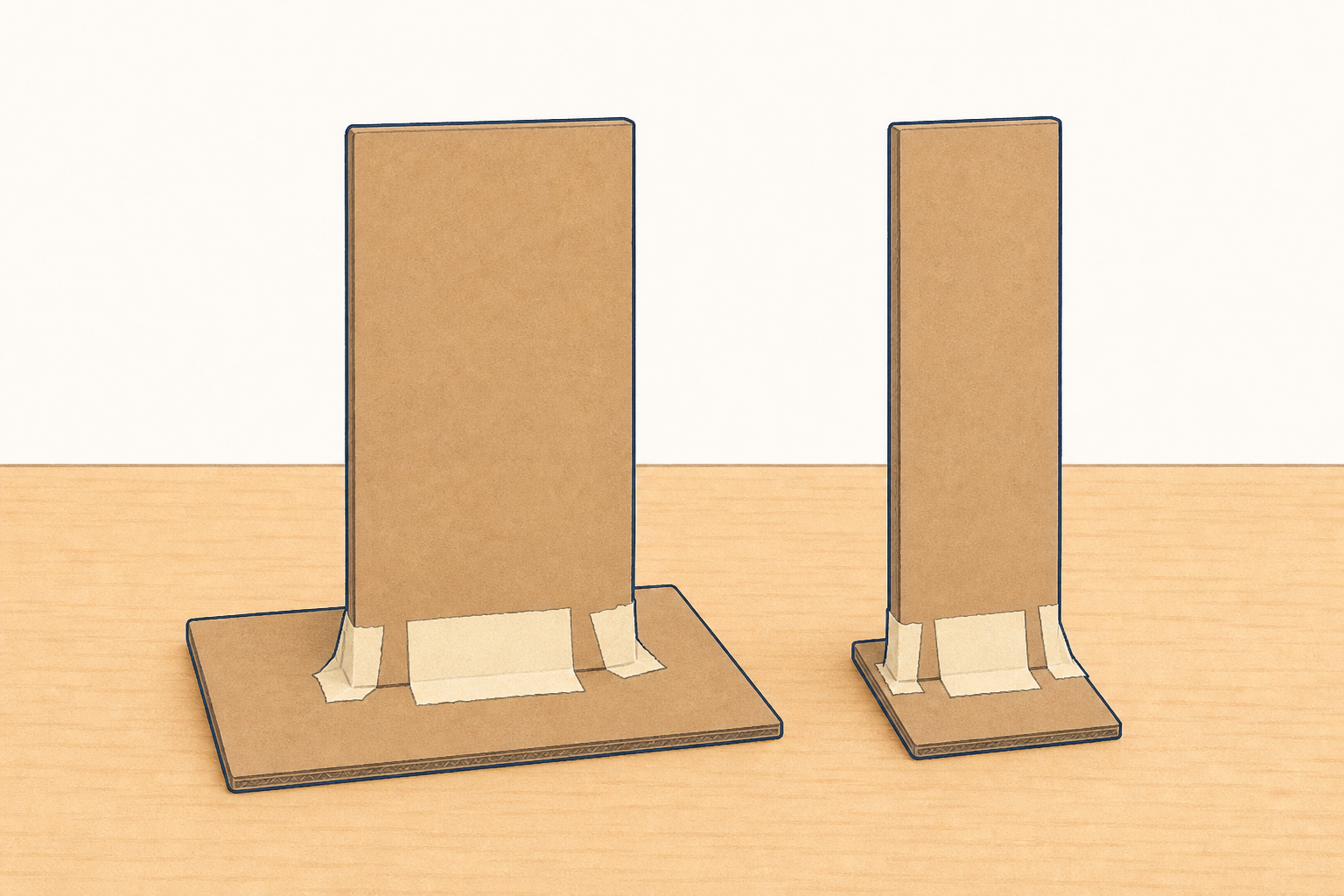 In groups, build two quick base samples only, not a full stand yet.
- The class default is one wide base and one narrow base, the same height. If your group agreed a different fair pair when you planned, use that instead: still change only one thing, still match the height.
- Use the same load and the same gentle fingertip nudge every time.
- Count nudges until each base tips. Stop at 10.
- Record which base tips less easily, then choose the winner for your full design.
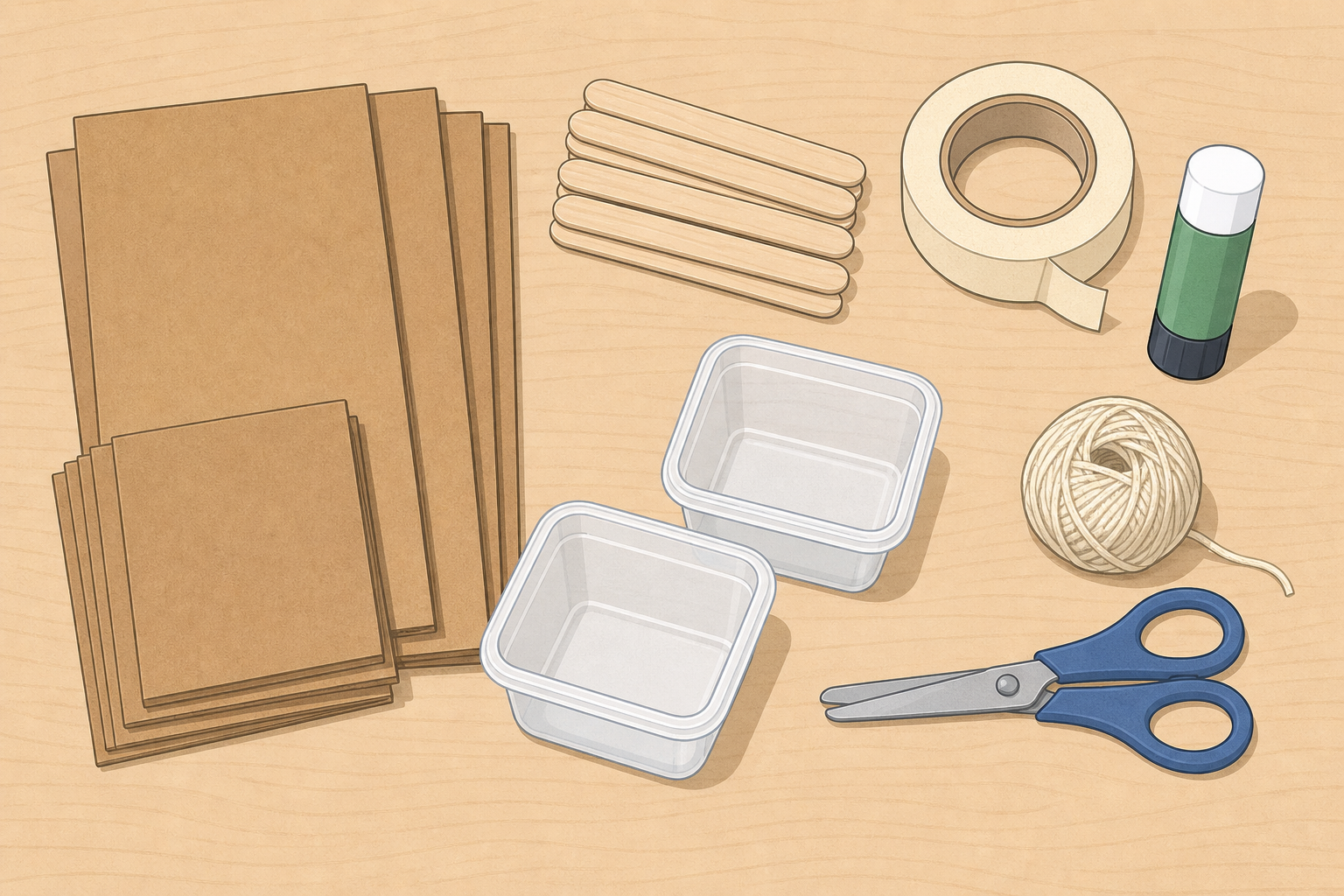 Here are today’s success criteria on the board: holds the tablet or book upright on a desk; stays steady when the desk is lightly bumped; device or book can go in and out easily; built only from the flexible build kit. The kit you may use is: cardboard and card, lolly sticks, masking tape, glue sticks (optional for paper only), string, clean recycled boxes or tubs, and scissors. Using the base that won your option test, sketch one labelled side view of your full stand on your Investigation Journal page. Tick the materials you will use from the kit list, and tick the success criteria already shown on the board.
Unlock the full learning experience
You're previewing this lesson. Get full access to this lesson and hundreds more — each one ready to teach, with interactive activities, printable resources and pupil progress tracking built in.
This lesson is copyright of Coding Ireland 2017 - 2025. Unauthorised use, copying or distribution is not allowed.