Here is a number that looks tiny but has a real job to do: 0.001. Where would it sit on a number line? And why is it so small compared to numbers we usually write?
Take a good look before any hands go up.
Give five seconds of quiet think-time, then take three hands-up answers, not open call-outs. Listen for pupils reaching for "a thousandth" or "one out of a thousand" — revoice whichever answer names the size, not just the digits.
We already know tenths and hundredths — today we go one step smaller, to thousandths, the third place. The flat is 1, the rod is 0.1, the small cube is 0.01, and the tiniest cube is 0.001. Watch each number build on the interactive and read the columns with me.
Relabel the blocks first: flat 1, rod 0.1, small cube 0.01, tiniest cube 0.001.
0.005 — five tiniest cubes, five thousandths. Point to the empty tenths and hundredths: nothing here, five in the last place.
0.034 — three hundredths and four thousandths. Before revealing the next, ask: bigger or smaller than five thousandths? Take predictions.
0.207 — two tenths, empty hundredths, seven thousandths. Key beat: press on the zero. Ask what would change if it disappeared (7 would slip into hundredths).
1.045 — read as "one and forty-five thousandths", not "one point oh four five". One whole, no tenths, four hundredths, five thousandths — pulls the day together.
Now we build some ourselves. Today we work through these numbers together on the mat: 0.008, then 0.056, then 0.302, and finally 1.204. The zeros are the tricky part, so we'll say each column aloud before we add a block.
This round is for talking it through together — pupils take turns at the board and the class agrees or corrects out loud.
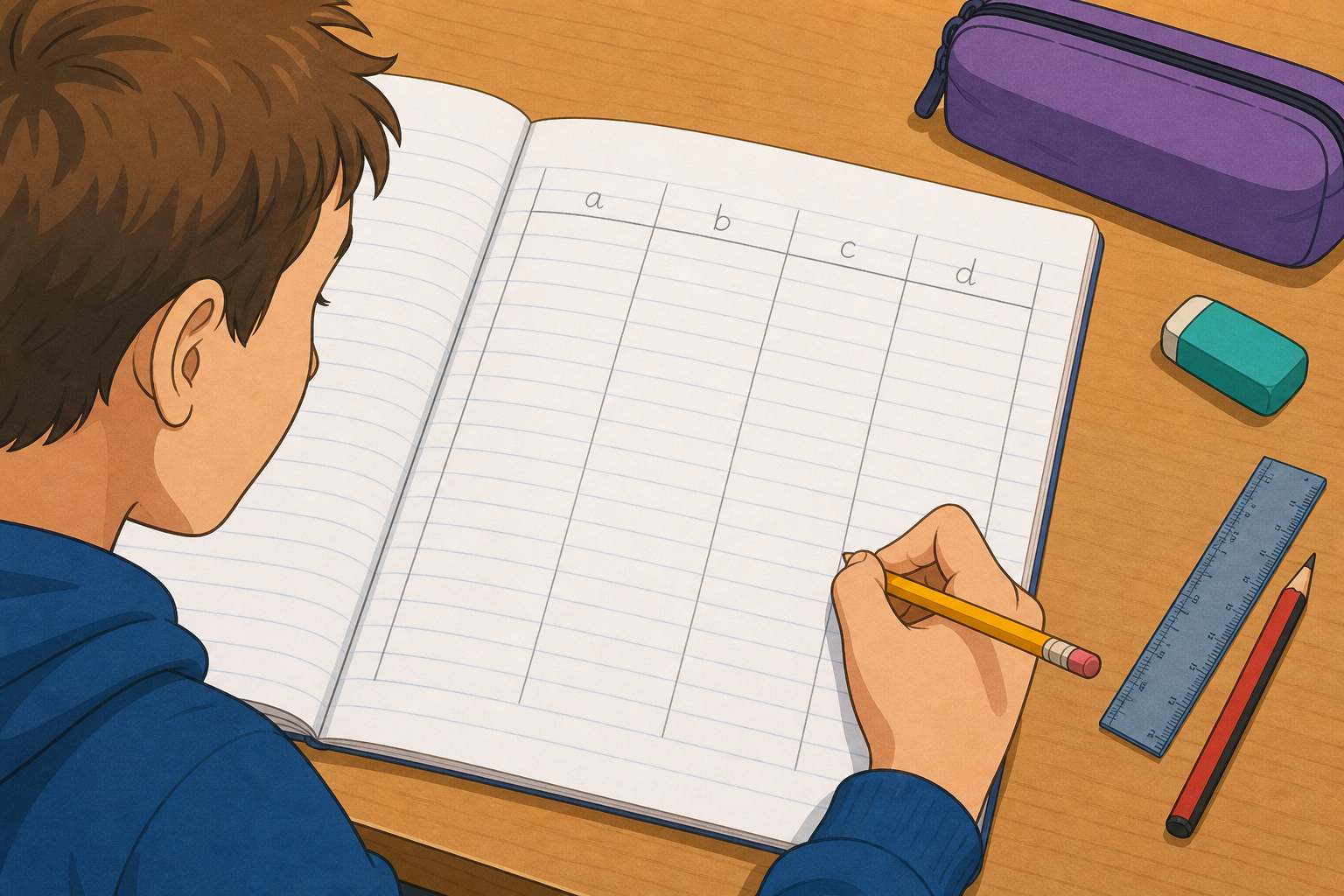
In your maths copy, sketch the four decimal columns and label them U, t, h, th. Then write each of the lesson's decimals into the columns, one under the other. Underline the thousandths digit on each one.
Walk the room glancing at the column labels and the underlined thousandths digit — no marking, this is whole-class copybook practice. Catch anyone lining the digits up from the left instead of by column.
Time to read some numbers carefully. Together we'll build and check these on the mat: 0.003, then 0.027, then 0.105, then 1.008, and last of all 2.305. Each one is a little bigger, and the zeros are the ones that catch people out, so say the columns before you tap.
These are the practice questions — pupils take turns at the board, check each answer, and the class confirms before moving on. Keep the board work brisk rather than over-explaining.
You're previewing this lesson. Get full access to this lesson and hundreds more — each one ready to teach, with interactive activities, printable resources and pupil progress tracking built in.