Beginner
30 mins
Teacher/Student led
+10 XP

What you need:
Chromebook/Laptop/PC

Teacher Class Feed

Load previous activity

    1 - Data Patterns

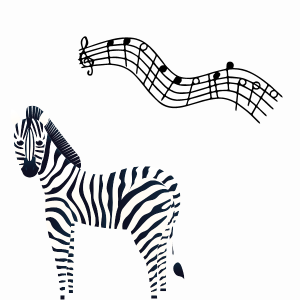
    Life is full of patterns, from the stripes on a zebra to the way your favorite song has a catchy tune. Data is no different! When you look closely, you can often see trends and patterns that help you understand what the data is trying to tell you.


    2 - Technical Terms and Definitions

    These are very handy words to learn more about in relation to patters of data.

    Pattern: A set order or arrangement, a series of events that repeat in a recognizable way.

    Trend: A general direction in which something is developing or changing.

    Anomaly: Something that doesn't fit the pattern or trend.

    Correlation: A relationship between two sets of data.

    3 - Real-World Examples

    We can see usage of data patterns in many places, here are a few well known. Can you think of any more?

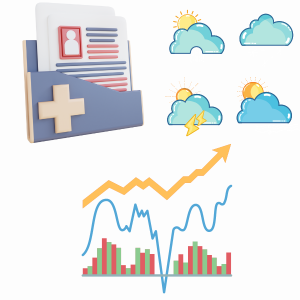
    Weather Patterns: Meteorologists use data to predict weather patterns. They can tell if it's likely to rain or be sunny based on past weather data.

    Stock Market Trends: People who invest in the stock market often look for trends to decide when to buy or sell stocks.

    Health Data: Doctors can spot patterns in a patient's symptoms or lab results to make a diagnosis.

    4 - What is a Pattern? A Quick Recap

    Can you remember what we learnt about patterns? Patterns are sets of things, like numbers or shapes, that repeat in a particular way. Think about the stripes on a zebra or the days of the week. They follow a specific order or arrangement. 

     In data maths, this is known as "pattern recognition," which means spotting the rule or the code that makes the pattern happen.

    Where Can We Find Patterns? 

    In Numbers: A sequence like 2, 4, 6, 8 is a pattern because it keeps adding 2. In maths, this is called an "Arithmetic Sequence." An arithmetic sequence is a pattern where the difference between consecutive numbers stays the same. Remember, consecutive means one after the other.

    In Nature: The petals on a flower often form a pattern. For example, have you ever looked closely at a sunflower? The seeds form a beautiful spiral pattern. Or how about the scales on a fish? They usually form repeating patterns too. Fractals are complex patterns that look similar at any level of magnification. That means if you zoom in or zoom out, they still look pretty much the same!

    In Time: Your daily routine is a pattern of activities. Time itself can have patterns. Think about your day: you wake up, eat, go to school, play, eat again, and sleep. This daily routine is a pattern that repeats every 24 hours. This is known as a "Cyclical Pattern." Cyclical patterns are patterns that repeat after a set period. In this case, the cycle is 24 hours.


    123learn · Online learning platform

    Unlock the full learning experience

    You're previewing this lesson. Get full access to this lesson and hundreds more — each one ready to teach, with interactive activities, printable resources and pupil progress tracking built in.

    Hundreds of curriculum-aligned lessons
    Interactive activities in every lesson
    Printable resources & progress tracking
    Copyright Notice
    This lesson is copyright of Coding Ireland 2017 - 2026. Unauthorised use, copying or distribution is not allowed.
    🍪 Our website uses cookies to make your browsing experience better. By using our website you agree to our use of cookies. Learn more