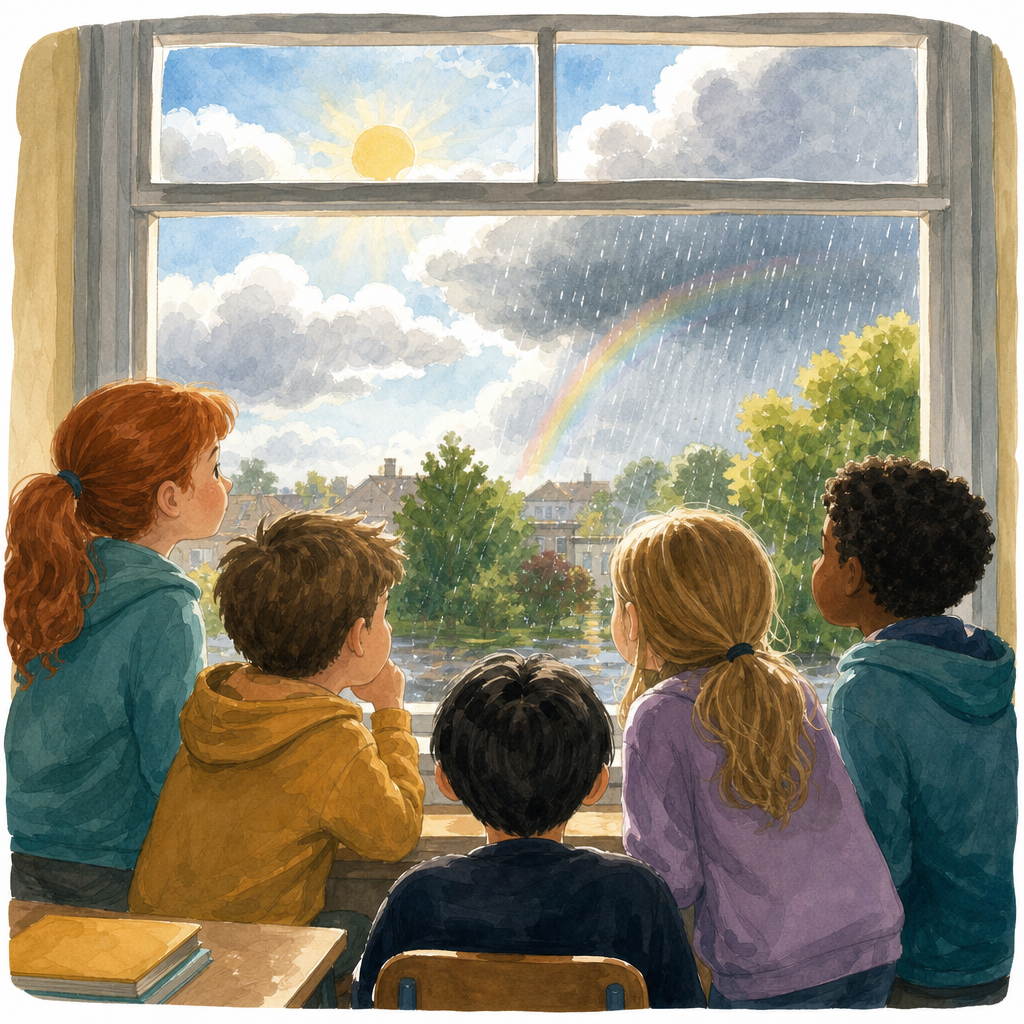
Look out of the window. What is the weather doing right now? Tell a partner in English, using only three words.
Collect three or four three-word answers from the room (for example "grey and damp", "bright and cold"). Enjoy the funny three-word forecasts — then promise: in ten minutes you will say the same idea in Spanish. Do not translate yet. The point is to get everyone looking at the sky and ready for the Spanish words that follow.
We will meet today's weather words in two short sets. For each card, look at the Spanish and the picture, listen to the audio, and repeat together. Then we reveal the English. Listen for the soft ll in La lluvia, like the y in yes.
Whole class on the board. Do not ask pupils to guess Spanish from English. Order every card: show Spanish + picture, play the audio, class repeats twice (once all together, once by table), then flip or reveal the English.
Cluster 1 — sky and everyday weather (first four cards): El sol (el SOL), Soleado (so-leh-AH-doh), La nube (lah NOO-beh), La lluvia (lah YOO-byah). After these four, a quick point-and-say chorus: you point at a picture, class calls the Spanish.
Cluster 2 — colder and stormier weather (next four): La nieve (lah NYEH-veh), La niebla (lah NYEH-blah), La tormenta (lah tor-MEN-tah), El relámpago (el reh-LAHM-pah-goh). Another short point-and-say before you move on.
Full pronunciation crib (keep this open):
Celebrate a crisp La lluvia — that ll is a win. Nod when accents land cleanly on El relámpago.
We will hear a short weather chat in Spanish twice — two friends checking the sky before they head out. You already know today's weather words. Listen for which ones you hear, then answer the questions on the board together.
Frame it as two friends in Seville deciding whether the park is a good idea. Play the full clip on the class speakers twice before anyone answers. On the first play, ask pupils just to raise a hand when they catch a weather word they recognise. On the second play, run the on-screen questions as a whole-class talk. If the class is stuck, replay one short section rather than translating the whole dialogue. The interactive marks answers; use the crib below if audio fails or you need to coach.
Teacher crib — sample weather-chat shape (built-in scenario may vary slightly; follow the on-screen questions if they differ):
Approximate transcript idea:
A: ¡Hola! ¿Viste el sol esta mañana?
B: Un poco. Ahora hay una nube grande.
A: ¿Y la lluvia?
B: Sí, viene la lluvia. ¡Cuidado si hay tormenta o relámpago!
Likely listening targets (words pupils should catch): el sol, nube, lluvia, tormenta, relámpago.
Answer support: If questions ask which weather is mentioned, accept any of the theme words clearly heard on the clip. If a question is true/false about rain or sun, replay the line and let the class vote before you confirm. Never leave a non-specialist guessing — if the clip and the crib diverge, trust the interactive feedback on screen and note the line for next time.
Open your copy. Write today's weather with one Spanish weather word from the board, then write the weather you would most like tomorrow. You may look at the phrases on the board while you write.
Pause the board interactives but keep two or three model cards visible (for example El sol, La lluvia, La tormenta) so spelling and accents stay on screen. Say aloud: "You may look at the words on the board while you write." Everyone writes two short lines: today's weather and the weather they would like tomorrow. Allow copying today's line straight from a visible card before they choose their own "wish" word. Walk the room and check they are writing the Spanish forms, not bare English. Do not collect these. Five minutes gives slower writers a fair finish.
You are the weather presenter on the class channel — think of a mini boletín del tiempo for Madrid or your own town. We spin the wheel together. When it lands, say the Spanish weather word clearly so the whole class can hear. If we land on one we already said, try it again with a big presenter voice.
Wheel face: the wheel shows the English prompt; the pupil produces the Spanish word.
Warm start (do this first): two whole-class chorus spins — land, play the audio if unsure, everyone says the Spanish together. Then pair-whisper: partners say it quietly to each other; one pair shares aloud. Only then move to volunteer or gentle cold-call. Allow "phone a table" once if a pupil freezes. Keep audio replay on for the first few solo rounds.
After four or five spins, switch the ask to match the same wheel face: the pupil still sees English and says Spanish, then the class calls back the English to lock meaning. Big presenter voice — you are on the class forecast! Keep the pace brisk so many pupils get a turn.
You're previewing this lesson. Get full access to this lesson and hundreds more — each one ready to teach, with interactive activities, printable resources and pupil progress tracking built in.