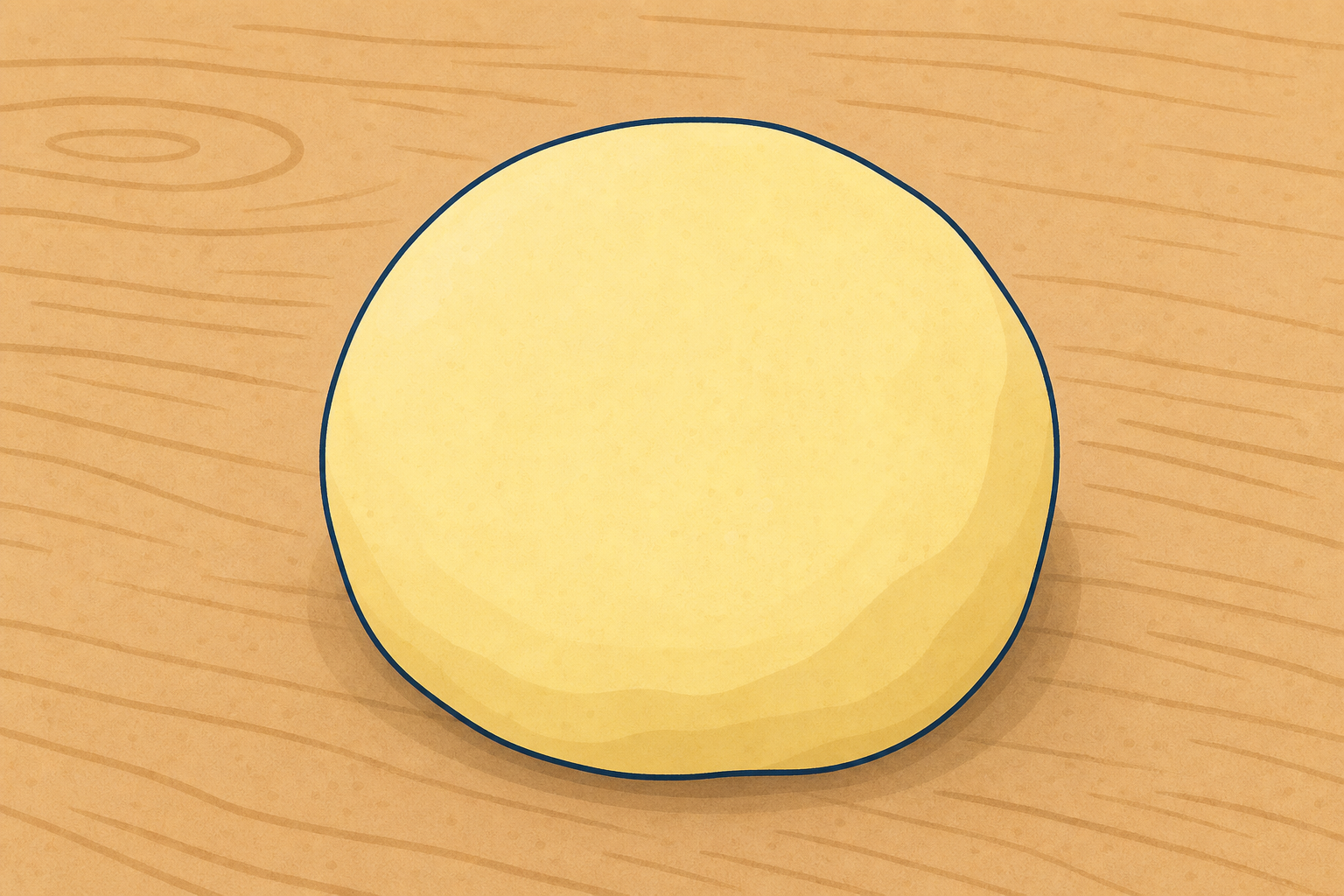
Look at this soft ball of dough. Can we change how it looks without cutting it or adding anything new? Hands up if you have an idea.
Hold up one small ball of play-dough. Do not change it yet. Take two or three ideas from the class (squash it, roll it, poke it). Keep the hook light: no tray set-up and no full vocabulary list here. Have the play-dough ready to show; everything else stays on the trays until the explore step.
Key question: Can we change a material just with our hands?
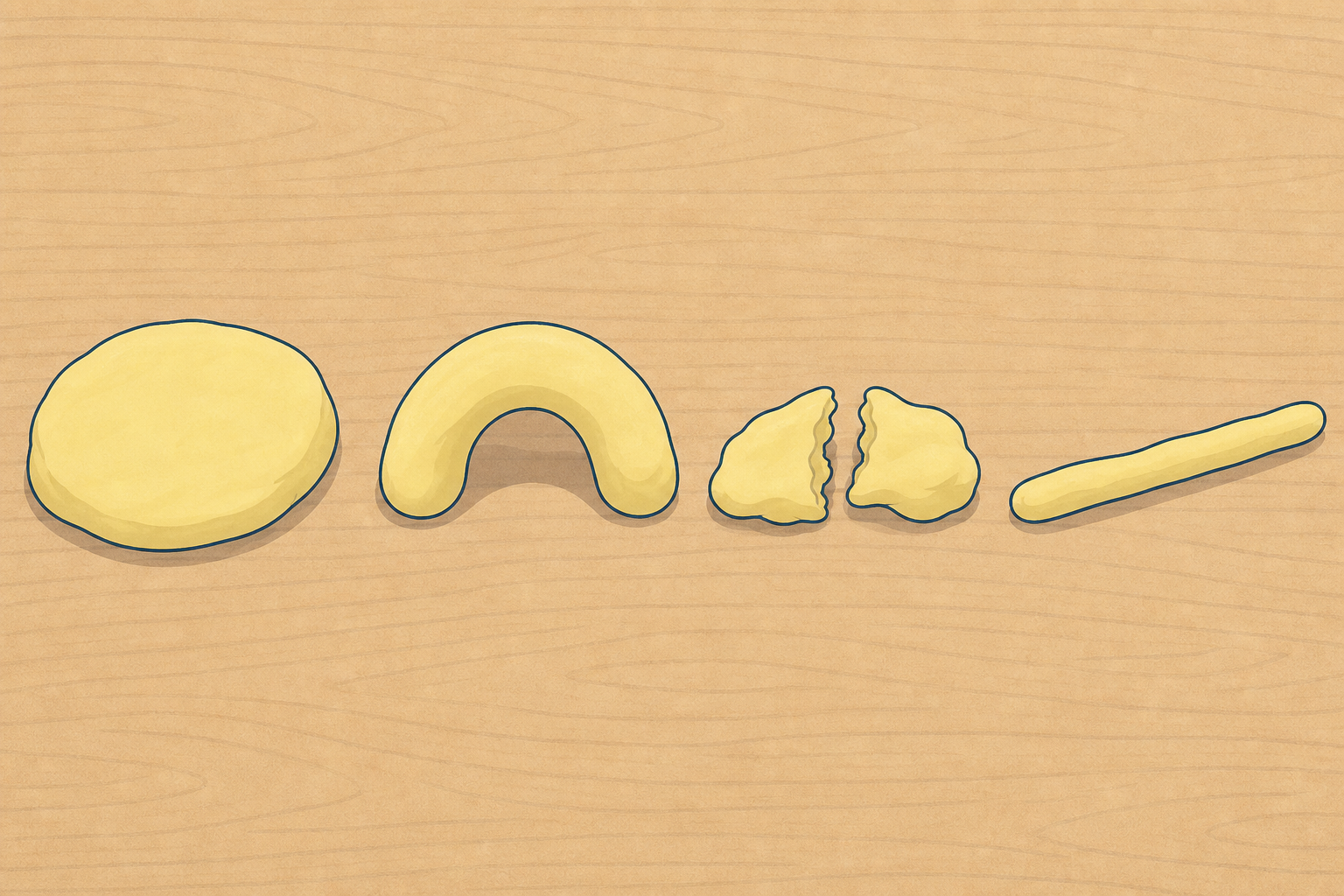
Watch this. I squash the dough. Press, press, flat! That is a change.
What looks different now? Is it still the same kind of dough?
Soon you will try more changes with your hands: bend, tear and stretch. Join me for a quick mime of each one.
One core idea today: we can change materials with our hands. The four action words are station labels said with a mime, not a glossary dump on the board.
Teach order (about 4 minutes):
Keep the board short; the table below is for you only.
| Concept | Why it matters | Example |
|---|---|---|
| Change — when we make a material look or feel different by what we do with our hands | Makers change materials on purpose so everyday things work better for us | A potter presses clay into a new shape for a bowl |
| Squash, bend, tear, stretch — four ways we use our hands to change a material (mime and say; not a full glossary) | Naming the action helps children talk about what they did at the tray | Squash play-dough; bend a pipe cleaner; tear paper; stretch a band |
| Same and different — talk stems after a change, not a second heavy concept | Noticing both helps children see the material is still the same kind of stuff | Torn paper is still paper, but now it is two pieces |
Misconception to head off: children may think a change means the material has become a different material. Gently revoice: the play-dough is still play-dough; only its shape has changed. Paper that is torn is still paper.
Who helps us (seed only; full close in step 5): a potter squashes and bends clay; a card-maker folds and tears paper for cards and books. Keep this to one sentence here.
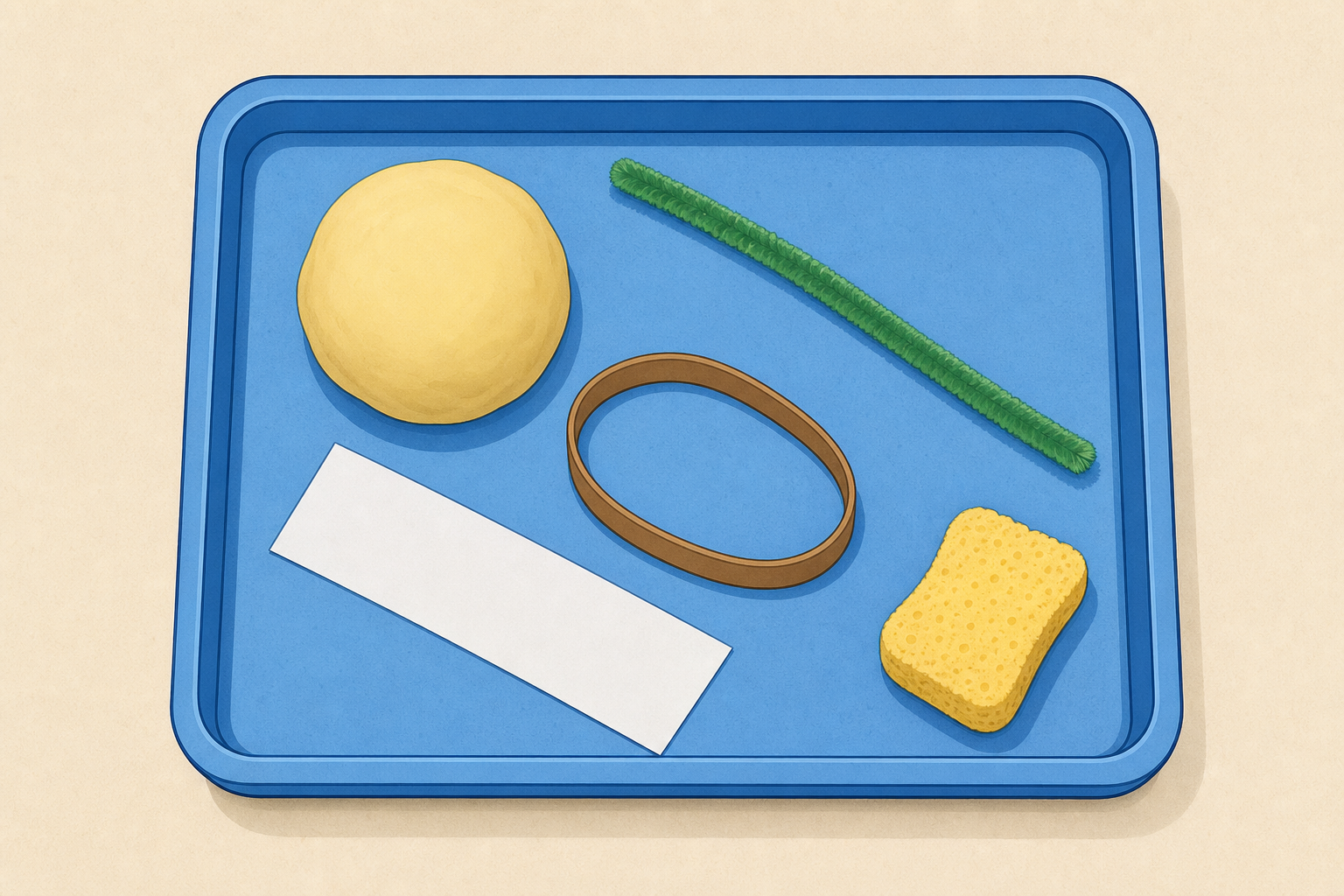
Go to your tray. Change each material with your hands. I will help you with the words as you try.
Intended shape for this 12-minute Infants slot: one tray (or mat) per group or per child with all four materials on it. Children stay at their place and try each change there. Do not plan four room rotations unless you have extra time and adult help; full station rotations eat the slot once transitions and safety are included.
Portion play-dough into small balls. Cut soft craft wire or pipe cleaners into short lengths (about 15 cm) with ends tucked. Put scrap paper strips and one wide elastic band per child ready on each tray.
Before children start, model one full cycle with play-dough so they hear the language:
Then send children to their trays. Circulate and prompt naming and same/different after hands are busy — do not front-load that talk on the board.
Safety: stretch and bend away from faces and eyes; no flicking bands; soft wire only; no tasting play-dough.
Differentiation: less confident children name the action with you (you say the word, they do the move). Confident children try to put a changed material back (roll the dough, unbend the wire) and say what is easy or hard to undo. Support vocabulary with mimes, not separate picture cards to prepare.
Choose one thing you changed. Hold it up. Tell your partner the change you made: squash, bend, tear or stretch.
This is an oral observation beat (no journal page).
Before talk starts, run this sequence so the move is safe and clear:
Keep talk to one stem at a time with the object still in hand:
Invite three or four pairs to share with the class. Revoice answers into clear same/different sentences. Do not require each child to produce all three ideas in one go.
Look-fors:
If answers stay vague ("it changed"), point to the object and ask: Is it still paper? How many pieces do you have now?
Surprise worth drawing out: the elastic band often goes back when they let go. That is useful talk: some changes stay, and some spring back.
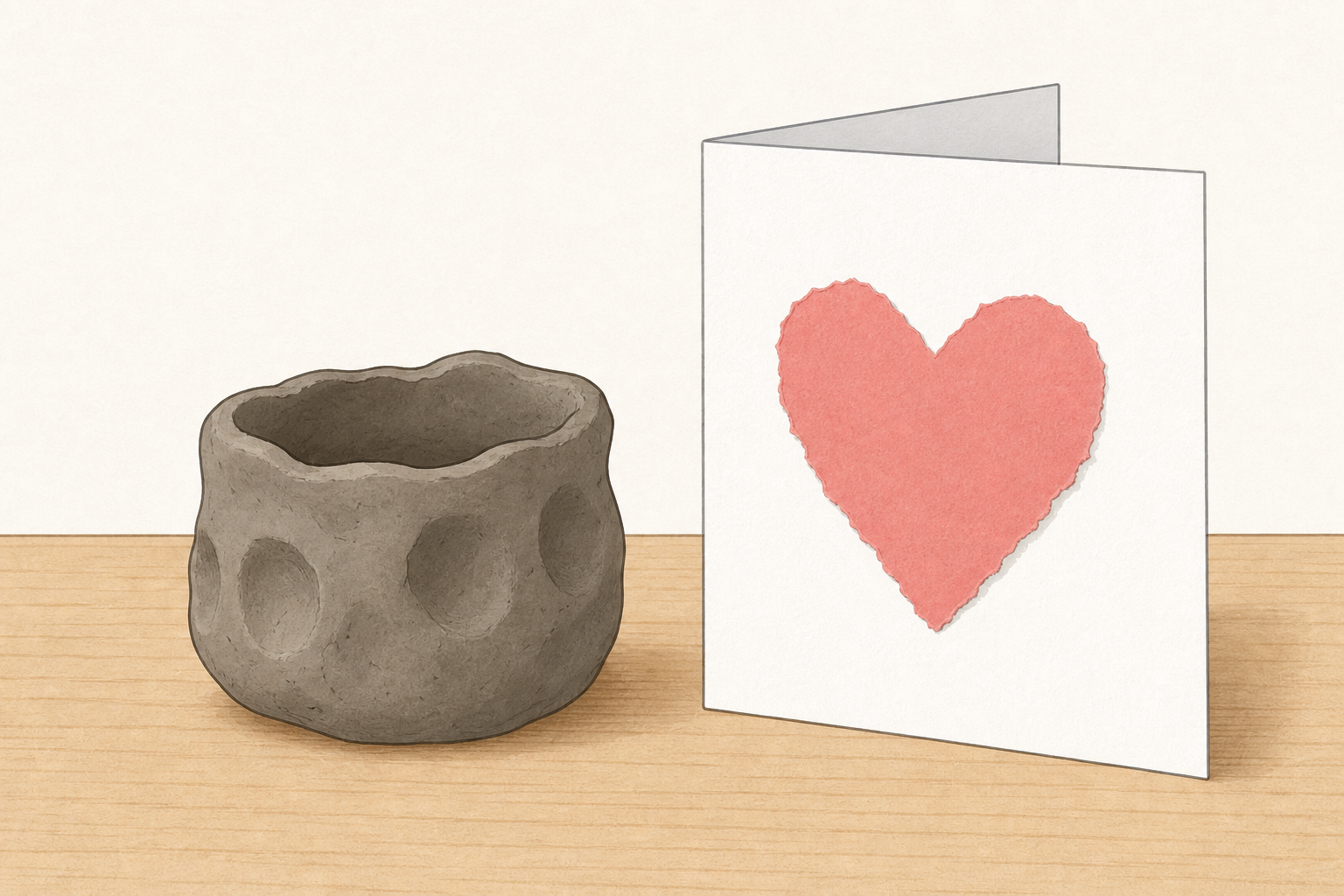
Look at this little pot. Someone squashed and bent clay to make it. Look at this card. Someone folded and tore paper to make it. We changed materials with our hands too.
Which change did the pot need: squash, bend, tear or stretch?
Display-only, oral make-sense talk. Keep this close short and concrete. Hold up real objects (or simple photos) already gathered: a small clay pot or mug, and a folded birthday card or paper booklet. Show the object first, then one simple line, then the choice question on the board.
Order:
Prompts: Which change did you like best? Which change was hard to undo? How does changing a material help someone?
Keep it hopeful and concrete: people change materials carefully so everyday things work better for us. Guesses and tries today were the start of that kind of thinking.
Do not type or save reflections. Children talk only. Do not stack job labels, new actions and open questions on the board at once; the short board text carries the objects and one choice question only.
You're previewing this lesson. Get full access to this lesson and hundreds more — each one ready to teach, with interactive activities, printable resources and pupil progress tracking built in.