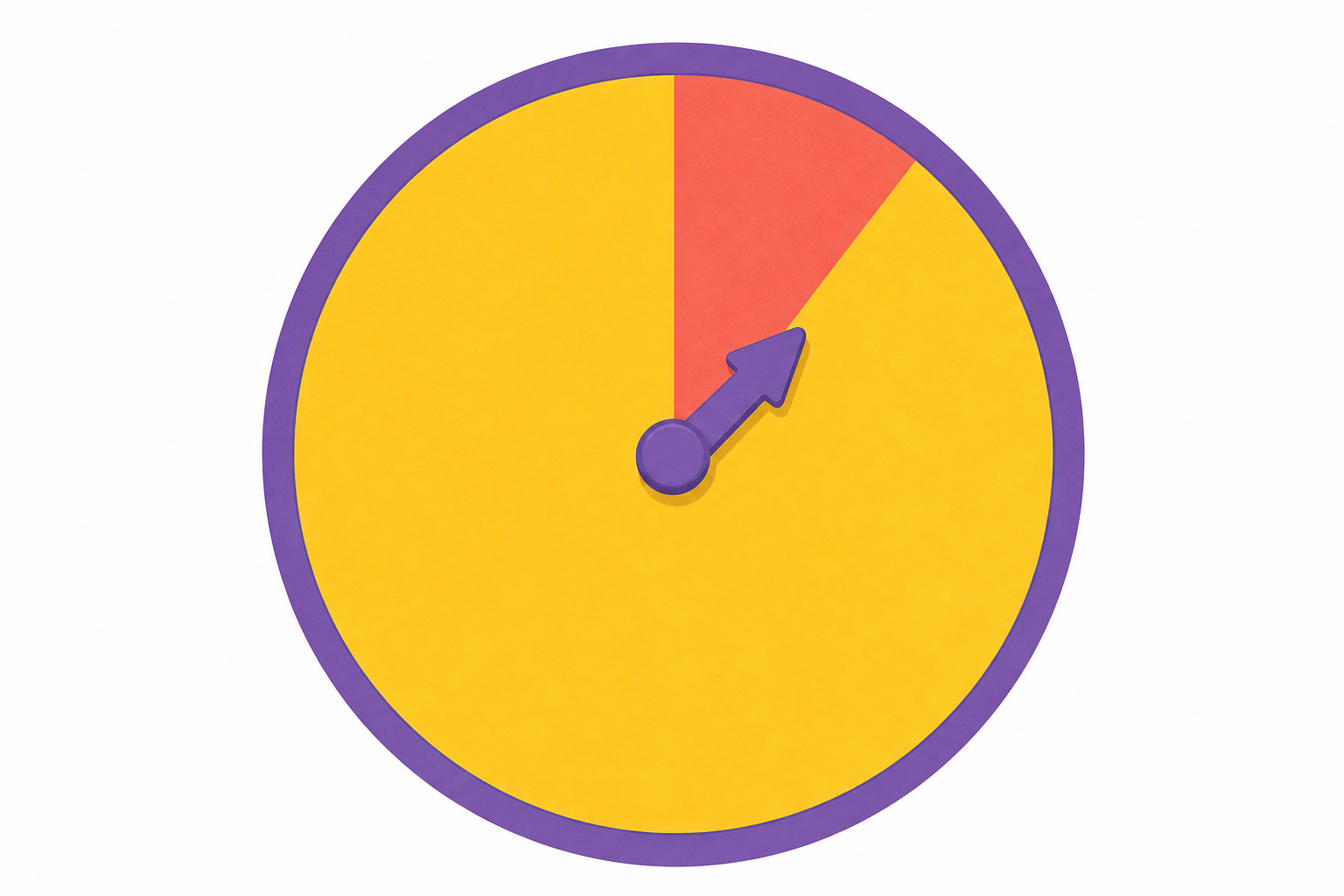
Look at the spinner in the picture. It is mostly red, with only a thin blue slice.
If you spin it, do you think it will land on red or on blue? How can you tell before you even spin?
Take three hands-up answers, not open call-outs. Give five seconds of quiet think-time first.
Listen for pupils naming the size of the section as the reason, not just "I think red". Revoice a good answer: so the big red part means red is more likely to happen.
Watch two spinners on the board. Notice how much of each spinner each colour covers, and think about which colour it will land on most.
On the last spinner, get ready to say whether red or blue is more likely, or whether they are equally likely.
Point at the big red section on the first spinner and ask which colour it will land on most. Hold out for the word likely for red and unlikely for blue.
On the second spinner, point out that the two colours cover the same amount — neither is more likely. Revoice: same size means the same chance.
These are static pictures, so there is no spinning — the class reads the likelihood from the section sizes.
Today we set up spinners together on the board. In turn we will set the section sizes so that:
Before each spinner is set, say what the sections should look like, then we check.
Talk this one through together — pupils take turns at the board and the class agrees or corrects out loud.
Rotate three or four pupils. Before each set-up, ask the class to predict what the sections should look like ("how much red for red to be likely?"). Watch for pupils who make red only slightly bigger and still call it likely — draw out that a small difference means it is only a little more likely.
For the equal spinner, hold out for the halves matching exactly. Revoice: same-sized sections, same chance.
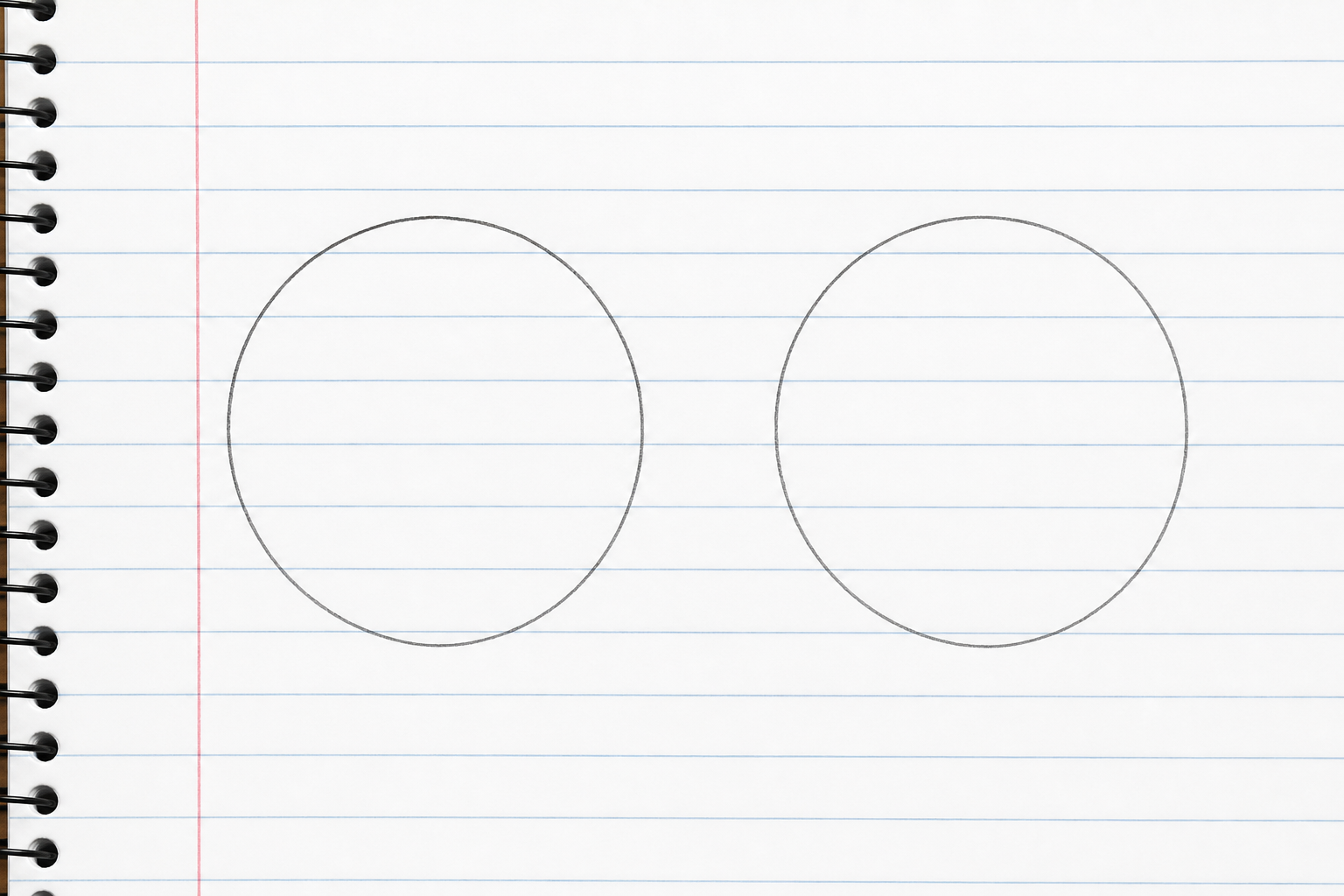
In your maths copy, draw two spinners.
On the first spinner, make red likely and label it. On the second spinner, make red unlikely and label it.
Walk the room glancing at how much of each circle pupils shade for red — this is whole-class copybook practice, not marking. Check the "likely" spinner has a large red part and the "unlikely" one a small red part.
Pupils who prefer paper can shade and label the two blank circles on the printed "Likely or Unlikely?" worksheet instead of the copy.
Here is one more event to think about: the sun will rise tomorrow morning. This is a very likely event, so it sits at the most-likely end.
Now we work through these together, from easiest to trickiest:
For each one, say your answer and how you know.
This is the practice round — pupils take turns at the board or hold up the cards, the class confirms each judgement, and we move on. Keep it brisk rather than over-explaining.
The 'sun rises tomorrow' event is on the board first as a very likely event, so pupils meet it before the ranking. For the ranking, listen for pupils placing the small-chance event (one red counter) at the least-likely end and the very likely event (the sun rises) at the most-likely end. For the spinner comparison, hold out for pupils reading likelihood from the section size, not from a guess.
You're previewing this lesson. Get full access to this lesson and hundreds more — each one ready to teach, with interactive activities, printable resources and pupil progress tracking built in.