Mathematics
Intermediate
50 mins
Teacher/Student led
+65 XP
What you need:
IWB/Projector/Large Screen
Measuring jug

Capacity: Estimate and Measure in Litres and Millilitres

Estimate and measure capacity using a jug, learning to read millilitres and litres accurately. Practise choosing the right unit for different containers and understand the relationship between ml and litres.
Teacher Class Feed

Load previous activity

    1 - Getting Started ~4 mins

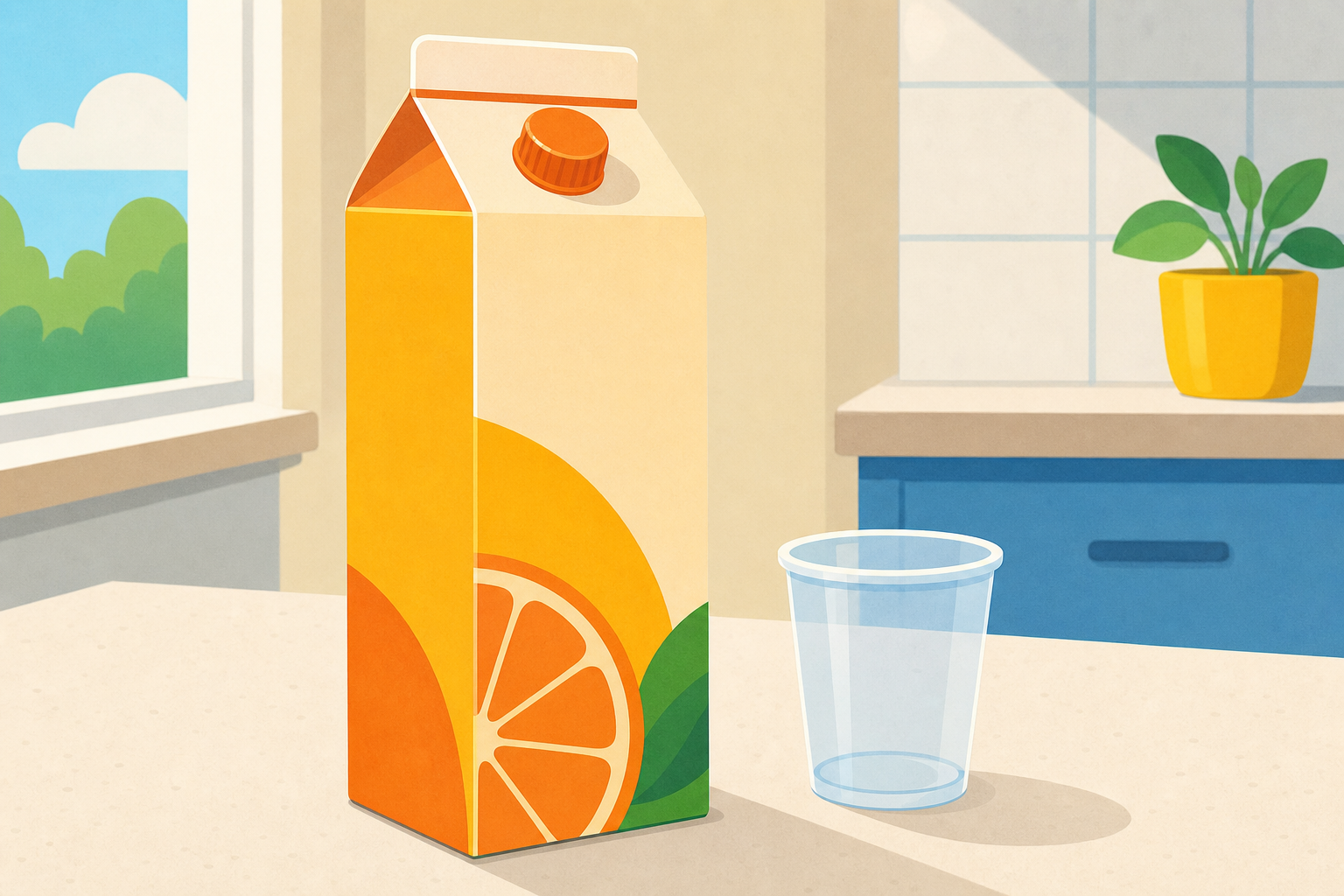
    Illustration for Getting StartedLook at this picture: a full one-litre carton of juice sitting beside a small cup. How many of those little cups do you think it would take to empty the whole carton? And which one is measured in litres, do you think?

    2 - Watch and Notice ~9 mins

    Look at each jug of juice, mark by mark. Read the level each time, keeping the jug flat and your eye level with the line. What big amount are the marks heading towards?

    3 - Try It Together ~10 mins

    Tip

    Find the nearest big mark below the line, then count the little 50 ml lines upwards.

    We will drag our one jug on the board to four amounts in turn: first 100 ml, then 300 ml, then 600 ml, then 950 ml. Some of these do not land on a big 250 mark. Read each one aloud before we check.

    Read the jug together

    4 - Estimate First in Your Copy ~3 mins

    COPYBOOK MOMENT

    On your Capacity Record Sheet (or in your maths copy), list three containers you can see or hold. Write your estimate for each one first, choosing millilitres or litres — for example "mug: about 300 ml". Leave a space beside each so you can write the real measured amount later.

    5 - Class Challenge ~8 mins

    Key point

    Estimate first, then measure. Write both down on your Capacity Record Sheet with the unit.

    At your station you have a real jug and some water. Estimate then measure three containers, going from smallest to largest: an egg cup, a mug, and a small bottle. On your Capacity Record Sheet, write down your estimate first, then the real amount and its unit.

    Before the stretch, watch this worked example of pairing containers to make 1 litre. Suppose a mug measures 300 ml and a small bottle measures 700 ml. Write both amounts, add them: 300 + 700 = 1,000 ml. That is exactly 1 litre, so this pair works. If the total is a little under or over 1,000 ml, say about 1 litre.

    Stretch task: using your own measured amounts, find two containers that together hold about 1 litre. Write both amounts, add them, and check the total.

    Hands-on Task

    Pupil practice
    Module 4 · Measures: Length, Weight and Capacity Measures
    Lesson 52 · Capacity: Estimate and Measure in Litres and Millilitres
    Download Activity Book page (PDF)
    123learn · Online learning platform

    Unlock the full learning experience

    You're previewing this lesson. Get full access to this lesson and hundreds more — each one ready to teach, with interactive activities, printable resources and pupil progress tracking built in.

    Hundreds of curriculum-aligned lessons
    Interactive activities in every lesson
    Printable resources & progress tracking
    Copyright Notice
    This lesson is copyright of Coding Ireland 2017 - 2025. Unauthorised use, copying or distribution is not allowed.
    🍪 Our website uses cookies to make your browsing experience better. By using our website you agree to our use of cookies. Learn more
