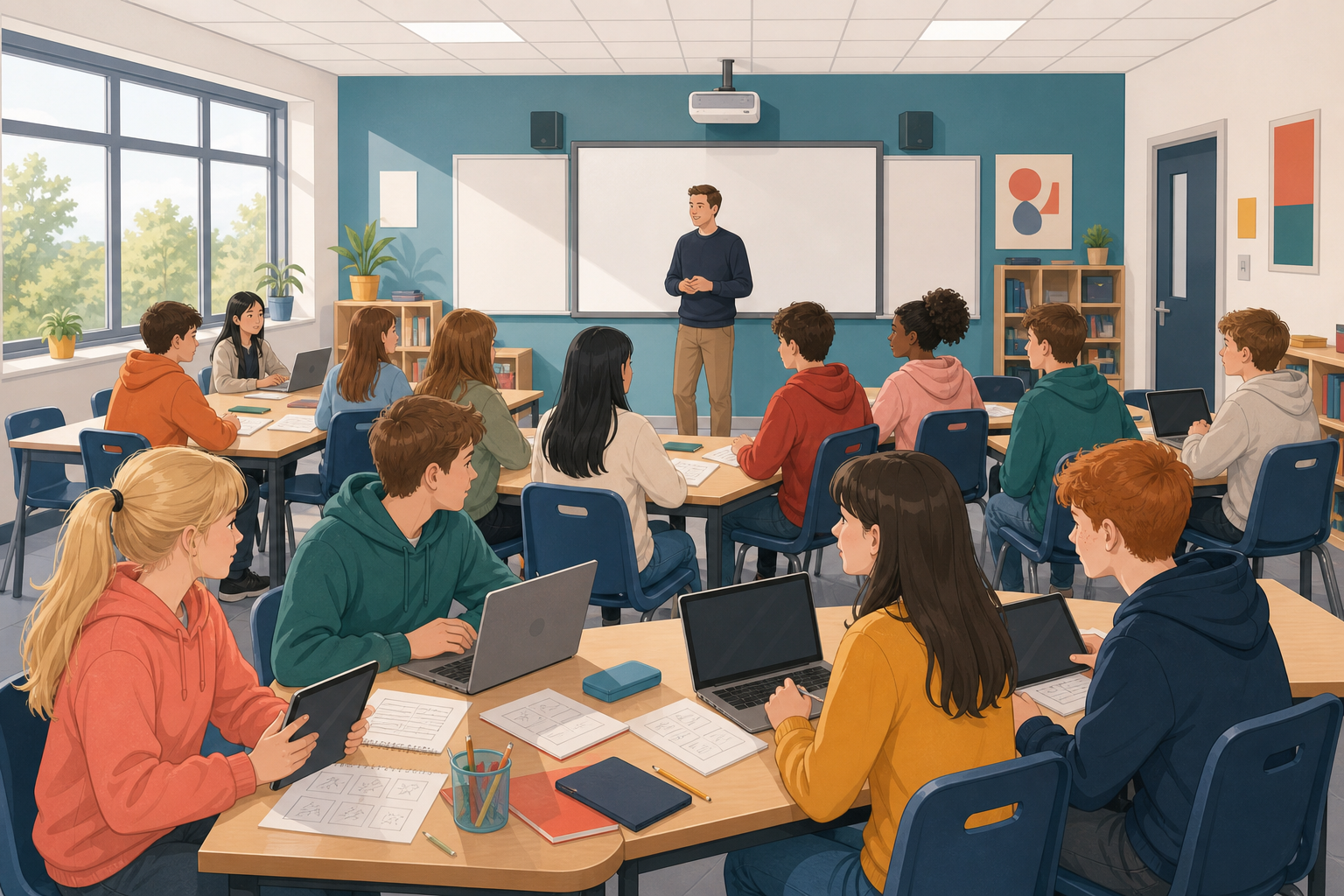
 Today you build your piece. Open your plan, which has your topic, audience and format, and open your research log too. If anything is missing, spend two minutes writing down your topic, audience, format and first sources again, and then start. By the end of this lesson you should have a complete draft that a partner could open and follow, even if it still needs checking and tidying up.
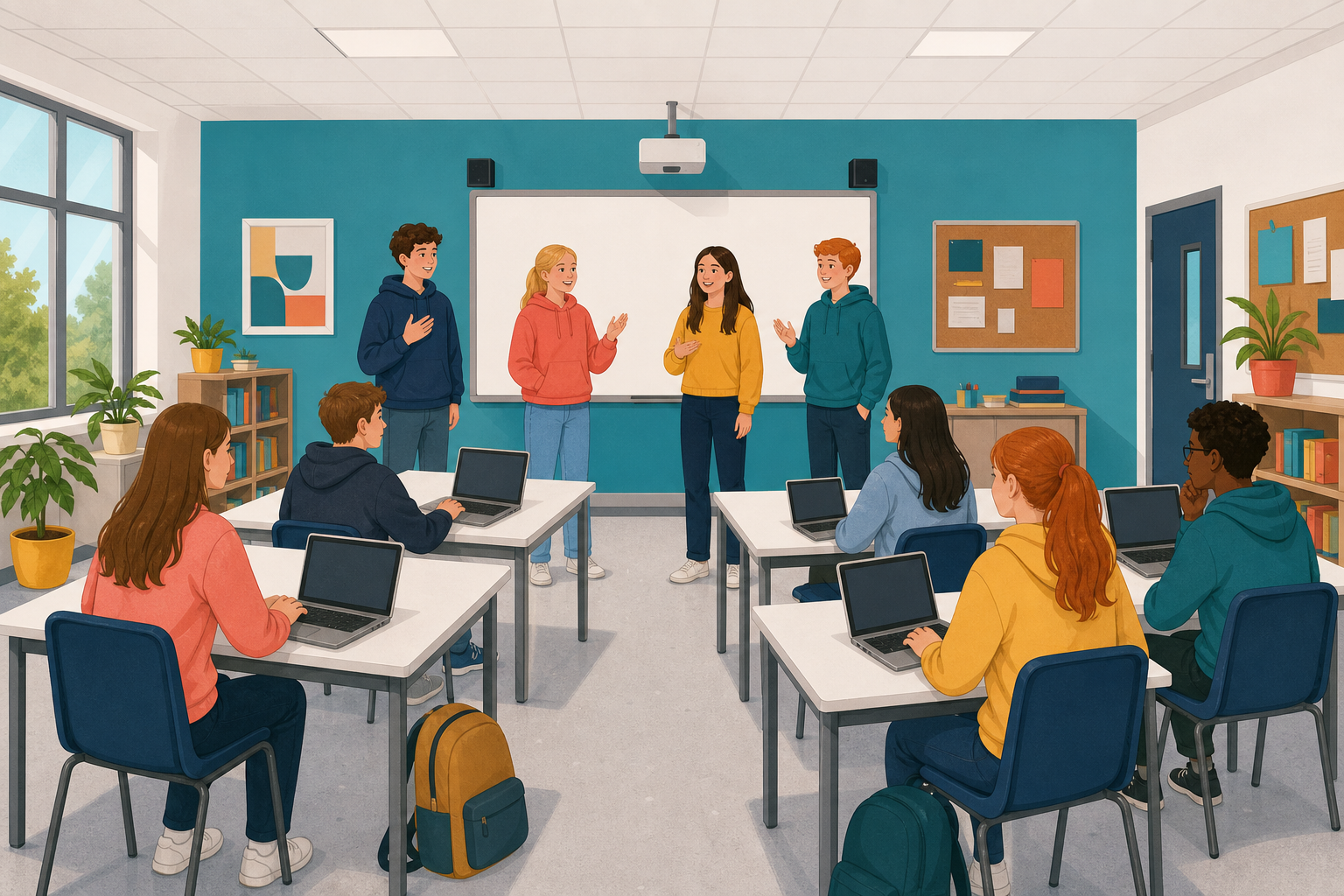 Keep these four habits while you build. Your teacher may ask you to explain one of them aloud.
- Credit as you go. When you add a source, note in your log who made it, the link, the date and the licence or permission.
- Stay inside the class charter. These are your class's agreed rules about respect, consent, privacy and permission, and they cover your piece.
- Consent and personal information. If a real person is in your piece, check they clearly said yes (their consent) and keep private details out.
- AI help, noted honestly. If an AI chat tool helped, write one line in your log saying how.
What you need by the end
- A complete draft for your format, or a note on your plan saying what is missing.
- Every source is credited in the piece and in your log.
- Any AI help is noted in one honest line in your log.
What a complete draft looks like
- Text or short page: Write the whole thing from start to finish so a reader can follow it without you.
- Image sequence (pictures in order): Put every picture in place with its caption. One picture can still be a placeholder, which is a label saying what goes there.
- Short video or audio: Lay out every part in order from start to finish, with the opening and closing finished. Missing clips can be placeholders.
Build steps
- Open your plan, research log and the tool for your format.
- Build your piece, and credit each borrowed picture, clip, sound, quote or fact in the piece and your log as soon as you add it.
- Halfway through, check your beginning and ending are in place before you work on the middle.
- Near the end, check your piece against the class charter, finish your credits and AI note, and save it the class way, where your class keeps its work. Nothing gets published today.
If you cannot find a file you are free to reuse, use a placeholder and note the gap in your log.
Come back together as a class. Building with these habits means you are making something you would be happy for anyone to see.
Think about what slowed you down most today. It might have been finding a fair source, wording a credit or deciding what personal detail to leave out.
You should now have a complete draft or a clear gap note on your plan, and a log that matches your piece. Next time you will check it for safety, consent, crediting and accuracy.
Think about
- Which of the four habits was hardest to keep while you were building, and why?
- If a partner opened your draft now without you there, what would they understand, and what would still confuse them?
Unlock the full learning experience
You're previewing this lesson. Get full access to this lesson and hundreds more — each one ready to teach, with interactive activities, printable resources and pupil progress tracking built in.
This lesson is copyright of Coding Ireland 2017 - 2026. Unauthorised use, copying or distribution is not allowed.