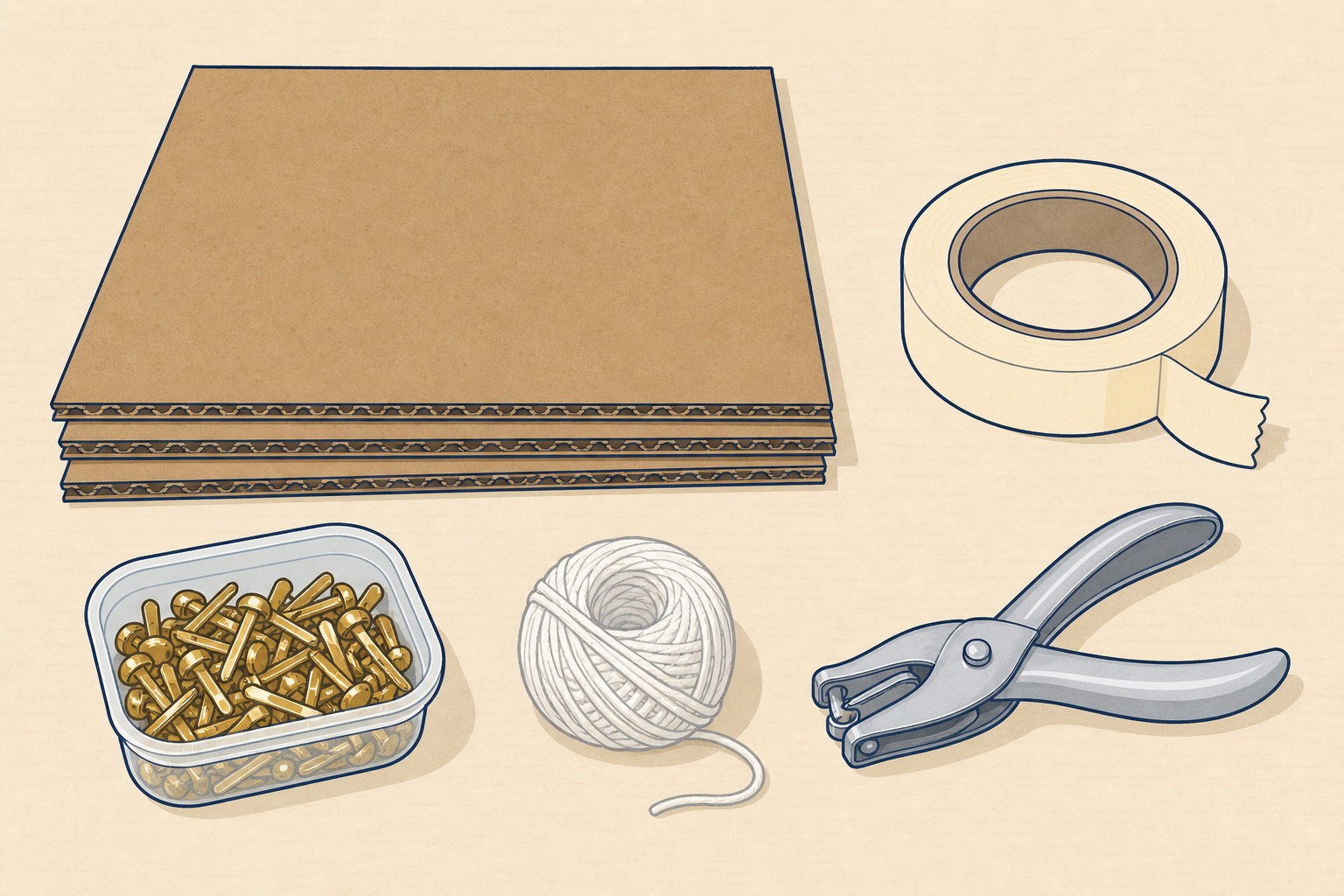
 Look at the sketch and success criteria your group agreed earlier in this project. What job must this build do, and how will you know it is working?
Today you build it full size for a real classroom job. You will choose a clever shape and a firm way to fix the parts, and you will test with a little load as you go, not only at the end.
Real engineers do this too: they let a clever shape and a clever join carry the weight so the whole thing stays light and strong.
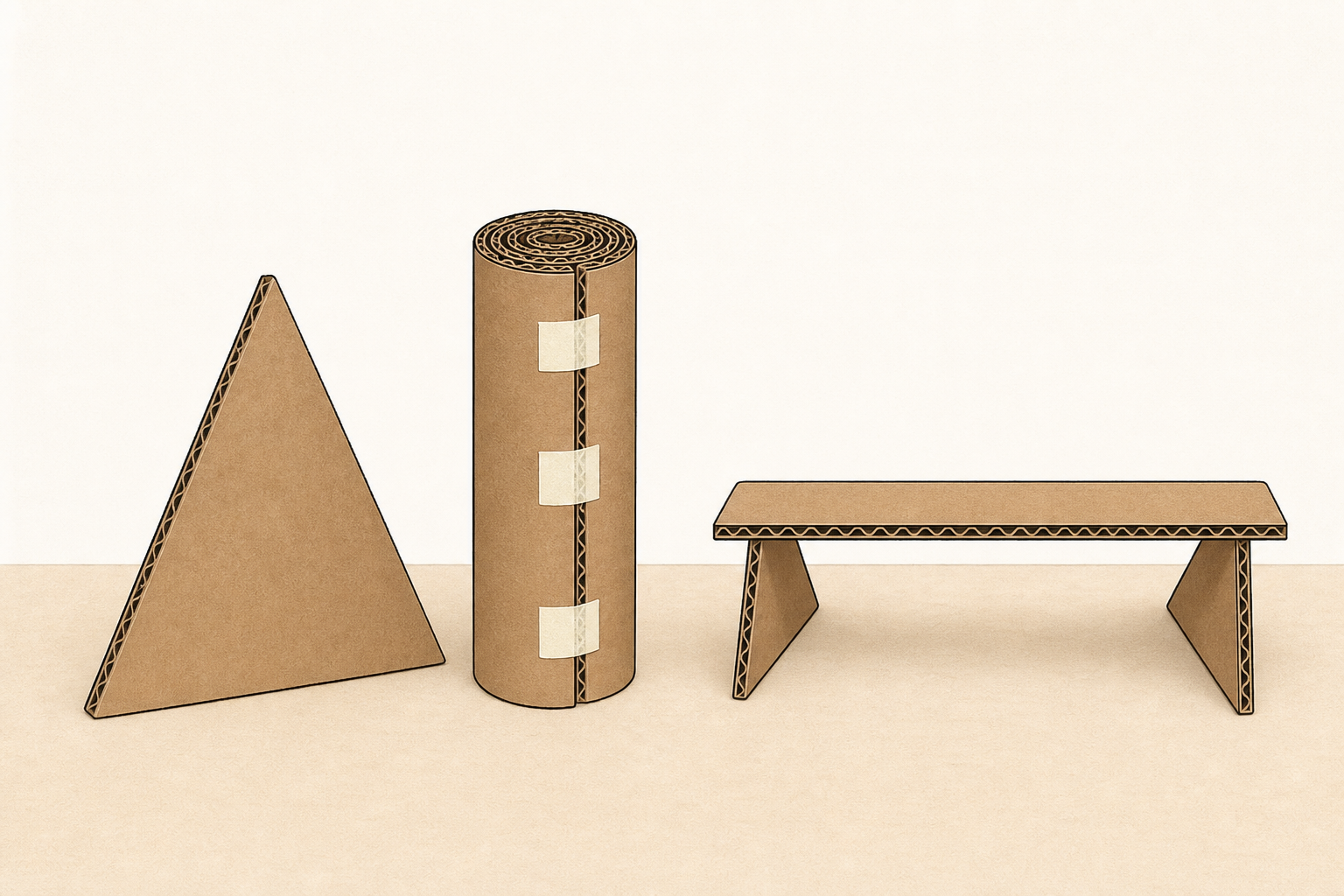
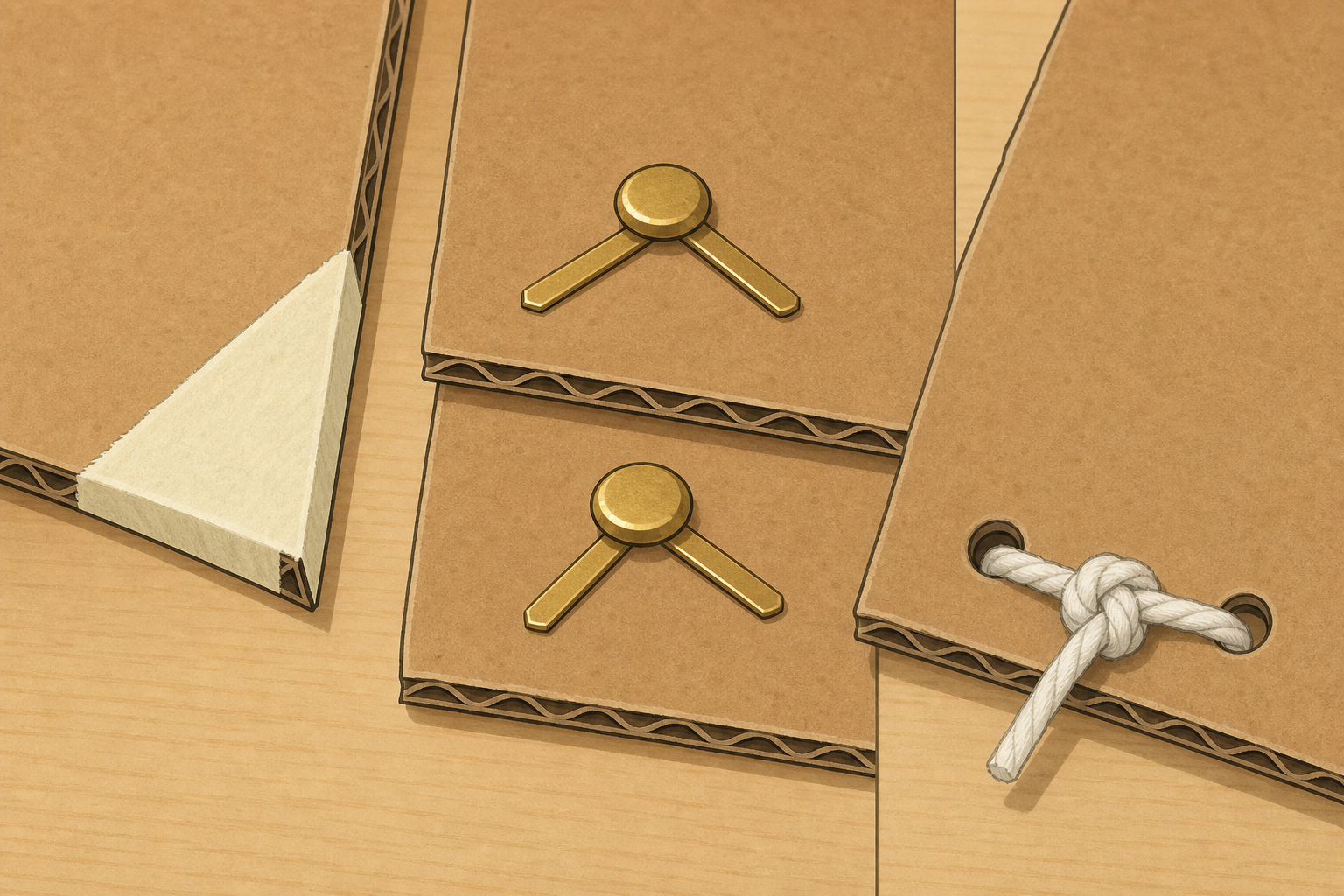 Before you build, choose two things.
A load-carrying shape is a shape that holds weight without sagging or tipping. Pick from this list: triangle brace, rolled tube, or braced span.
A strong join is a fix that stays firm under load. Pick from this list: taped triangle corner patch, split pins locked so they do not spin, or string ties through punched holes.
If something weakens later, you strengthen it by changing the shape or the join, not by piling on more card or tape.
Watch the quick demo: where does the flat shelf fail first, and which choice from the lists would fix it?
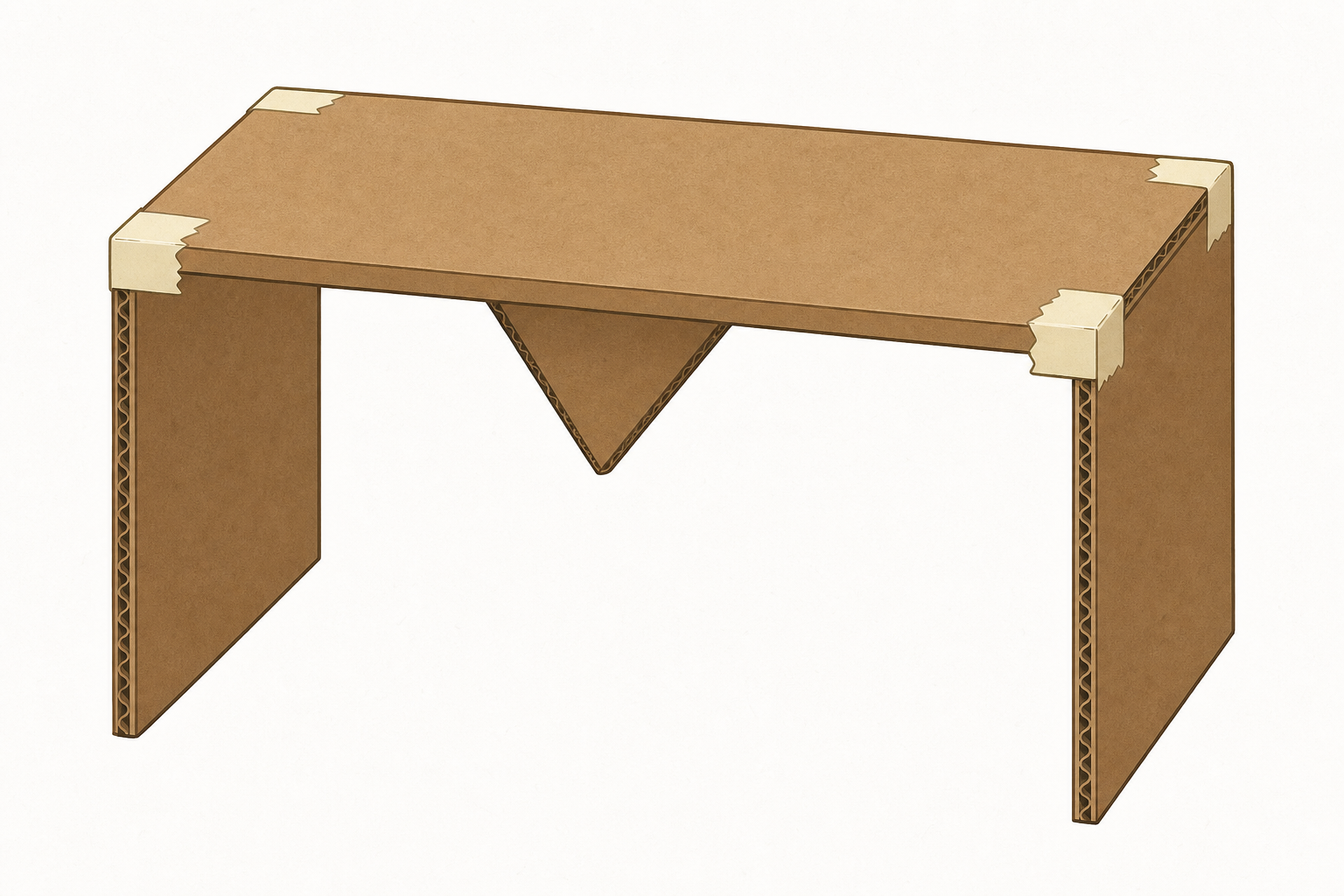 Build the full-size version from your group's sketch for your classroom-scale job (small shelf, tablet stand, short desk rail, or similar).
Before you cut, point to the board and choose: one load-carrying shape (triangle brace, rolled tube, or braced span) and one strong join (taped triangle corner patch, locked split pins, or string ties). Give everyone a job: holder, joiner, sketch checker and load watcher.
Keep the real load nearby but do not pile it all on yet. Your job in this step is to make the shape and the join do the work. Use tape, pins or string for any join that must hold weight today.
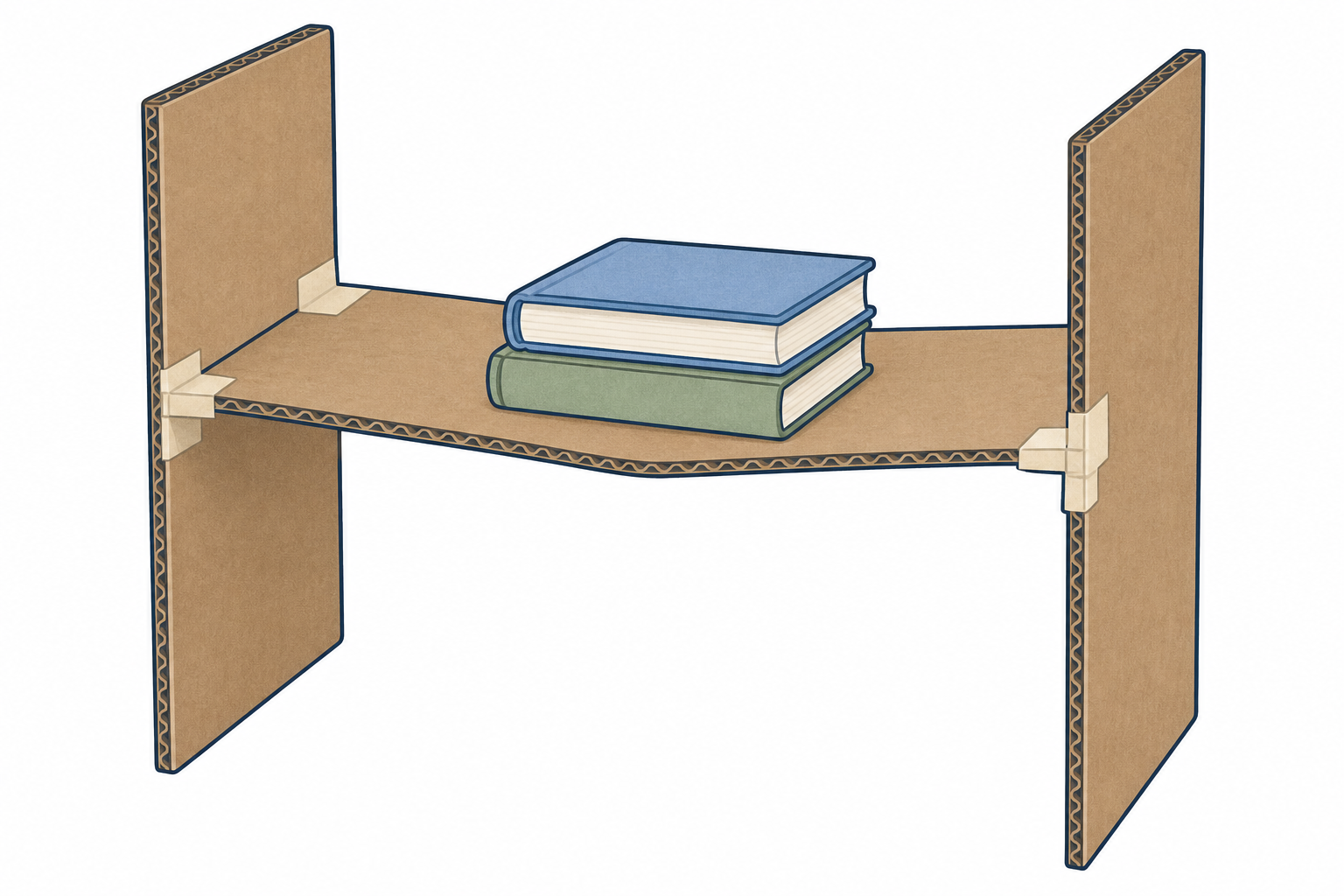
 Load your build a little at a time. Watch for sagging, tipping or peeling.
When something weakens, stop. Name which idea will fix it using the same plain choices as before: triangle brace, brace under the shelf, rolled tube, braced span, triangle corner patch, locked pins, or string ties. Make that one change, then load again gently.
On your Investigation Journal page, record what you built, what sagged or weakened, which idea fixed it, and why that change should help.
Board example before you write: Saw: the middle of the shelf dipped after two books. Think: a triangle brace under the span stopped the dip on the reload.
Keep what you saw separate from what you think it means, like the example.
Unlock the full learning experience
You're previewing this lesson. Get full access to this lesson and hundreds more — each one ready to teach, with interactive activities, printable resources and pupil progress tracking built in.
This lesson is copyright of Coding Ireland 2017 - 2025. Unauthorised use, copying or distribution is not allowed.