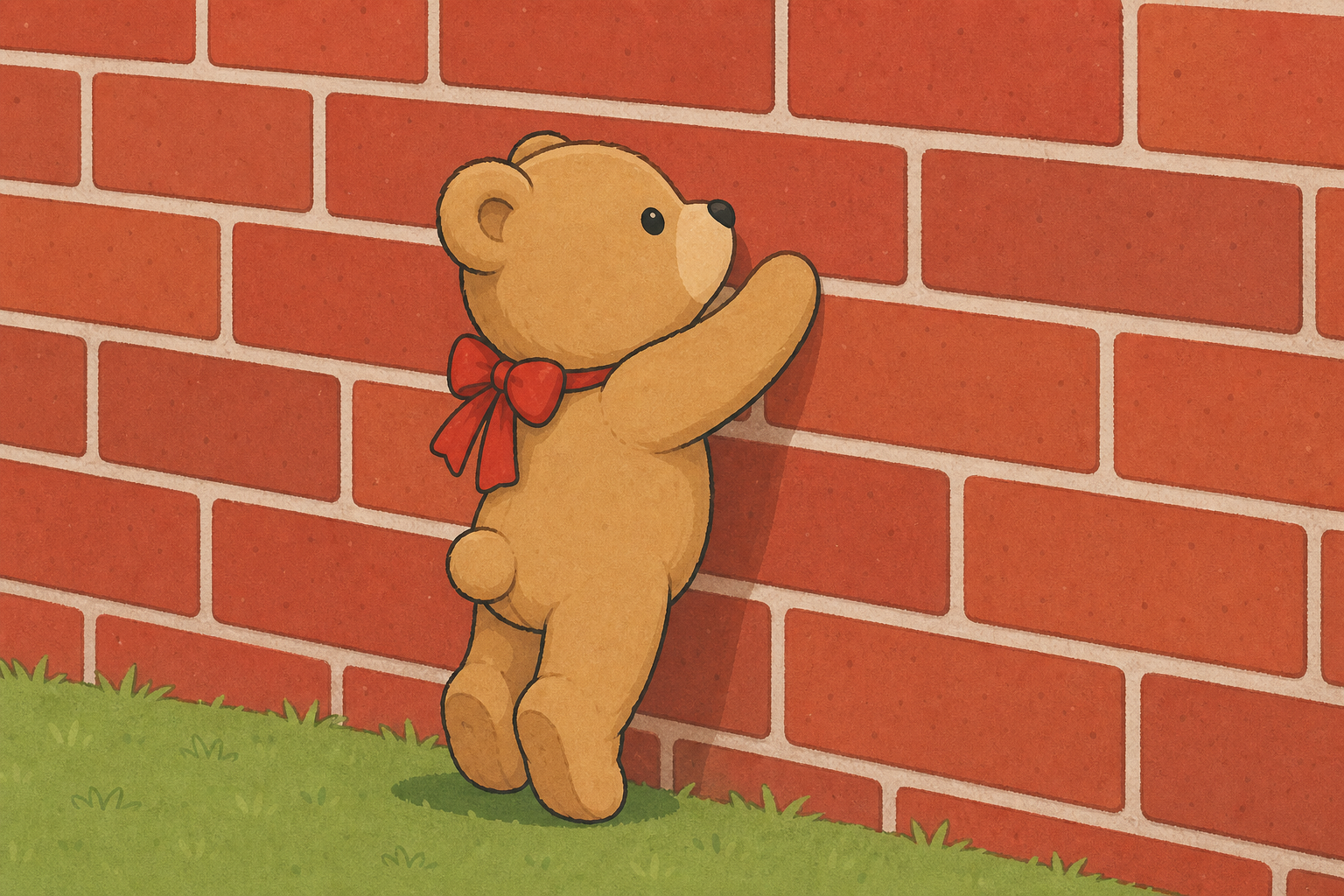
Oh no! Teddy wants to see over the wall, but he is too small. Can we build a tall tower for him to sit on so he can see?
A good tower is tall, and it still stands up when we let go.
Keep this beat light. Hold up one soft toy and point to the low wall, shelf or taped line you set up before the lesson as the "wall". Do not tip out the full build kit yet.
Say: Teddy wants to see over the wall. Can we build a tall tower for him?
What "good" looks like (say simply): it is tall, and it still stands up by itself when we let go.
Who helps us: builders make tall buildings stand strong so people can work and live up high.
What should go on the bottom of our tower so it does not fall: big blocks or little ones?
Talk with a partner. Then we will share one idea with the class.
| Concept | Why it matters | Example |
|---|---|---|
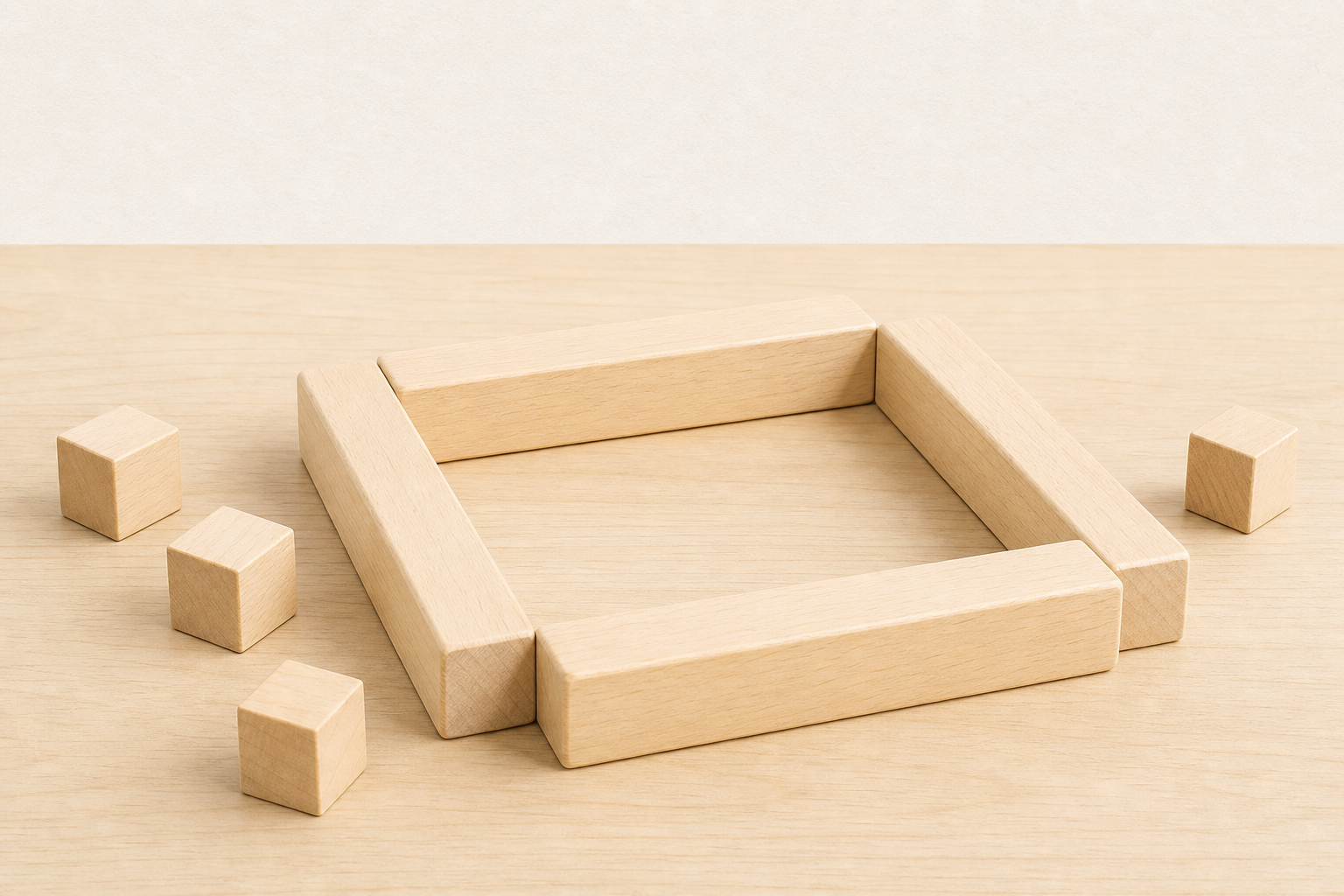
| Wide bottom — a big, steady base at the foot of the tower | A wide bottom stops the tower wobbling and toppling so Teddy can sit safely | Biggest blocks laid flat at the bottom, with a piece of card as a flat floor on top if you like, then smaller pieces higher up |
Use everyday talk for the rest: a tower is just our tall build that stands by itself; steady means it stays up and does not tip. Do not teach these as extra key terms.
One crisp model only on the carpet while the class watches (about 90 seconds; kits stay put):
Partner talk (about 1 minute): What should go on the bottom so it does not fall? Big blocks or little ones?
Share: Take two or three short answers only. Celebrate every idea. Revoice child language: big bottom, strong feet, flat base.
Misconception to head off: children may think taller always means better, even if it falls. Gently name both goals: tall and standing by itself.
Before we build tall, try this: make a wide bottom with your biggest pieces. You can put a flat card on top like a floor. Press it gently. Does it feel steady?
Then add just a few pieces on top. What do you notice?
Starter sets should already be at each pair spot from before-bell staging (a few large blocks or cups plus one or two card pieces). Do not hand-distribute now. Keep the full tubs closed beside each spot for the next step so this stays a short notice-and-try burst.
Look-fors:
Quick regroup after about 4 minutes: Who tried a wide bottom? What did you notice? Did anyone use card as a floor? Invite two pairs to show their base without building the full tower yet.
Safety: build on the floor or a low table; keep fingers clear when pieces stack; stand back if anything tips.
Now build the tallest tower you can. Use blocks, cups and card. Your tower must stand up by itself.
If it wobbles, stop and make the bottom wider. When you are ready, sit Teddy on top very gently to test.
Full tubs should already be staged beside each pair from before the lesson. Open them now (or top up the starter set into the full mix) so there is no long queue. Each pair needs mixed blocks, about six paper cups, a few card offcuts, and one light soft toy. Floor lanes should already be clear.
Card is a flat floor between cups or layers, or a lid on top — not another wobbly wall. One 10-second demo is enough: lay card on a cup layer, then stack on that flat floor.
Use two short build bursts with a 30-second regroup in the middle, not one long silent build.
Success looks like: the tower stands without a hand holding it; the child can point to one helpful choice (wide bottom, big pieces low down, careful stacking, card as a flat floor).
If every tower falls: model one more wide base in the middle of the carpet and let pairs rebuild. Falling is useful data, not failure.
Early finishers: try a second tower with an even wider bottom, or test whether Teddy can sit lower down if the top is too tippy. No devices.
Safety: stand back when a tower topples; mind fingers between blocks and cups; keep soft toys light; tidy stray pieces so no one trips.
Some friends will show their tower. We all listen for what helped it stand. Show a thumbs-up when you hear a good idea.
Builders make tall buildings stand strong. What helped yours?
Bring the class to a sharing circle or stay at build spots if moving would knock towers. Invite about four pairs to show (not every pair if time is tight). The rest are listeners first: thumbs-up for a kind listen when they hear what helped a tower stand. Not being picked is still a full job.
Sentence starter to model: My tower stood because… (wide bottom / big blocks at the bottom / I stacked carefully / card as a flat floor).
Revoice and link: builders also think about a strong, wide bottom so tall buildings stay steady. That is how makers help people work and live up high.
Do not rank towers by height alone. Praise standing, fixing after a fall, and clear noticing words.
If a tower already fell: the pair can show the base they would use next time and still earn the full share.
Save for later (unit share): before any pack-away, take a quick photo of each pair's standing tower (or their best base if it has fallen). Keep the photos in one class folder named for this unit so children can show their make again in the later show-and-tell lesson. Do not keep the physical towers if space is tight — the photo is the saved make.
You're previewing this lesson. Get full access to this lesson and hundreds more — each one ready to teach, with interactive activities, printable resources and pupil progress tracking built in.