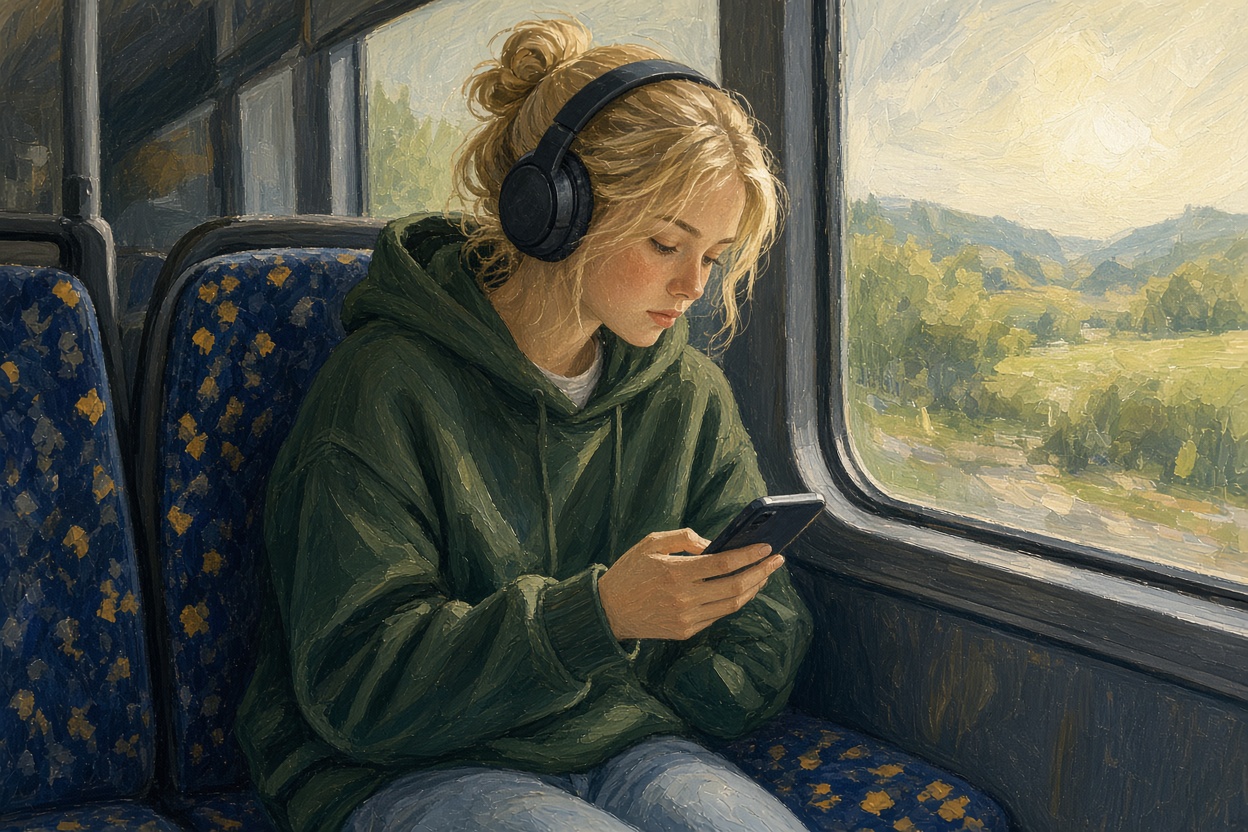
 Think of the last voice you kept listening to on purpose: a local station bulletin, match-day phone-in energy, a late-night close-mic show, a podcast host in your headphones. Something about that voice made you stay.
Today you will hear two short treatments of the same Dublin story, weigh how each one uses pace, voice and sound, and then write a description of a radio advertisement you would make, in the order a listener hears it. That description is the piece that goes in your Communication Portfolio.
Audio lives or dies on three things you can train yourself to hear. You already know the feel of them from Irish radio habits: a local news bed that moves fast, match-day phone-in energy, or a late-night host who sounds close to the mic.
| Term | What it means for you | Real example |
|---|---|---|
| Pace | How fast the speaking and the edits move: it decides whether you feel briefed or rushed | A match update that lands the score before you stand up |
| Audio design | Music, effects, silence and room sound behind the voice: it tells you what kind of show you are in before a fact arrives | Kitchen clatter under a podcast host, then quiet before the topic starts |
| Intimacy of voice | How close and personal the voice feels: it decides whether the piece is talking to a crowd or to you | A late-night host who sounds as if they are in the same room |
How to listen (worked on a third piece, not today’s two): picture a twenty-second local weather forecast. Ask only what the ear can answer. Does the voice feel near or far? Does it move quickly or take its time? Is there music, traffic, or quiet behind it? Who is still meant to be listening at the end? Those four questions are the whole method. You will use them on the two pieces next.
Piece A is a short news segment on a Dublin cycle route that opened late. You get two plays, then the questions open, then one final play. No scrubbing back while plays remain. Answer only from what you heard.
These notes are raw material for the radio advertisement you describe later. They are ear-training, not a scored comprehension test and not your Portfolio file.
Piece A: news radio segment
Same story, two treatments: the news segment you just worked, and the podcast clip below. Play Piece B here, as often as you need. (Your teacher may also play it for the room.)
Change a weight and watch which piece comes out ahead. The grid is not saved, so write your short comparison note in Enter Your Work below: you will file it beside your Portfolio piece next.
Piece B, the podcast clip:
Same story, two audio treatments
Unlock the full learning experience
You're previewing this lesson. Get full access to this lesson and hundreds more — each one ready to teach, with interactive activities, printable resources and pupil progress tracking built in.
This lesson is copyright of Coding Ireland 2017 - 2026. Unauthorised use, copying or distribution is not allowed.