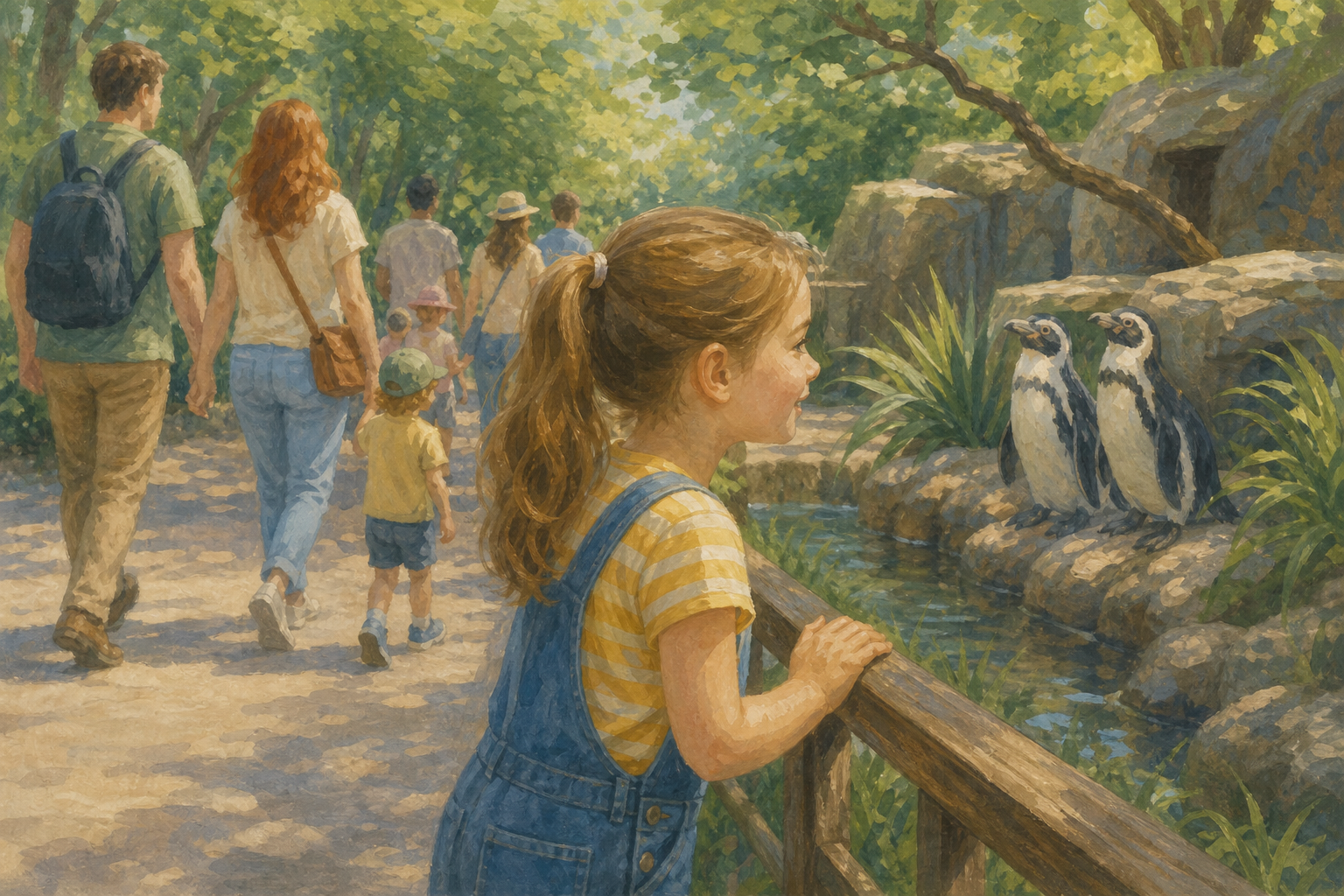
 Imagine we are visiting a French parc animalier (animal park). Name one animal you might see in the water, one on the farm trail, and one in the wild enclosure. You have already met pets, farm animals, wild animals and birds this year. Today we pull eight of them into one set and sort them by gender.
By the end of this lesson, you will be able to:
- Name eight animals in French with le, la or l'
- Sort animal nouns into masculine and feminine columns
- Spot any gender patterns you have actually found this year
These eight animals are on our park map, drawn from pets, farm, wild and birds. First, listen and repeat each French name with its article while it is on the board. Then try saying the French with its article before you flip the English card. Watch which take le, which take la, and which take l'.
At the park gate there are two enclosures labelled masculin and féminin. Drag each animal into the right one. Use the article as your clue: le and l' (before a masculine word) go one way, la the other.
Open your copy and write four animals with their articles. Mark each one masculine or feminine. Include la vache and three that take le or l'.
- le chien — the dog
- le chat — the cat
- le cheval — the horse
- la vache — the cow
- le poisson — the fish
- le lion — the lion
- l'oiseau — the bird
- le canard — the duck
Our park guide spins the wheel and points at a pen. When it lands on an animal, say the French aloud with its article. Use the board list if you need a quick look.
Unlock the full learning experience
You're previewing this lesson. Get full access to this lesson and hundreds more — each one ready to teach, with interactive activities, printable resources and pupil progress tracking built in.
This lesson is copyright of Coding Ireland 2017 - 2025. Unauthorised use, copying or distribution is not allowed.