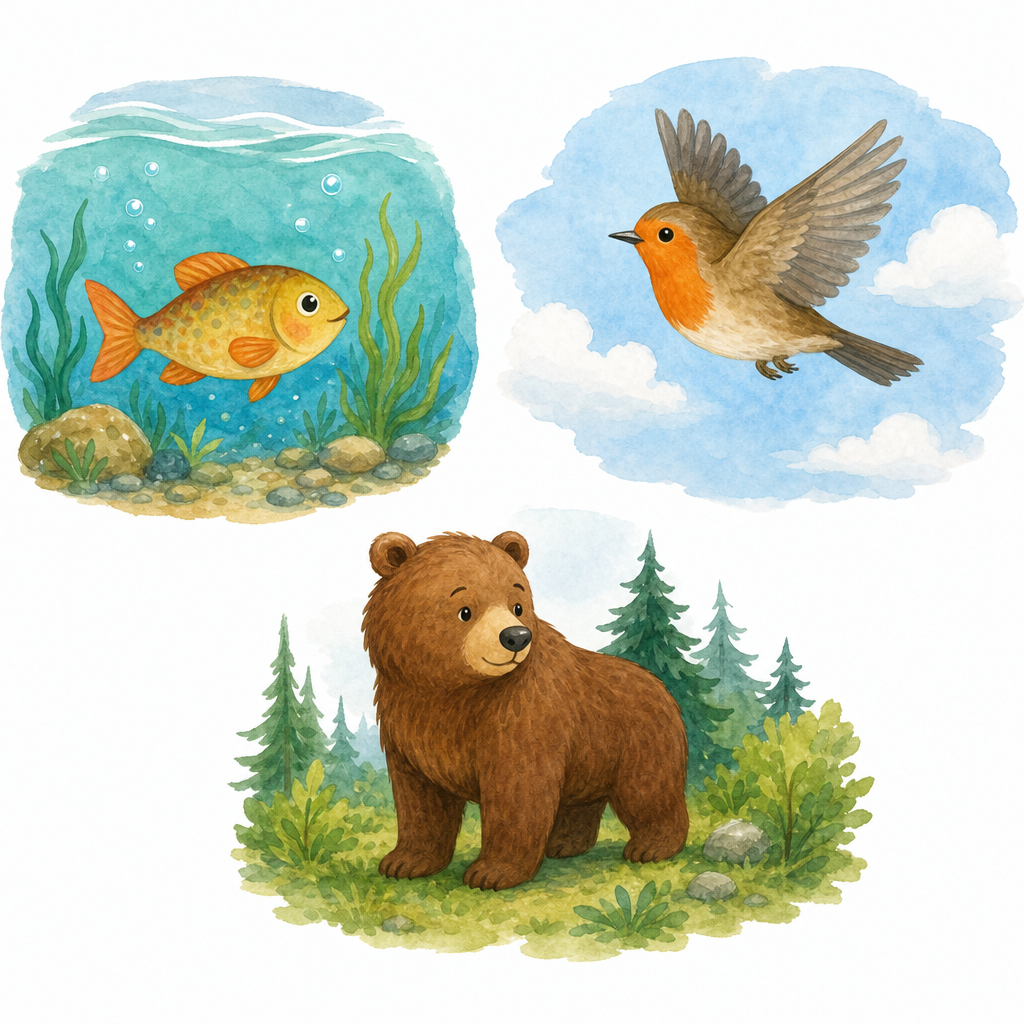
 Name an animal that lives in water, one that lives in the air, and one that lives underground. Say them in English first, then see if any German animal words come to mind.
By the end of this lesson, you will be able to:
- Name eight mixed animals in German with the right article
- Sort animal nouns into der, die and das
- Say a short line such as Das ist der Hund
Here are today's eight animals: pets, farm animals and a few others mixed together. First pass: listen to the full German word with its article, then repeat it together before the card flips. Second pass: volunteers say the German with der, die or das before the flip.
We sort each animal into der, die or das. Vote with your fingers (1 = der, 2 = die, 3 = das), then a volunteer comes up to drop the card on the board. Think about the article you just practised, not about what the animal looks like.
Open your copy and write four animals with their articles, grouped into columns by gender. Take care with capital letters: every German noun starts with one.
- der Hund — the dog
- die Katze — the cat
- das Pferd — the horse
- der Vogel — the bird
- der Bär — the bear
- der Fisch — the fish
- das Schaf — the sheep
- die Kuh — the cow
Spin the wheel. When it lands on an animal, whisper a short line with your partner first: Das ist + article + animal (for example Das ist der Hund). Then one of you says it out loud for the class. No peeking at your copy first.
Unlock the full learning experience
You're previewing this lesson. Get full access to this lesson and hundreds more — each one ready to teach, with interactive activities, printable resources and pupil progress tracking built in.
This lesson is copyright of Coding Ireland 2017 - 2025. Unauthorised use, copying or distribution is not allowed.