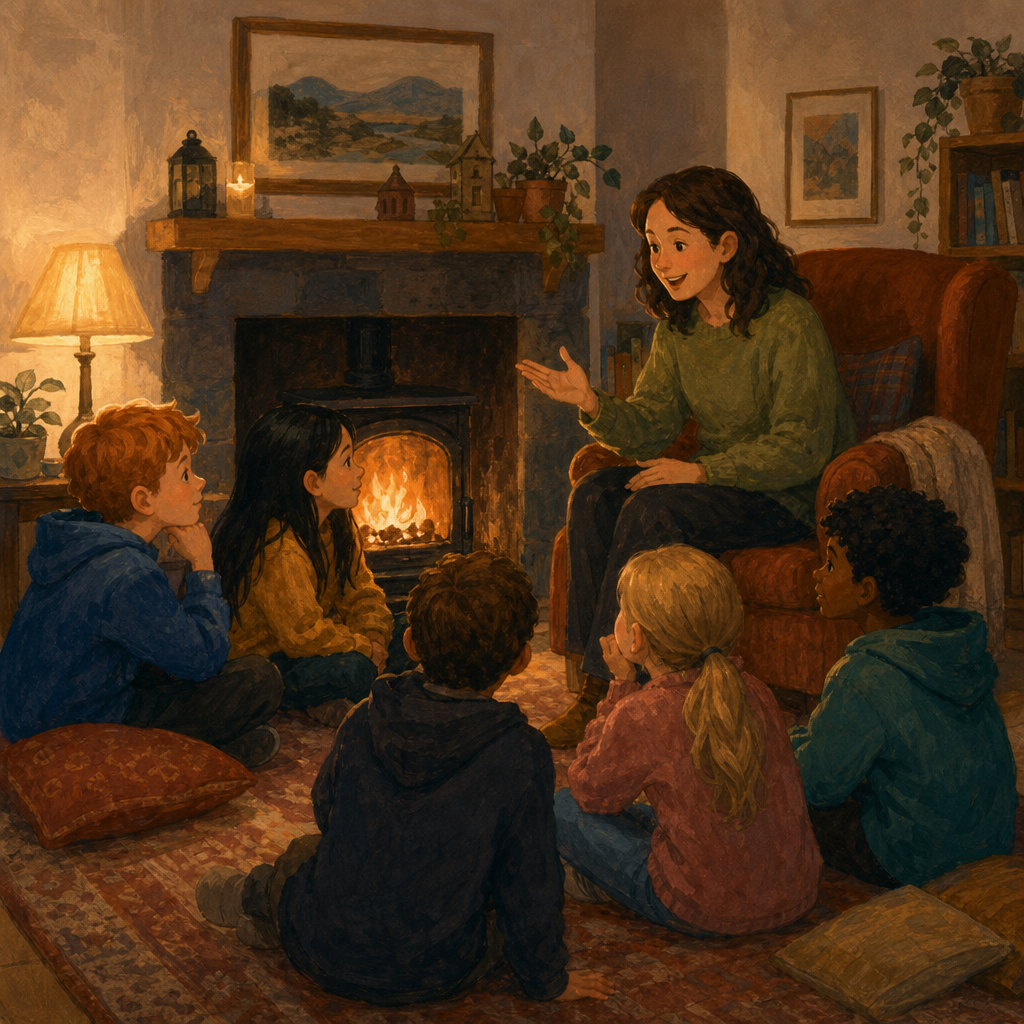
 The Táin (TAWN) is an ancient Irish tale. People passed it on by word of mouth for a very long time before anyone wrote it down. They carried it in their heads, by the fire, on the road, and from one generation to the next.
So here is the question for today: what changes when a story is finally written?
By the end of this lesson, you will be able to:
- Explain that some great tales were spoken long before they were written
- Link a story's real places to placenames that still hold older roots
- Talk about whether writing a spoken story saves it, freezes it, or both
Eyes on the storyteller, because this part of the story reaches you by voice and not from the page. Listen first, and picture each scene in your head as you hear it.
Three moments to hold on to while you listen:
- An army marches for a great brown bull
- One boy-warrior holds a river ford alone
- Two friends face each other across the water
Names you will hear:
- Medb (MAYV): the queen who wants the bull
- Cú Chulainn (koo HULL-in): the boy who holds the ford
- Ferdiad (fair-DEE-ad): his friend and foster-brother
After the telling: then the page
Long after people told this tale aloud, it was written down. A spoken telling can stretch or lean toward the listeners in the room. A written telling holds still, so the next reader meets nearly the same words.
The Táin is not set in a made-up kingdom. Its ground, the real places under the story, is Ulster.
Watch the placename decoder on the board, and if you are called up, tap a place and see the name split into its parts. Look for Irish roots inside names you already half-know, and notice how a story's map can still sit under today's map.
4 - The Moment You Would Keep ~5 mins
Open your copy. Write the moment from the story you would keep if you could keep only one, and why.
- Medb marching for the Brown Bull
- Cú Chulainn alone at the ford
- Champions crossing the water one by one
- Ferdiad facing his foster-brother
- Someone writing down a tale already old
One moment. One reason. Use your own words.
Tales like the Táin were carried for a long time in Irish. Listen to each short clip.
Show 1 finger if you think the clip is Irish, or 2 fingers if you are not sure or think it is another language. Then wait for the reveal, and keep your answer in your hand rather than calling it out.
Listen for the music of the language, not for words you already know.
Unlock the full learning experience
You're previewing this lesson. Get full access to this lesson and hundreds more — each one ready to teach, with interactive activities, printable resources and pupil progress tracking built in.
This lesson is copyright of Coding Ireland 2017 - 2026. Unauthorised use, copying or distribution is not allowed.