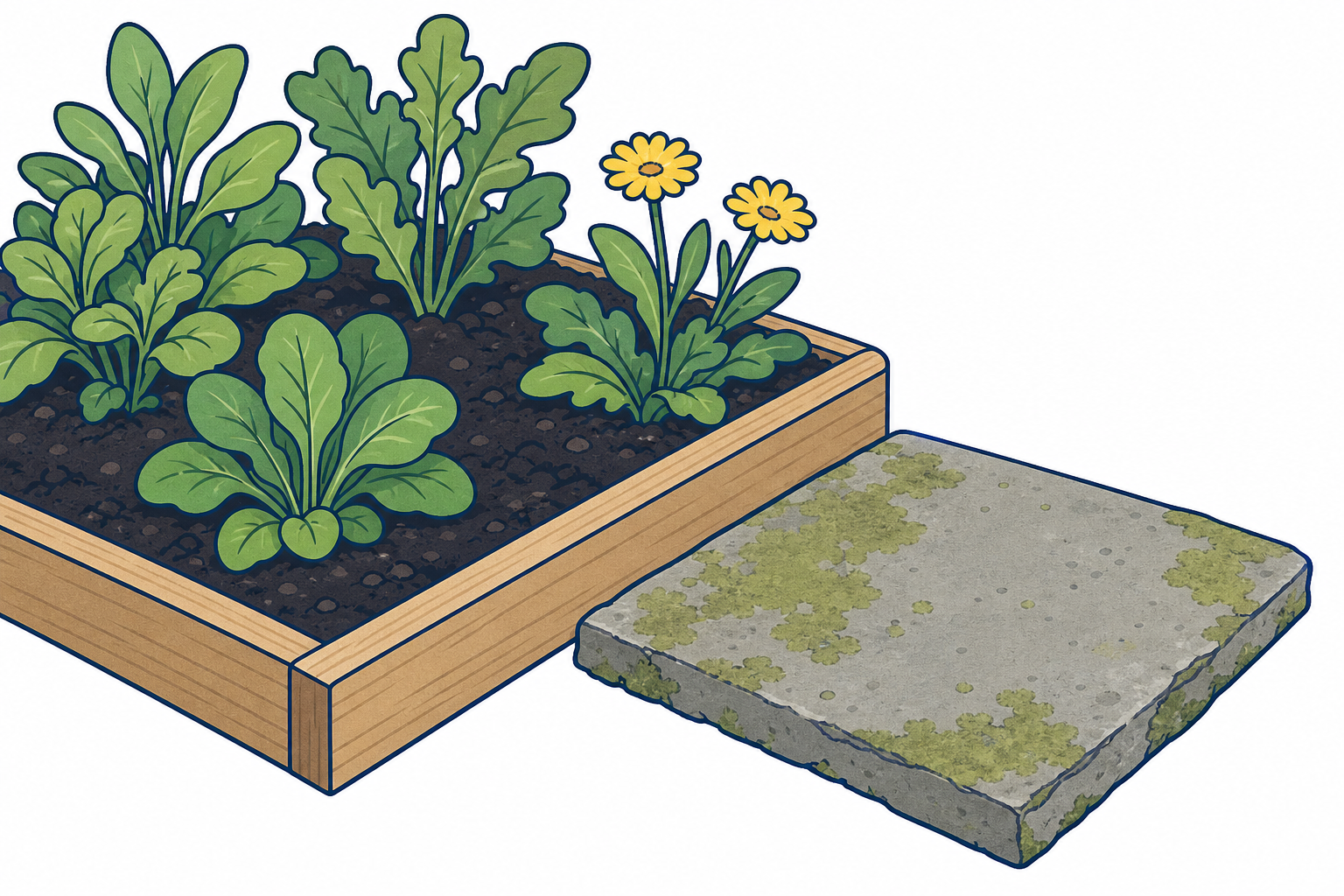
Today we are going outdoors! Our eyes, ears, hands and noses can help us notice the school garden.
What do you think you might hear outside? Hands up if you have a guess.
Keep this beat light and curious. Do not hand out magnifiers or gloves yet. Stand near the door or by the window so the class can sense they are about to go out.
Take two or three guesses about sounds (a bird, the wind, footsteps, a car). Smile at every guess. Guesses are never wrong; they are the start of the fun.
Link back gently: children have already met the five senses indoors. Today four of them come outside with us. Remind them we will not use taste outdoors.
We are going out with our eyes, ears, hands and noses.
Nothing from the garden goes near our mouths.
| Concept | Why it matters | Example |
|---|---|---|
| Noticing outdoors — stopping still so your eyes, ears, hands or nose can find something in the garden | When we rush we miss the little things living right by our feet | Standing still by a bush and hearing a robin before you see it |
| Our outdoor senses — looking, listening, touching and smelling help us find out about nature; tasting stays indoors | Each sense tells us something different about the same garden | Cool damp grass under fingertips, the smell of wet soil, a shiny green leaf through a magnifier |
Say the noticing idea live (do not project a long definition). Point to eyes, ears, hands and nose as you name looking, listening, touching and smelling. Say the no-taste rule aloud: we keep our mouths closed for tasting; nothing from the garden goes near our mouths.
Model one full noticing cycle before you go out (you do this live with the leaf or laminated leaf photo from materials). Hold up the magnifier and the leaf (or use the window view if weather is poor):
Then briefly cup your ear: Now I listen… I can hear… Name one real sound in the room or yard.
Safety cue to say aloud: we do not pick plants or put anything in our mouths outdoors. We stay with the class.
Before you leave the room: children put on coats if needed; gloves stay in the basket for now (they are optional at the touch stop if the ground looks messy); one adult leads. If you are on your own, keep the line short, stop often, and count heads at every stop.
We are walking the school garden together. At each stop we try one sense.
Stay with the class. Do not pick or taste anything. Be ready to tell one thing one of your senses noticed.
Walk the route yourself once if you can. Choose three short stop spots (for example: the hedge, a grassy patch, a wall or planter). Keep the whole walk inside school grounds with clear boundaries.
The 13 minutes cover lining up, coats, three short stops, kit hand-out, and walking back. Move as one class in short bursts, not free roam. One clear noticing from a child is success; a second sense is a bonus, not a checklist.
Single-adult pattern: you lead from the front of a short line; children stay between you and a fixed landmark (wall, fence, path edge). Count heads at every stop before you move on. Do not free-roam or split the group.
Use the last minute or two to gather, walk back, and reach the door mat ready for hand washing.
Key questions while you walk (one sense at a time): What did your eyes find? What did your ears catch? How does that feel? What does the air smell like today?
If weather is too wet or wild: run the same four senses at an open doorway, under a shelter, or beside a classroom window box and planter trays you set just outside the door. The science is the noticing, not a long trek.
Differentiation: some children may only manage one clear noticing; that is enough and matches success for this lesson. Confident talkers can whisper a second finding to you. Children who find noise hard can focus on looking and touching first.
Safety: stay together; no tasting; no picking; watch for litter and dog mess; wash hands as soon as you return.
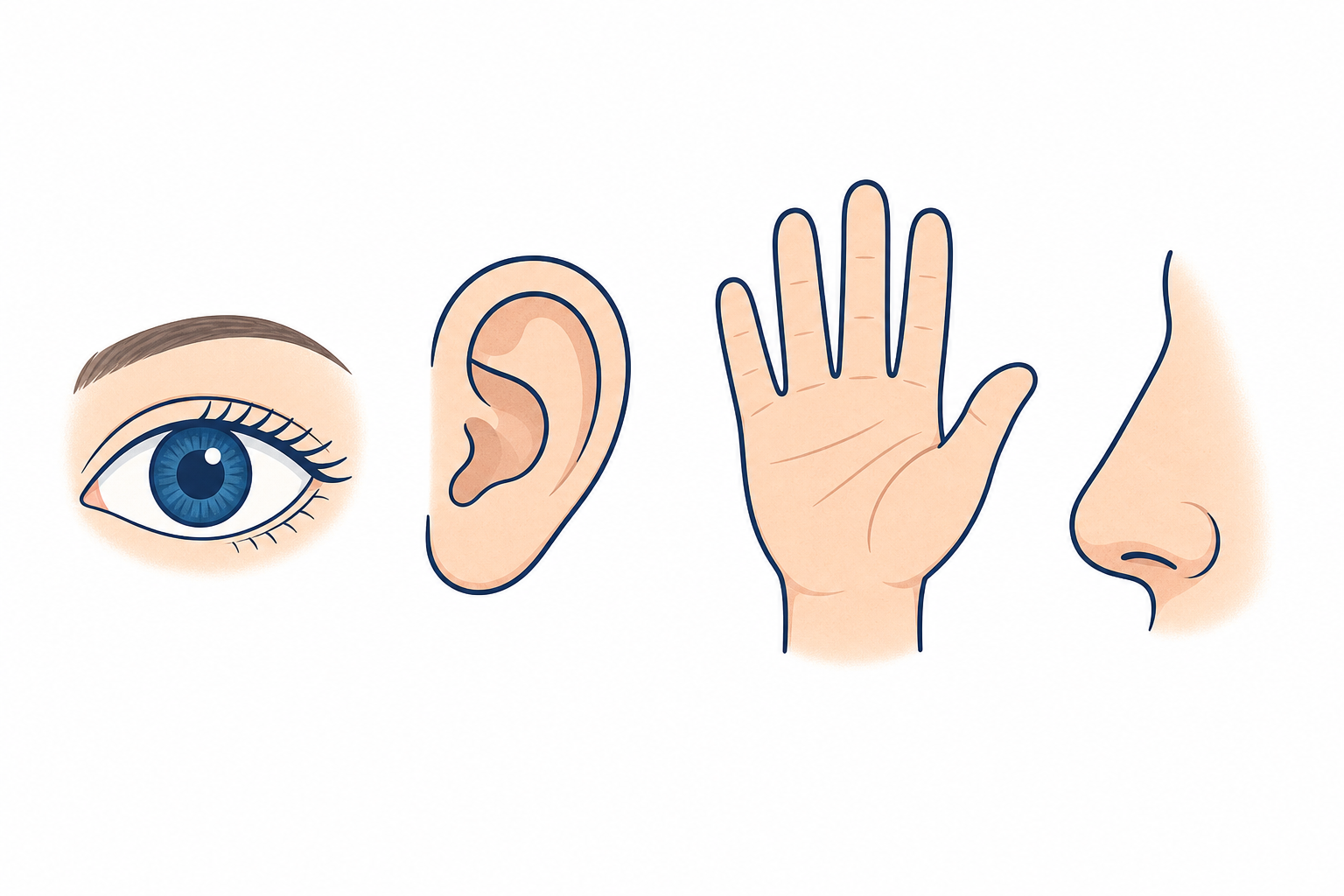
Time to tell. Look at the eye, ear, hand and nose pictures. Point to the one you used, then tell us what you noticed.
You might say: I saw… I heard… I felt… or I smelled…
This is the oral observation beat. There is no Investigation Journal page today. Children speak; you listen and revoice.
Sit in a quick circle indoors or just inside the door after hand washing. On the board, IWB, a mini whiteboard, or a door-side pad, sketch four simple pictures: eye, ear, hand, nose. Invite several children to point to a picture first, then say the finding. Use sentence starters said aloud: I saw… I heard… I felt… I smelled…
What good looks like at this age: a child points to a body part (or the matching sketch) and names one real finding (a bird sound, wet grass, a yellow flower, soil smell). Full sentences are a bonus, not a must.
If a child is shy, offer a partner whisper first, then one pair shares with the class. You may also offer choices: Did you notice with your eyes or your ears?
Common mix-up: children may say they "tasted the air". Gently steer: outdoors we keep tasting for food time; today we used looking, listening, touching and smelling.
Collect a quick class list with one word or doodle under each sense sketch from the children's findings. Use whatever surface is nearest the circle (IWB, mini whiteboard, or pad by the door) so you are not stuck if the circle is at the door after washing. That list feeds the next talk.
Our senses helped us notice the garden. Point to the body part that helped you most today.
Grown-ups who look after plants use eyes, hands and noses too — just like we did on our walk.
Display-only, oral make-sense talk. Keep it short and warm. Stay concrete: link back to what the children just found, not to an abstract gardener job.
Draw out with today's findings:
Who helps us weave: lightly name that grown-ups who look after plants (a gardener, or someone who minds the school garden) use eyes, hands and noses as real tools, just as we did today. Do not open with a big "how does a gardener care for plants" question.
Misconception to head off: senses are not only for fun games indoors. People who care for living things use them as real tools for looking after plants and places.
Close with a hands-up: Which sense helped you most today — eyes, ears, hands or nose?
You're previewing this lesson. Get full access to this lesson and hundreds more — each one ready to teach, with interactive activities, printable resources and pupil progress tracking built in.