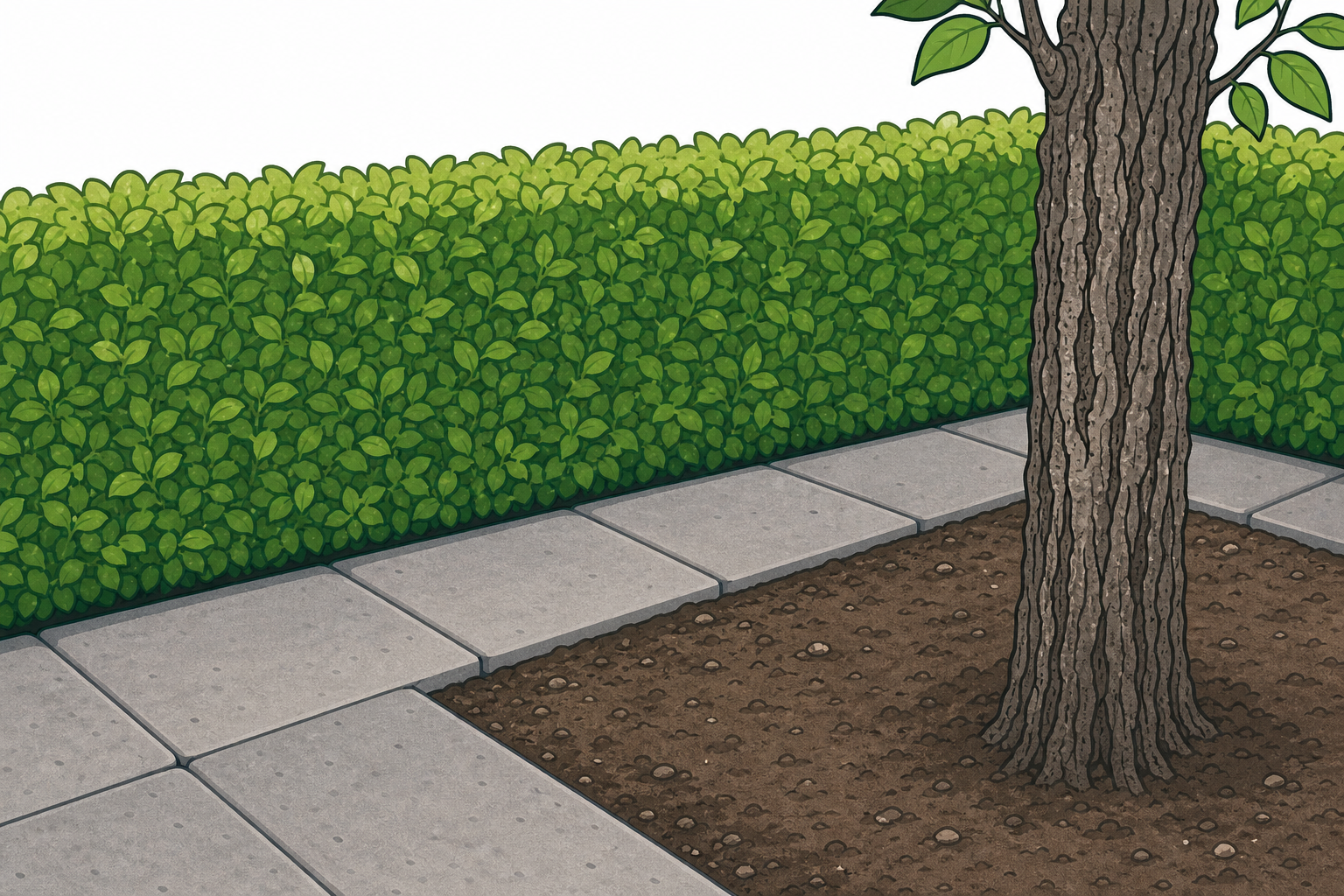
Today we take our senses outside. What might you notice in the school garden if you look, listen, touch and smell carefully?
Even a quiet hedge can hide a bird your eyes miss until your ears find it.
Hands up one thing you think you might find.
Keep this light. Do not hand out clipboards or list the hunt targets yet. Stand by the door or window so pupils can glimpse the outdoor space if the weather allows.
Take three or four quick ideas only. Revoice everyday noticing: the school garden and yard are our science lab today.
Before the lesson: check the weather and a safe route; mark clear stop points on a short loop of the garden or grounds; print each pupil's Investigation Journal page from this lesson (four boxes: I saw, I heard, I felt, I smelled), or prepare plain A4 sheets with those four labelled boxes; set clipboards and pencils ready on desks for when you return (do not take them outside); optional fabric gloves if bark or ground may be wet or cold.
If heavy rain makes a full walk unsafe, use a covered outdoor area, porch or open windows for a shorter senses listen-and-look from a safe dry spot, then complete the record indoors.
Our words
Senses outdoors — eyes, ears, hands and nose outside. Example: close your eyes to hear a bird.
Observation — say what you really noticed. Example: "I felt rough bark."
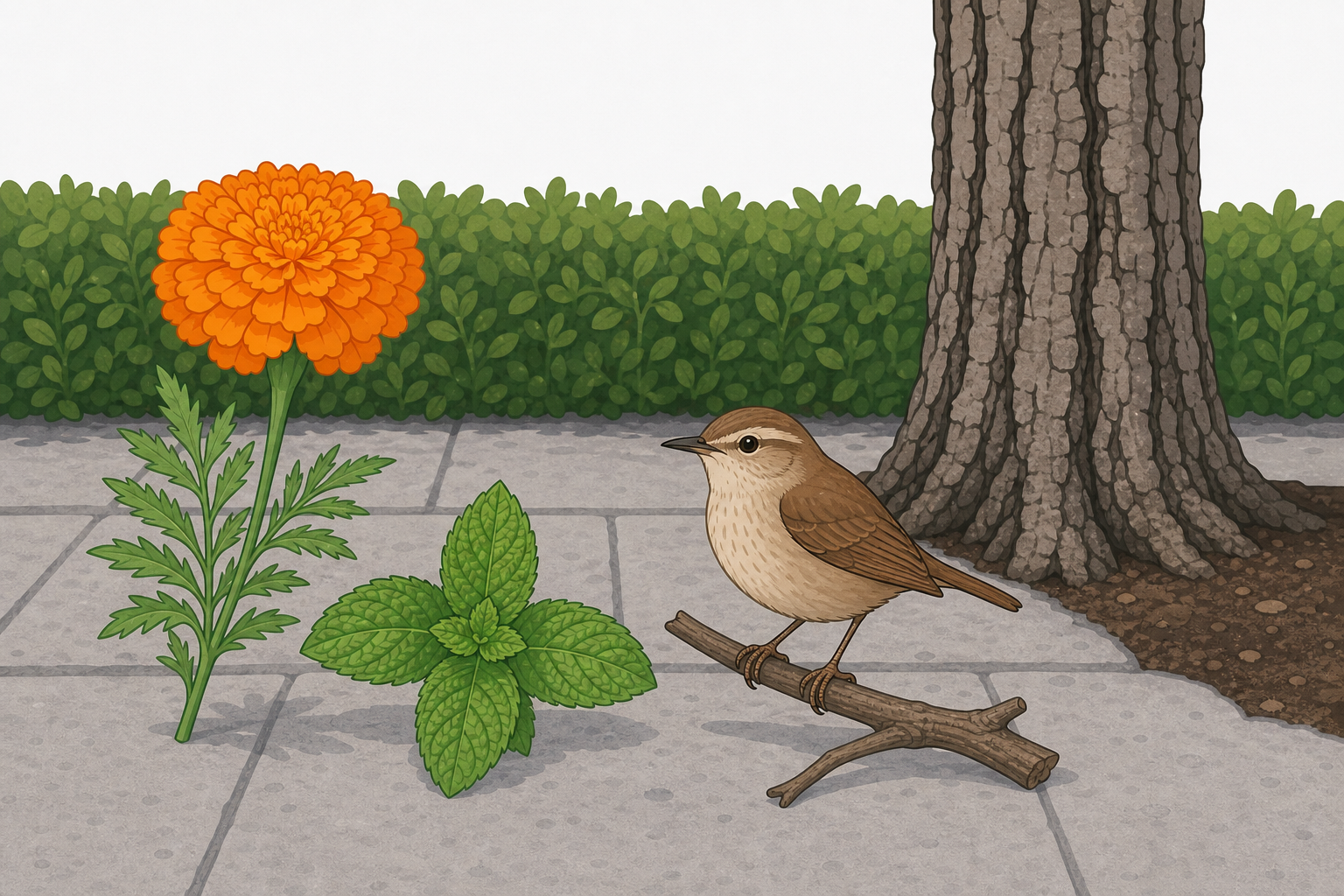
Show only this screen. Keep it to one short beat: the two words and their tiny examples. Do not move on to hunt jobs until pupils have heard both words once.
The full table is for you only.
| Concept | Why it matters | Example |
|---|---|---|
| Senses outdoors — using sight, hearing, touch and smell carefully to notice living and non-living things in the garden or grounds | Outside there is more to notice than indoors, and each sense picks up different clues | Your eyes spot a yellow dandelion; your ears catch a blackbird; your fingers feel rough bark |
| Observation — saying or drawing what you really saw, heard, felt or smelled, not what you guessed | Scientists keep what they noticed separate from what they think it means | "I smelled wet soil after the rain" is an observation; "so a worm must live there" is a guess |
Modelled observation (say this live before you leave the room, after the hunt jobs step):
I wonder what my ears will notice first outside. I think I might hear birds, because I often hear them from the yard. I try it by standing still and closing my eyes for a few seconds. I observed a robin singing and the wind in the hedge. I think my hearing helped me notice a living thing I could not see at first.
Misconception to head off: children may think observation means naming the plant or animal correctly. Praise careful sensing first; names can come later if known.
Our hunt jobs
On our hunt we will find:
We will not taste anything outside.
This is its own board reveal after the words step. Point to each icon as you name the job so early readers can hold the four jobs without reading a paragraph.
Remind the class: no tasting outdoors, no picking unless you say so, stay with the group.
If helpful, run the short modelled observation from the previous step's teacher notes now, just before you leave the room.
Before we go out, think with a partner. What might your eyes find? What might your ears hear? What might feel rough? What might have a smell?
Share one idea you think you might find with the class.
Run this as a quick whole-class talk with partner whispers first. Ideas about what we might find are never wrong; they start the science. Keep any richer word such as "prediction" in your own talk only if the class already knows it; the pupil screen uses plain wording.
Prompts:
Collect a few ideas on the board under four simple heads: see, hear, touch, smell. Leave them up to compare when you return.
Do not hand out clipboards or journals yet. Leave the printed Investigation Journal pages, clipboards and pencils ready on desks for the indoor record step. Pupils go outside with empty hands (and optional gloves only if you choose them for the touch stop).
Brief the safety rules once more in plain words before you line up.
We walk the garden path together and stop at each spot the teacher chooses. At the stops, use your senses to find:
On the walk we only look, listen, touch and smell. We draw and write when we come back.
Stay with the group. Touch only what the teacher says is safe. Do not pick or taste anything.
Lead a short loop with four planned stops (hedge or tree, open grass, a wall or fence, a flower bed or planter). Budget real minutes for line-up, exit, head-counts, short moves between stops, and return: aim for about 1–2 minutes of quiet noticing plus brief talk at each stop.
Time-gate (protect the indoor journal): the outdoor block is 17 minutes including line-up and return. If you are not at the first stop by about minute 4 of this block (line-up or exit has run long), drop at once to the three-stop pattern: Stop A sight only; Stop B hearing only; Stop C touch and smell together at one rich spot (for example a flower bed or planter with safe bark or a wall nearby). Still collect all four sense finds, then return so the eight-minute indoor record stays intact.
If the path is short even on a smooth exit, you may also plan three stops from the start and cover two senses at one rich spot, but still collect all four sense finds.
Suggested four-stop order:
Memory lever at every stop (do this before you move on): after quiet noticing, ask the class to name back one shared find in a short choral phrase (for example "Yellow daisy, eyes" or "Bird song, ears"). You hold that phrase for the group (say it again as you walk, or jot one word on a small card in your pocket). This shared cue is what fills empty boxes indoors, not private memory alone.
Fold the whole class in with questions: What did your ears notice that your eyes missed? Is that living or non-living?
If a child finds something exciting mid-path, pause the line briefly so everyone can share the notice, then move on.
No journals outdoors. Clipboards stay inside. Pupils notice with their senses only.
Irish context: name common finds when you know them (robin, blackbird, daisy, dandelion, oak or ash bark, wet soil). It is fine to say "a small bird" if the species is unclear.
Safety in the moment: head count at each stop; keep paths clear; no running; adult at front and back if a second adult is available.
You're previewing this lesson. Get full access to this lesson and hundreds more — each one ready to teach, with interactive activities, printable resources and pupil progress tracking built in.