The whole first lesson, as your class sees it. No sign-in needed.
Everything a teacher needs to teach Geography for 5th Class this year.
The whole books come with the course, in each class's Resources.
Every lesson is mapped to the specification. This course teaches 11 of the 11 outcomes for this class.
Tap any outcome to read it. The coloured ones are taught in this course. The curriculum does not include official reference codes for individual learning outcomes, so we have assigned a code scheme to make it easier to identify and track coverage.
36 lessons in 6 modules. The lesson marked Sample opens in full.
The class sorts the services of its own place by who looks after them, checks on a walk from the gate, reads what a council spends, and follows the rubbish from the bin. It then turns to sustainable living: the signs of it near the school, and an action the class chooses to try.
The class investigates and evaluates how water, land, food and transport are managed. Each lesson measures or reads one resource in real figures: a tap and a drip in the school, the ground near the gate sampled stop by stop, the food Ireland throws away, the streets checked for walking and cycling, and the river nearest the school. The module closes by weighing three real plans against each other.
One physical process at a time: weathering read on dated stone near the school, what a river wears away and builds, what ice did to a valley, how lava made rock, why the sea wears some coasts faster than others, and how heavy rain becomes a flood. Each lesson works from real photographs, a real map or real figures, and asks how the process works and how we can tell.
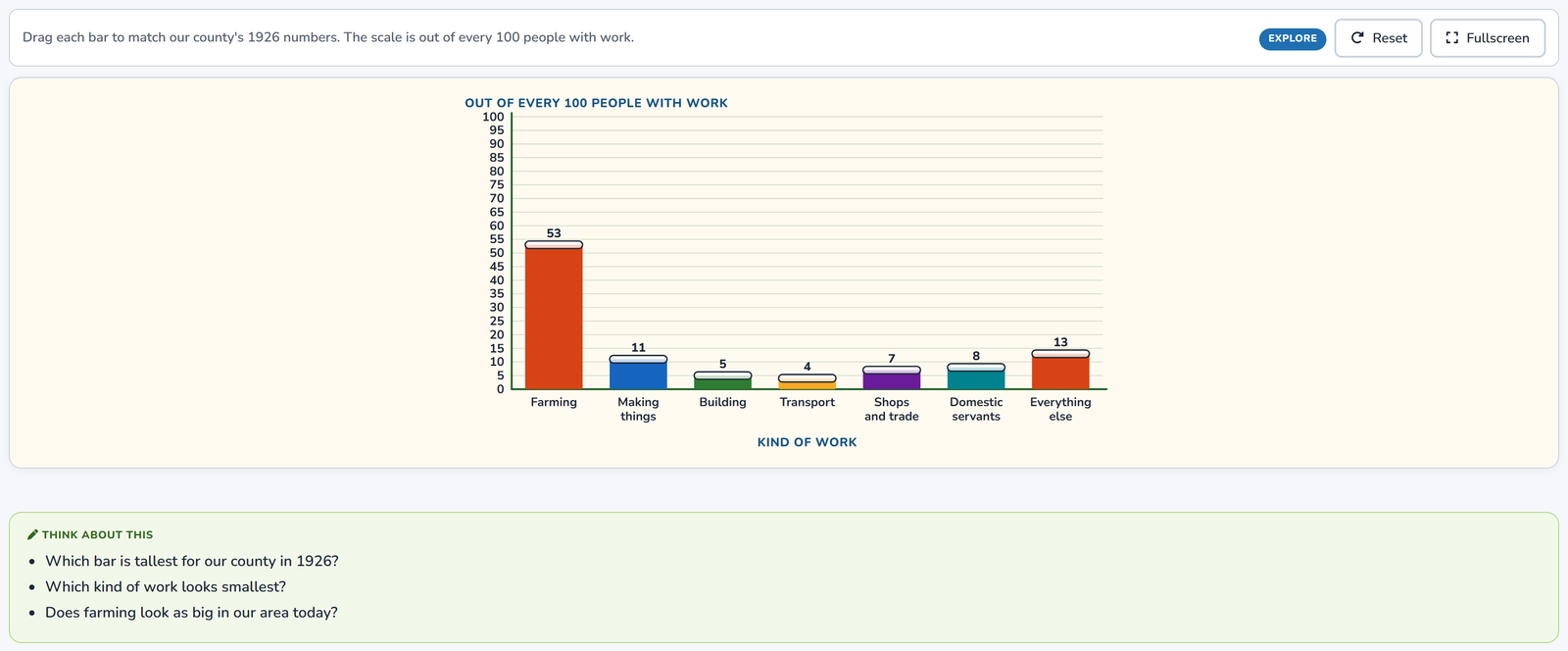
How a limited supply of resources shapes the work Ireland does and the trade it needs: what the island has plenty of and what it lacks, why its farmland is mostly grass, and why it buys so much of its wood. Then why people have moved to and from Ireland and what their moving changed, worked from the census: the population census by census, the people leaving and arriving year by year, and who lives here now set beside 1926.
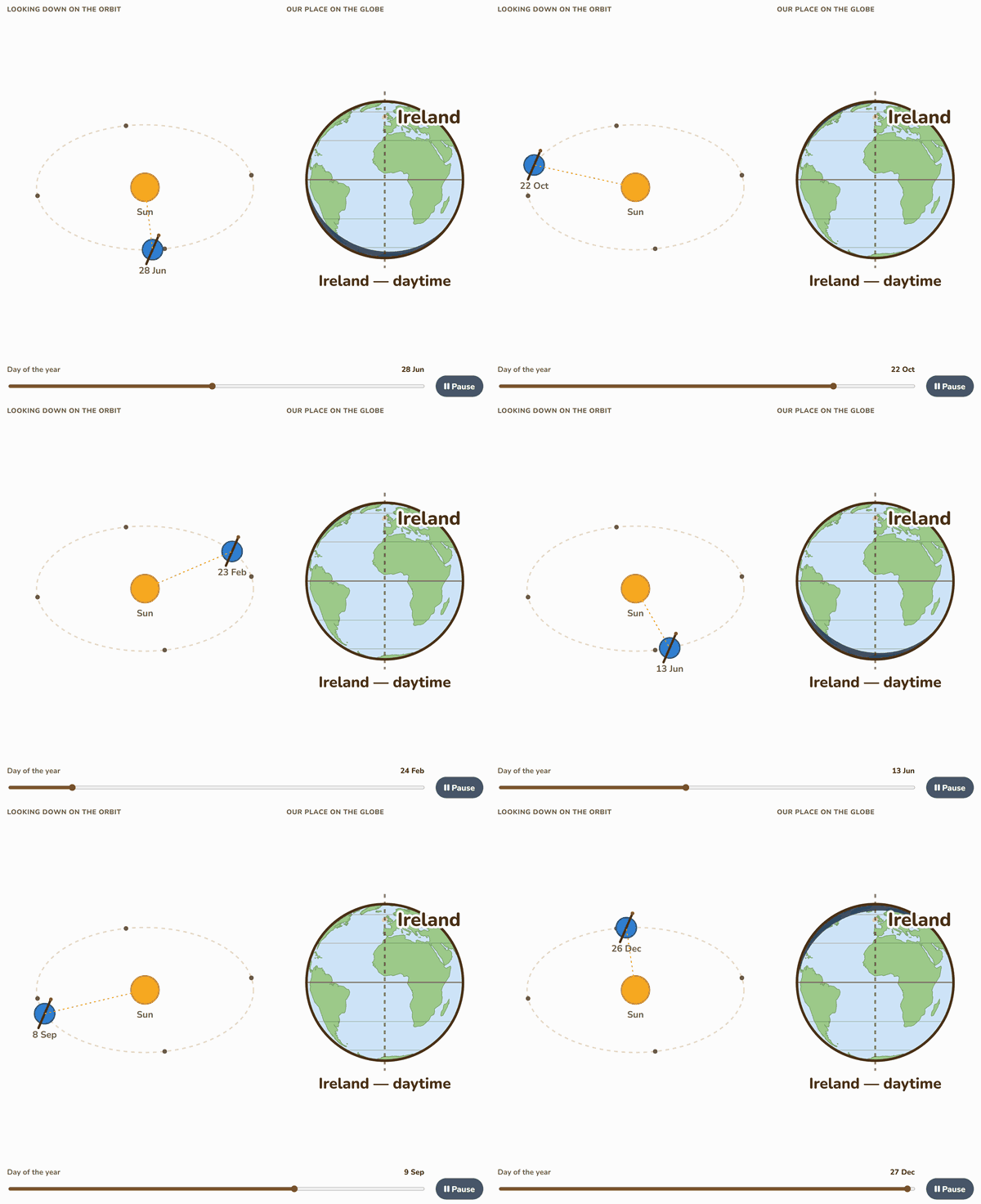
How the Earth relates to the bodies around it. The class paces out the planets' distances in the yard, sets Earth beside its hottest neighbour, works out the moon's changing shape with a torch and a ball, and asks why the moon keeps its craters. It closes on festivals whose dates follow the moon, and on the Dutch communities who began about 800 years ago to keep the sea off their land.
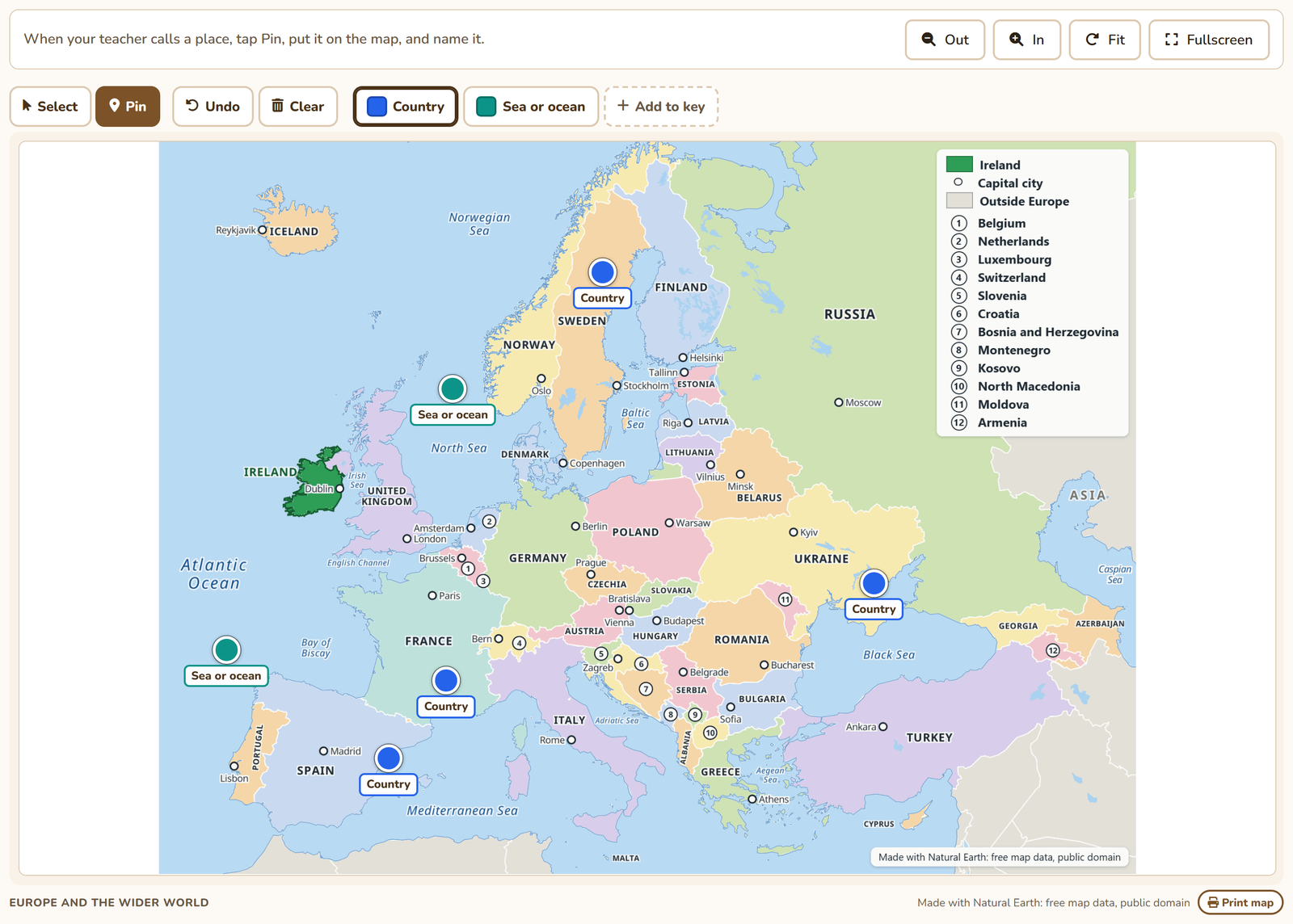
Real examples of change in the natural environments of Europe and the wider world, made by physical processes, by people, or by both. Six places, each read from real photographs, satellite pictures or figures: a glacier in the Alps, a forest in Brazil, a sea in central Asia, a new island off Iceland, the walkers' paths below Everest, and a river in the United States set free from its dams. On four of them the class examines evidence, draws its own conclusion and says how sure it can be.
Get in touch to discuss pricing and ordering for your school.
Back to 5th Class courses