The whole first lesson, as your class sees it. No sign-in needed.
Everything a teacher needs to teach SEE for 1st Class this year.
The whole books come with the course, in each class's Resources.
Every lesson is mapped to the specification. This course teaches 17 of the 17 outcomes for this class.
Tap any outcome to read it. The coloured ones are taught in this course. The curriculum does not include official reference codes for individual learning outcomes, so we have assigned a code scheme to make it easier to identify and track coverage.
108 lessons in 6 modules. The lesson marked Sample opens in full.
September to early October. The year starts where the child stands: the school building and its grounds, the street at the gate, the people who keep the school going, and the weather that shapes a school day. The class learns to look closely, to name what it sees, to tell what nature made from what people made, and to read the school's own map from above. Early autumn is the driest, brightest time for working outside, so six of the module's lessons go out.
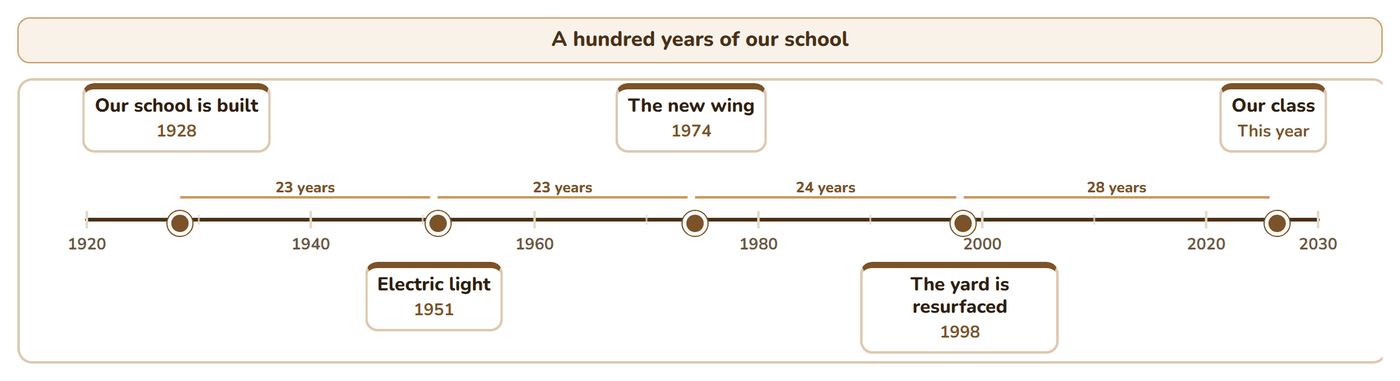
Mid-October to November. Homes and work long ago, met through real objects and photographs the class can question: what can we see, what might it tell us, and what can it not tell us? The lessons set parents, grandparents and great-grandparents side by side, put Halloween's old customs in the week before the October break, and end with the people who help us and how their work has changed. The dark evenings of November are the right time to ask how homes were lit and warmed before electricity.
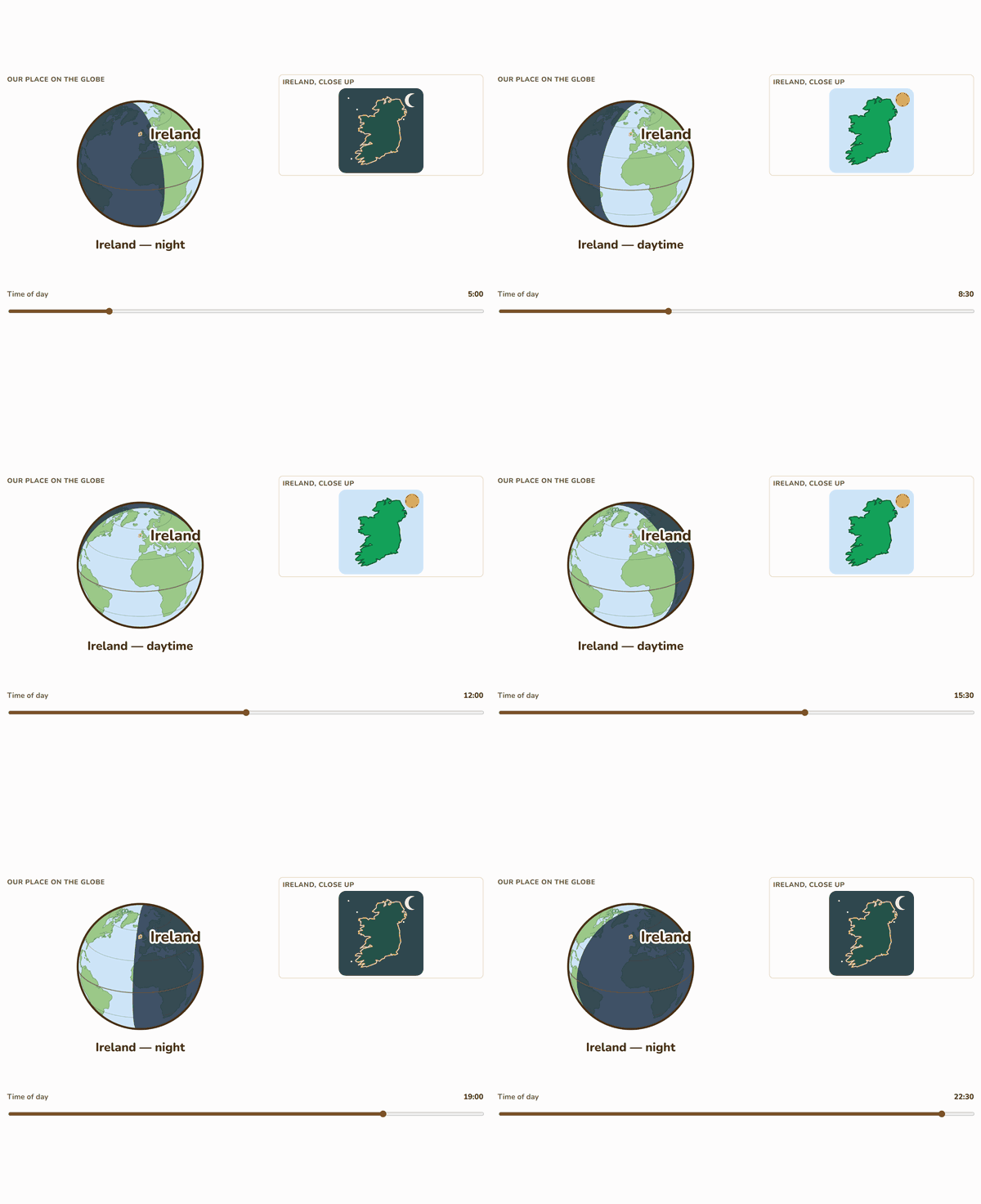
December and January. The darkest weeks of the year turn the class to the sun and the moon: day and night, the short days, the changing moon, the shortest day at our own school, and places where the sun does not rise at all. Christmas falls in mid-December, so the customs of winter light and of Christmas, here, long ago and in other countries, sit in those weeks. January brings frost, snow and storms, and how they change people's days, then the new year in China and in Ireland.
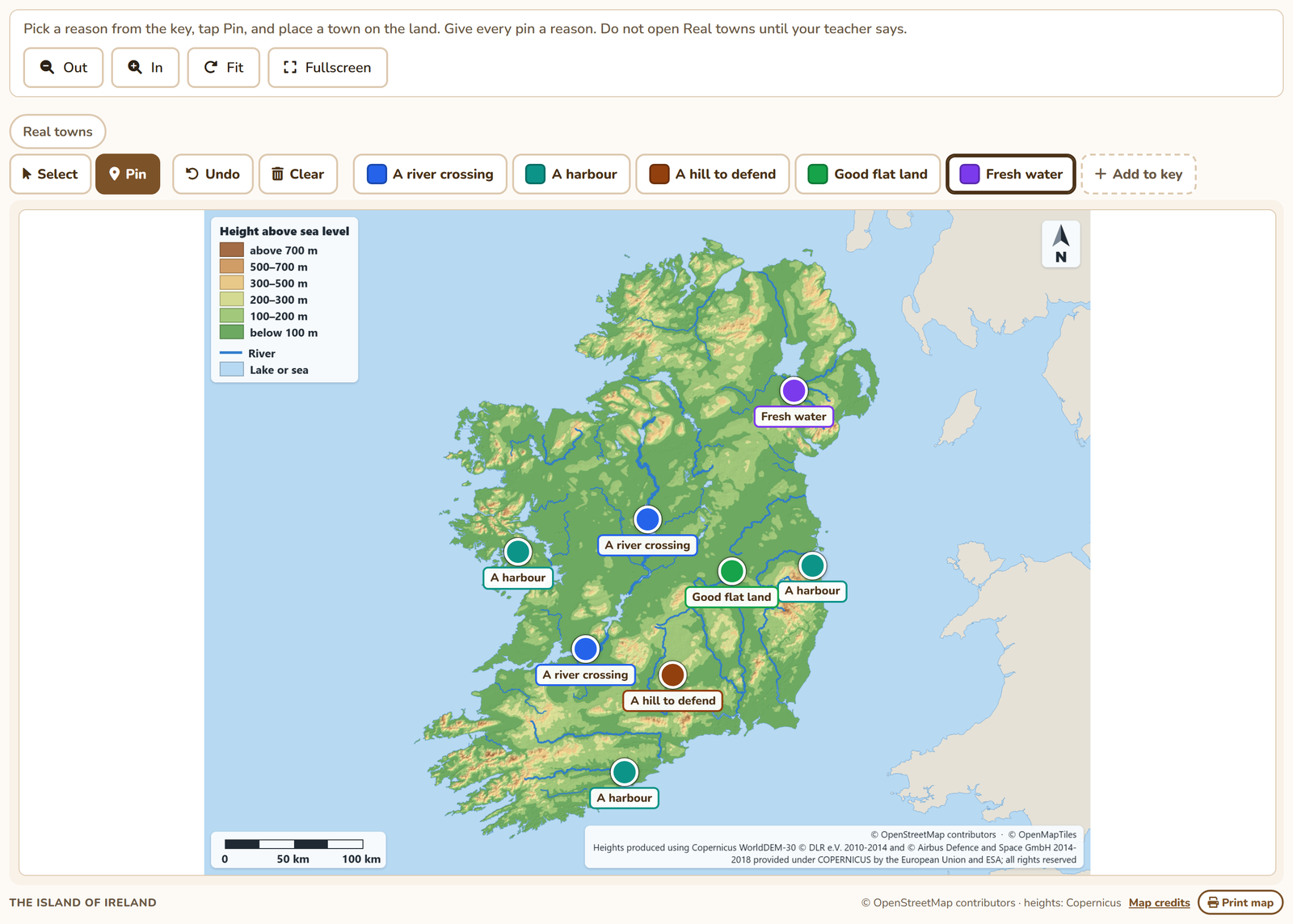
Late January to mid-March. The class zooms out from its own place to the island of Ireland, using the real maps of Ireland on the board: the sea all round, the rivers, mountains, lakes, islands, bogs and coast, the counties and the lines between them, the cities, the ways people travel, and the names of places. St Brigid's Day opens the module at the start of February, and the legends told about Irish places run through it. One walk takes the class to the water nearest the school, so the island's rivers start from one the children can see.
Mid-March to early May. St Patrick's Day opens the module, with what Patrick wrote himself set beside the stories told about him. Spring is when living things change fastest and when weather and farming meet most plainly, so the class looks for signs of spring, nests, wild flowers and bees, reads the wind and a month of real weather, hears old weather sayings, and considers small things it could do for living things, as an invitation. Places of worship of several traditions, spring festivals far away and the old May customs come in the same weeks.
May and June. The widest scale comes last, as the school year ends: the world's continents and oceans, very cold, very hot, very wet and very high places, children's lives in other countries, stories from other countries, famous places, and the sun and the sea at midsummer. The year closes back in the school grounds and on the school's own map, with what the class would show a visitor from far away.
Get in touch to discuss pricing and ordering for your school.
Back to 1st Class courses