The whole first lesson, as your class sees it. No sign-in needed.
Everything a teacher needs to teach SEE for Junior Infants this year.
The whole books come with the course, in each class's Resources.
Every lesson is mapped to the specification. This course teaches 12 of the 12 outcomes for this class.
Tap any outcome to read it. The coloured ones are taught in this course. The curriculum does not include official reference codes for individual learning outcomes, so we have assigned a code scheme to make it easier to identify and track coverage.
72 lessons in 6 modules. The lesson marked Sample opens in full.
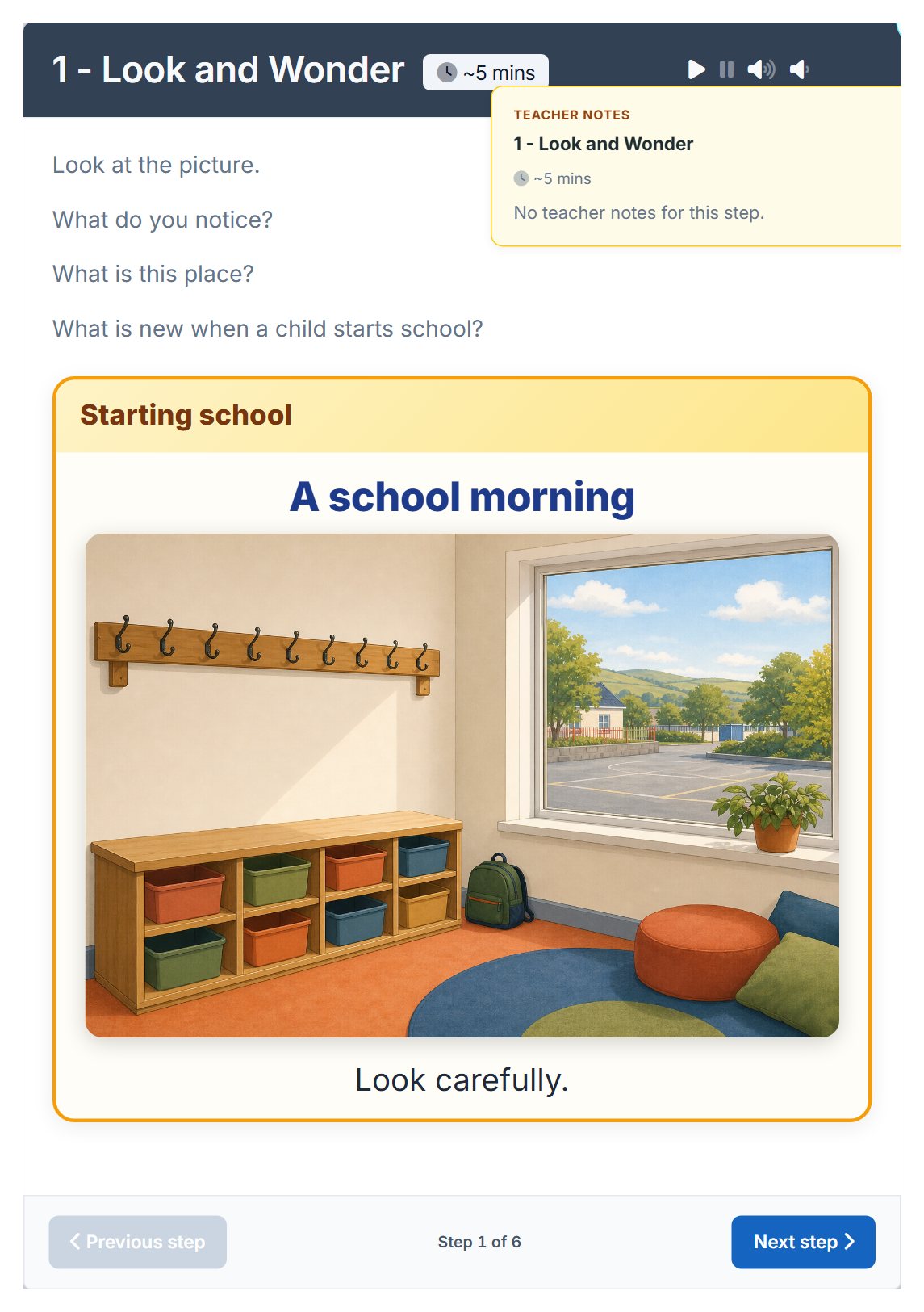
The first six weeks start where a four-year-old stands: the milestone of starting school, the classroom, the people who work in the school, the school grounds and what is near the school on its own map. Autumn begins outside the window, so the module also meets one tree, the day's weather, an old painting of harvest and the first Irish legend. Location words start here and come back all year.
Autumn at its height, from the middle of October to the end of November: leaves turning and falling, birds and animals getting ready for winter, puddles and darker evenings. Halloween is met as people in Ireland have kept it for hundreds of years, and Diwali as a made-up family in a town like ours keeps it. A made-up granny's toys, homes on reed islands in Peru, a fable from Greece and the legend of the Giant's Causeway complete it.
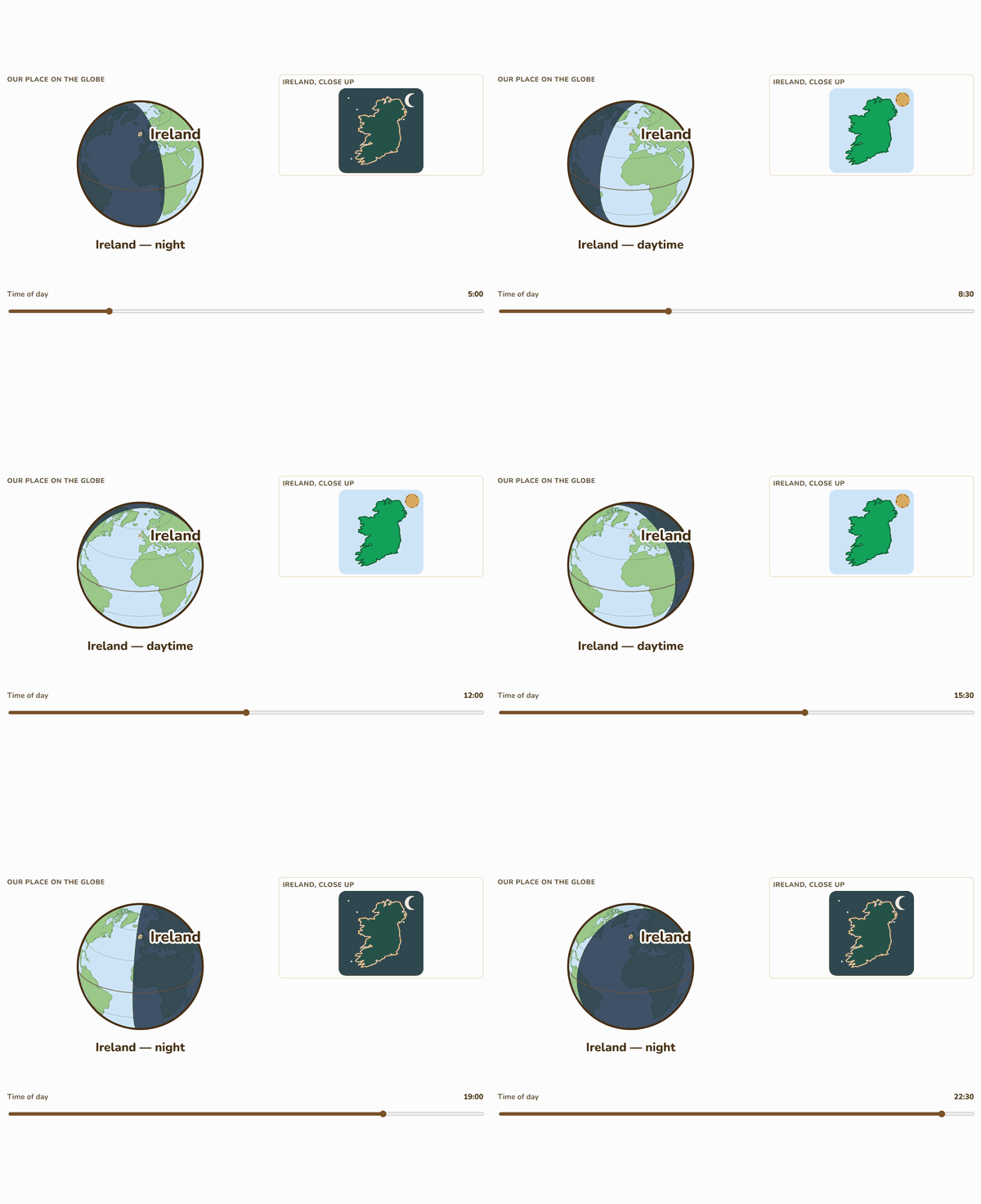
December to the middle of January, the darkest weeks of the year. The class finds out what makes day and night, watches the moon change and meets the shortest day at Newgrange, then the winter festivals of light as what people do. In January the class goes out to the frost and finds out what the cold does to people and animals and to the people who work outside, and the module ends with children in the snow in Norway and the Children of Lir.
The end of January to the middle of March, when winter turns to spring. The class goes out to a tree in winter, the wind, the view from the school gate and the first signs of spring, and meets the lambs. St Brigid's Day, Chinese New Year, Pancake Tuesday and Eid are met as what people do. A story from Norway, a made-up street and carnival in two countries complete it.
The middle of March to the start of May, when spring is everywhere. St Patrick's Day, Easter, Holi and May Day are met as what people do. The class goes out to the minibeasts, a tree in spring and the flowers and bees, looks at nests and April showers, hears a made-up grandad's memories of school, and hears an old story from China.
May and June, the long days. The class meets the sun's warmth and its shadows, a tree in summer, the Earth as a planet and the first people on the moon; looks at toys children make by hand, hot and cold places, an old painting of haymaking, a story from Nigeria and the music and dance of Ireland; and marks the longest day with the bonfires of St John's Eve. The year ends on the class's own milestone: a whole year at school.
Get in touch to discuss pricing and ordering for your school.
Back to Junior Infants courses