A complete year of Maths, delivered by teacher-led interactive-whiteboard lessons, a printed pupil Activity Book, and a Teacher Resource Book, built to the NCCA Primary Mathematics Curriculum.
Click any lesson with to preview it
The pre-number bedrock of the year, opened through real objects and talk: sorting and matching by one attribute, one-to-one correspondence, more and fewer, direct comparison and ordering by size. No numerals and no counting demands, so every child succeeds from the first week and the maths-box routines that carry the whole year settle in.
| Our Maths Box: Things That Go Together Sample | ||
| Sorting by Colour | ||
| Big and Small | ||
| What Belongs Together: Sorting by Kind | ||
| Odd One Out | ||
| Matching: Find the Same | ||
| Things That Go Together | ||
| One for Each Teddy: One-to-one | ||
| More or Fewer: Match Them up to See | ||
| Enough, Not Enough, Too Many: the Busy Cafe | ||
| Long and Short | ||
| Small, Middle-sized, Big: Putting Things in Order | ||
| Numbers All Around Us: the Number Walk | ||
| The Great Sorting Day: Module Review |
Meeting the first numbers properly. Pupils touch-count little sets, recognise and begin to form each numeral, match numeral to set, build the first counting stairs, meet 'one more', and discover that three stays three however it is arranged. Every context is an infant's own world: songs, teddies, birthdays and the numbers on doors and buses.
| The Number 1: Just One | ||
| The Number 2: a Pair Sample | ||
| Writing 1 and 2: in the Air and in the Sand | ||
| The Number 3: the Three Bears | ||
| Sets of 3 All Around | ||
| Writing 3 | ||
| Match the Numeral to the Set | ||
| 1, 2, 3 in Order: the Counting Stairs | ||
| One More | ||
| Still Three: Spread Out or Squeezed Together | ||
| Counting What We Hear and Do: Claps, Hops and Jumps | ||
| Where Numbers Live: 1, 2 and 3 in Our World | ||
| Our 1, 2, 3 Show: Module Review |
Extending the counting world to 4, 5 and zero, then moving from counting sets to making and breaking them: partitioning 4 and 5 onto two plates, joining little sets, and finding a hidden part. Everything stays in objects and talk ('3 and 2 make 5'); there are no plus, minus or equals symbols at this stage. Five becomes a landmark: one whole hand, one full row of the ten-frame.
| The Number 4: Alice the Camel's Humps | ||
| Sets of 4 All Around: the Wheel Hunt | ||
| Writing 4 | ||
| The Number 5: One Whole Hand | ||
| Five Currant Buns in the Baker's Shop | ||
| Writing 5 | ||
| 1 to 5 in Order: the Counting Staircase | ||
| One More, One Less: Teddies in the Bed | ||
| Zero: None at All | ||
| Writing 0 and Counting Down: Blast-off! | ||
| Breaking 4: Two Little Plates | ||
| Breaking 5: Fingers up, Fingers Down Sample | ||
| Putting Sets Together: and Makes | ||
| The Hiding Game: How Many Are Hiding? | ||
| The Five Party: Module Review |
Meeting repeating patterns properly: noticing, copying, continuing, creating and fixing AB, AAB and ABC patterns in colours, sounds and actions. The rule is the star: say the pattern out loud and it tells you what comes next. Patterns stay in little hands (cube trains, threading beads, body percussion) with the pattern-blocks interactive as the shared IWB surface.
| Patterns All Around Us: What Do You Notice? | ||
| Copy My Pattern | ||
| What Comes Next? | ||
| Patterns We Can Hear and Do | ||
| Make Your Own Pattern | ||
| The Pattern Hunt: Outdoors | ||
| Two the Same, Then One: a New Pattern | ||
| Three in the Pattern: Red, Yellow, Blue | ||
| Pattern Detectives: Fix the Mistake | ||
| The Pattern Party: Module Review |
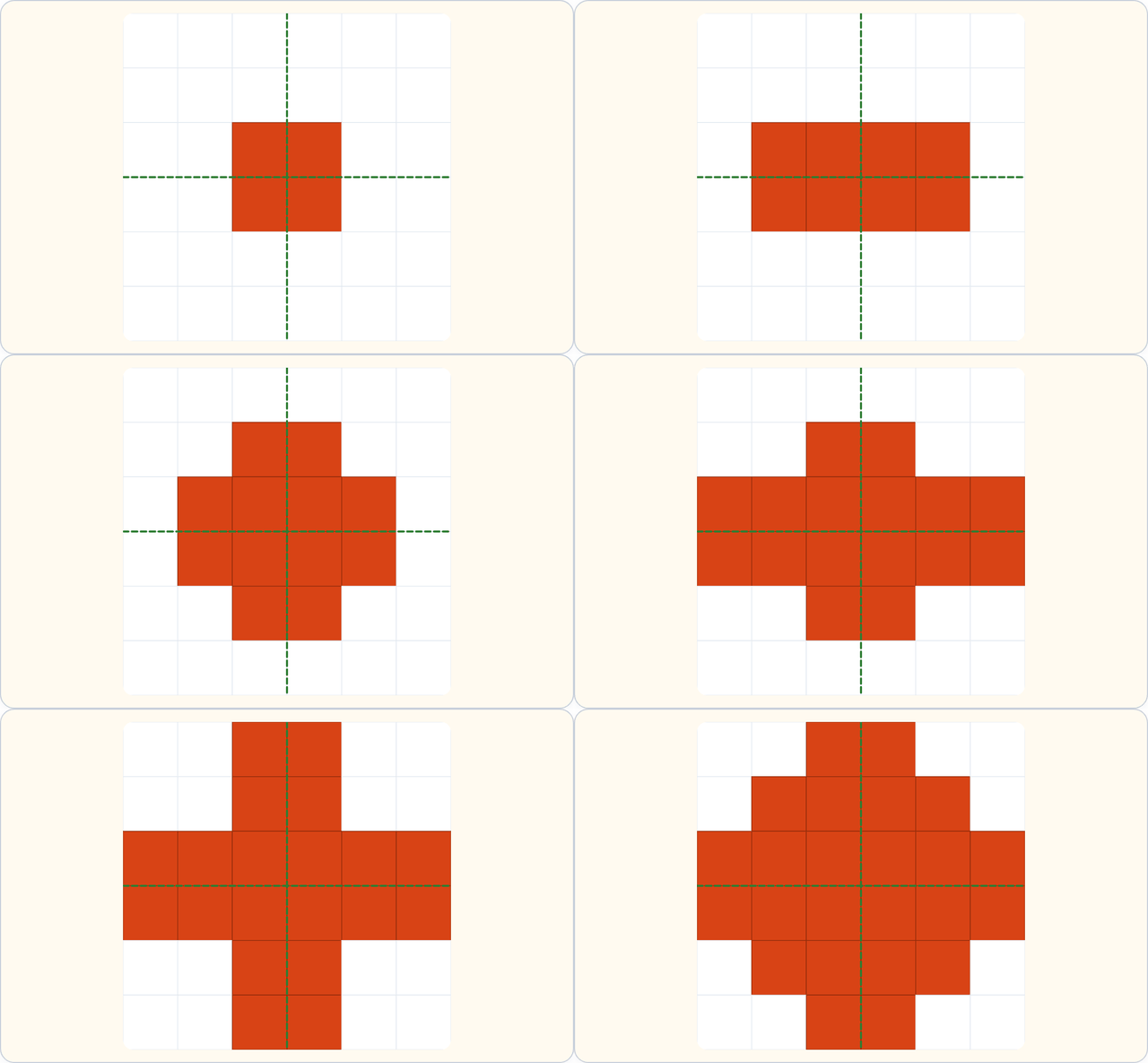
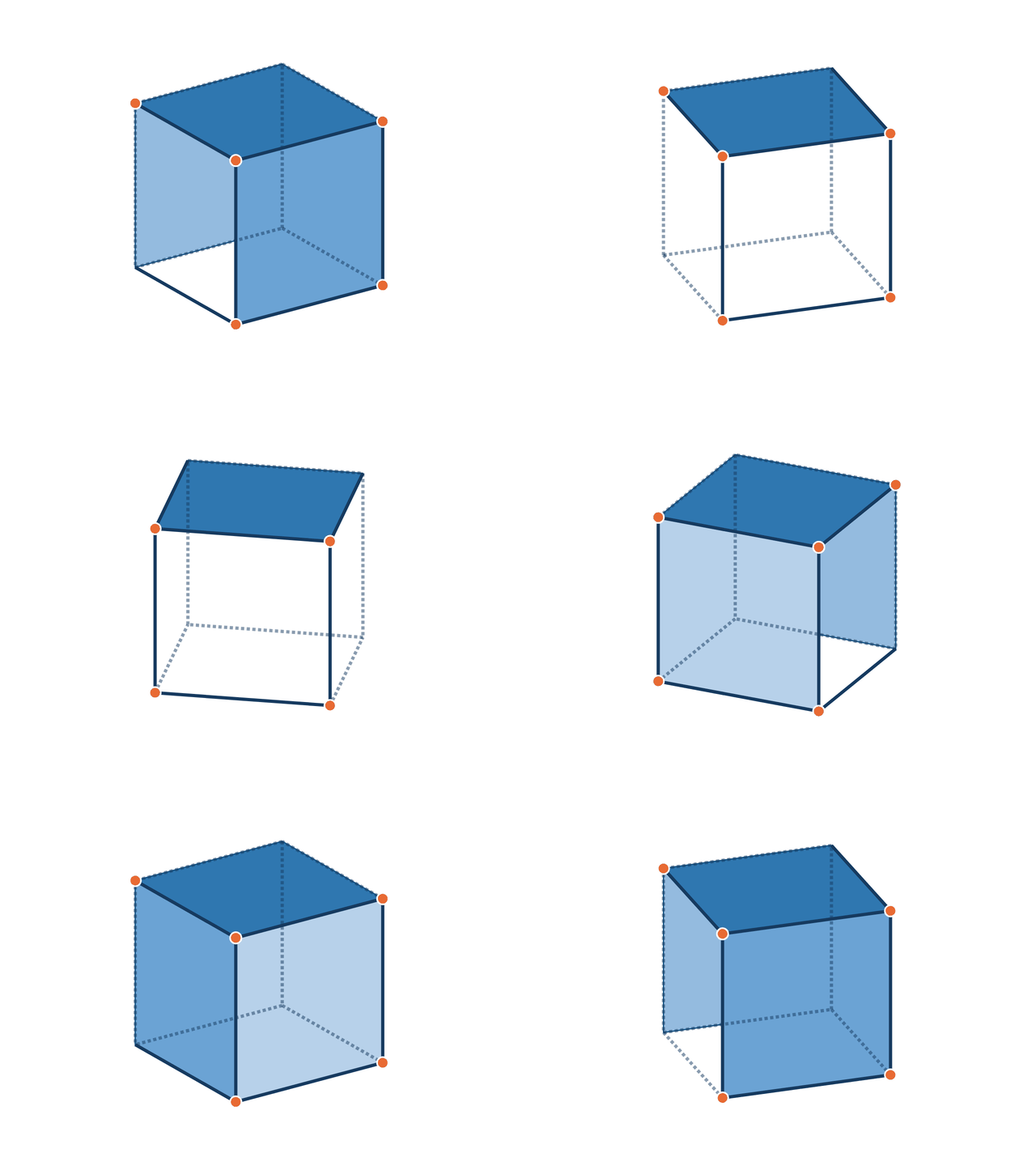
Where things are, then what shape things are. Position words through body play and the shop-corner queue, then 3-D solids before 2-D shapes (infants handle boxes and balls long before they meet the flat shapes on their faces), and finally shape movements: rolling, sliding, turning and fitting. Almost everything is real objects: the feely bag, the junk box, ramps and construction play; the interactive appears only late, once flat shapes arrive.
| Where Is Teddy? on, in, Under, Beside | ||
| Over, Under, Through: the Bear Hunt Trail | ||
| In Front, Behind, Between: the Shop Queue | ||
| The Mystery Box: Meeting Our Solids | ||
| Roll or Slide? the Big Ramp Test | ||
| Balls and Boxes | ||
| Tubes: the Shape That Rolls and Stacks | ||
| Master Builders: Building with Solids | ||
| Flat Faces: Printing with Our Solids | ||
| The Circle: Round and Round | ||
| The Square: Four Sides the Same | ||
| The Triangle: Three Sides, Three Corners | ||
| The Rectangle: Like a Door | ||
| Shape Pictures | ||
| Slide It, Turn It, Fit It in | ||
| The Great Shape Hunt: Module Review |
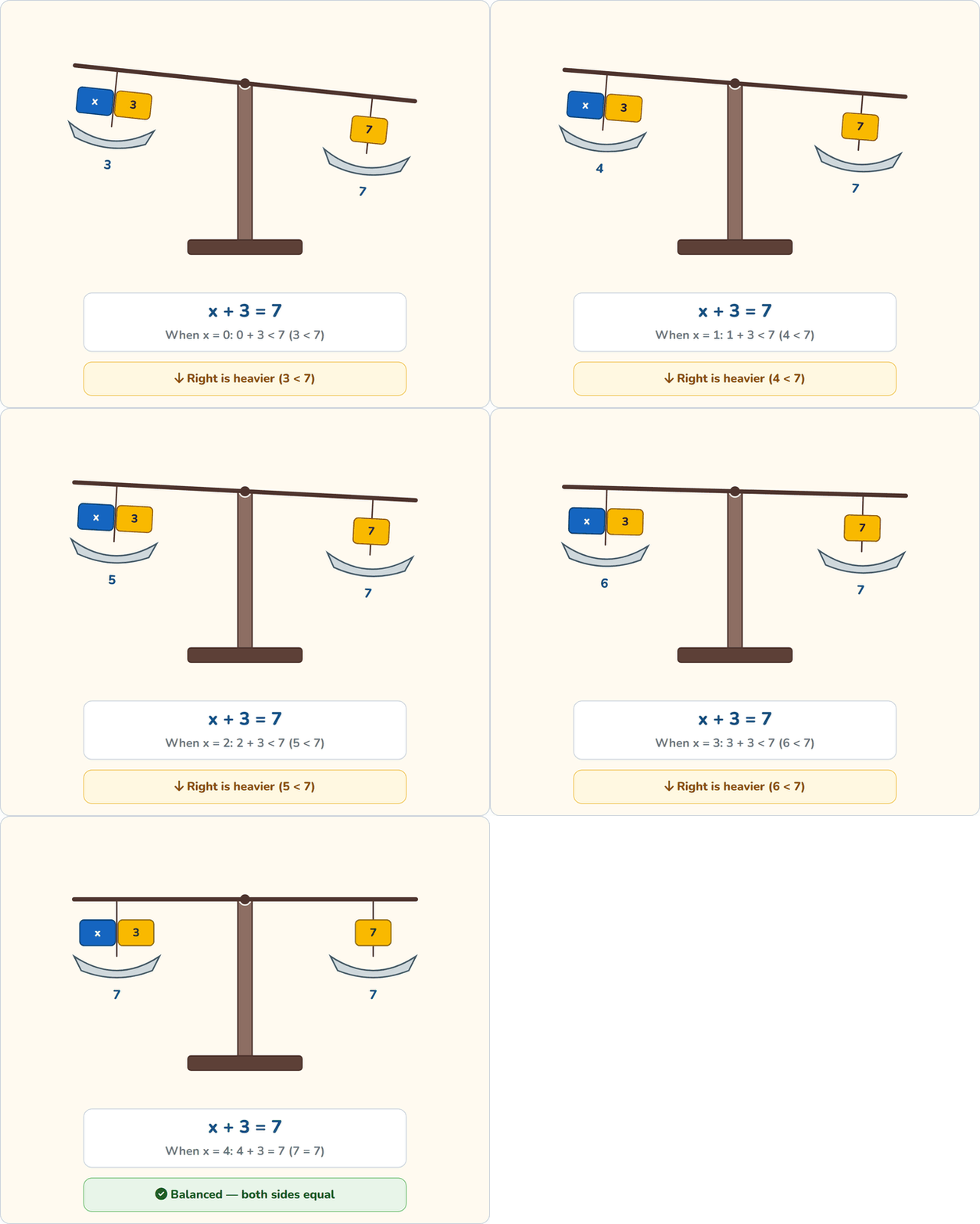
Direct comparison across the three measures an infant can get their hands on: length (longer and shorter, taller, wide and narrow), weight (heavier and lighter, and the surprise that big is not always heavy) and capacity (full, empty and which holds more). Everything is compared directly: lining up ends, hefting in two hands, pouring one into the other; no units yet. The balance scales does the truth-telling, at the carpet and on the IWB.
| Longer and Shorter: Line up the Ends | ||
| Taller and Shorter: Towers Side by Side | ||
| Wide and Narrow: Roads for Our Cars | ||
| Short, Middle-sized, Long: the Washing Line | ||
| Heavy and Light: the Two-hand Test | ||
| The Balance Scales Tells the Truth | ||
| Big Is Not Always Heavy | ||
| Full and Empty | ||
| Which Holds More? the Pouring Test | ||
| Guess How Many: the Button Jars | ||
| The Teddy Bears' Sports Day: Measures Outdoors | ||
| The Measures Fair: Module Review |
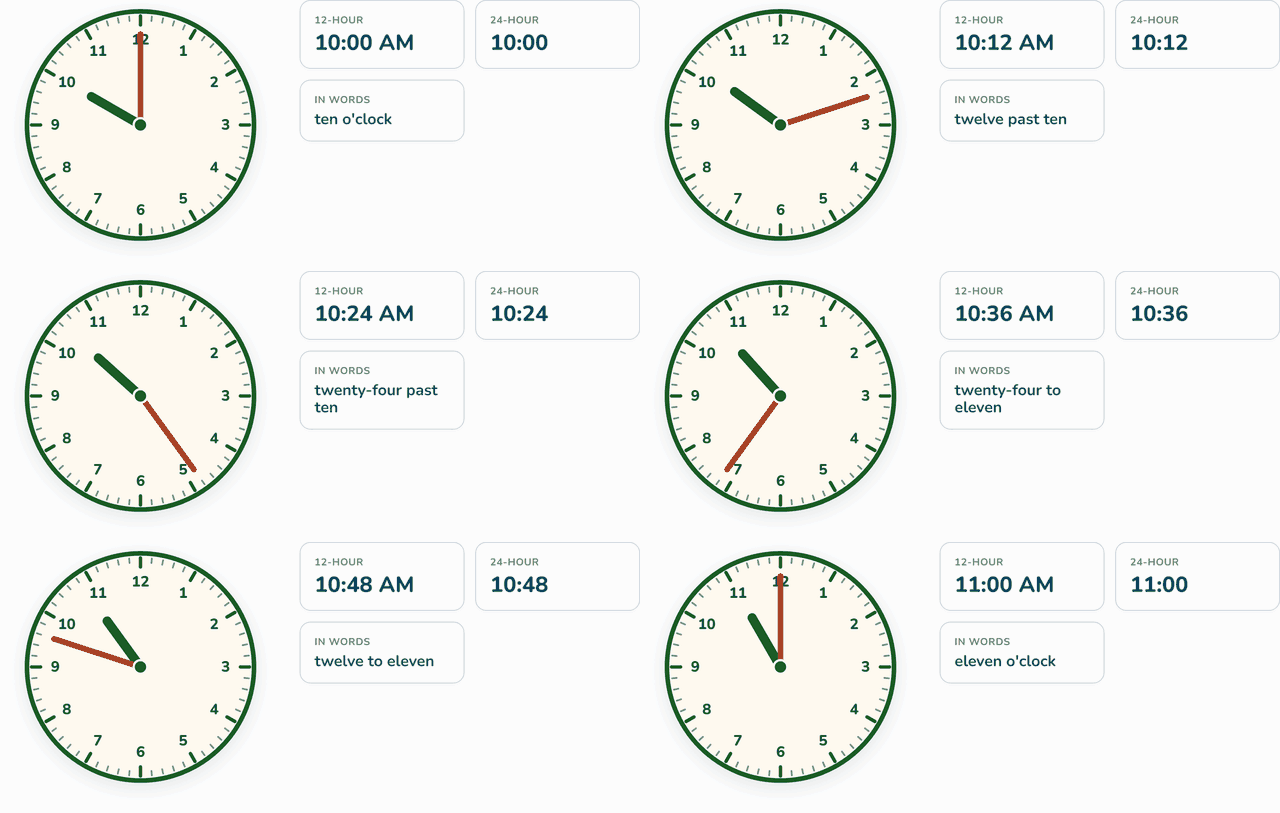
A first sense of time: day and night, the order of the day's events (first, next, last; before and after), and the feel of a long time against a short time. There are no clocks and no days-of-the-week lists at this stage: time is pictures, routines and talk, sequenced with photo cards on the washing line, acted out and sung. No interactive appears in this module; every lesson runs on picture sequencing, rhyme and play.
| Day or Night? | ||
| Morning Time: This Is the Way We Start the Day | ||
| First, Next, Last: Our School Day | ||
| Before and After | ||
| A Long Time or a Short Time | ||
| Bedtime: Night-time Comes | ||
| Our Whole Day: Morning to Night | ||
| Our Day and Night Show: Module Review |
First money awareness, entirely through shop play: money is what we swap for things, coins are special and worth looking at closely, one coin buys one thing, and a price tag tells us how many coins to count out. Everything stays tiny: 1c coins in little purses, price tags of 1c, 2c and 3c, no sums and no change. The shop corner, the till and the talk are the whole lesson. No interactive appears in this module; the money lessons run on role play.
| What Is Money for? the Shop Opens | ||
| Looking at Coins | ||
| One Coin for Each: the 1c Shop | ||
| The Price Tag: Count the Coins Out | ||
| Shopkeeper Day | ||
| The Great Class Market: Module Review |
Late in the year the counting world opens up to 10: oral counts forwards and backwards, touch-counting sets to 10, meeting and recognising the numerals 6 to 10 (recognition only, writing these belongs to Senior Infants), seeing little dot patterns at a glance, and the first landmark feel of ten (a full frame, two full hands). Rhymes and games carry every lesson.
| The Big Count to 10 | ||
| The Number 6: the Egg Box | ||
| The Number 7: Rainbows and Ladybirds | ||
| The Number 8: the Octopus | ||
| The Number 9: One Box Empty | ||
| The Number 10: the Full Frame | ||
| The Counting Stairs to 10 | ||
| Match the Numeral to the Set: 6 to 10 | ||
| Dots at a Glance | ||
| Counting Backwards from 10: Blast Off! | ||
| Ten in the Bed | ||
| Counting the World: Steps, Hops and Treasures | ||
| Guess, Then Count | ||
| The Counting Fair: Module Review |
The year closes with finding things out: asking a class question, collecting one answer from everyone (one cube, one mark, one picture each), lining the answers up fairly so eyes can compare, and reading what the rows say (more, fewer, most of all). Real-object graphs come before picture graphs, and every graph grows from a question the class actually cares about; the tally-chart and pictogram-builder interactives are the shared IWB surfaces, and one picture always stands for one answer.
| Sort It, Line It up, See It | ||
| Our Big Question: Vote with a Cube | ||
| The Shoe Graph: a Real-thing Graph | ||
| From Things to Pictures | ||
| A Mark for Each | ||
| The Picture Graph on the Big Screen | ||
| Reading a Graph: More, Fewer, Most of All | ||
| How Do We Come to School? | ||
| The Traffic Watch | ||
| The Beanbag Game: Keeping the Score Safe | ||
| The Minibeast Graph: Answer Its Questions | ||
| Our Class Found Out: Module Review |
The pre-number bedrock of the year, opened through real objects and talk: sorting and matching by one attribute, one-to-one correspondence, more and fewer, direct comparison and ordering by size. No numerals and no counting demands, so every child succeeds from the first week and the maths-box routines that carry the whole year settle in.
| Our Maths Box: Things That Go Together Sample | ||
| Sorting by Colour | ||
| Big and Small | ||
| What Belongs Together: Sorting by Kind | ||
| Odd One Out | ||
| Matching: Find the Same | ||
| Things That Go Together | ||
| One for Each Teddy: One-to-one | ||
| More or Fewer: Match Them up to See | ||
| Enough, Not Enough, Too Many: the Busy Cafe | ||
| Long and Short | ||
| Small, Middle-sized, Big: Putting Things in Order | ||
| Numbers All Around Us: the Number Walk | ||
| The Great Sorting Day: Module Review |
Meeting the first numbers properly. Pupils touch-count little sets, recognise and begin to form each numeral, match numeral to set, build the first counting stairs, meet 'one more', and discover that three stays three however it is arranged. Every context is an infant's own world: songs, teddies, birthdays and the numbers on doors and buses.
| The Number 1: Just One | ||
| The Number 2: a Pair Sample | ||
| Writing 1 and 2: in the Air and in the Sand | ||
| The Number 3: the Three Bears | ||
| Sets of 3 All Around | ||
| Writing 3 | ||
| Match the Numeral to the Set | ||
| 1, 2, 3 in Order: the Counting Stairs | ||
| One More | ||
| Still Three: Spread Out or Squeezed Together | ||
| Counting What We Hear and Do: Claps, Hops and Jumps | ||
| Where Numbers Live: 1, 2 and 3 in Our World | ||
| Our 1, 2, 3 Show: Module Review |
Extending the counting world to 4, 5 and zero, then moving from counting sets to making and breaking them: partitioning 4 and 5 onto two plates, joining little sets, and finding a hidden part. Everything stays in objects and talk ('3 and 2 make 5'); there are no plus, minus or equals symbols at this stage. Five becomes a landmark: one whole hand, one full row of the ten-frame.
| The Number 4: Alice the Camel's Humps | ||
| Sets of 4 All Around: the Wheel Hunt | ||
| Writing 4 | ||
| The Number 5: One Whole Hand | ||
| Five Currant Buns in the Baker's Shop | ||
| Writing 5 | ||
| 1 to 5 in Order: the Counting Staircase | ||
| One More, One Less: Teddies in the Bed | ||
| Zero: None at All | ||
| Writing 0 and Counting Down: Blast-off! | ||
| Breaking 4: Two Little Plates | ||
| Breaking 5: Fingers up, Fingers Down Sample | ||
| Putting Sets Together: and Makes | ||
| The Hiding Game: How Many Are Hiding? | ||
| The Five Party: Module Review |
Meeting repeating patterns properly: noticing, copying, continuing, creating and fixing AB, AAB and ABC patterns in colours, sounds and actions. The rule is the star: say the pattern out loud and it tells you what comes next. Patterns stay in little hands (cube trains, threading beads, body percussion) with the pattern-blocks interactive as the shared IWB surface.
| Patterns All Around Us: What Do You Notice? | ||
| Copy My Pattern | ||
| What Comes Next? | ||
| Patterns We Can Hear and Do | ||
| Make Your Own Pattern | ||
| The Pattern Hunt: Outdoors | ||
| Two the Same, Then One: a New Pattern | ||
| Three in the Pattern: Red, Yellow, Blue | ||
| Pattern Detectives: Fix the Mistake | ||
| The Pattern Party: Module Review |
Where things are, then what shape things are. Position words through body play and the shop-corner queue, then 3-D solids before 2-D shapes (infants handle boxes and balls long before they meet the flat shapes on their faces), and finally shape movements: rolling, sliding, turning and fitting. Almost everything is real objects: the feely bag, the junk box, ramps and construction play; the interactive appears only late, once flat shapes arrive.
| Where Is Teddy? on, in, Under, Beside | ||
| Over, Under, Through: the Bear Hunt Trail | ||
| In Front, Behind, Between: the Shop Queue | ||
| The Mystery Box: Meeting Our Solids | ||
| Roll or Slide? the Big Ramp Test | ||
| Balls and Boxes | ||
| Tubes: the Shape That Rolls and Stacks | ||
| Master Builders: Building with Solids | ||
| Flat Faces: Printing with Our Solids | ||
| The Circle: Round and Round | ||
| The Square: Four Sides the Same | ||
| The Triangle: Three Sides, Three Corners | ||
| The Rectangle: Like a Door | ||
| Shape Pictures | ||
| Slide It, Turn It, Fit It in | ||
| The Great Shape Hunt: Module Review |
Direct comparison across the three measures an infant can get their hands on: length (longer and shorter, taller, wide and narrow), weight (heavier and lighter, and the surprise that big is not always heavy) and capacity (full, empty and which holds more). Everything is compared directly: lining up ends, hefting in two hands, pouring one into the other; no units yet. The balance scales does the truth-telling, at the carpet and on the IWB.
| Longer and Shorter: Line up the Ends | ||
| Taller and Shorter: Towers Side by Side | ||
| Wide and Narrow: Roads for Our Cars | ||
| Short, Middle-sized, Long: the Washing Line | ||
| Heavy and Light: the Two-hand Test | ||
| The Balance Scales Tells the Truth | ||
| Big Is Not Always Heavy | ||
| Full and Empty | ||
| Which Holds More? the Pouring Test | ||
| Guess How Many: the Button Jars | ||
| The Teddy Bears' Sports Day: Measures Outdoors | ||
| The Measures Fair: Module Review |
A first sense of time: day and night, the order of the day's events (first, next, last; before and after), and the feel of a long time against a short time. There are no clocks and no days-of-the-week lists at this stage: time is pictures, routines and talk, sequenced with photo cards on the washing line, acted out and sung. No interactive appears in this module; every lesson runs on picture sequencing, rhyme and play.
| Day or Night? | ||
| Morning Time: This Is the Way We Start the Day | ||
| First, Next, Last: Our School Day | ||
| Before and After | ||
| A Long Time or a Short Time | ||
| Bedtime: Night-time Comes | ||
| Our Whole Day: Morning to Night | ||
| Our Day and Night Show: Module Review |
First money awareness, entirely through shop play: money is what we swap for things, coins are special and worth looking at closely, one coin buys one thing, and a price tag tells us how many coins to count out. Everything stays tiny: 1c coins in little purses, price tags of 1c, 2c and 3c, no sums and no change. The shop corner, the till and the talk are the whole lesson. No interactive appears in this module; the money lessons run on role play.
| What Is Money for? the Shop Opens | ||
| Looking at Coins | ||
| One Coin for Each: the 1c Shop | ||
| The Price Tag: Count the Coins Out | ||
| Shopkeeper Day | ||
| The Great Class Market: Module Review |
Late in the year the counting world opens up to 10: oral counts forwards and backwards, touch-counting sets to 10, meeting and recognising the numerals 6 to 10 (recognition only, writing these belongs to Senior Infants), seeing little dot patterns at a glance, and the first landmark feel of ten (a full frame, two full hands). Rhymes and games carry every lesson.
| The Big Count to 10 | ||
| The Number 6: the Egg Box | ||
| The Number 7: Rainbows and Ladybirds | ||
| The Number 8: the Octopus | ||
| The Number 9: One Box Empty | ||
| The Number 10: the Full Frame | ||
| The Counting Stairs to 10 | ||
| Match the Numeral to the Set: 6 to 10 | ||
| Dots at a Glance | ||
| Counting Backwards from 10: Blast Off! | ||
| Ten in the Bed | ||
| Counting the World: Steps, Hops and Treasures | ||
| Guess, Then Count | ||
| The Counting Fair: Module Review |
The year closes with finding things out: asking a class question, collecting one answer from everyone (one cube, one mark, one picture each), lining the answers up fairly so eyes can compare, and reading what the rows say (more, fewer, most of all). Real-object graphs come before picture graphs, and every graph grows from a question the class actually cares about; the tally-chart and pictogram-builder interactives are the shared IWB surfaces, and one picture always stands for one answer.
| Sort It, Line It up, See It | ||
| Our Big Question: Vote with a Cube | ||
| The Shoe Graph: a Real-thing Graph | ||
| From Things to Pictures | ||
| A Mark for Each | ||
| The Picture Graph on the Big Screen | ||
| Reading a Graph: More, Fewer, Most of All | ||
| How Do We Come to School? | ||
| The Traffic Watch | ||
| The Beanbag Game: Keeping the Score Safe | ||
| The Minibeast Graph: Answer Its Questions | ||
| Our Class Found Out: Module Review |
Get in touch to discuss pricing and ordering for your school.