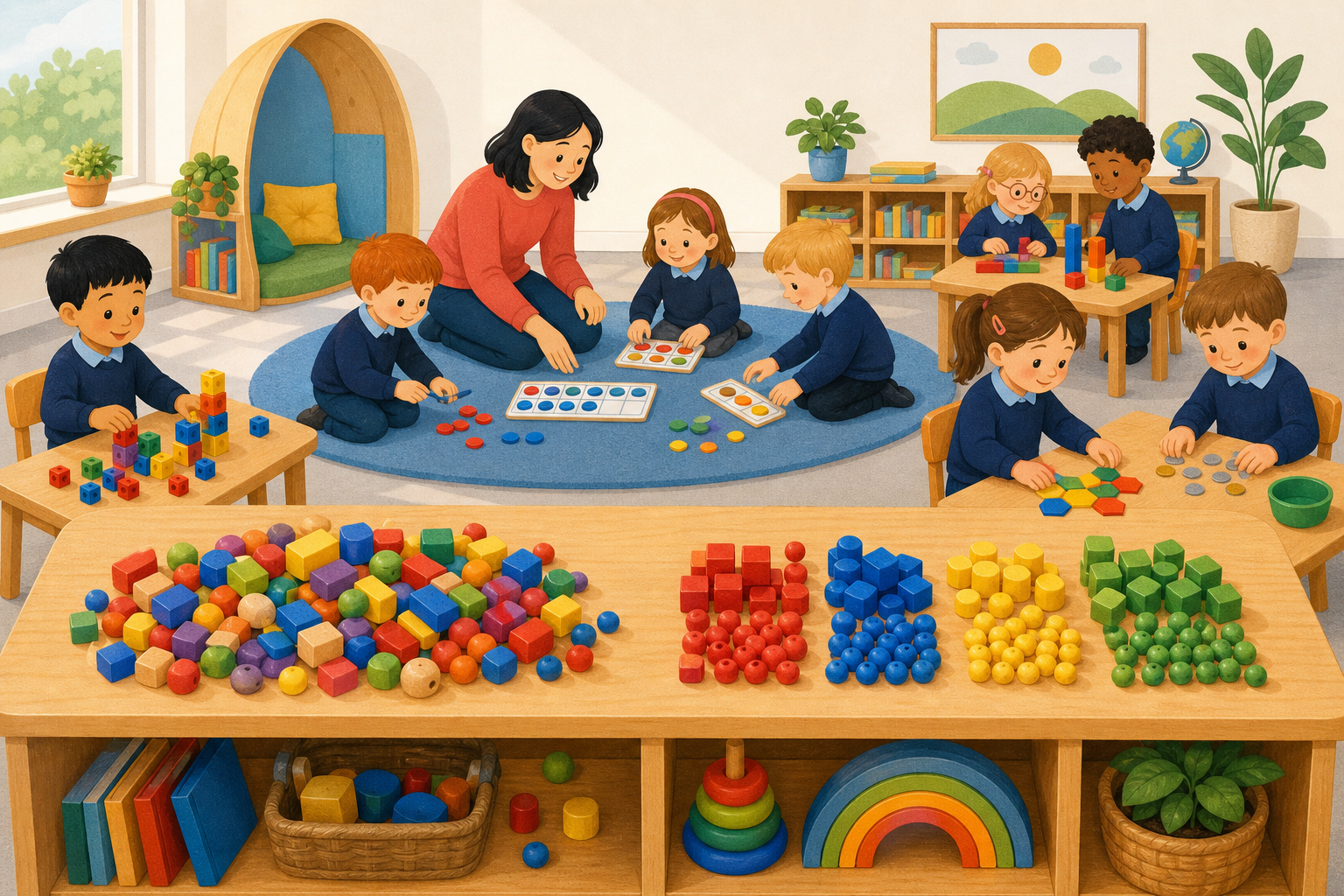
Look at these two toy shelves. One is all mixed up. One has the toys sorted into neat groups.
What do you notice?
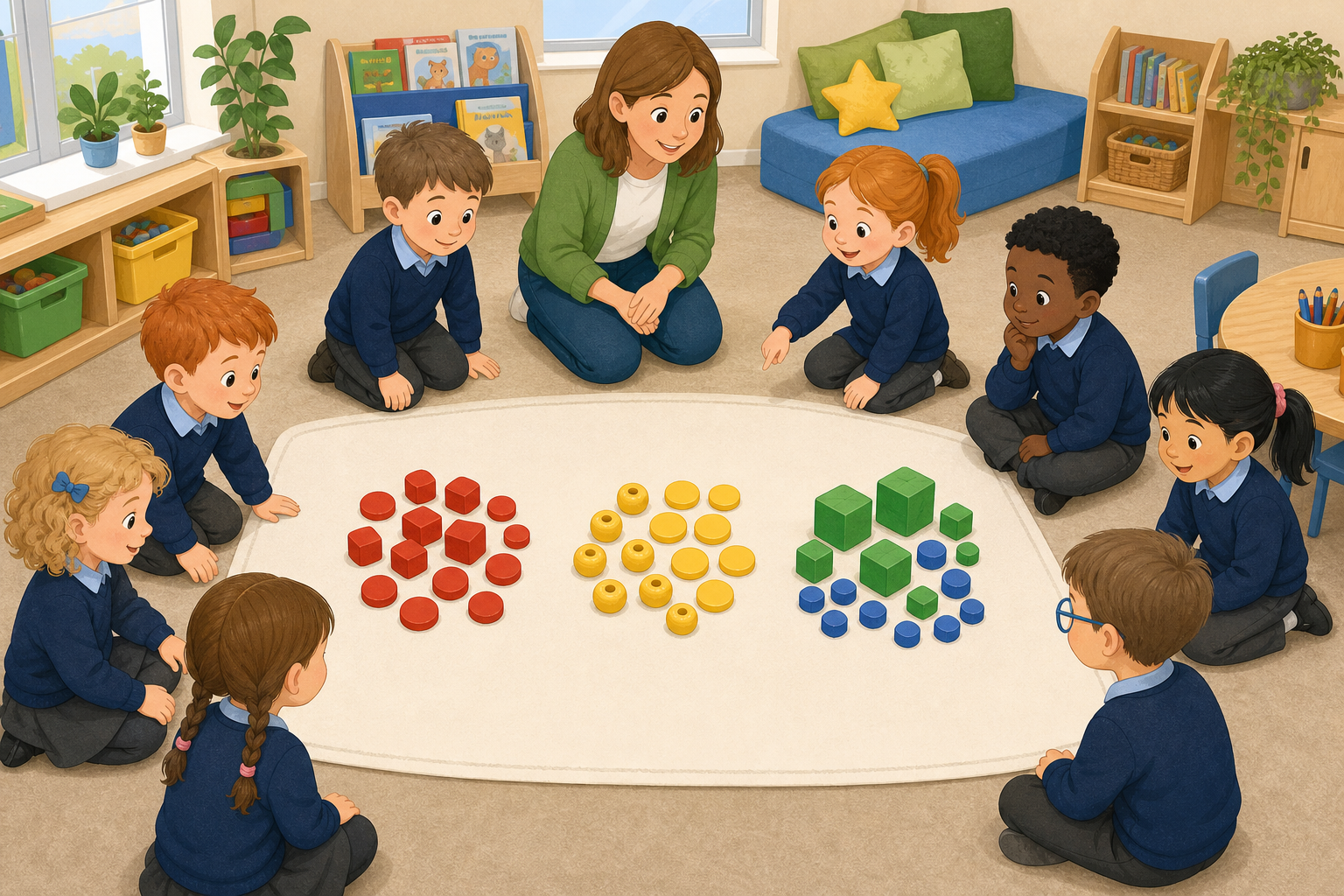
Show the two photos side by side and give five seconds of quiet looking before any hands go up. Take two or three what do you notice? answers, not open call-outs. Draw out that the tidy shelf has things that go together in each spot.
Watch as I tip out a little tub of mixed counters, cubes and beads onto the mat.
Some things go together. I am going to make some groups and tell you why each thing goes where it goes.
I can sort by colour, so all the red things go together. I can sort by shape, so all the round things go together. I can sort by size, so all the big things go together and all the little things go together.
This is a teacher-led demonstration with the real maths-box objects on the visualiser or carpet mat, not an on-screen activity. Tip out a small mixed tub and think aloud: this one is a cube, I will put it with the other cubes… this one is round and shiny, it goes here.
Point at the on-screen picture as you say each attribute word so colour, shape and size are grounded before the children sort. Make sure you model all three: a colour pile, a round-shape pile, and a big/small pile so size is seen and not just heard.
Model that there is more than one right way to group. Deliberately pause and wonder aloud: should this bead go with the round things, or with the beads? The point is that the child chooses the reason — there is no single correct sort. Keep every sentence short and name what your hands are doing.
Now it is your turn. In a moment I will give each of you (or your little group) a tray of mixed things.
First, find two things that look the same and put them together. Then keep going and sort the rest into groups your own way.
You can sort by colour (all the red together), by shape (all the round ones together), or by size (all the big ones together). The reason things go together is called your rule. When you finish, be ready to tell me your rule.
Hand each child (or small group) a sorting tray with a small mix of counters, interlocking cubes and threading beads before they begin — this is the moment the tray arrives, so name it as you pass them out. This round is for pupils to sort at their tables with real maths-box objects — circulate and listen. There is no one right answer: a child sorting by colour and a child sorting by shape are both correct.
Get the youngest sorters started with a concrete first move: find two things that look the same and put them together. Circulate and ask show me your group and why do these go together? Accept every sensible reason and revoice it aloud (ah, you put all the little ones here). Give a one-minute warning before you stop, so the beat has a clear mid-point re-focus.
Hold up your finished tray for the class to see.
Can we guess your rule? Did you sort by colour, by shape, or by size?
This round is for talking it through together — pupils take turns holding up a tray and the class guesses the rule.
Bring a few finished trays to the front one at a time. Take two or three hands-up guesses for each tray (all red!, all cubes!). The child confirms or corrects. Revoice a strong reason: so your rule was colour — everything red is together. Keep it brisk; four or five trays is plenty.
How did you choose what went together today?
Did anyone sort the same things a different way from their friends?
Listen for children naming a reason — colour, shape, size. Revoice the big idea: the same box of things can be sorted lots of ways, and each way has its own rule. Head off the idea that there is only one right answer — celebrate two children who grouped the same tray differently.
You're previewing this lesson. Get full access to this lesson and hundreds more — each one ready to teach, with interactive activities, printable resources and pupil progress tracking built in.