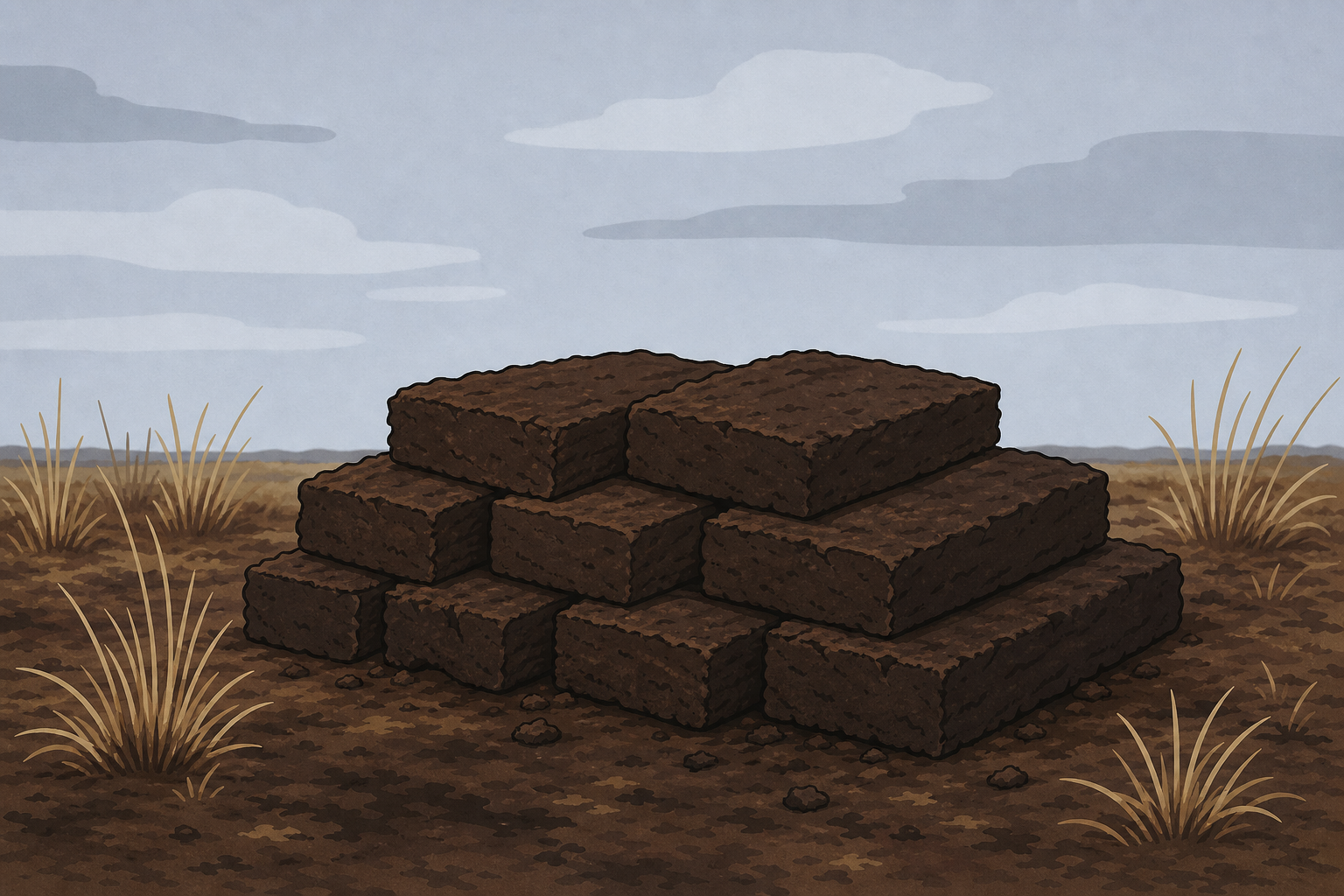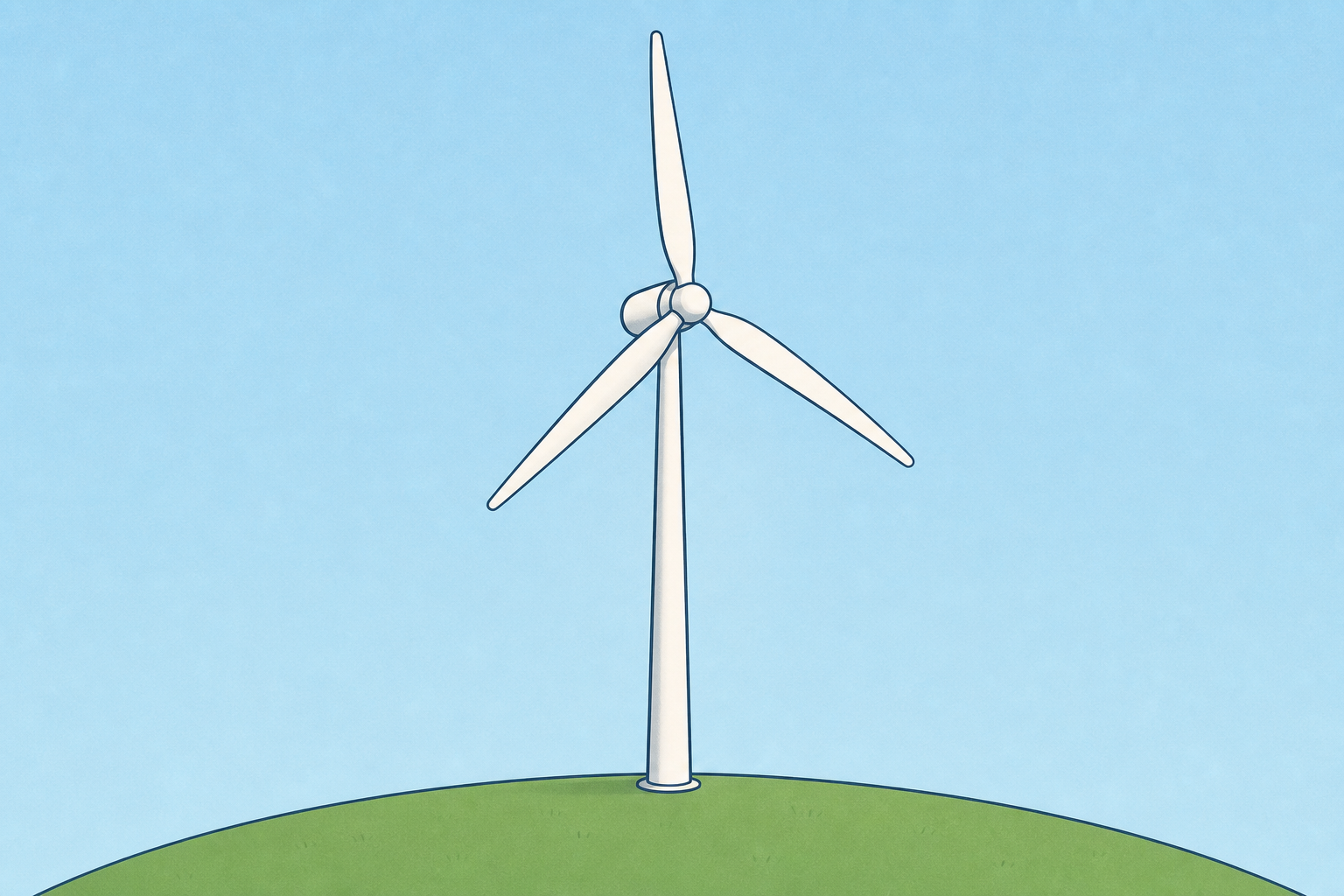
When you switch on a light or charge a tablet, where does that energy come from? Hands up one idea.
Today we will sort energy sources into two big groups and feel one of them for ourselves.
Keep this light. Accept any sensible ideas (the plug, the ESB, the sun, wind, a power station) without correcting yet. The sort and the key idea come next.
Have ready to show: one energy-source card (for example Wind) and one finished pinwheel so curiosity is sparked, but do not hand materials out yet.
Link to Irish life: many children will have seen wind turbines on hills or from a car. Name that if it comes up.
Energy comes from an energy source — a place or thing that gives us heat, light or power.
Today we sort sources into two groups:
Turn and talk: if we keep using something for years and years, will nature make more of it quickly, or will it slowly disappear? Be ready to share one idea with hands up.
Teach the core contrast before the sort. Project only the short board text above. Use the full table yourself. Save the phrase wind energy for the pinwheel step so the board stays light.
| Concept | Why it matters | Example |
|---|---|---|
| Renewable — an energy source that keeps coming back and will not run out | Choosing renewable sources helps Ireland keep lights and heat going for the future | Wind keeps blowing across Ireland, so wind farms can keep making electricity |
| Non-renewable — an energy source that will run out one day because nature cannot replace it quickly | If we only used these, one day there would be none left for heat and power | Gas and turf take a very long time to form, so once we use them up they are gone |
| Wind energy — energy from moving air that can spin a pinwheel or a turbine (name this at the pinwheel step) | It is a renewable source pupils can feel with their own hands today | Blowing on a paper pinwheel makes the blades spin, just as wind spins a turbine |
Supporting phrase (say aloud, not a fourth board term): an energy source is simply where the energy comes from — the sun, the wind, gas under the ground, turf from a bog.
Worked sort (model aloud before groups begin): Hold up the turf card. I wonder which group turf belongs in. I predict non-renewable, because peat takes thousands of years to form in a bog, so we cannot quickly make more. I place it in non-renewable. That is how we will decide for each card: keep coming back, or will run out?
Misconception to head off: children sometimes say wood is non-renewable because a cut tree is gone. At this age, treat wood as renewable when trees are replanted, and say so plainly. The careful-use / replant idea belongs with wood only, not with wind or sun. Turf is non-renewable because new peat forms far too slowly.
Nature of STEM: Ireland once leaned heavily on turf and coal. Today more electricity comes from wind farms on hills and coasts. People keep working out cleaner ways to power homes.
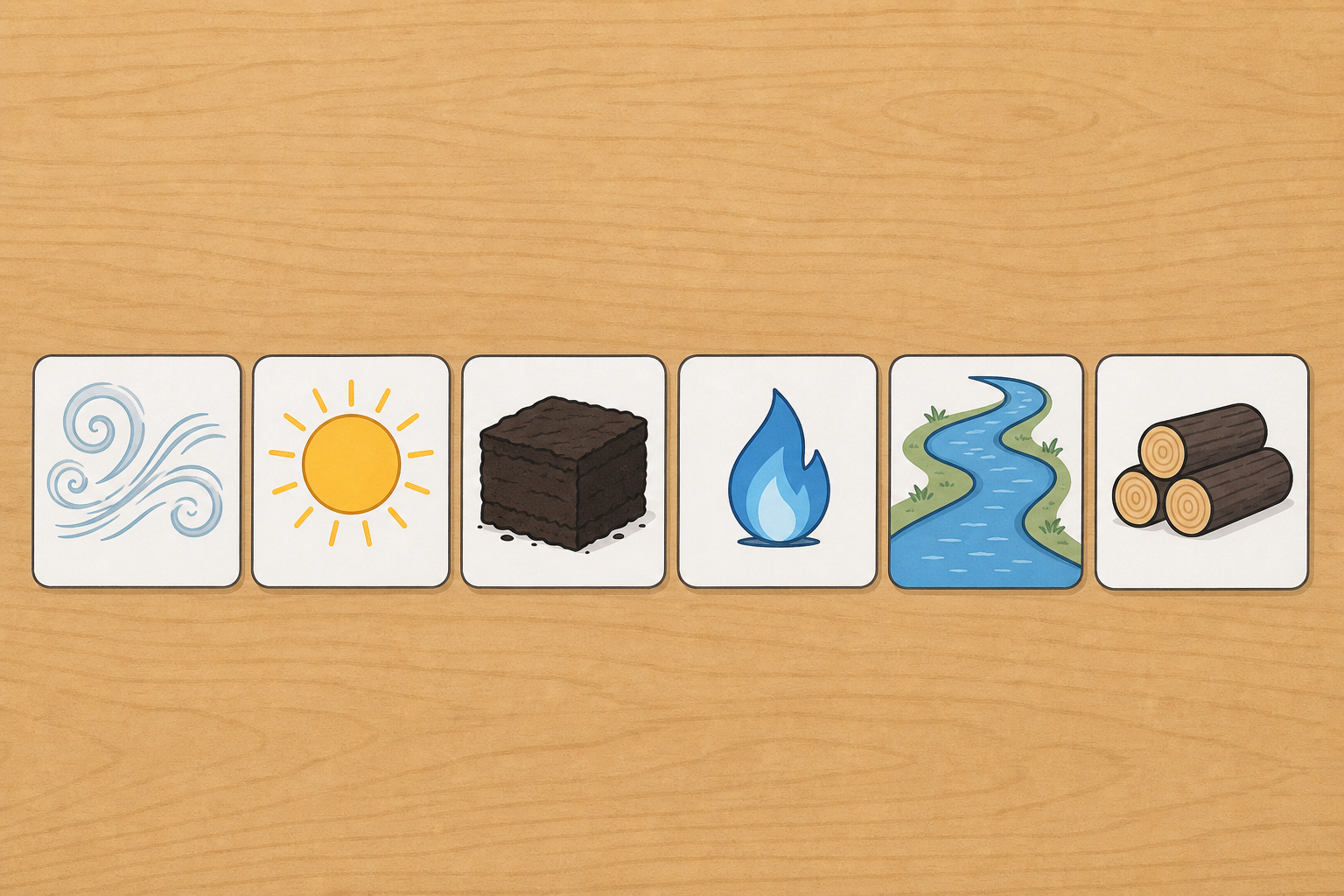
In your group, look at the six energy-source cards:
Sort each card into renewable (keeps coming back) or non-renewable (will run out). Talk about why before you place it. Be ready to share one choice with the class.
Print the provided energy-source cards (one set of six per group). Lay out two labelled sorting trays or mats per group: Renewable and Non-renewable.
During the sort: circulate and ask Why did you put that there? and Will nature make more of this quickly? If a group is stuck, return to the turf model from the last step. If pupils treat moving water as drinking water, point back to the card clue: rivers and dams that make electricity.
Differentiation: less confident groups sort three cards first (wind, sun, gas) then the rest. Confident groups add a sticky note naming one place they have seen that source (a turbine, a sunny panel, a fire).
What good looks like: every card is placed and the group can say keep-coming-back or will-run-out for at least two cards in their own words.
Look at the six cards on the interactive: wind, sun, turf, gas, moving water and wood.
We will answer the question on screen and send each one to renewable or non-renewable. Call out where you think each card belongs, and say why.
Drive the sorting-tree interactive on the IWB in challenge mode so the class places each source together. There are no scores or streaks — only right group or not yet, with a quick reason said aloud.
What appears on screen: six item cards (wind, sun, turf, gas, moving water, wood), the question Does this energy source keep coming back without running out?, and two groups: renewable and non-renewable. Work through the placements one at a time.
Fold the whole class in: when one pupil suggests a group, ask another Do you agree? Why?
If the interactive is unavailable: rebuild the same two groups with the paper cards on the board and call out the items yourself.
Ireland once burned a lot of turf; now many hills have wind turbines spinning in the same weather that flaps your coat.
Look at this outline of Ireland on the board. Together we will place each energy source where you might notice it in Ireland, and say renewable or non-renewable as it goes on:
When it is your turn, call out where the marker should go and whether that source keeps coming back or will run out.
Use one shared blank outline of Ireland on the IWB for the whole class. Do not run a separate pair-map track in the same slot — that split left watchers unsure of their job. Pupil helpers may stick tokens; everyone else calls out place and renewable / non-renewable.
Place-linked anchors (keep it simple, no invented percentages):
What this beat teaches beyond the earlier sort: where you might notice each source in Ireland, not only which pile it belongs in. Optional invite: I have seen a turbine near… without needing exact geography.
Highlight the story: Ireland is moving from heavy use of turf and coal toward more wind and other renewables. That is people using STEM to change how we power our lives.
Key question: Which renewable source might you see from a car window in many parts of Ireland? (wind turbines)
You're previewing this lesson. Get full access to this lesson and hundreds more — each one ready to teach, with interactive activities, printable resources and pupil progress tracking built in.