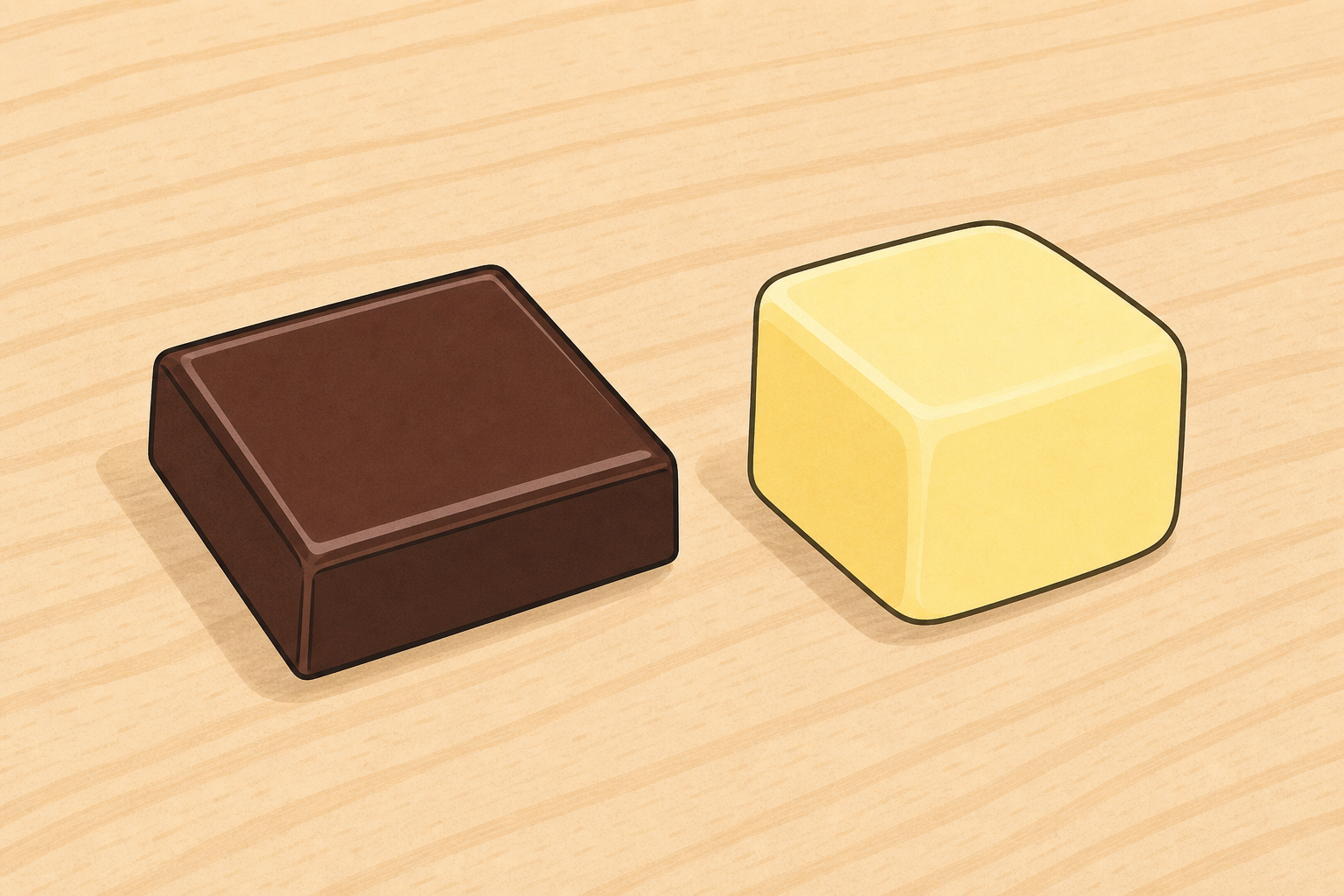
Look at this square of chocolate and this piece of butter. They feel firm and hold their shape.
What do you think would happen if we warmed them gently: would they stay the same, or change?
Have one chocolate square and a small piece of cold butter ready to show (still solid). Hold them up so the whole class can see. Do not set up the warm-water tray yet; that comes later.
Take three or four quick ideas. Accept all predictions; do not correct them. Link to everyday noticing: a chocolate bar left in a warm schoolbag, butter on a sunny windowsill, or frost melting on an Irish morning.
Key question: What might change: how it looks, how it feels, or its shape?
Think about chocolate in a warm coat pocket, or butter left on a sunny windowsill. Everyday warmth can change how some materials look and feel.
Today we will find out: what happens to chocolate and butter when we warm them gently, and then let them cool?
Keep this beat very short. Do not tell the class that chocolate or butter will soften or melt: predictions come next and must stay genuine.
You may name the two everyday words lightly if it helps: warming (making something a bit warmer) and cooling (letting it get cooler again). Save the fuller table and firming language for after they have watched the tray.
| Concept | Why it matters | Example |
|---|---|---|
| Warming — gently making a material warmer so it can change how it looks and feels | Warming is part of everyday life, from cooking to a sunny windowsill, so noticing what changes helps us understand materials | Chocolate left in a warm coat pocket can go soft and sticky |
| Cooling — letting a material get cooler again. Some materials that went soft when warmed can firm up as they cool | Cooling can reverse some of the changes we see when materials warm, which is useful when we cook or store food | Melted butter left on a cool plate becomes firmer again |
Misconception to head off later (after the demo): children may think materials "disappear" when they melt, or that only fire makes things change. Emphasise gentle warming (warm water, not hot and never a flame) and that the material is still there: it has changed how it looks and feels.
The science lands when they watch the tray.
Our question: what happens to chocolate and butter when we warm them gently, and then let them cool?
On your Investigation Journal page, write or draw what you think will happen to each one when it is warmed, and what you think will happen when it cools. Say why.
Read the question aloud. Pupils complete the prediction part of the Investigation Journal page only (leave the observe section blank for now).
Sentence stems: I think the chocolate will… because… / I think the butter will… because…
Invite two or three predictions for the class to hear. Predictions are never wrong: they are the start of the science. Do not confirm or correct outcomes before the tray demo.
Differentiation: some pupils draw their prediction and tell you the "because" aloud; others write a short sentence.
Watch the warm-water tray carefully. Keep your hands and faces back.
First we warm the chocolate. Then we warm the butter. Look for changes in shape, shine and how runny each one becomes.
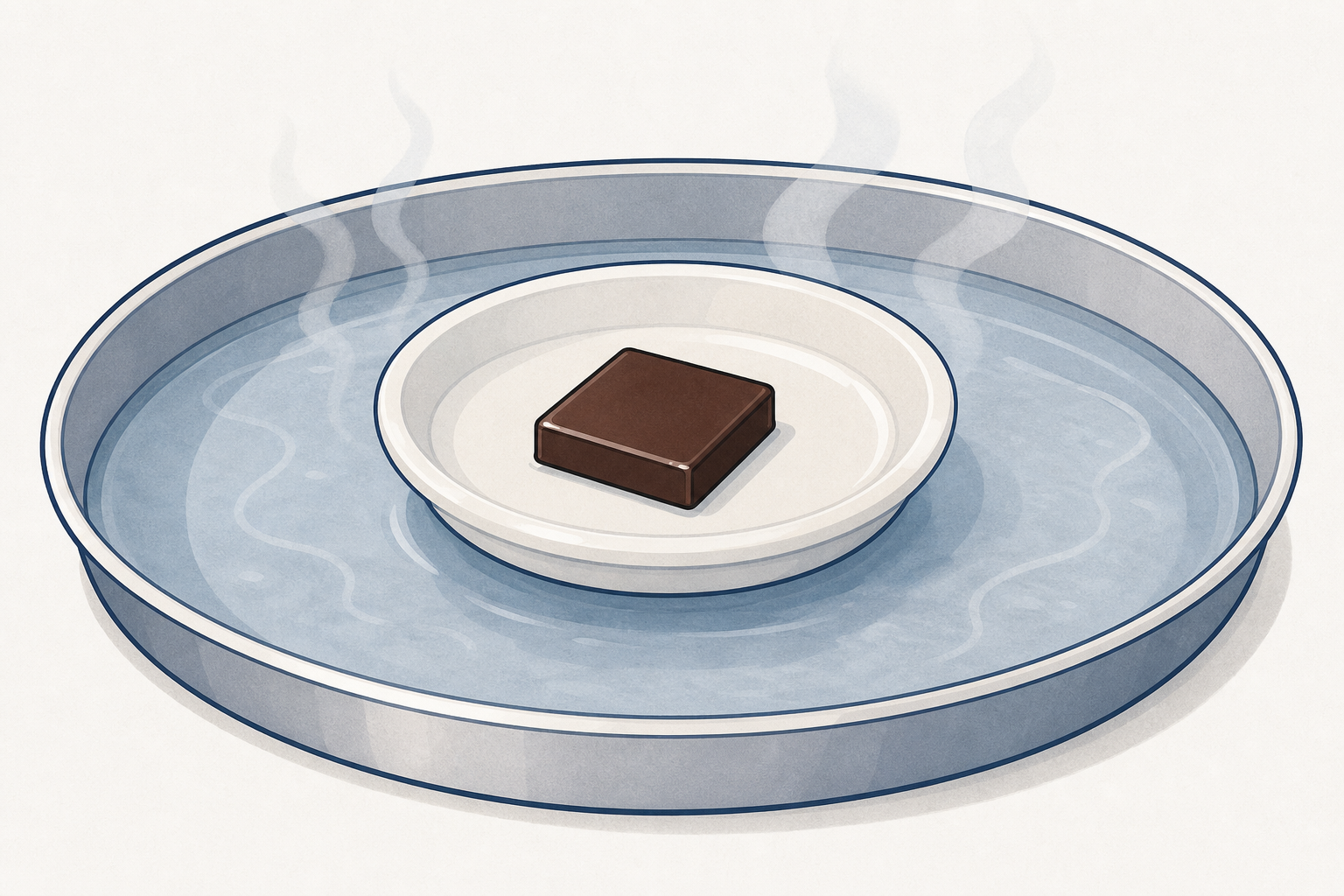
Fill the tray with warm (not hot) water from a jug: hand-warm is enough. Place one foil dish with a chocolate square and one with a small piece of cold butter ready beside the tray. Pupils stay seated or stand well back; only you handle the tray and dishes.
I wonder: will gentle warm water change this firm chocolate?
I predict: I think it will go soft and shiny.
I test: set the foil dish on the warm water and wait. Tip the dish slightly so the class can see.
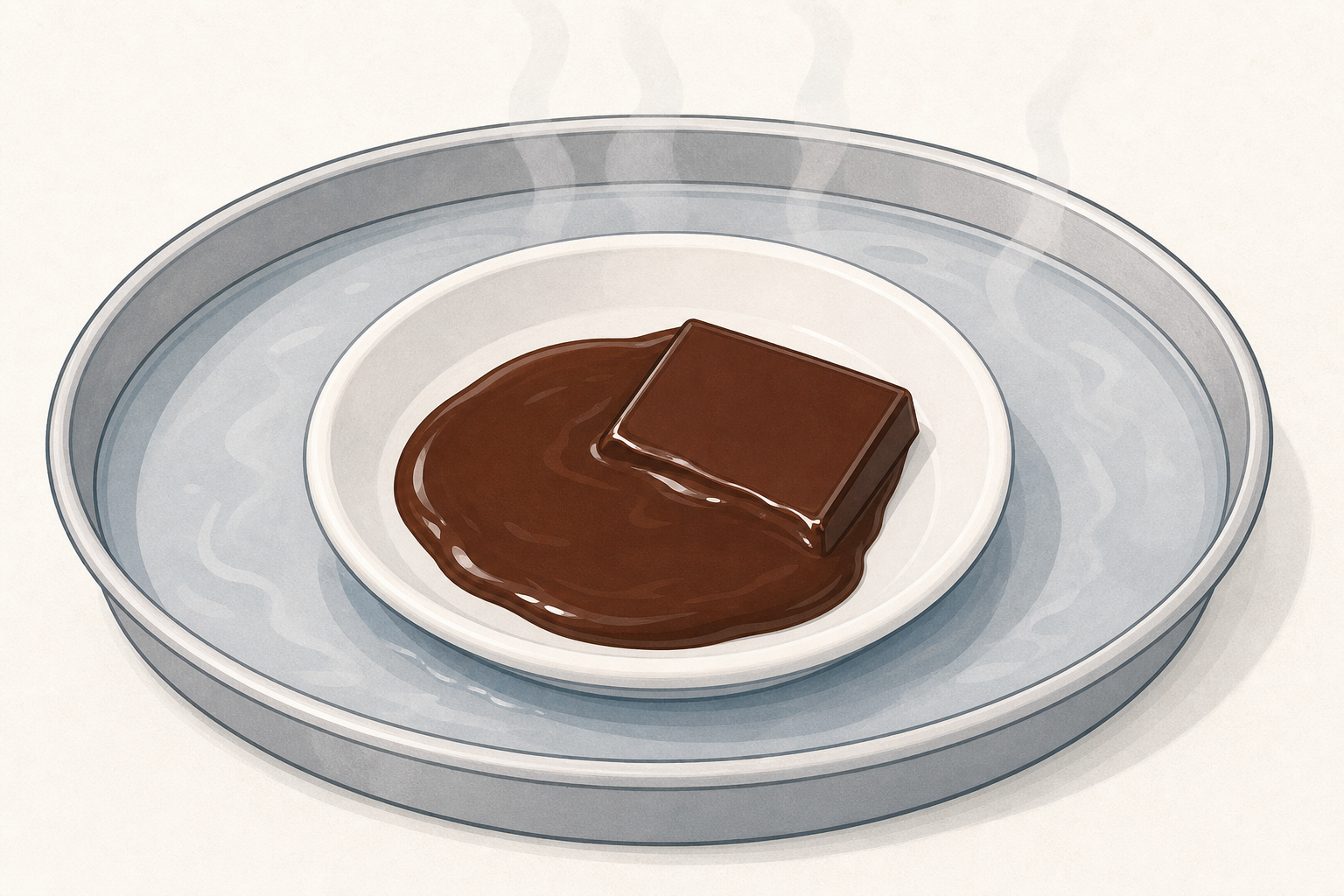
I observed: the edges went soft, then the chocolate looked glossier and more runny.
I think: gentle warming changed how the chocolate looked and felt: it is still chocolate, just softer.
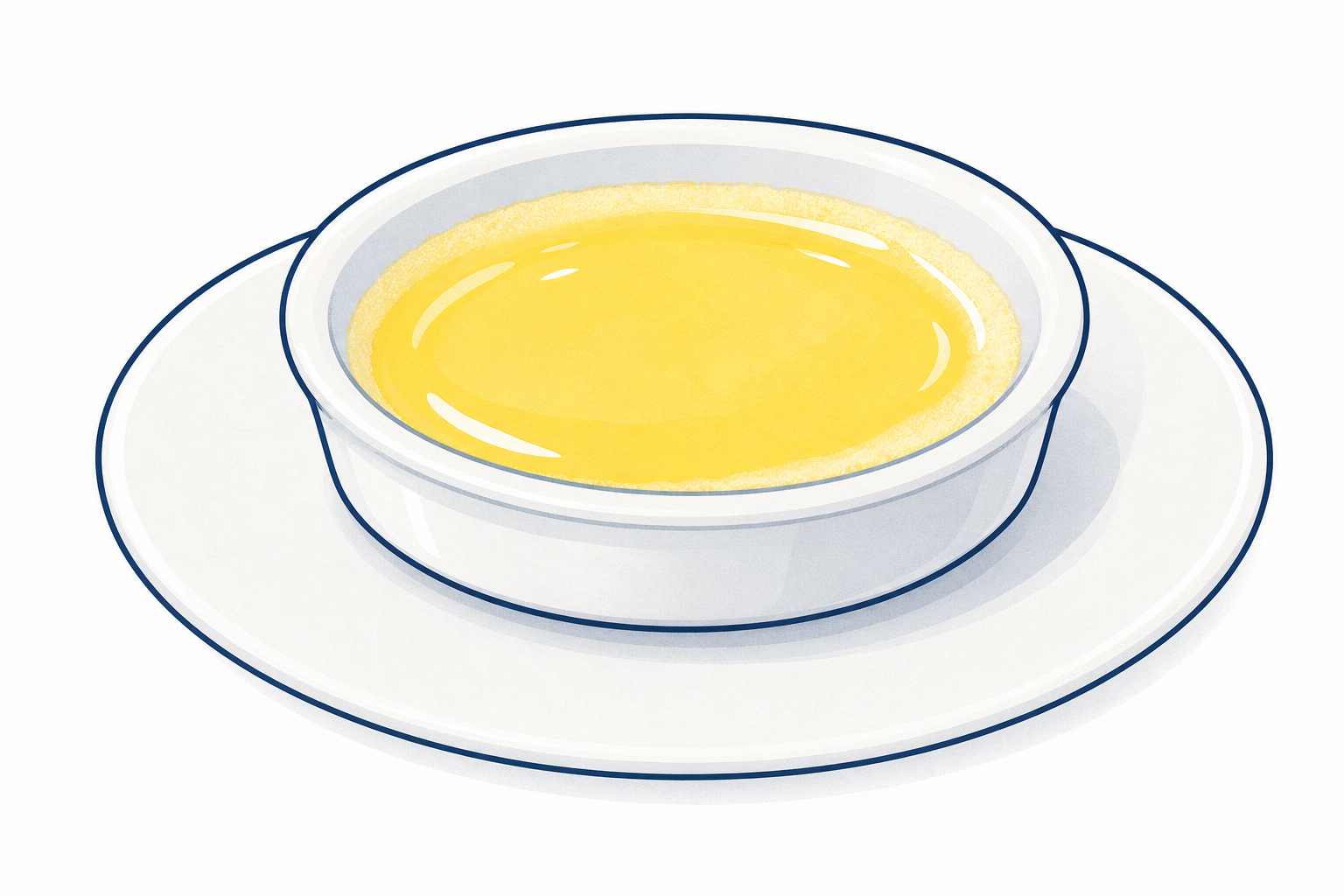
Then warm the butter the same way. Ask: Is the butter changing faster, slower, or the same as the chocolate?
Every 30–60 seconds, pause and take a quick whole-class judgement so back rows stay part of the investigation (not a separate desk task):
Revoice answers with the lesson words warming, soft, shiny and runny.
What to expect: both soften; butter often melts more quickly into a pool. If little happens, the water is too cool: refresh with slightly warmer (still not hot) water and wait patiently.
Safety: never use a flame or boiling water. No tasting. Wipe any spills at once.
Watch as your teacher lifts the dishes off the warm water and leaves them on a cool plate.
Look for early signs of cooling: a thicker edge, less shine, or a slower drip when the dish is tipped. Use your eyes only. Do not touch.
Move both foil dishes onto a cool plate or mat away from the warm tray. Ideal: a plate kept in the fridge until this step, or a cool ceramic tile from a cool spot in the room, so firming starts within the lesson.
Name one easy signal before the quiet watch: thicker edge, less shine, or slower drip when I tip the dish. Give the class quiet watching time (about two minutes), then prompt with short whole-class judgements so everyone knows what noticing looks like while they wait. Do not ask pupils to write yet: this step is eyes-only watching.
Pacing prompts (every 30–40 seconds):
Prompts: Is it still runny? Is it starting to look thicker or firmer? Are the two materials behaving the same way?
What to expect and how to guarantee a cooling signal: both begin to firm as they cool. Butter often firms into a softer solid; chocolate thickens and may look duller. If little has changed after two minutes, name what is starting (thicker edges, less shine, slower drip when you tip the dish slightly for the class to see) and leave the dishes in a cool place. You will revisit them at the start of the next step before anyone writes about cooling, so every class can name at least one cooling change in-lesson.
Keep the whole class involved: Who noticed the first change? Did cooling match your prediction so far?
You're previewing this lesson. Get full access to this lesson and hundreds more — each one ready to teach, with interactive activities, printable resources and pupil progress tracking built in.