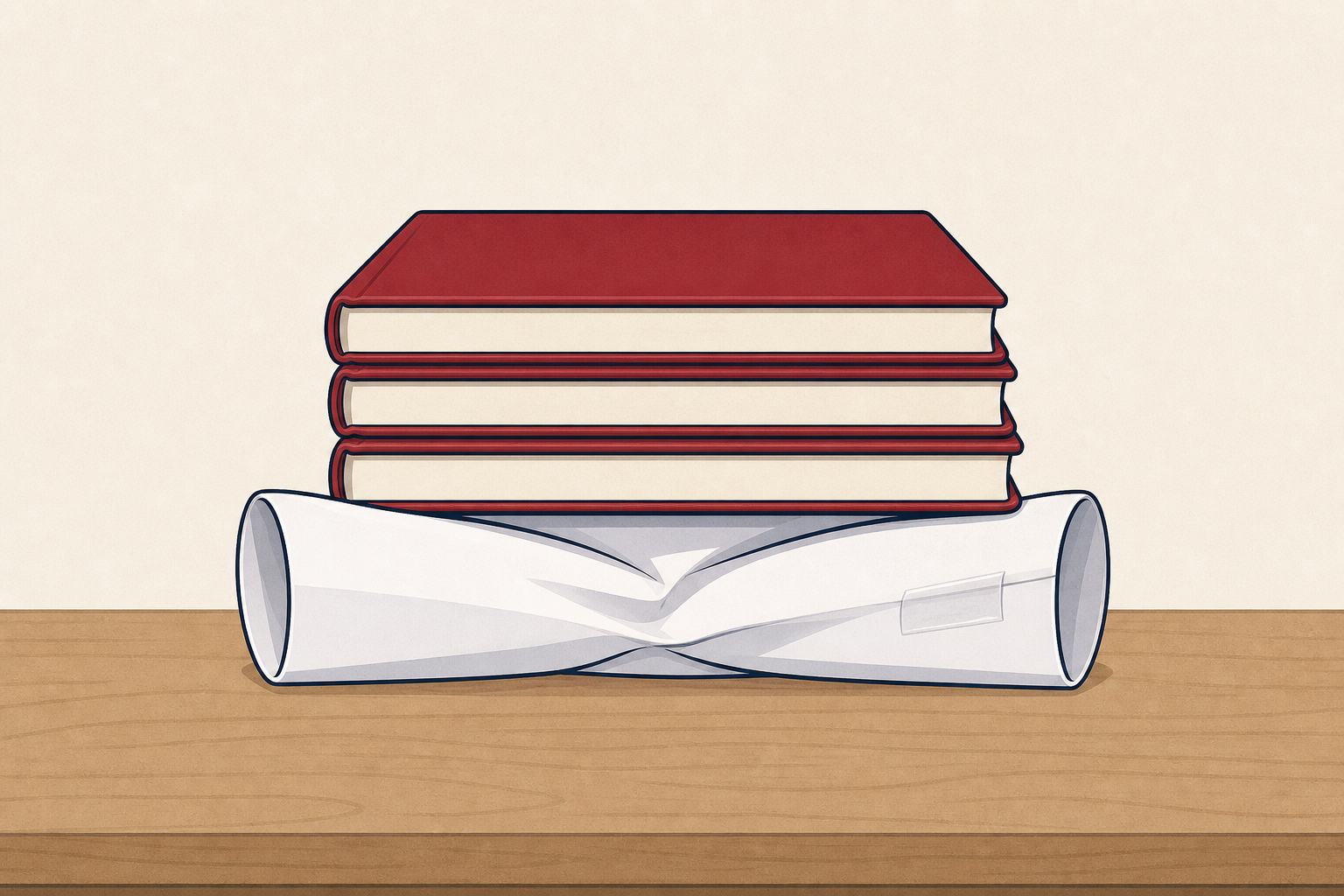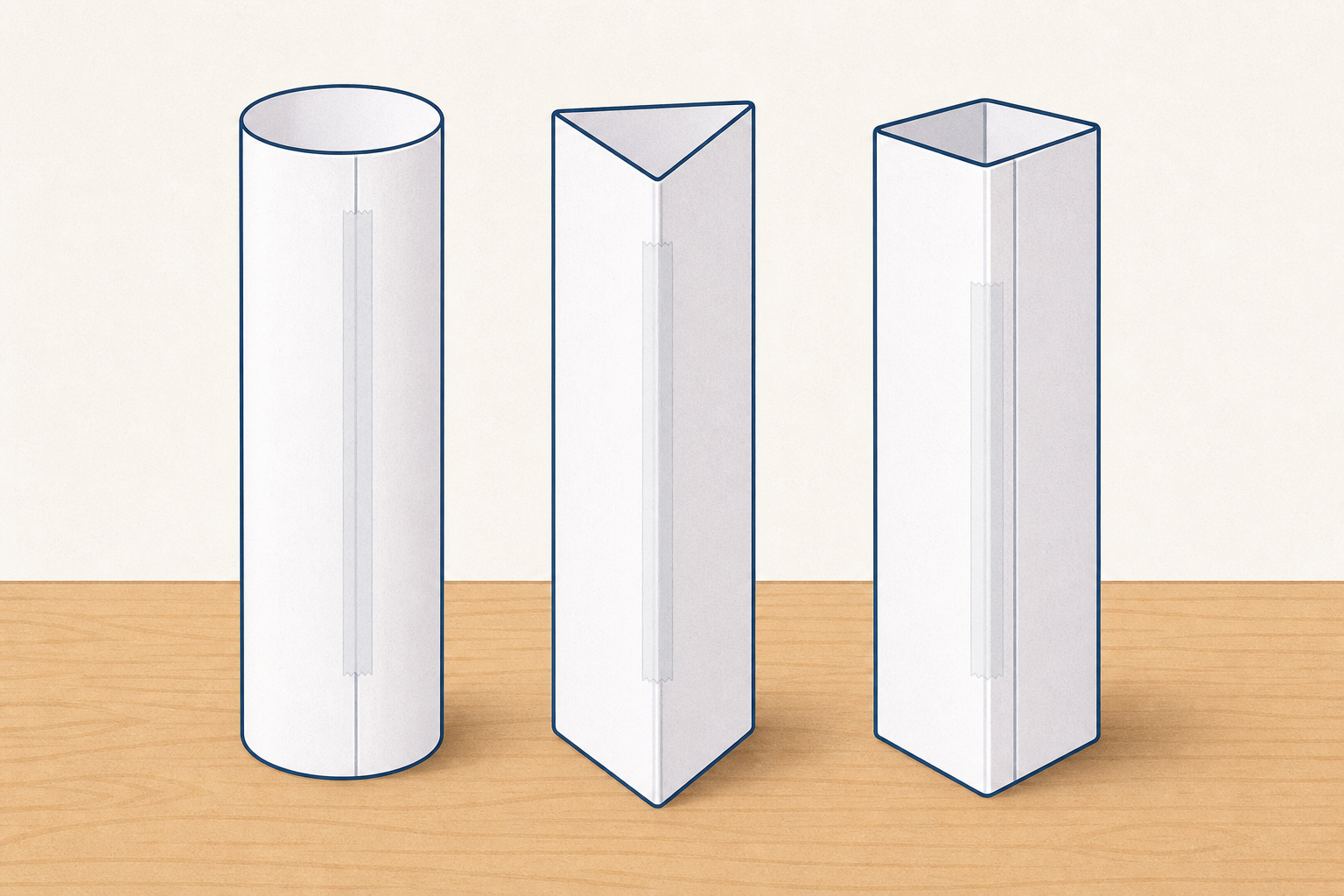
Look at these three paper tubes: one round, one triangle and one square. If we stack books on top, which shape do you think will hold the most before it folds?
Hands up for your guess, and be ready to say why.
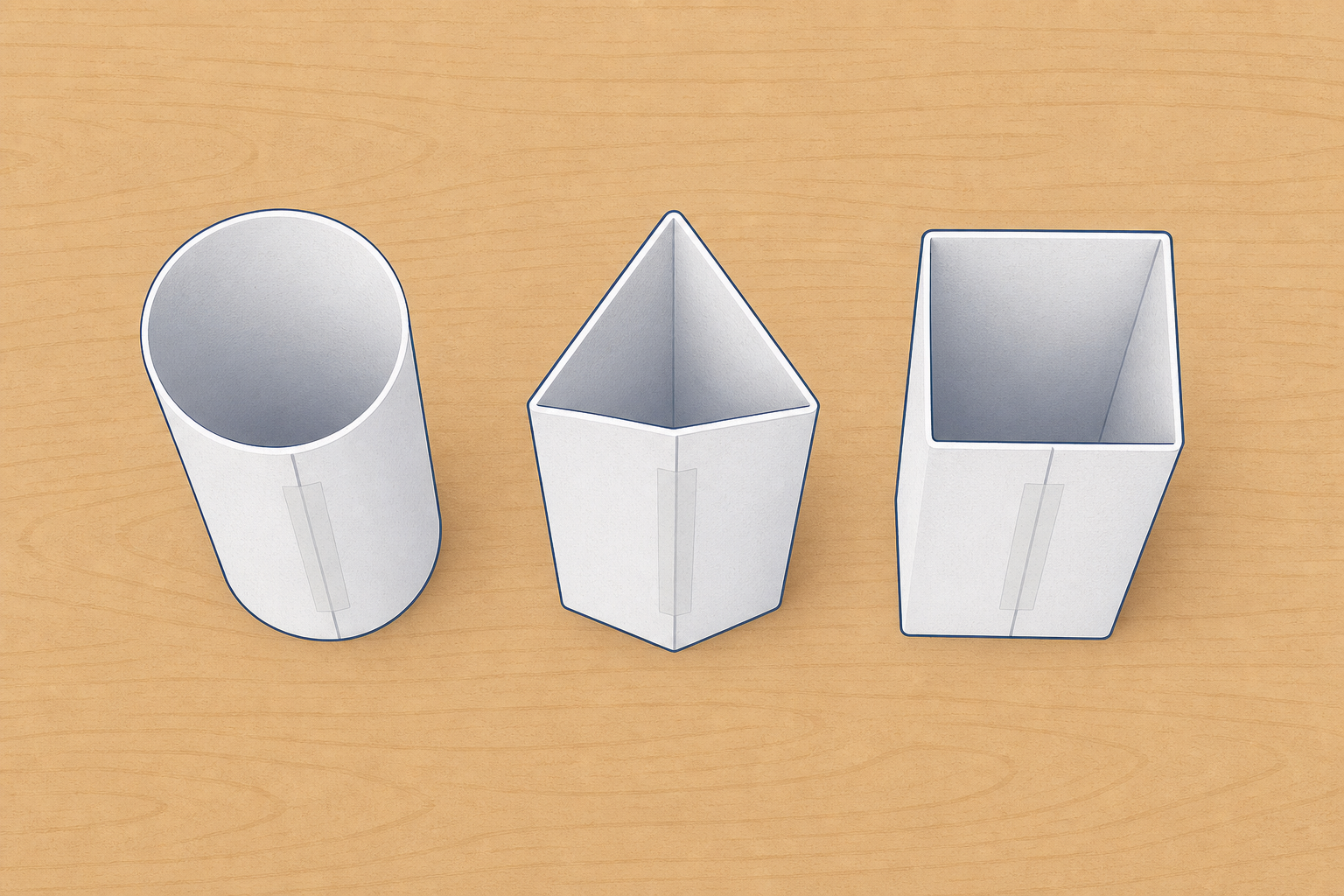
Hold up three pre-made sample columns (round, triangle, square) made from the same paper so the class can see the shapes clearly. Do not load them yet. Point briefly at the open top of each sample so children can see the different end-shapes.
Key questions: Which shape looks strongest? Why might a round tube resist folding better than a square one? Why might the push spread more evenly around a round tube?
Capture a quick tally of predictions on the board. Keep this light: no variables talk and no apparatus set-up yet.
Nature of STEM link: engineers choose shapes on purpose. Round tubes show up in scaffolding poles and lamp-posts because the shape spreads the push evenly around the sides.
Our question: which paper column shape holds the most books before it buckles?
A fair test means we change only one thing, measure one thing, and keep the rest the same. Today we change only the end-shape of the column: round, triangle or square. Look together at the open top of each sample as I hold them up. That end-shape is what we compare.
When a column folds under the books, we call that a buckle. We will watch for it when we test.
| Concept | Why it matters | Example |
|---|---|---|
| Fair test — a comparison where we change only one thing, measure one thing, and keep everything else the same | If two things change at once, we cannot tell which one caused the result | We change only the column shape; the paper sheet, the height and how we stack the books stay the same |
| Cross-section (end-shape) — the shape you would see if you sliced straight across a column | Different end-shapes spread a load in different ways, so some hold more | Point at the open top of each sample column: round, triangle and square |
| Buckle — when a column suddenly folds, bends in or collapses under a load | Buckling is our clear end-point so every group measures the same way | Save the full focus for the load step; name it now so children know what to watch for |
Board pacing: lead with the question and fair test. Treat cross-section lightly as “end-shape” while pointing at the open tops of the three samples you hold. Name buckle once; do not dwell on it until books are stacked.
Worked model (say aloud before groups build): I wonder which shape holds more. I predict the round tube will hold most because the push spreads evenly round the sides. I will test by stacking the same books, one at a time, until the column buckles. I keep the paper, the height and how I stack the same. I observed that my round sample held more books than my square sample before it folded. I think the round end-shape was strongest in this test.
Misconception to head off: children may think thicker paper or a taller column is allowed. Stress that only the shape changes.
Let's plan our fair test together on the board. Five cards appear: the column shape, how many books it holds before it buckles, the paper sheet, the column height, and how we stack the books.
Call out where each card belongs: Change, Measure, or Keep the same.
Drive the fair-test-planner interactive on the IWB in explore mode. Pupils call out placements; you drag the cards.
Correct placement:
Narrate each keep-the-same card: same sheet size so no group gets thicker paper; same height so taller columns do not win unfairly; same stacking (one book at a time, in the middle of the top) so loading stays fair.
Ask: What would make this test unfair? (Using more tape on one shape, starting with different paper, loading books roughly on one column only.)
Differentiation: invite a less confident pupil to place a Keep-the-same card; stretch by asking what else we could keep the same (same person stacking, same table surface).
Your group will build three paper columns from the same size sheets, all the same height: a round tube, a triangle tube and a square tube.
Round: roll the sheet and tape the long join. Triangle: fold into three equal panels, then tape the join. Square: fold into four equal panels, then tape the join.
Use only a thin strip of tape along each join. Stand each column on its end and check the heights match before you test.
Give every group three identical full A4 sheets (one per shape). Default support: lightly pre-crease the triangle sheets into three equal panels and the square sheets into four equal panels for every group (not only as differentiation). Leave the round sheet plain. Have spare sheets ready. Mark a height line on the board or use a ruler so groups can match height (about 21 cm if using whole A4 rolled the short way, or agree one class height).
Before groups start, demo once: show a pre-creased triangle sheet folding into three panels and joining with one thin tape strip; then a pre-creased square into four panels. Then hold up a finished round tube. Leave the three samples standing as models.
Only a thin tape join: extra layers of tape would change the material and spoil the fair test.
Look-fors / success focus: same starting sheet, same finished height, one clean join, columns free-standing on end with clearly distinct shapes. If a column is shorter, rebuild rather than stretch it. Neatness may still vary; treat join quality as real data in the make-sense talk if results differ.
Differentiation: extra adult help at the join for groups who need it; confident groups check height with a ruler and adjust before taping.
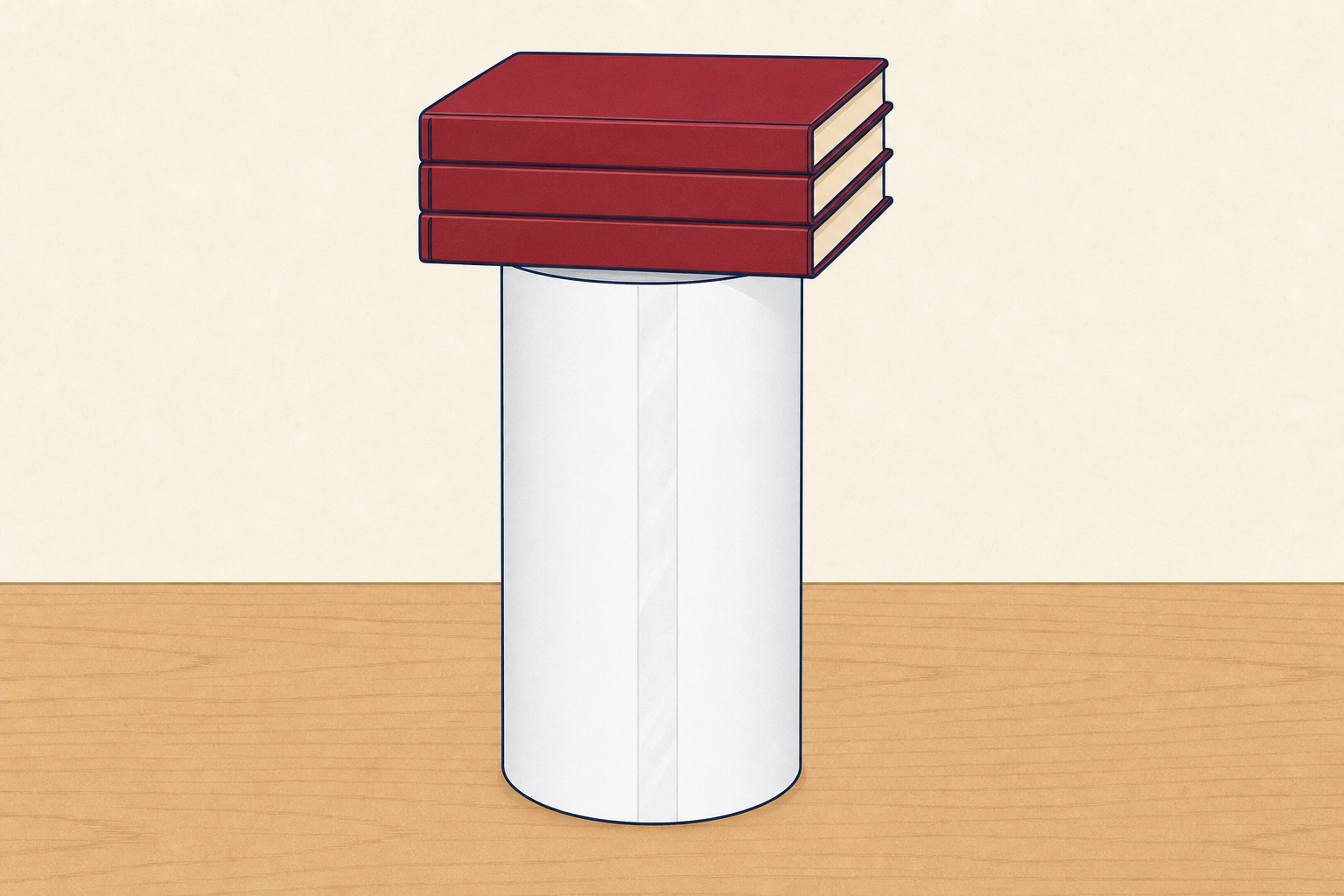
Test one shape at a time. Stack the same books, one by one and centred on top (in the middle of the top), until the column buckles.
Class rule: write the number of books on top when it first folds. Write that number on your Investigation Journal page straight away, before you test the next shape.
Keep the paper, the height and the stacking the same. Only the shape changes.
Agree the class definition of buckle before starting: the column folds, tips or can no longer hold the stack unaided.
One counting rule for the whole class: record how many books are on the column when it first buckles. State it once on the board and stick to it so group tables are comparable.
Record at the moment of buckle: each group writes the book count on the Investigation Journal page immediately, before swapping to the next shape. Do not wait until a later step. One pupil can be the designated recorder while others stack and watch for buckle.
Safety: stand back during the load test; keep fingers out from under books; catch books if a column fails suddenly; do not stand on chairs to stack higher.
Use the same set of similar books for every shape in a group. Lightweight reading books or thin magazines work better than heavy hardbacks so several can stack before failure. Keep a shared class reserve of matching books nearby. If a neat round tube still has not buckled when the group set runs out, continue stacking from the reserve of the same books so every shape gets a true buckle count.
What to expect: the round tube often holds the most because the load spreads evenly; the square often buckles at a face or edge first; triangle can be strong but folds at a crease. Results may vary with tape and neatness — treat that as real data and talk about it in make-sense.
If all three hold only a very small number, books may be too heavy: switch to thinner books or magazines.
Circulate and ask: Which keep-the-same rule are you watching most carefully right now? Have you written the number yet?
You're previewing this lesson. Get full access to this lesson and hundreds more — each one ready to teach, with interactive activities, printable resources and pupil progress tracking built in.