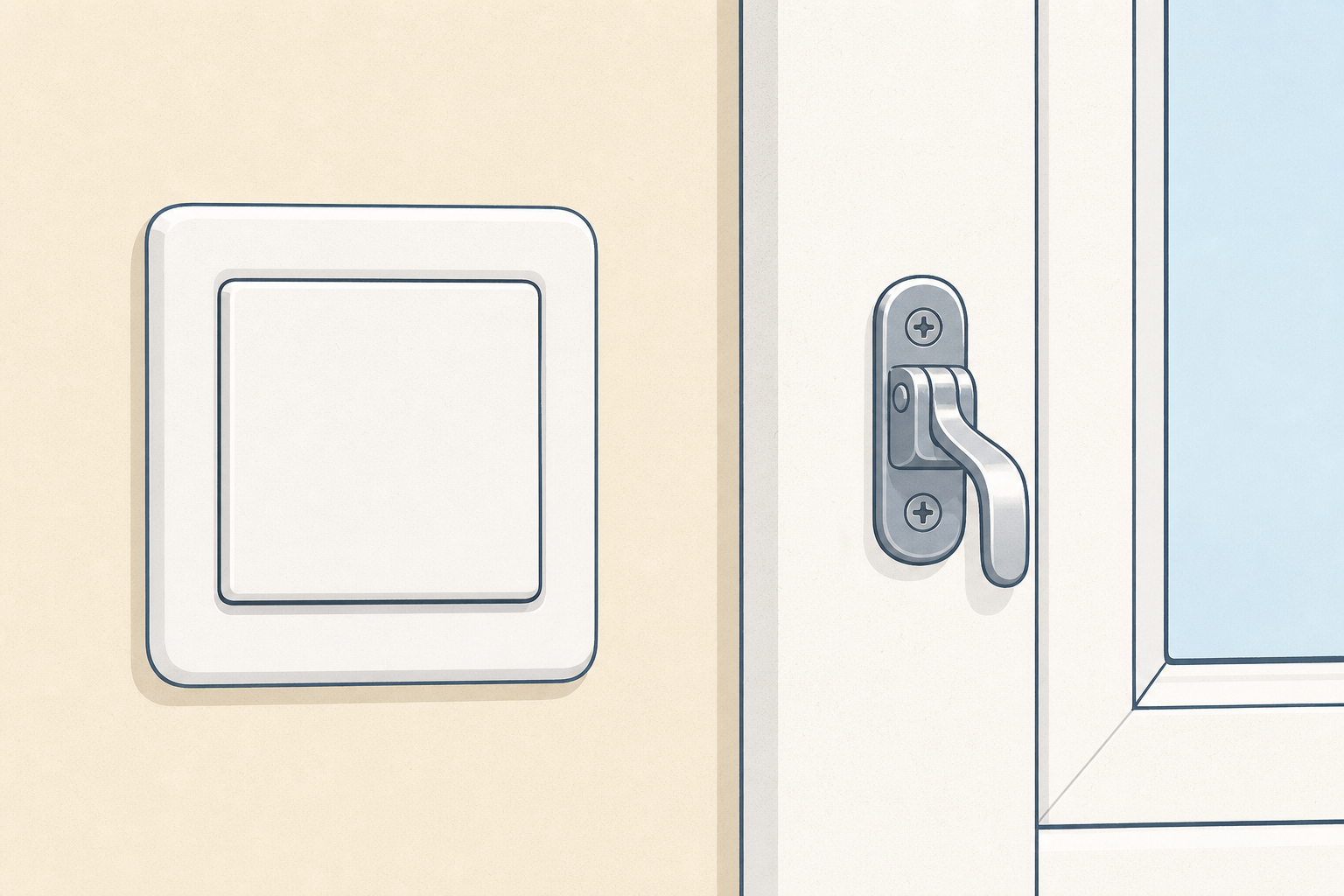
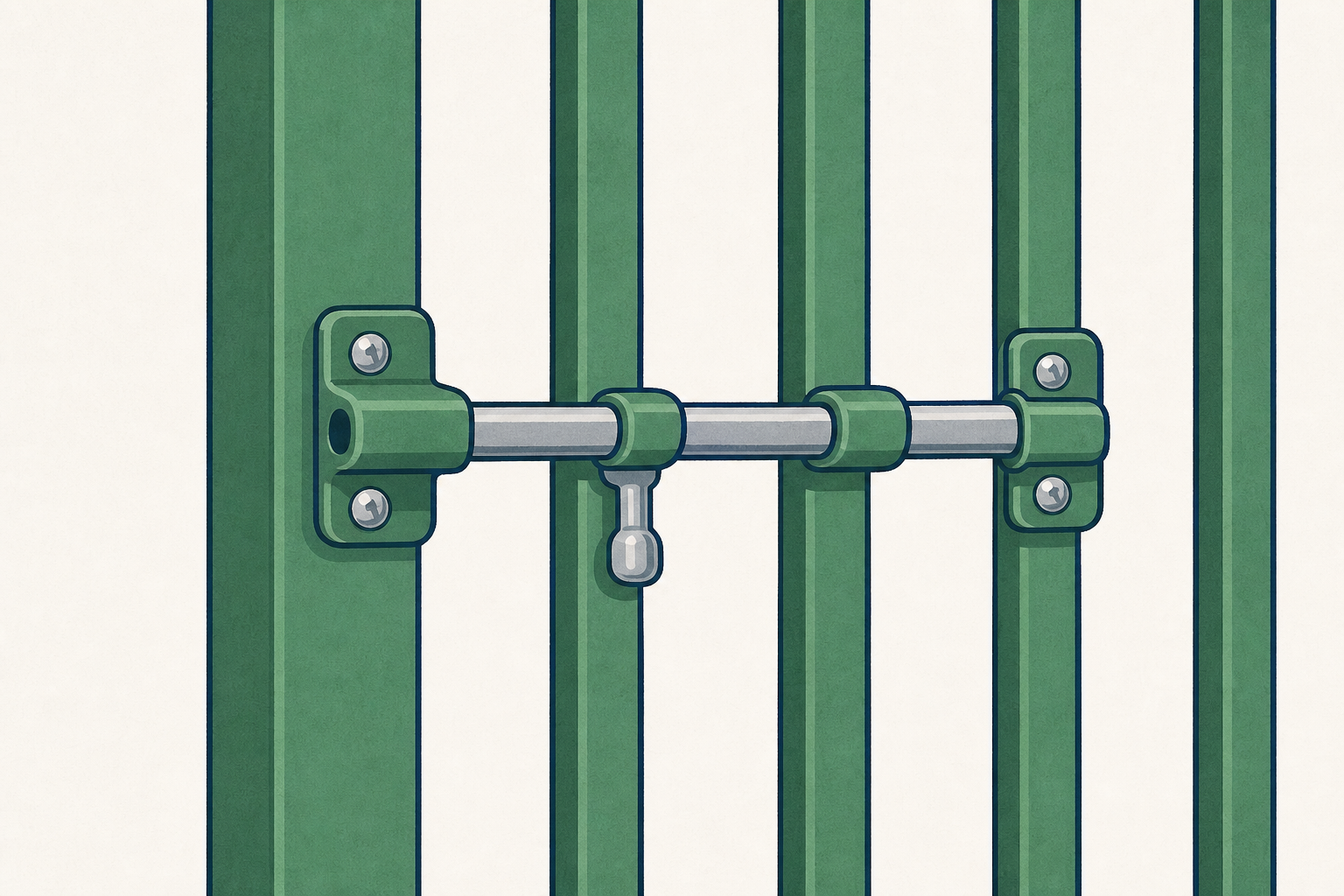
Look around this room for a moment. Who figured out the light switch? Who designed the window catch? Who built the playground gate?
Today we put on STEM eyes. STEM is the long story of people working out how the world works and making things better. What can you already spot that someone once had to invent, notice carefully, or build?
Keep this beat light and curious. Do not hand out clipboards or start the walk yet. Stand near a few everyday objects (a door handle, a tap, a bin) and invite two or three quick calls from the class.
Key question: What in this room would not be here if nobody had ever figured anything out?
What to expect: pupils name phones, lights, chairs, pencils. Gently steer them toward school examples they can later sort: door hinges, water taps, the PE stopwatch, the noticeboard, a bike rack, a weather chart or thermometer, a measuring jug.
Misconception to head off: STEM is not only computers and robots. A spoon, a ramp, a weather chart and a careful question about a puddle all count.
STEM means people working out how the world works and making things better.
Science is finding out by looking carefully, asking questions and testing ideas.
Technology is a tool or machine that helps us do a job.
Engineering is designing and building something that solves a real problem.
Is a school gate that stops the ball rolling onto the road science, technology, or engineering? Be ready to say why.
Project only the idea currently in hand. Reveal one short board paragraph at a time with a real object so technology and engineering do not blur. Maths sits inside STEM too; name it once with a school example, but today's sort still uses three piles: science, technology and engineering.
Reveal order (about 90 seconds each beat, then the gate check):
| Concept | Why it matters | Example |
|---|---|---|
| STEM — people working out how the world works and making things better, using science, technology, engineering and maths together | Almost everything around school was once a puzzle someone solved | A roof gutter carries rain away so the yard stays usable after Irish showers |
| Science — finding out about the world by looking carefully, asking questions and testing ideas | Science helps us notice patterns, like why some leaves stay green in winter | Watching which side of the yard dries first after rain and wondering why |
| Technology — tools and machines people invent to help do a job | Technology saves time and effort in everyday jobs | A pencil sharpener, a torch, a bicycle bell, the classroom clock |
| Engineering — designing and building things that solve a real problem | Engineering turns a need into something that works in the real world | A wide door ramp, a sturdy shelf, a playground climbing frame |
Short pre-walk model (say aloud in under a minute):
I wonder about our classroom door. The handle and hinges let us open a wall safely with one hand. That is engineering: someone designed and built a way in and out. Long ago many buildings used hanging cloths or heavy bars; later people improved hinges, handles and latches.
Quick check: after the hold-ups, ask which pile each object belongs in and why. Borderline answers are fine if the reason is sensible.
Teaching tip: some things fit more than one pile (a thermometer is technology that helps science). Accept the best fit and the reason.
Every object on our route was once someone's problem to solve. We are going on a short STEM eyes walk of our classroom, corridor and yard. Look for things someone once had to figure out, invent or build, and for science finds too.
A science find helps us measure or notice something. It can also be a careful observation you really want to check.
With your pair, list at least four things on your clipboard (try for a mix across science, technology and engineering). For each one, jot a short name and one clue, like this: drain: carries rain away. Stay with the class and only go where your teacher leads.
Pair pupils up. Hand each pair one clipboard with list sheet, one pencil, and one set of prompt cards. Show the worked clipboard line on the board: drain: carries rain away. Say the success bar once: at least four finds, with a short name and one clue each, and a mix if they can. Then lead out.
Lead the class as one group. Pause at four rich spots and name the STEM angle aloud so science is an equal hunt target, not an afterthought. Suggested pauses:
At each pause ask: What job does this do? What problem does it solve? Does it help us find something out, is it a tool, or was it designed and built?
If the line is slow or the yard is wet, stop after the indoor science and engineering anchors plus one outdoor stop, then return. The later "What did people use before?" beat can flex down to 4 minutes if the walk overruns.
Prompt cards (print one set per pair; pupils read these as hunting tips, not answers):
Card A — Look up high: Spot something above head height that people built or fixed in place. What job does it do?
Card B — Look down low: Spot something near the floor or ground that helps water, feet or wheels. What problem does it solve?
Card C — Tools and measures: Find a tool, machine or measuring thing that makes a job easier or helps us notice something. What did people do before it existed?
Card D — Built to last: Find something strong that holds, blocks or protects. Why might that shape or material have been chosen?
Card E — Science eyes: Find something that helps us measure or notice a pattern, or write one careful observation you want to check. What question does it raise?
Look-fors (balance the three piles):
Differentiation: pairs who struggle list names only; confident pairs add the job each thing does. A less mobile pupil can be the class scribe at the front of the line, collecting shouted finds on one shared list.
Safety: stay together; set a clear boundary in the yard; mind wet surfaces and gates; no climbing.
Each find on your list is part of the long story of people figuring things out. Stay in your walk pair. Use the list on your clipboard and the three category cards on your table.
Sort each find into science, technology or engineering. If two piles both feel right, choose the best fit and be ready to say why. We will hear a few tricky ones together.
Give each pair three category cards only (Science / Technology / Engineering). Pairs sort from their written walk lists under the three cards (point on the list or tick beside each name). No physical objects or scrap slips are required. Circulate and ask for reasons, not perfect categories.
Category card texts (print one set per pair):
Card 1 — Science: Finding out about the world by looking carefully, asking questions and testing ideas.
Card 2 — Technology: Tools and machines people invent to help do a job.
Card 3 — Engineering: Designing and building things that solve a real problem.
Worked sort to model first (whole class, 1–2 minutes):
Common sticking points:
Key questions while circulating: What job does it do? Is it mainly a tool, a built structure, or a way of finding something out?
This is our first Investigation Journal page of the year. We will open it together first so everyone can see where the three groups go.
Write or draw at least one find under science, one under technology and one under engineering, and try for two in each group if you can. Beside any two items, write a short why you put it in that group (tool, helps us find out, or built to solve a problem).
If your pair is short of a science find, use one we spotted as a class on the walk (for example the weather chart, measuring jug or plant labels).
This is the paper recording beat and the first journal use of the course. Hold up one Investigation Journal page (or project a blank page if you have a visualiser) and show the three group areas together before anyone writes. Do not invent extra sheets. Pupils transfer the best of their walk list into the three groups.
Success look-fors (keep the first journal use light):
Support: allow drawings plus a dictated label for pupils who write slowly. Scribe one-word reasons on the board as a word bank: tool, measure, build, strong, opens, lights, carries water, notices weather.
Stretch: star one item that could sit in two groups and write both reasons.
You're previewing this lesson. Get full access to this lesson and hundreds more — each one ready to teach, with interactive activities, printable resources and pupil progress tracking built in.