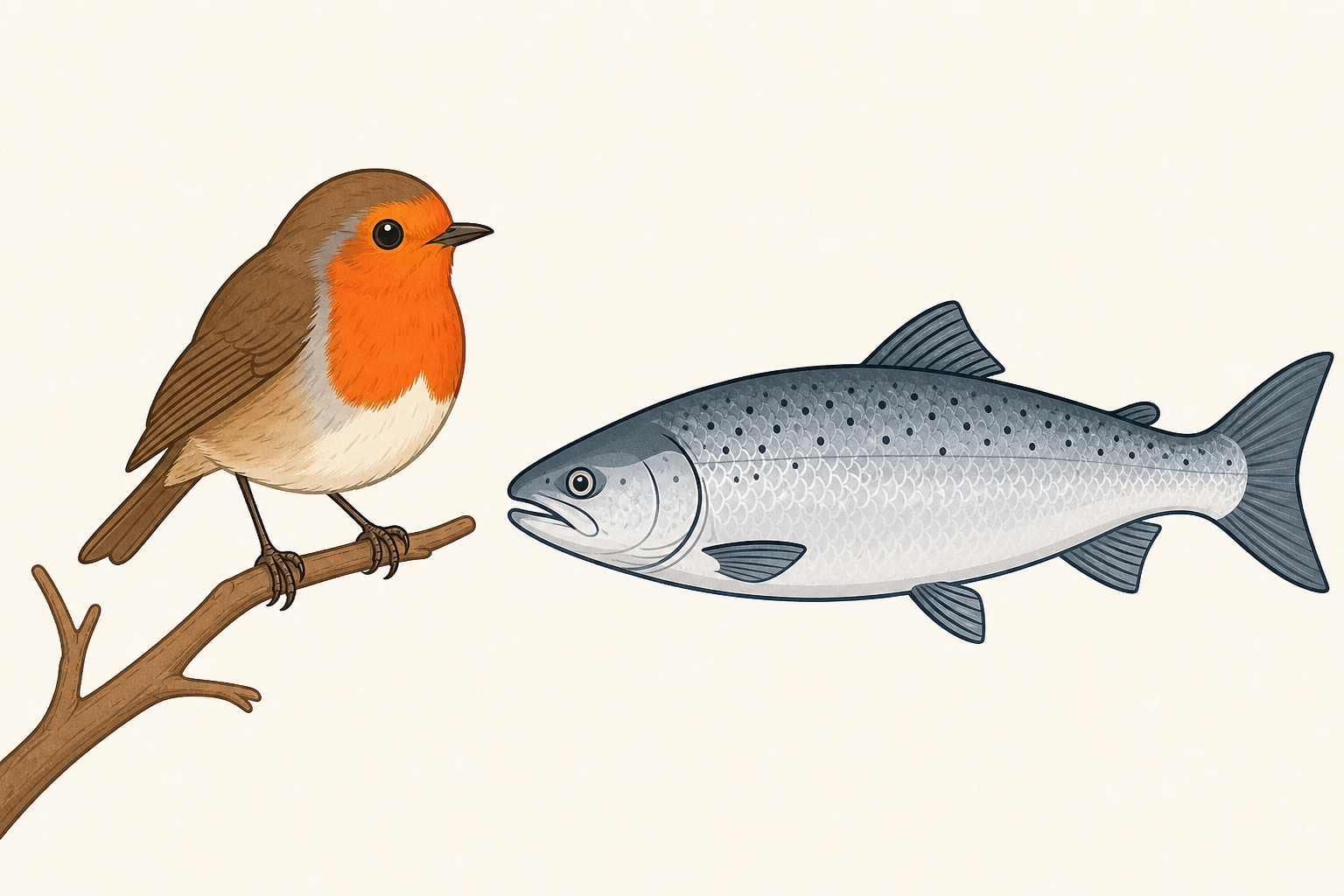
Look at these two Irish animals: a robin and a salmon. How are they different? How are they the same?
Today we become animal sorters. We will look closely, choose a rule, and put living things into groups that share something we can see.
Hold up (or show on the IWB) the robin card and the salmon card only. Keep the rest of the set face down. Take three or four quick answers aloud. Do not name the full sorting rules yet.
Key question: What can we see that is the same, and what is different?
Have the six photo cards ready but out of sight for now. No apparatus set-up in this beat.
A feature is something we can see on an animal, like legs, wings or feathers. When we sort, we put animals that share a feature into a group. The sorting rule is the rule we pick for that sort.
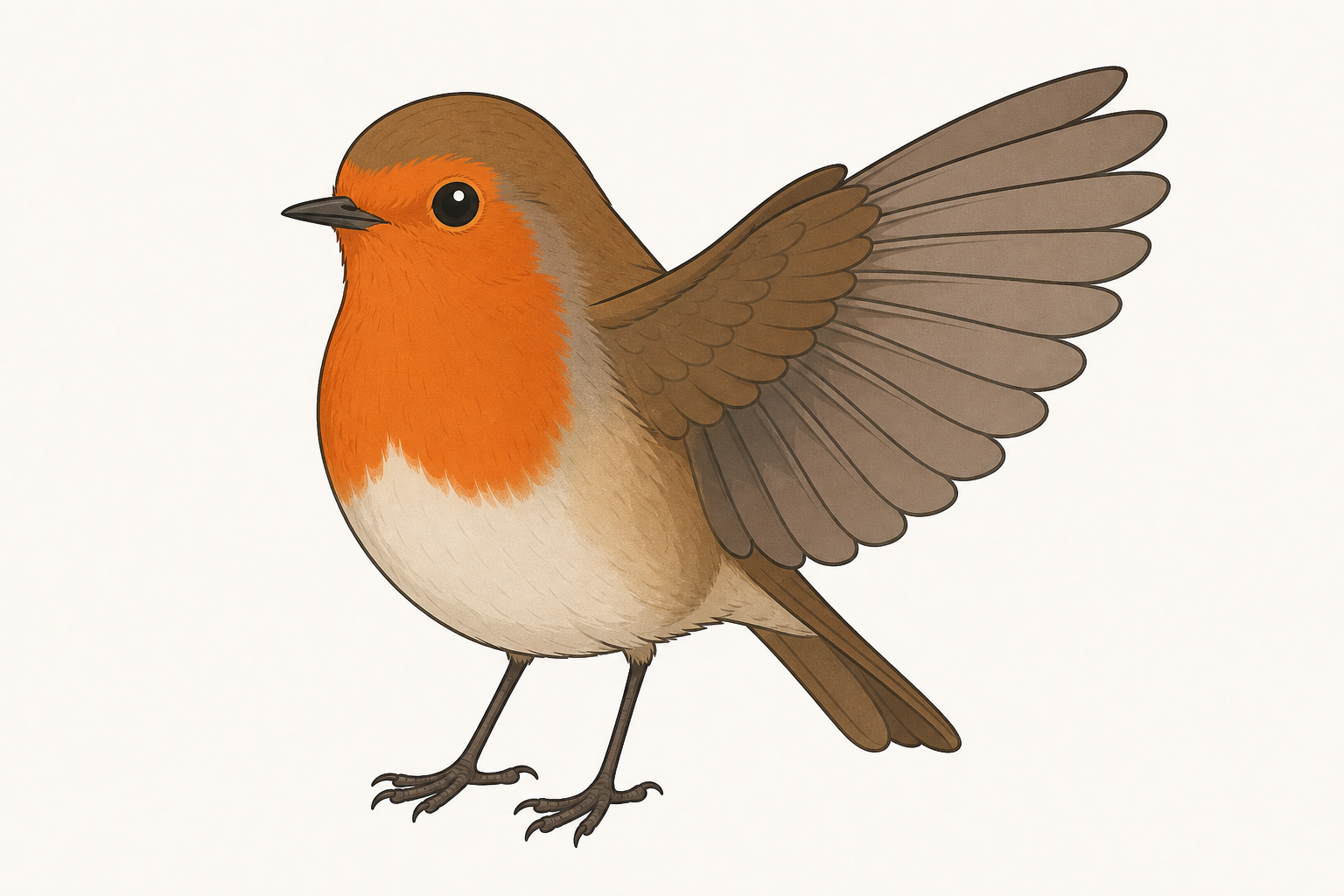
Look again at the robin. It has wings. If our sorting rule is ‘has wings’, the robin goes in the wings group. The salmon does not show wings, so it stays out of that group.
Project only the short board text. Use the table below for yourself while you teach. Lead with feature and sort into groups. Say sorting rule aloud; introduce the word criterion once as the scientist name for that rule if it helps, then default back to ‘sorting rule’. Do not put criterion on the board.
| Concept | Why it matters | Example |
|---|---|---|
| Feature — something you can see on an animal that helps you tell groups apart (legs, wings, covering) | Features let us sort living things without guessing what is inside them | A hedgehog has spines and four legs; a snail has a shell and no legs |
| Classify / sort — to put living things into groups that share the same feature | Grouping helps scientists name, study and protect animals | Robin and bee both have wings, so they can share a ‘wings’ group |
| Sorting rule (criterion) — the rule you choose for one sort, such as ‘has legs’ or ‘lives in water’ | Changing the rule can put the same animal in a new group | By land or water, the salmon goes with water animals; by covering, it goes with scaled animals |
Cards on show in this beat: keep robin and salmon visible from the hook. Ground the wings example only in those two cards (robin has wings; salmon does not). Do not model with the bee yet — groups meet the full set in the next step.
Modelled cycle (say this aloud once, with robin and salmon only):
Misconception to head off: children may say a fish has ‘no covering’ or call fins ‘legs’. Covering means the outer surface (scales, feathers, shell, smooth skin, spines, hard body). Fins are not legs or wings.
Nature of STEM weave: Irish naturalist Robert Lloyd Praeger spent years walking the country recording and grouping plants and animals. Scientists still sort living things today, though the tools (cameras, apps, DNA) have changed.
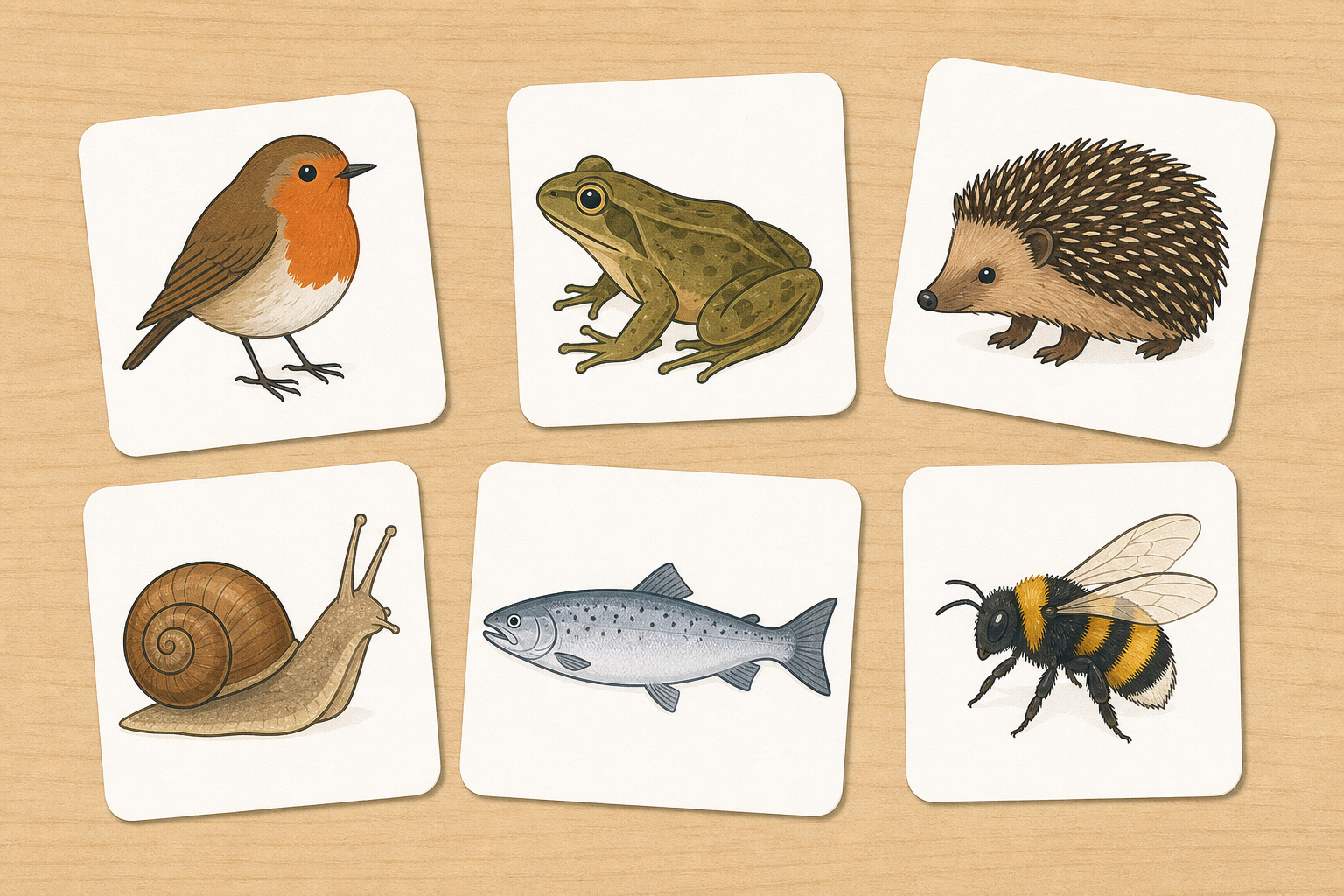
Each group has six Irish animal cards: robin, frog, hedgehog, snail, salmon and bee.
Look carefully at every card. For each animal, notice: does it show legs? Does it show wings? What covering can you see (feathers, scales, shell, smooth skin, spines or hard body)?
Talk in your group. Do not sort yet — only notice.
Print the provided wildlife photo cards (one set of six per group). Place up to six labelled sorting spaces (A3 sheets, trays or hoops) to one side for the next step.
Give one minute of quiet looking, then circulate. Prompt with: Point to the covering. How many legs can you count? Are those wings or fins?
Quick teacher key (not for pupils):
Look-fors: pupils naming what they see, not guessing diet or feelings. If a group races ahead, ask them to find one feature every card has and one feature only some have.
Now sort your six cards into groups using one feature the whole group can see.
Choose one sorting rule together:
Place each card in a sorting space. Before we share, jot your sorting rule and which animals went in each group on a sticky note or scrap of paper and leave it on the desk.
Keep the first sort guided. Offer the three sorting rules on the board and let each group pick one. You may revoice once: Scientists call the sorting rule a criterion. Then stick to ‘sorting rule’ in talk. Do not invent extra animals.
Sorting spaces: each group has up to six labelled spaces (A3 sheets, trays or hoops). Legs / no legs and wings / no wings only need two spaces. Covering needs one space per covering type that appears: robin (feathers), salmon (scales), snail (shell), frog (smooth skin), hedgehog (spines), bee (hard body). Groups may leave unused spaces empty.
Visit groups and ask: What is your sorting rule? Show me one animal that nearly tricked you. Common sticky points: snail (no legs), salmon fins vs wings, bee’s six legs, hedgehog spines, bee hard body.
After about nine minutes of sorting, freeze the room. Invite two groups with different rules to hold up one group each and explain. Fold the watchers in: Would the salmon stay in that group if we used your rule instead?
Differentiation: less confident groups use ‘legs / no legs’ only. Confident groups may split a group further (for example legs-and-wings vs legs-no-wings) if they can name the rule.
Before you leave this step: check every group has written its sorting rule and a quick list of which animals sat in each group on the sticky note or scrap. Leave that note on the desk. Cards stay in place until the board sort, then will be gathered for the second sort.
On the board we will sort the same six animals with yes-or-no questions.
The cards on screen are: robin, frog, hedgehog, snail, salmon, bee.
First question: Does it have legs? Second question: Does it have wings? Call out where each animal should go, then we check the groups together.
Open the sorting-tree interactive activity in explore mode on the IWB. The class must see exactly these six item cards: robin, frog, hedgehog, snail, salmon, bee. The two yes/no questions are: Does it have legs? and Does it have wings? The three end groups are: no legs, legs but no wings, and legs and wings.
Drive it live: take one animal at a time. Pupils answer the questions aloud; you drag (or the class directs you). Do not reveal a finished sort first.
Answer key for you:
After the tree is complete, ask: Which question split the group best? Could a different first question work just as well?
Link back to the table sort: some groups used covering instead of legs. Same animals, different sorting rule, different groups. That is the point.
You're previewing this lesson. Get full access to this lesson and hundreds more — each one ready to teach, with interactive activities, printable resources and pupil progress tracking built in.