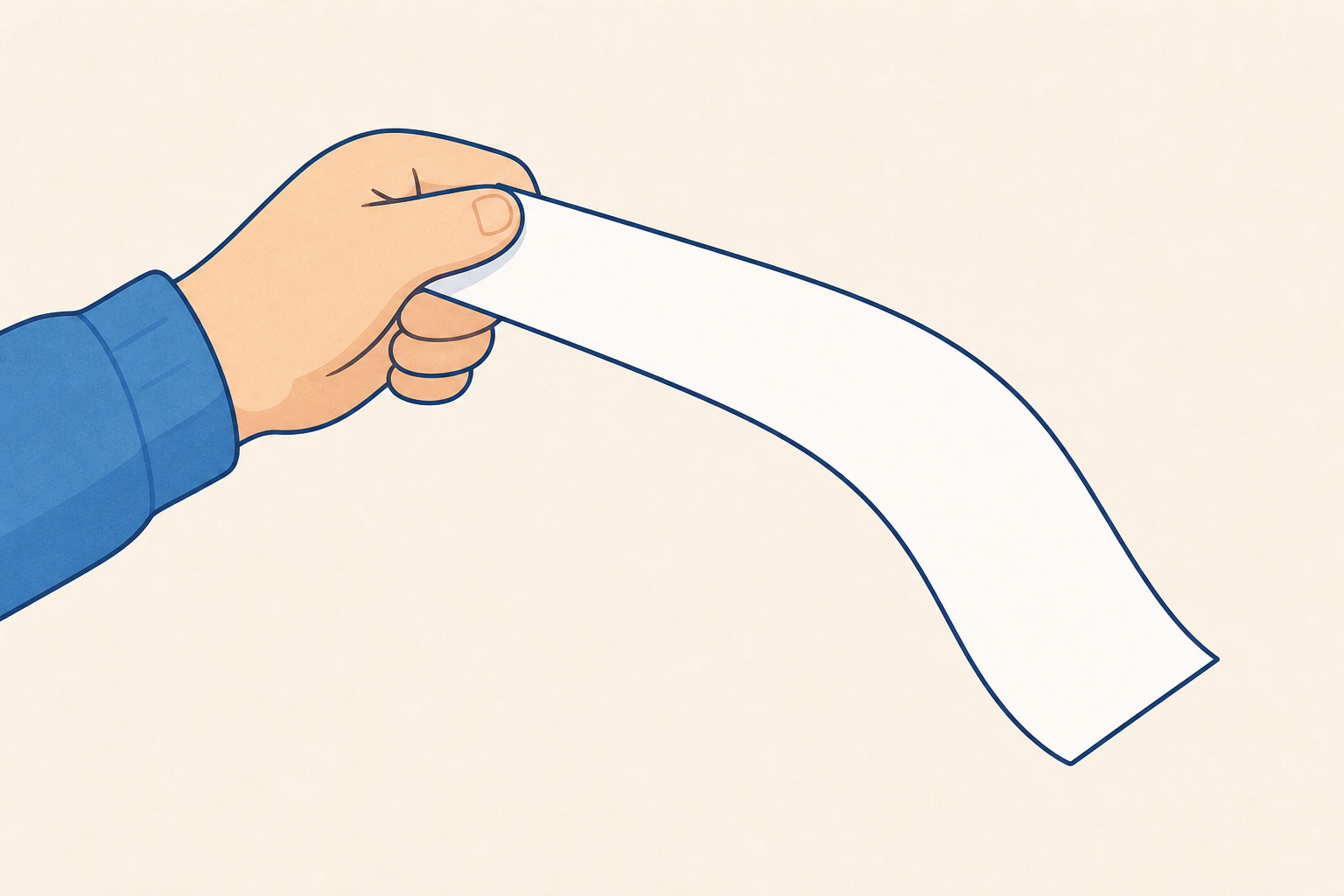
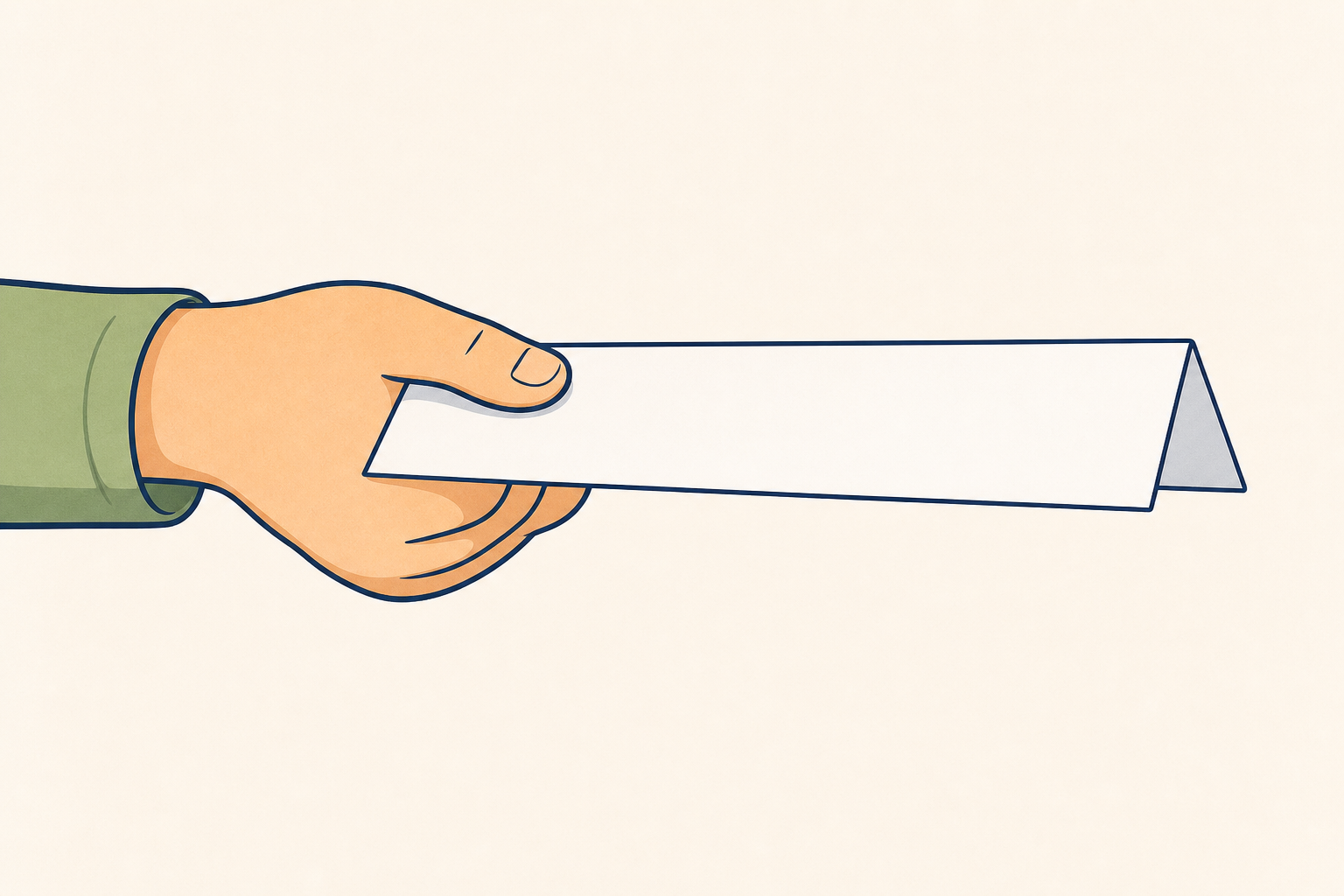
Watch carefully. Your teacher is holding out one strip of paper from one end, like a diving board.
What happens to the free end? Why does this paper flop when nothing has changed about the paper itself?
Hold one flat paper strip out from one end so the class can see it flop. Keep the hook light: one surprising flop and the question. Do not name the three shapes yet and do not hand out materials. Pupils watch only; they do not hold strips yet.
Key question: Why does this paper flop when nothing has changed about the paper itself?
Take two or three quick guesses. Do not correct them. Save any talk of paper holding firm until after the first shaped demo later. The investigation will settle the idea.
Can the same piece of paper stop flopping just by changing its shape?
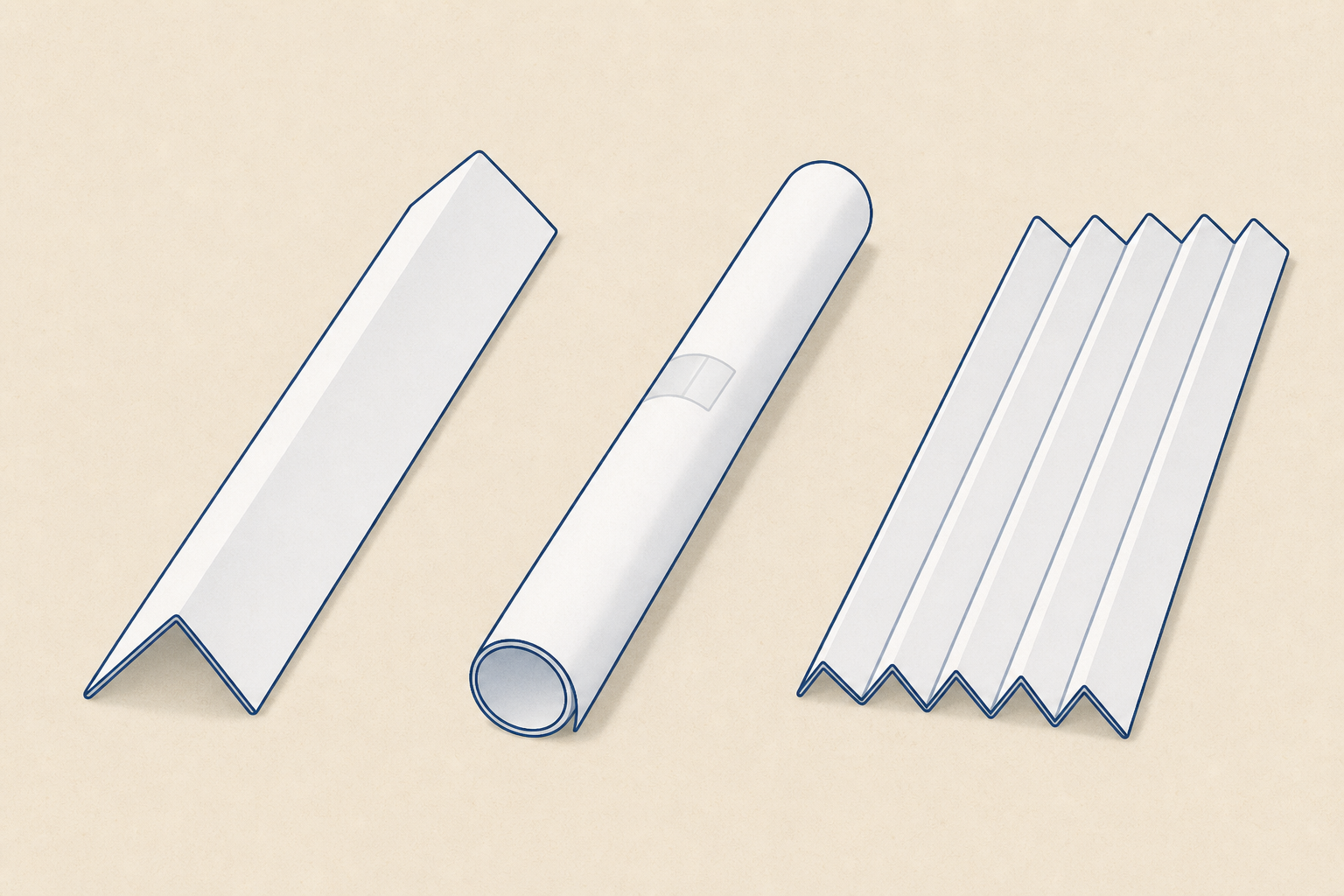
We are going to find out with three shapes made from the same paper. Today we care about stiffness: how well a shape holds itself up. We will try a deep V, a tight tube, and fan folds (ridges folded back and forth).
Keep the board short. Name stiffness and the three shapes in plain language tied to the coming test. On the IWB lead with V, tube and fan folds (ridges). Use concertina only as a light synonym later, once pupils have made the ridges with their hands. Full definitions stay here as your reference, not a script to read aloud. Do not model the full ranked comparison yet: that would give away Step 3's prediction. A short method demo (how to fold and hold fairly) comes after predictions, at the start of the hands-on step.
| Concept | Why it matters | Example |
|---|---|---|
| Stiffness — how well a shape holds itself up and resists bending or flopping | Engineers choose shapes that stay stiff so bridges, roofs and poles do not sag | A flat strip of paper flops in your hand; the same strip rolled into a tube stays firm |
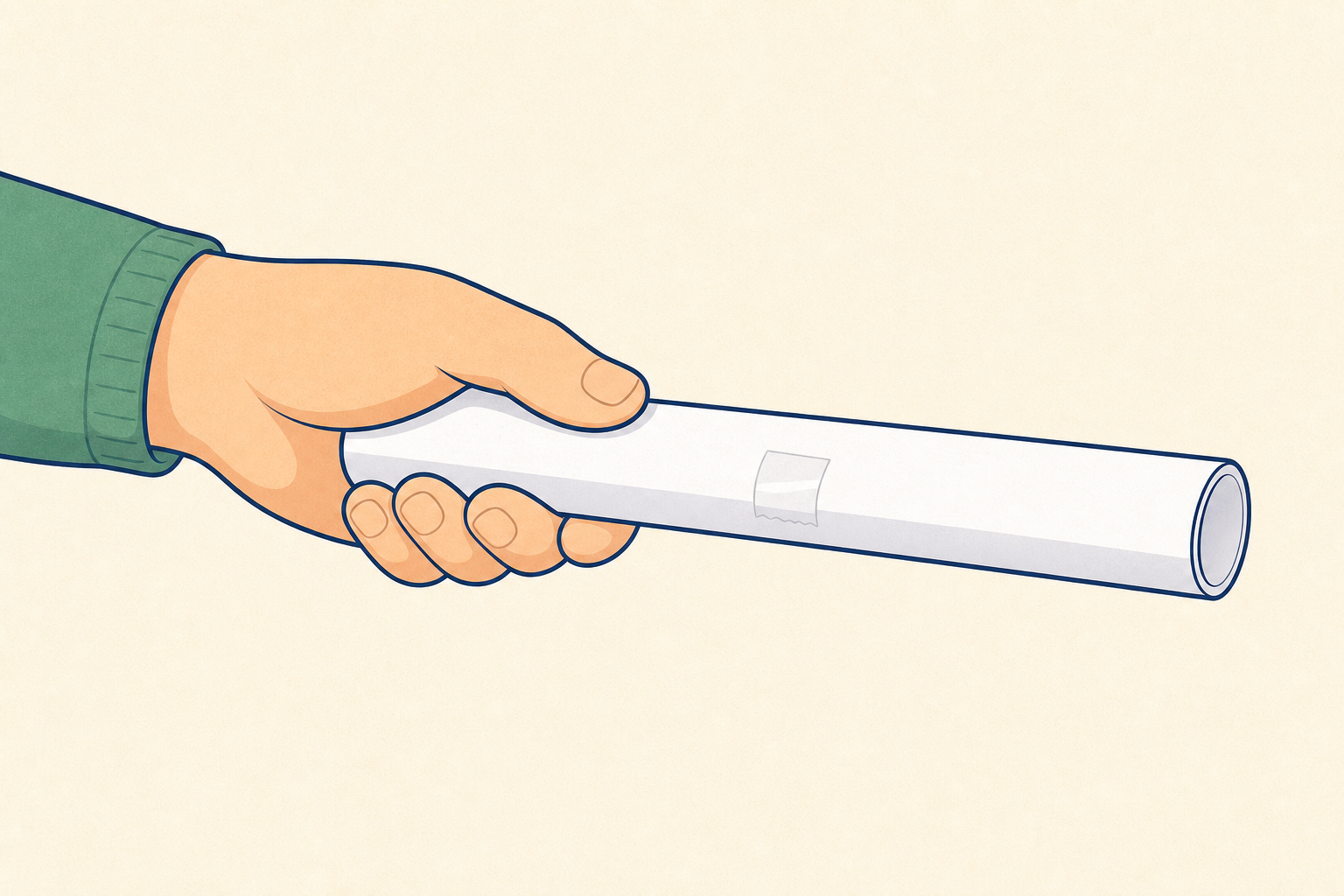
| Tube — a hollow round shape whose walls work together so it is hard to bend or squash flat | Tubes are strong without needing lots of material, so they are light and useful | Scaffolding poles and poster tubes are hollow tubes that still hold firm |
| V-fold — a deep fold that turns a flat strip into a V-shaped beam | One simple fold can make a floppy strip much harder to bend | Fold a paper strip into a deep V and hold it out: it resists far better than the flat strip |
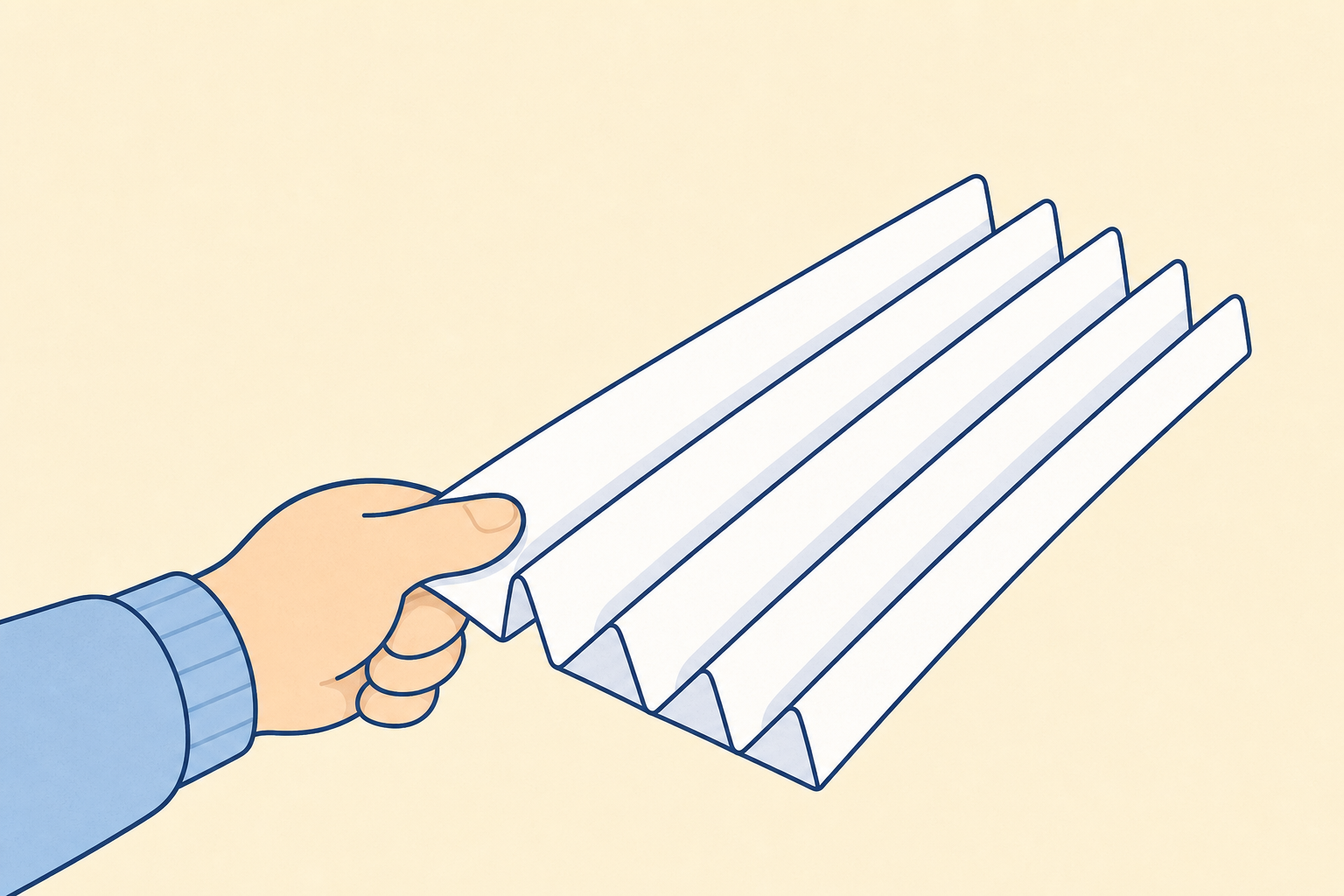
| Fan folds (concertina) — folds back and forth into ridges, like a fan | Ridges stop a sheet bending the easy way | Ridged card and ridged steel roofing both use ridges for stiffness |
Misconception to head off: children may say thicker paper is what makes it stiff. Keep every strip the same paper so the only change is shape.
Nature of STEM: steel roofing is ridged (corrugated) so thin sheets stay stiff in Irish wind and rain; scaffolding poles are hollow tubes so they are strong and light. People worked out these shapes long before modern materials.
We will stiffen the same paper three ways: a deep V, a tube, and fan folds (ridges). Which shape do you think will resist flopping best when you hold it out from one end? Tell your partner why.
Use think-pair-share. Predictions are never wrong; they are the start of the science. Do not demo or rank the shaped strips yet. Keep pupil talk on V, tube and fan folds or ridges; if a child already knows the word concertina, accept it, but do not require it yet.
Look-fors:
Capture two or three predictions on the board in the children's own words. You will return to them after the hand tests.
Now test the same paper four ways. Watch how to make each shape, then hold each one out from one end.
Hold each from one end the same way: no books underneath, no weights on top. Your hand is the only test. For the V, hold it like a tiny roof beam, point down or point up, not lying on its side. For the fan folds, run the ridges from your hand out to the free end and leave them standing up a little.
Cut A4 sheets into strips about 4 cm wide and 21 cm long. Each pair needs enough strips for one flat baseline plus one deep V, one tube and one set of fan folds (about four to six strips per pair, with spares). Pre-fold one deep V, one tube and one fan-fold strip per table as support models, especially for the tube and ridges which take longest.
Show how to fold each shape and how to hold fairly. Use the flat strip as the baseline flop only. Do not rank the three shaped strips or announce a winner: pupils must feel that for themselves.
I wonder whether shape alone can stop this paper flopping. I predict (point back to the board predictions). I test fairly like this.
Hold the flat strip out from one end: it flops.
Deep V: fold the strip long-ways so it looks like a tiny roof. Hold it out as a little roof beam sitting upright (point of the V down or up), not flopped on its side.
Tube: roll the strip tightly along its long edge and pinch or lightly tape the join. Hold it out from one end.
Fan folds: fold back and forth into even ridges, like a paper fan, so the ridges run from the end you hold out to the free end. Leave the ridges standing up a little (do not squash the fan flat again) so the strip has depth when you hold it out.
Same length sticking out each time. Nothing under the strip and nothing resting on top.
Tell the class: your folds may feel different from your neighbour's, and that is useful to talk about.
Scope lever so every pair finishes the compare: pupils work in pairs and share the making. Between them they produce one deep V, one tube and one fan-fold strip (plus one shared flat baseline). Both children must still hold and feel every shape. Sharing the making is what keeps the four-way hand compare inside the slot; do not ask each child to make all three shapes alone. If a pair is slow on the tube or fan folds, hand them a pre-folded support model so they still complete the feel-and-compare.
Time-box roughly: method model (3 min), flat baseline (1 min), make and feel V (3 min), tube (4 min), fan folds (3 min), pair compare (1 min). Circulate and keep the comparison fair:
How to make each shape (quick reminder after the live model):
What to expect: the flat strip usually flops at once. A deep V often holds better when held upright. Fan folds often resist well across the ridges when left standing. A tight tube often feels stiffest. Treat mismatches (loose tube, shallow V, squashed-flat fan, V held on its side, ridges the wrong way) as fair-test talk, not errors: ask what changed about the fold or the hold. If a tube unrolls, pinch the join or add a tiny piece of tape.
Key questions while circulating: Is the paper different, or only the shape? Which one would you trust to hold a light card?
Differentiation: hand the pre-folded support models to pairs who need them so the compare still happens. Confident pairs can try a shallower V versus a deeper V (both held as upright roof beams) and say which feels stiffer.
After hands have felt the ridges, you may lightly name them a concertina if useful, but keep recording and talk in fan folds or ridges.
On your Investigation Journal page, record each shape you tested and whether it flopped or held. Note which shape resisted best, and one reason you think that happened.
Pupils record on their Investigation Journal page. Do not invent extra columns or boxes: say what to record, not how the page is laid out. Accept fan folds or ridges as the shape name; concertina is optional if a pupil chooses it.
What to record:
Observation prompts while they write: Did any shape surprise you? Was the paper the same every time?
If a pupil only drew, ask them to say one sentence about the best shape so the oral conclusion is secure.
You're previewing this lesson. Get full access to this lesson and hundreds more — each one ready to teach, with interactive activities, printable resources and pupil progress tracking built in.