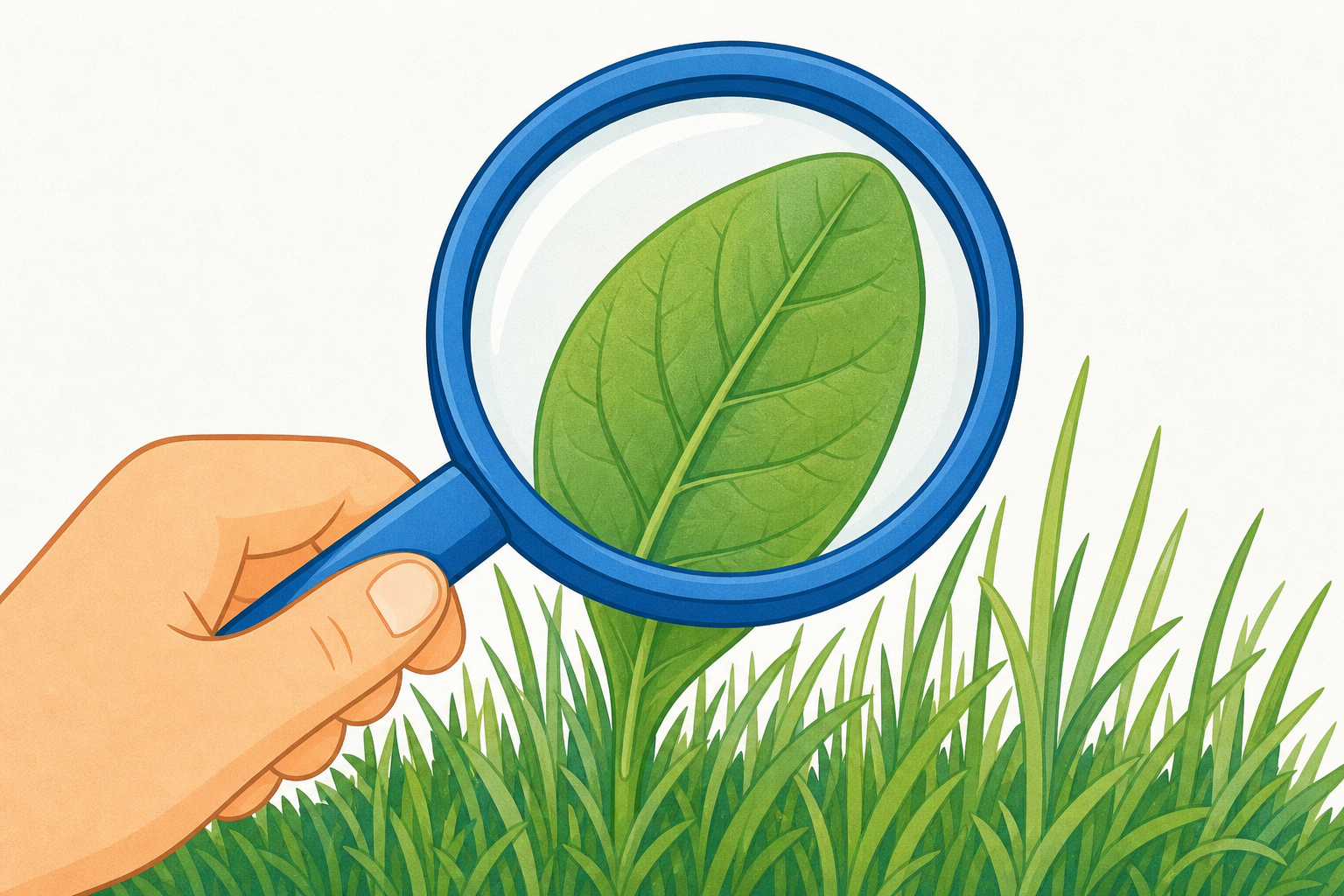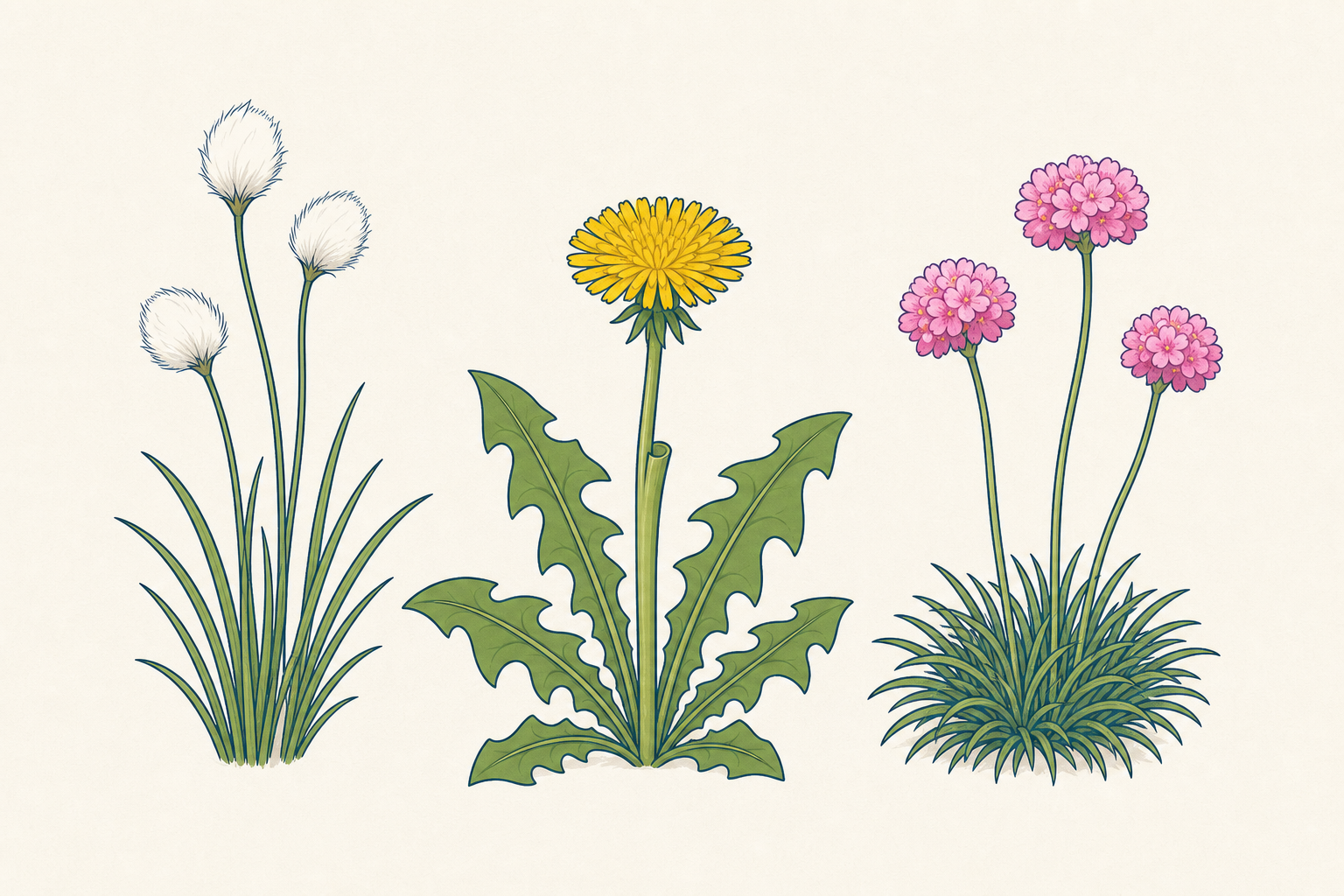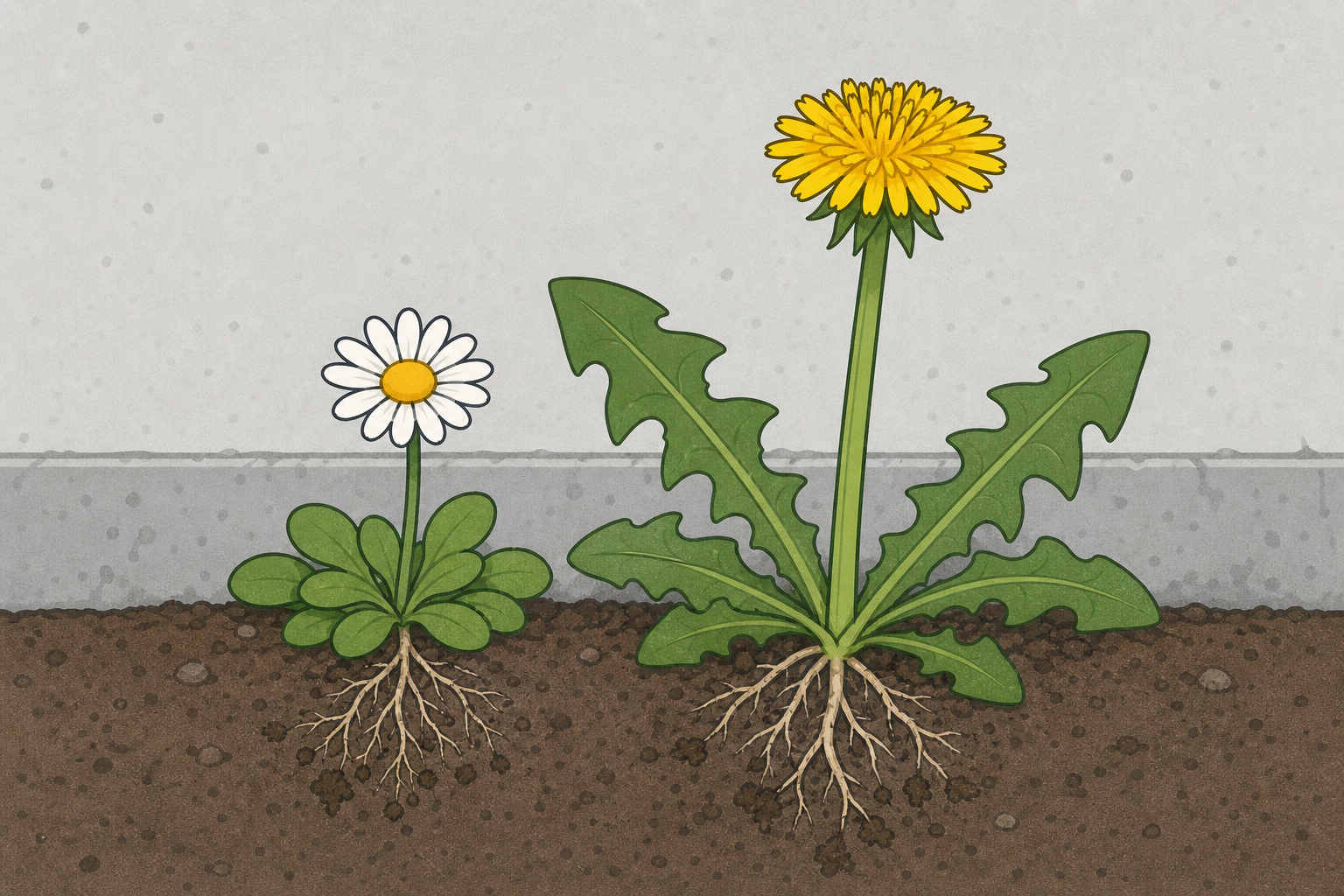
Look around our school. How many different plants can you spot without leaving your seat? A blade of grass, a weed by the wall, a tree beyond the window?
Today we hunt for plants outside, then meet plants from other Irish places: the wet bog, the field edge and the windy shore. What makes each plant suit the place where it grows?
Keep this as a curiosity beat only. Do not hand out magnifiers, cards or journals yet.
Take two or three quick answers about plants children can already see from the room. Revoice everyday noticing: you already know how to look carefully and say what you notice.
On the board use only the plain place names: wet bog, field edge, windy shore. If you need the word hedgerow later, gloss it yourself as a line of bushes along a field edge; do not put it on the pupil screen.
Before the lesson: check the outdoor route is safe and clear; print the provided illustrated Irish habitat plant cards (one set of three per group); print the Investigation Journal page; gather magnifiers.
Two words for today.
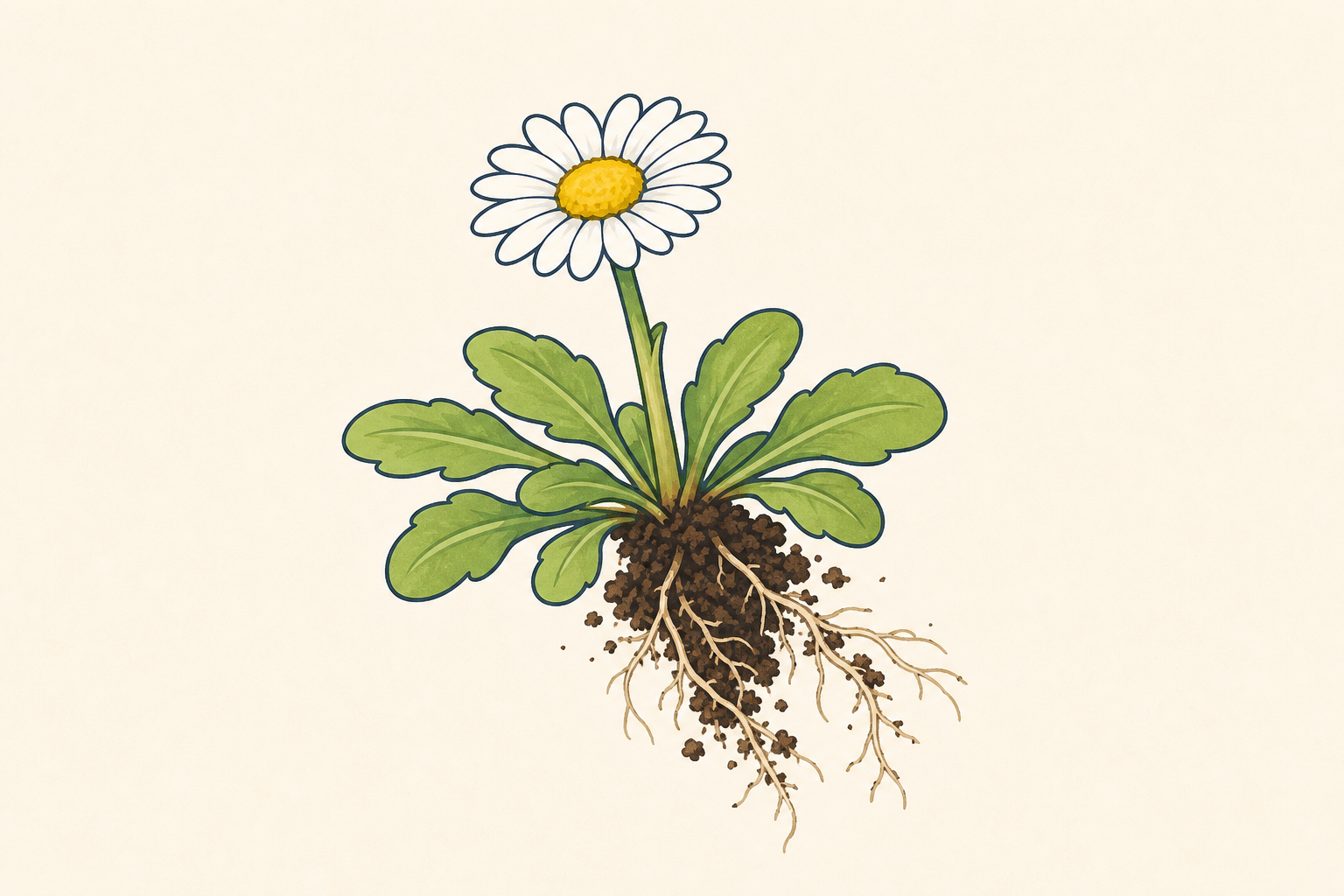
Plant — a living thing with roots, a stem and leaves, like a daisy in the yard.
Habitat — the kind of place a plant grows best, like a wet bog or a windy shore.
Board stays short: only the two bold words and one short example each. Put a simple picture next to habitat (bog, field edge or shore) so the word has a place to stick. Do not define leaf, stem, flower or roots here; those labels come with the diagram in the next step.
Spoken bridge into the next step (not on the board): When we go outside, we will look for plants in our school habitat. Later we will meet plants from other Irish habitats.
| Concept | Why it matters | Example |
|---|---|---|
| Plant — a living thing that usually has roots, a stem and leaves, and grows in soil, sand, water or even cracks in stone | Naming something as a plant helps us look for the same main parts on every find | A daisy in the school yard and heather on a bog are both plants, even though they look different |
| Habitat — the kind of place where a plant grows best | Knowing the habitat helps us understand why leaves and stems look the way they do | Thrift grows low on a windy Irish seashore; heather grows on a wet bog |
Misconception to head off: children may say only trees or garden flowers are plants, and call weeds "not real plants". A weed is still a plant. Also, moss and grass count as plants even without a big colourful flower.
Ask: Is the grass on the pitch a plant? How do you know?
On the board is a flowering plant. The labels are roots, stem, leaf, flower and petal. Help us put each label on the right part. Which part takes in water from the soil? Which part holds the plant up?
Drive the interactive on the IWB. Pupils call out where each label belongs; invite different children to drag if the board allows touch. This is the first full teach of plant-part labels for this unit (later lessons only need a brief recap).
Five labels appear: roots, stem, leaf, flower, petal. Place each on the matching part of the flowering-plant diagram. Point-and-name only: no extra board definitions beyond what the label shows.
Before dragging starts, one brief aside: Flower means the whole colourful head. Petal means one piece of that flower. Point to the whole head, then to one petal, so children do not drop "flower" on a single petal.
Use this as the model before the hunt: I wonder which parts we will spot outside. I predict we will see leaves and stems easily, and flowers on some plants, but not roots unless a plant has been loosened. We will look carefully with magnifiers.
Fold the whole class in while one child is at the board: Are they right? Which label is still left? What does that part do?
Keep the pace brisk so the outdoor hunt still has time.
Our plant hunt job:
Use a magnifier. We will tell the class one plant later. We will draw back in the classroom.
Keep the board job list short. Say the safety rules yourself as you leave: walking feet, gentle looking, no tasting, do not pick spiky plants (bramble, holly) or unknown plants, wash hands on return. Do not pick plants unless you say one small already-loose sample is allowed. Journals stay indoors until the drawing step; the hunt is eyes, magnifier and talk only.
Groups of three or four work well. Each group has one magnifier. You lead a short loop of the yard, pitch edge, planter or hedge line, whichever is safe today.
Prompt science talk: What does the leaf feel like? Is the stem soft or woody? Can you see a flower? Where is this plant growing: crack, grass, soil, shade?
Likely school-ground finds: grass, daisy, dandelion, white clover, plantain, moss on a wall, dock, a planted shrub or tree (ash, oak, birch, or whatever grows on your site).
If weather is too wet or the grounds are out of bounds, run an indoor "windows and planters" hunt plus the habitat cards in the next step, using any potted plants or weeds from the yard brought in earlier in a tray.
As you return, remind them: be ready to tell one plant you found and one part you noticed. One child from each group shares if time allows. Keep this brisk.
If the outdoor loop runs long: protect the in-class labelled drawing next. Trim this oral share first (two groups only, catch others in the closing talk). If still short, shorten the habitat-card compare talk to one quick whole-class match, not the group draw time.
On the board are three places: wet bog, field edge and windy shore.
Your group has three plant cards. Sort the three cards in a row on your table to match the three places on the board (left to right). Then tell your group one way a card plant is the same as, or different from, a plant from our yard.
This beat stays a short sort-and-compare, not a second full teach. Before groups start, show the three place headers on the IWB with one simple picture each (wet bog, field edge, windy seashore). Explain hedgerow in one line only if a child asks: a line of bushes and small trees along a field edge.
Desk sort (no extra kit): groups keep cards at their table. They lay the three cards in a left-to-right row that matches the board order: wet bog, field edge, windy shore. They do not bring cards to the IWB unless you invite one group to check a match.
Hand out one set of three provided illustrated cards per group. After the row is set, groups name one same-or-different link with a school-ground find.
Each card must show a clear photo or simple drawing of the whole plant plus a close leaf or flower detail. The short line below is a caption only, not the main content. Text on the IWB is a backup for sorting by place if a print set is missing; it is not a substitute for seeing the plant.
Printable illustrated card captions (use exactly; pair each with its plant image):
Card A — Heather (wet bog): Small tough leaves and tiny purple or pink flowers. Likes wet, windy bog ground.
Card B — Hawthorn (field edge): Lobed leaves, white spring blossom and sharp thorns. Grows along hedgerows and field edges.
Card C — Thrift / sea pink (windy shore): Low cushions of narrow leaves and pink pom-pom flowers. Stays low so strong sea winds do not snap it.
Key comparison talk: school-ground daisy is short and open to the sun; thrift is low for wind; heather likes wet ground; hawthorn may have thorns along a field edge.
Point out: we already have many plants on our doorstep, and Ireland has different ones further afield. Same main parts, different shapes for different places.
If the hunt overran, do one quick whole-class sort on the board and one compare, then move to drawing.
You're previewing this lesson. Get full access to this lesson and hundreds more — each one ready to teach, with interactive activities, printable resources and pupil progress tracking built in.