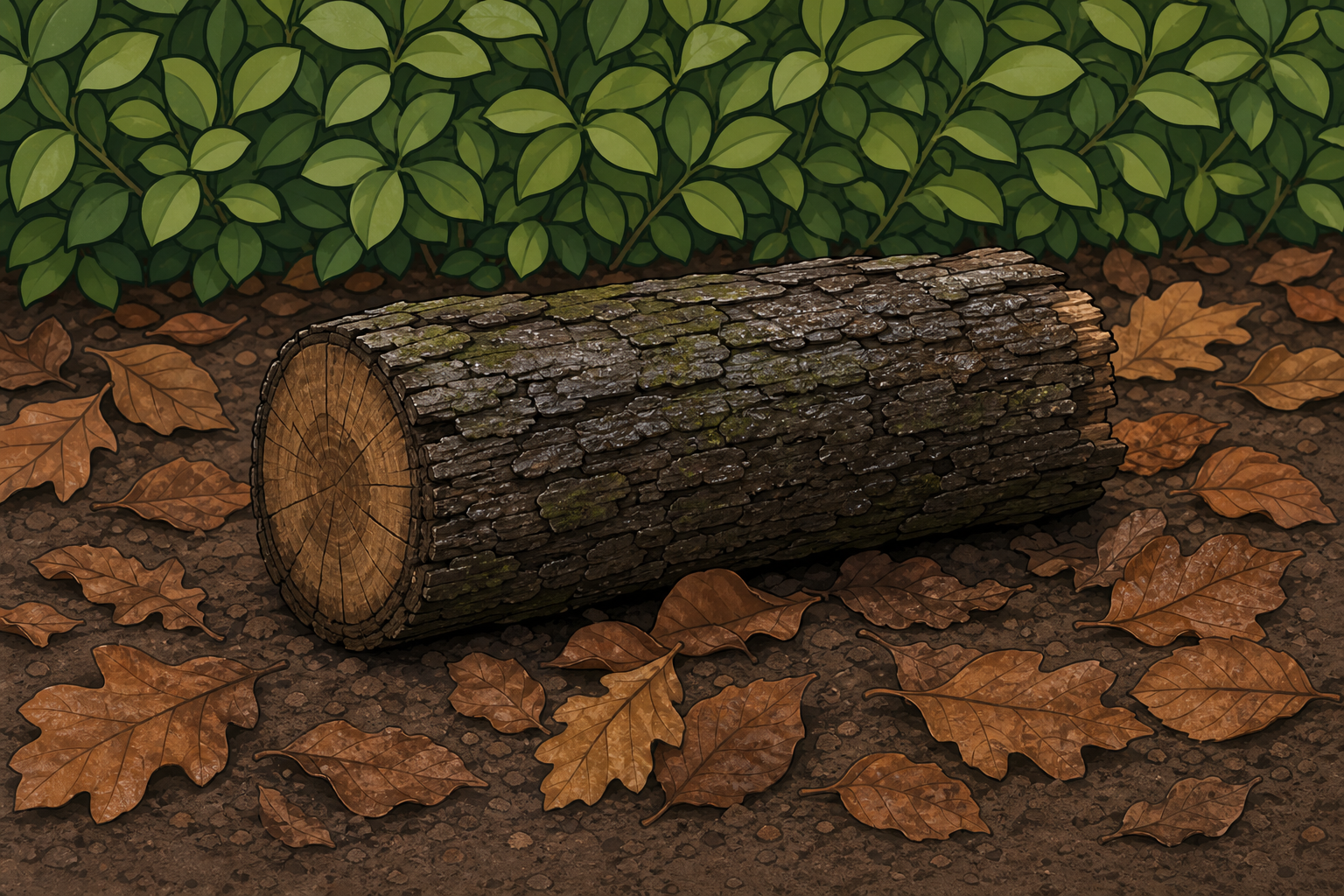
Look at this quiet corner of our school grounds. Who do you think lives there, even when we are not looking?
Today we will explore a tiny habitat, list what lives in it, and build a food chain that shows who eats what.
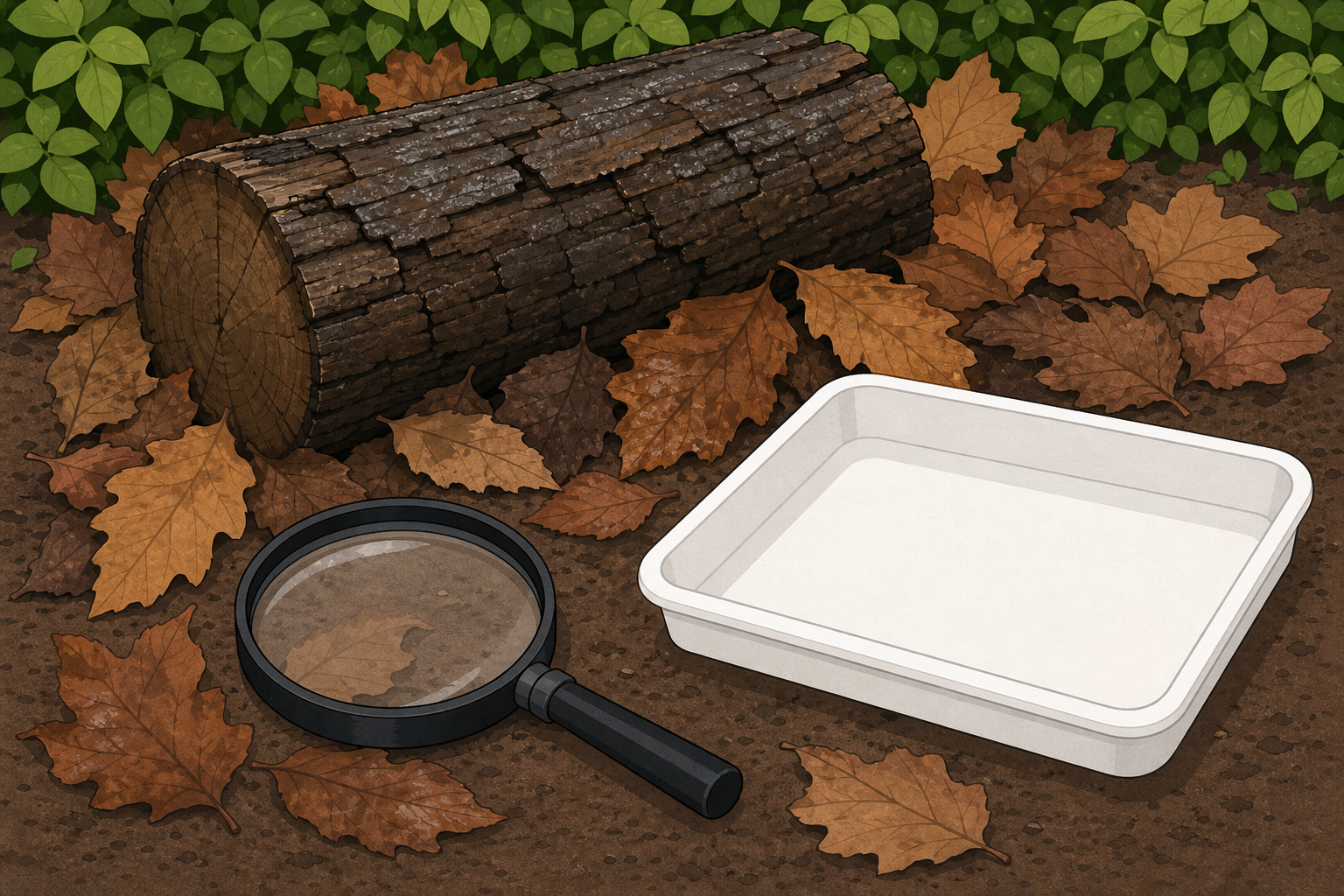
Show a photo on the IWB of a school hedge, leaf pile or log, or stand by the classroom window and point to a real corner of the grounds. Keep this beat light: one curiosity question only. Do not hand out trays or magnifiers yet.
Key question: Who might live there even when we are not looking?
Collect a few ideas on the board (worms, woodlice, beetles, spiders, plants). Save the full list for the outdoor explore.
A habitat is a place where living things find food, water, shelter and space to live.
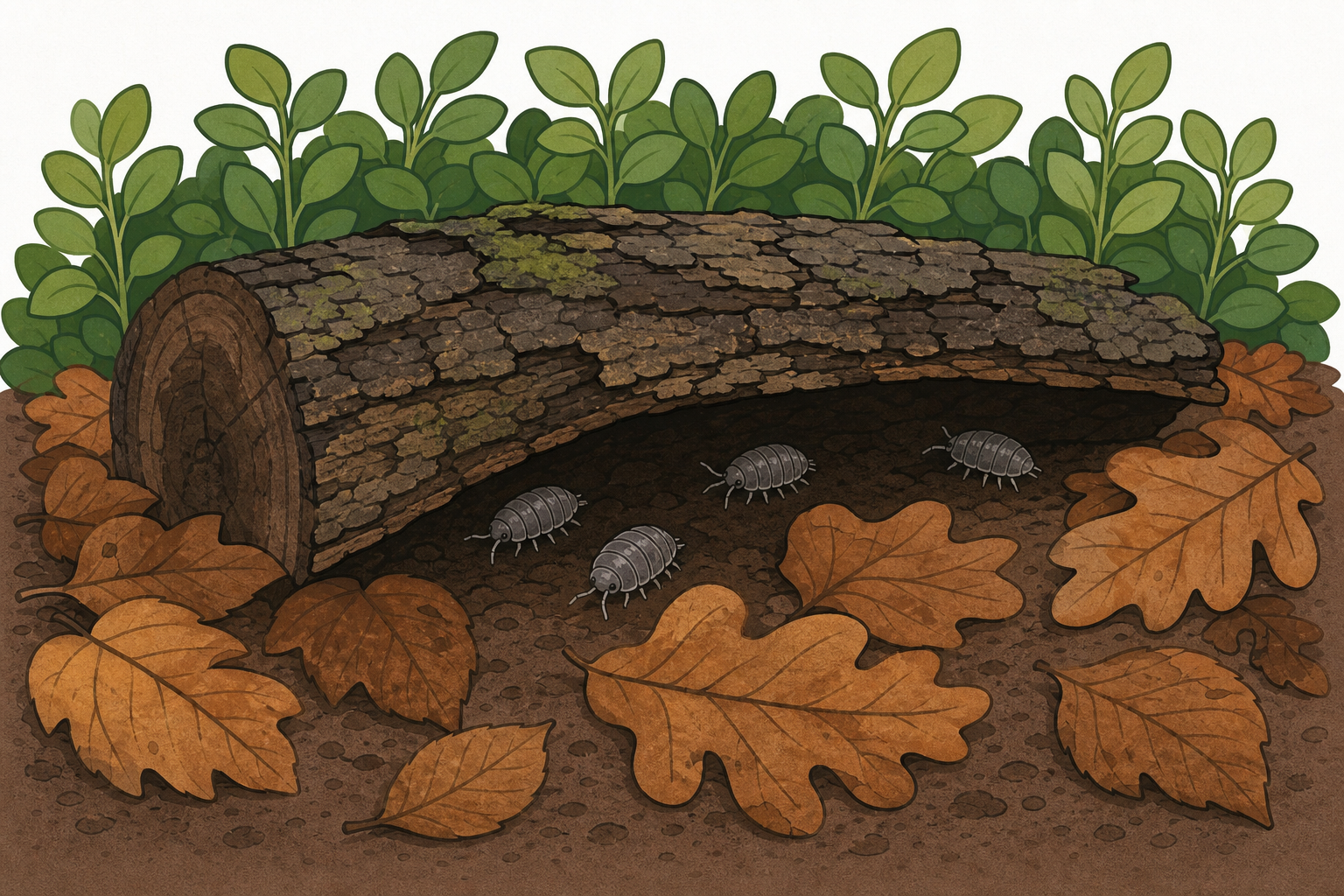
Our quiet corner under the log or along the hedge is a tiny habitat. What food, water, shelter or hiding places might minibeasts find there?
Teach habitat only in this step. Hold food chain until the build step after the explore, and hold depend for the partner talk near the end. Link the word to the photo or real corner from Getting Started.
| Concept | Why it matters | Example |
|---|---|---|
| Habitat — a place where living things find food, water, shelter and space to live | Naming a habitat helps us notice what lives there and why that place is worth looking after | Under a log, in a leaf pile, or along a school hedge |
| Food chain — a line of living things joined by arrows that show who eats what (teach after the explore) | The arrows tell the story of energy moving from plants or plant material to plant-eaters to hunters | Dead leaves (once part of a living plant) → woodlouse → blackbird (the arrow points to the eater) |
| Depend — living things in a place need one another (and the plants) to stay alive (talk goal after the chain) | If one link is missing, the others can struggle, so habitats matter for wildlife | No dead leaves or plants means less food for woodlice, and then less food for blackbirds |
Board talk: invite two or three ideas about what makes the corner a good place to live (damp shelter, food in the leaf litter, places to hide). Do not open the full food-chain story yet.
Nature of STEM: naturalists map habitats across Ireland (bog, hedgerow, seashore) because naming a place and noticing what lives there helps people protect it.
We are going outside to explore one tiny habitat: under a log, in a leaf pile, or along a hedge.
Move gently. Look closely. Notice plants and minibeasts. Do not harm anything living. We will list what we find when we come back.
Keep the class in a loose group at one habitat with clear boundaries. You lift a log or leaf layer slowly first and hold finds where all can see.
Runnable participation model: mark a short edge of the same spot (for example one side of the log or a one-metre strip of leaf litter). Invite about three or four pairs forward together for a short simultaneous look (about one minute) while the rest of the class watch and call out what they notice. If time allows, swap once so a second set of pairs looks. Do not try to give every pair a private one-minute turn in sequence; that will not fit the slot. Watching pairs are real participants: ask them what they can see and what they would look for next.
Return every living thing exactly where it was found, then walk back inside.
Guiding questions: What plants do you see? What is moving? Where might something hide? What might eat what here?
Differentiation: less confident pairs call out one plant and one animal for you to scribe on a class list; confident pairs try to notice three different living things.
Indoor fallback: if weather is unsafe, stay inside. Show the laminated microhabitat photo cards (or the same photos on the IWB) and pass a tray of leaf litter brought in earlier for gentle looking, still treating any living finds carefully and returning them outside afterwards.
Some of these living things were hiding there the whole time, even when we walk past that corner every day.
Back inside, we share what we noticed. Name the living things from our habitat. We will sort them into plants and animals, then talk about who might eat whom.
Build a shared class list on the board in two columns: Plants and Animals / minibeasts. Accept common names (woodlouse, worm, spider, snail, grass, daisy, moss, blackbird if seen or heard nearby).
Prompts: Which living things make their own food (plants)? Which feed on dead leaves or plants? Which might hunt or eat other animals? If two groups found the same creature, put a tally mark beside it.
Keep the list visible for the food-chain step. Likely school-ground links you can support without inventing: dead leaves or leaf litter feed woodlice, worms and snails; birds such as blackbirds or thrushes can eat worms, snails and woodlice; spiders hunt smaller minibeasts.
Link to Irish habitats: the same idea of who-eats-what appears in a hedgerow, a bog and on the seashore, even when the living things are different.
Look-fors: pupils can name at least two living things from the visit and say whether each is a plant or an animal.
A food chain is a line that shows who eats what. The arrow points to the eater.
Here are three cards from a school-ground habitat like ours: dead leaves, woodlouse and blackbird.
Dead leaves were once part of a living plant: that plant material is still the food at the start of this chain.
Help us put the cards in order so the arrows show who eats what.
Introduce the term food chain now that the class has a real habitat list. Keep the class list on the board beside the interactive. Do not tell the full feeding order before pupils try the cards.
Drive the flow-builder interactive on the IWB in explore mode with layout: chain. Three cards appear: dead leaves, woodlouse, blackbird. Pupils call out the order; a volunteer drags each card into place.
Target sequence: dead leaves → woodlouse → blackbird. Arrow labels read is eaten by.
After the chain is built, retell the feeding links out loud: dead leaves are eaten by the woodlouse; the woodlouse can be eaten by the blackbird. Then ask: Which way do the arrows point, and why? What would happen if the dead leaves and plants disappeared from this place? Point back to matching names on the class list (woodlouse, leaves, bird) so the chain is clearly about the habitat they explored.
If you also print physical food-chain cards for a table sort, use these exact texts (they name the organisms without giving the full order away):
Misconception: children often draw the arrow the wrong way. Model: the arrow means is eaten by or gives energy to, so it points from food to eater. If pupils reverse the chain, hold up the cards and retell slowly: plant material first, then the plant-material eater, then the hunter.
If the class list supports a clear alternative two- or three-link chain (for example grass → snail → thrush, or leaf litter → worm → blackbird), you may rebuild once with spoken labels after the interactive, still using the same arrow rule and only organisms the class actually named.
You're previewing this lesson. Get full access to this lesson and hundreds more — each one ready to teach, with interactive activities, printable resources and pupil progress tracking built in.