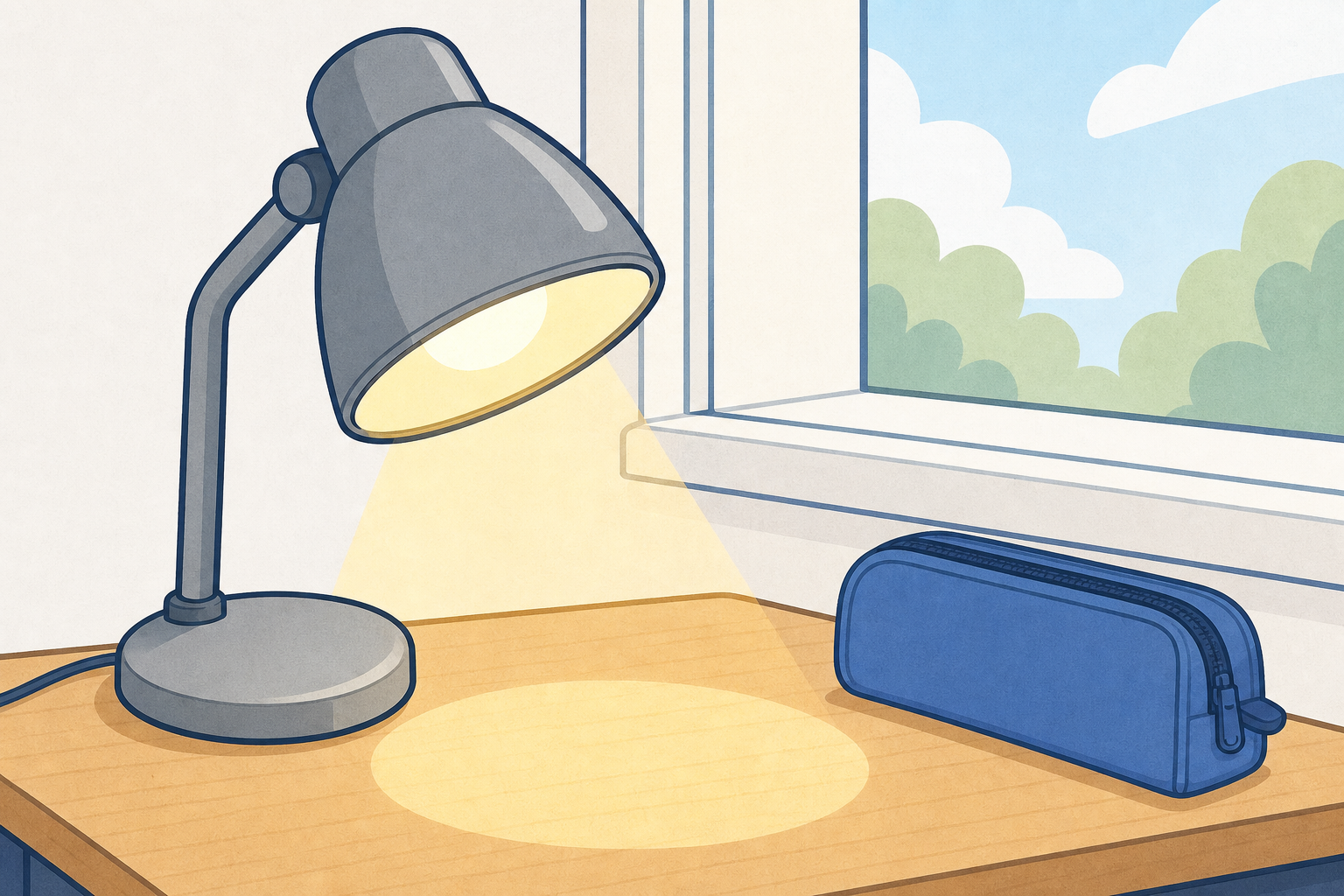
Close your eyes for three seconds. Open them. What changed?
We use light every day without thinking. Where is the light coming from in this room right now? If the sun went dark and every lamp, screen and torch went off, could you still see your pencil case on the desk?
Keep this beat light and quick. Ask pupils to name light they can see or feel without leaving their seats (window daylight, ceiling lights, the interactive whiteboard, a phone if one is out). Do not yet sort into natural and artificial, and do not unpack materials.
Key question: Could we see anything at all with no light? Accept short answers; the next step will pin the idea that we need light to see.
Misconception to park gently: some children say the moon is a light source. If it comes up, say we will check real sources today and come back to the moon later if needed (it reflects the sun's light rather than making its own).
Right now light is helping you see this board. Some of that light comes from nature. Some is light people switch on or light themselves.
Natural light comes from nature, such as the sun or the stars.
Artificial light is light people make or switch on, such as a lamp, a torch or a candle.
People have always needed light when the sun goes down. Long ago in Ireland that might have been a rushlight (a small homemade light); today it might be the ceiling lights in our room.
We need light to see. Later we will test how materials let torchlight through.
Project only this short board text. Teach just the two source words now. Hold transparent, translucent and opaque until the torch sequence so pupils meet each cluster when they can use it.
| Concept | Why it matters | Example |
|---|---|---|
| Natural light source — light that comes from nature, not made by people | It helps us tell which light we rely on outdoors without switching anything on | Sunlight through the classroom window on a clear Irish morning |
| Artificial light source — light people make or switch on with tools, fuels or devices | Most indoor light at school and home is artificial, especially on dark winter afternoons | Ceiling lights, a torch, a phone screen, or a candle flame |
Stars note: stars make their own light, so they count as natural sources, even though only the sun gives us useful daylight for seeing in the classroom. Starlight is real light, but it is far too faint to help us see a pencil case.
Nature of STEM thread: light in Irish homes has changed over time. One of the earliest artificial lights used in Irish rural homes was the rushlight. People later used candles and oil lamps, and then electric bulbs and screens. The job is the same (light so we can see) but the artificial source has changed.
Misconception to head off: children sometimes think eyes send out light. Keep the simple Stage 3 idea: light comes from a source, hits things, and enters our eyes so we can see.
Ask: Is a switched-off torch a light source right now? (No — it only counts when it is giving out light.)
We are going on a short light hunt around our classroom. Spot things that are giving out light right now, or that can give out light when switched on.
Sorting rule: natural = light from nature; artificial = light people make or switch on.
Sort each source. Be ready to say why. Before you finish, jot one natural and one artificial source on your Investigation Journal page.
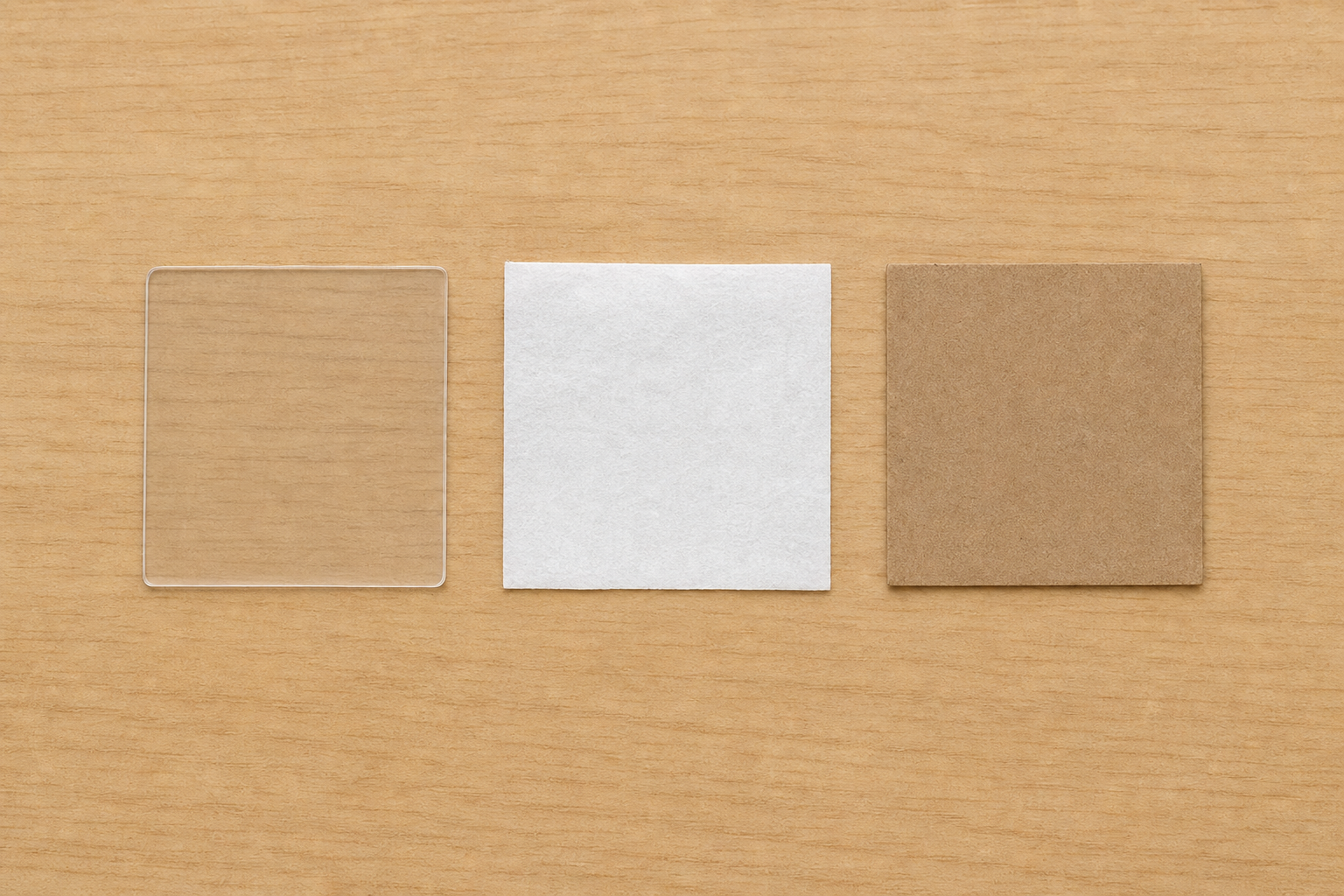
Print the provided light-source cards (one set per group). Default this step to an indoor hunt plus cards inside the classroom and nearby corridor windows only. Treat a doorway or yard glimpse as an optional 2-minute add-on only when time and weather clearly allow. Stay with the class if you step outside.
Show the short sorting rule on the board and keep it visible. Model one borderline card together first: a candle flame. People light the candle, so it is artificial. Then in pairs or small groups, pupils list real light sources they can see, match or add the printed cards, and sort into two labelled trays or floor spaces: Natural and Artificial.
Card A — The sun: Our star. It lights the daytime outside and sends daylight through windows.
Card B — A fire or candle flame: A flame people light for heat or light. Candles, campfires and rushlights are lights people make by burning fuel.
Card C — Stars: Distant suns that shine in a dark night sky. (They make their own light, so they are natural sources, even though only the sun helps us see in the daytime.)
Card D — An electric lamp: A bulb or lamp you switch on in a room or on a desk.
Card E — A torch: A hand-held light you switch on to see in dark places.
Card F — A phone or tablet screen: The glowing screen of a device.
Card G — The interactive whiteboard: The big classroom screen that lights up when it is on.
Card H — A bicycle light: A small light fixed to a bike so riders can be seen and can see the path.
Natural: A, C. Artificial: B, D, E, F, G, H.
Look-fors: pupils justify with the board rule. If someone puts the sun with artificial because "it comes through the window", revoice: the sun is still natural; the window only lets the light in. If someone argues a candle is natural because fire is "from nature", revoice: at this level we sort by whether people made or lit the light. A wildfire would be natural; a candle or campfire people light is artificial.
Differentiation: less confident pairs sort four cards first (sun, lamp, torch, candle). Confident pairs add sources they spotted on the hunt that are not on the cards.
Journal moment (1–2 minutes at the end of this step): each pupil quickly notes one natural and one artificial source from the hunt so they are not trying to remember them cold later.
Safety: never look straight at the sun. Keep any outdoor add-on brief and together as a class.
Before we test, three quick words. Match each one to the sample your teacher holds up.
Transparent: clear bright patch (clear plastic).
Translucent: soft glow (tissue paper).
Opaque: dark patch (cardboard).
Now look at each test material. Will the screen show a clear bright patch, a soft glow, or a dark patch? Say your prediction out loud and give one reason. Predictions are the start of the science, not a test to get right.
Hold up one known example for each word and chorally name them once before any votes: clear document-wallet plastic (transparent: clear bright patch), tissue paper (translucent: soft glow), cardboard (opaque: dark patch). Leave those three samples visible as anchors. Keep only the short board lines on the IWB; say the fuller definitions yourself as you hold each sample.
Then hold up each remaining test material one at a time: baking paper, thin fabric, aluminium foil. For each, take a quick class vote using the screen-look phrases (clear bright patch / soft glow / dark patch) and ask one pupil why. Point to the desk word cards so pupils match what they expect to see, not a memorised definition.
Do not reveal results yet. Note one or two bold predictions on the board so you can return to them after the test.
| Concept | Why it matters | Example |
|---|---|---|
| Transparent — nearly all the light passes through so you can see clearly through it | Windows and clear packaging work because light can travel through them | A clear document wallet held up to the torch |
| Translucent — some light gets through but is scattered, so shapes look soft or blurry | Frosted glass and thin paper let light in without a clear view through | Tissue paper glowing when the torch is behind it |
| Opaque — light is blocked so almost none reaches the other side | Walls, books and cardboard stop light and cast dark patches | Card held between torch and screen leaving a dark shape |
Common prediction pattern: children often say foil will let light through because it is shiny. Leave that misconception live for the investigation to challenge.
Keep predictions short. Move into the investigation while energy is high.
We will test each material between a torch and a white screen. Use the word cards on the table: match what you see on the screen to clear bright patch (transparent), soft glow (translucent), or dark patch (opaque).
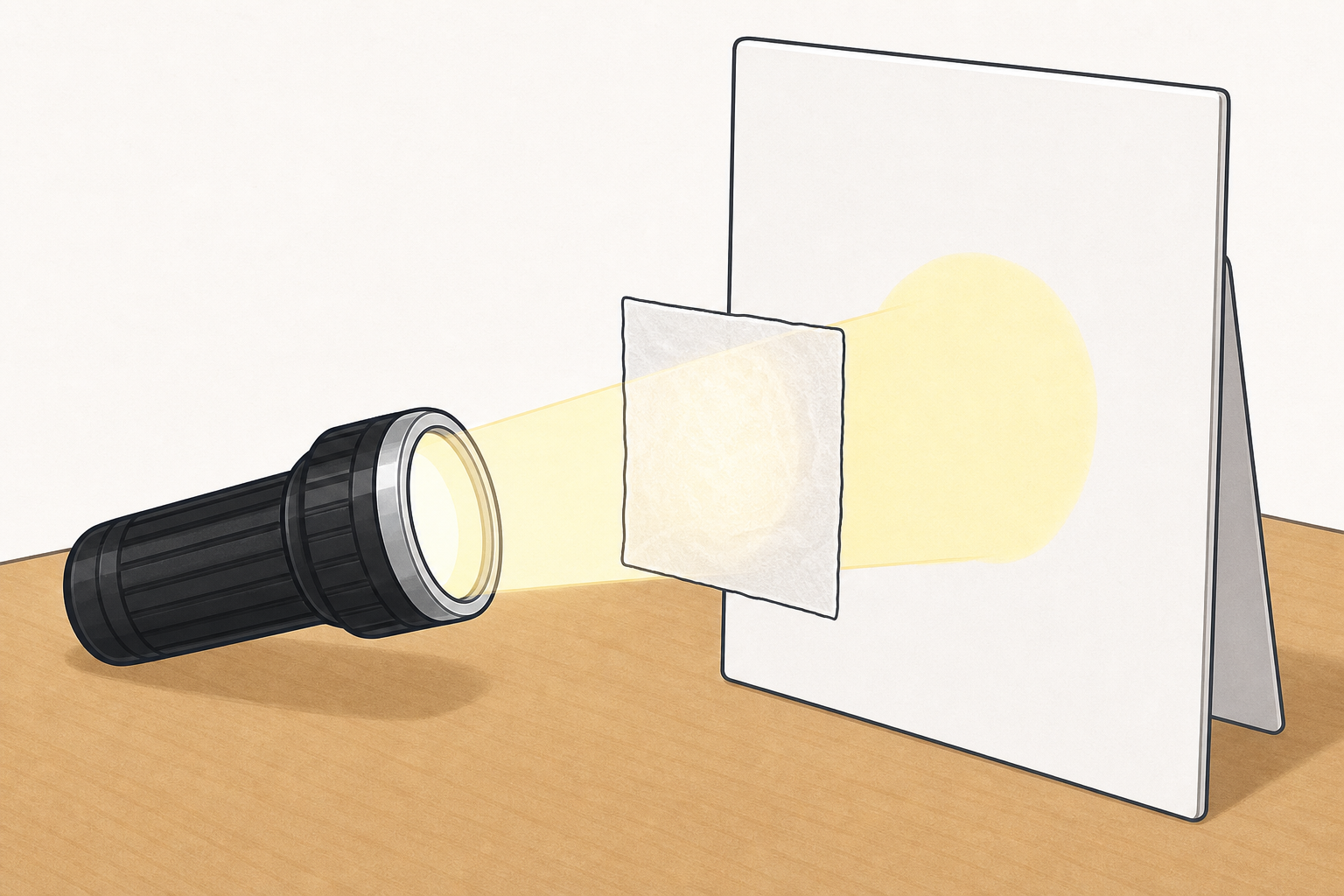
When your group has the torch, hold each material flat between the torch and the screen and decide together. When another group is testing, watch the screen with the class and help decide which word fits. Make a quick tick or word choice as you go; you will finish the full record next.
Ideal kit: one torch, one white screen (wall, board or large white paper), and the shared material set per group, plus desk word cards: transparent / translucent / opaque with sample phrases (clear bright patch / soft glow / dark patch). Dim the room a little if you can so the beam shows, but keep enough light for safe moving. Groups work on desks facing a clear wall or propped white paper.
Minimum kit for parallel groups: at least one working torch between two groups. If you have only one or two torches for the whole class, do not try full parallel testing. Run a short teacher-led or station-turn sequence instead: one group tests while the class watches; fold watchers in with questions such as What do you predict for the next material? and Do you agree with their decision? Rotate groups through the torch station so every pupil handles at least two materials. Timing still works because decisions are spoken and ticked, not written in full sentences yet.
I wonder: what will cardboard do to the torch beam?
I predict: I think it will be opaque because I cannot see through a cereal box.
I test: hold the card flat between torch and screen, about a hand-span from the screen, torch steady.
I observed: the screen goes dark behind the card; almost no glow gets through.
I think: cardboard blocks light, so it is opaque.
Then hand the method to groups (or the station turn) for the full set of materials. Remind them: same torch distance each time, material flat, look at the screen not into the torch. Lean on the desk word cards so pupils match screen look to word rather than memorising definitions. Full journal sentences wait for the next step; here groups only decide and make a quick tick or word mark.
If you used a station-turn or teacher-led path, stop for a 2-minute whole-class evidence gather before recording. On the board, list each material once. Ask the testing group (or the class) to call out the agreed word for that material. Confirm the class result for every sample so every pupil has a full set to copy into their journal, even if they only handled two materials themselves. Spoken share is enough; a simple board list works.
If the room is too bright: cup a hand around the torch and screen area, or use a large cardboard box already in the room as a simple viewing tunnel (open ends only).
Safety: never shine torches at eyes or faces. Point only at the screen. Walk with torches switched off between stations.
Differentiation: support groups with the three word cards on the table. Stretch: which classroom object would you choose for a window, a lampshade, or a blackout blind, and why?
You're previewing this lesson. Get full access to this lesson and hundreds more — each one ready to teach, with interactive activities, printable resources and pupil progress tracking built in.