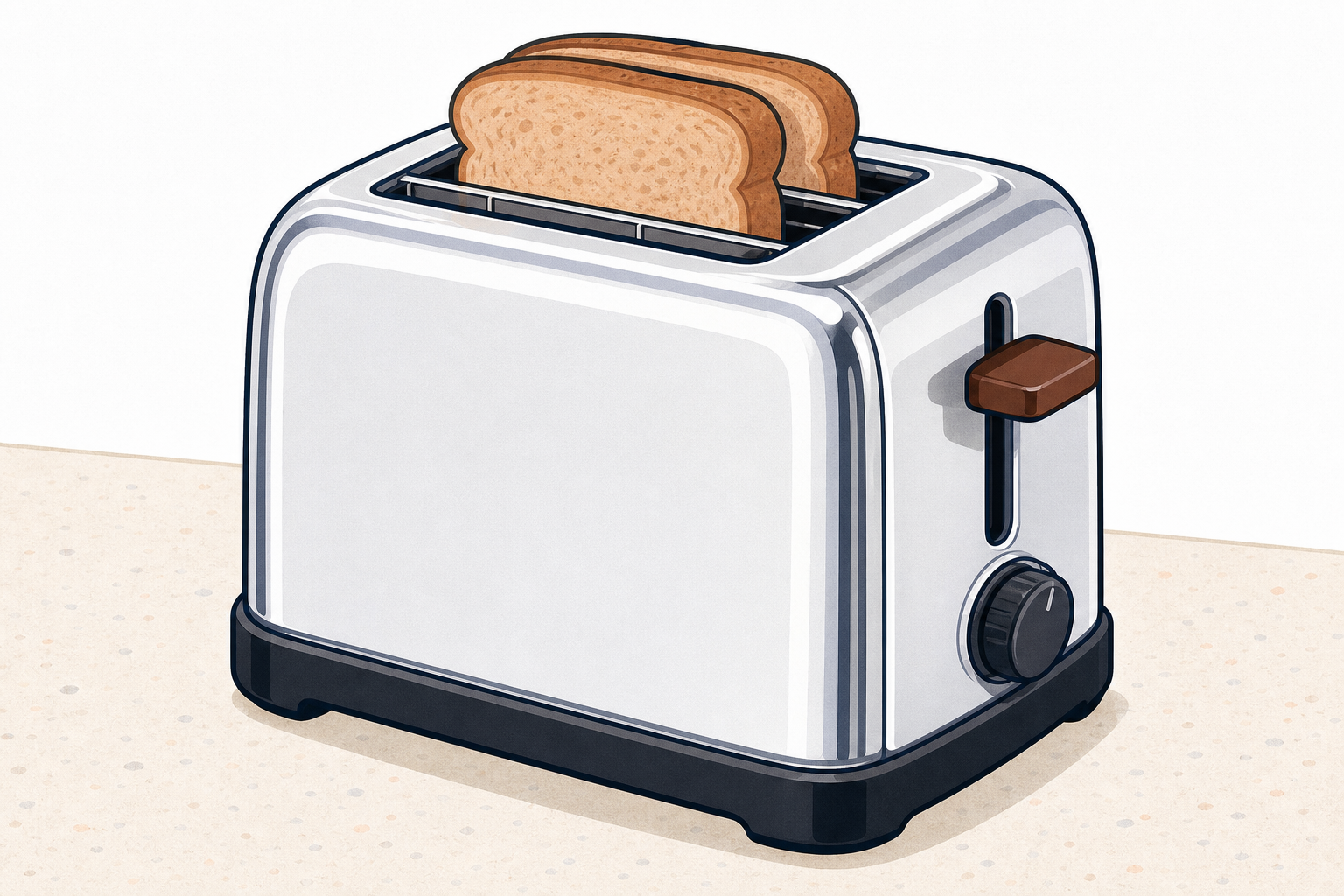
Think of a toaster at breakfast. Something goes in, something happens inside, and something comes out. What are those three things?
Today we will map everyday technologies the same way: input, process and output.
Keep this light. Hold up or name a toaster (or show a picture on the IWB). Take three or four quick answers only. Do not teach the full IPO table yet.
Listen for: bread in, heat or toasting, toast out. If pupils say only "it makes toast", nudge: What went in first? What did the toaster do?
Have the device cards, sticky notes and the three floor labels ready nearby, but do not lay out the full floor flow until the group mapping step.
IPO is the short name for input, process and output.
Those three breakfast ideas have names: input is what goes in, process is what the technology does, and output is what comes out.
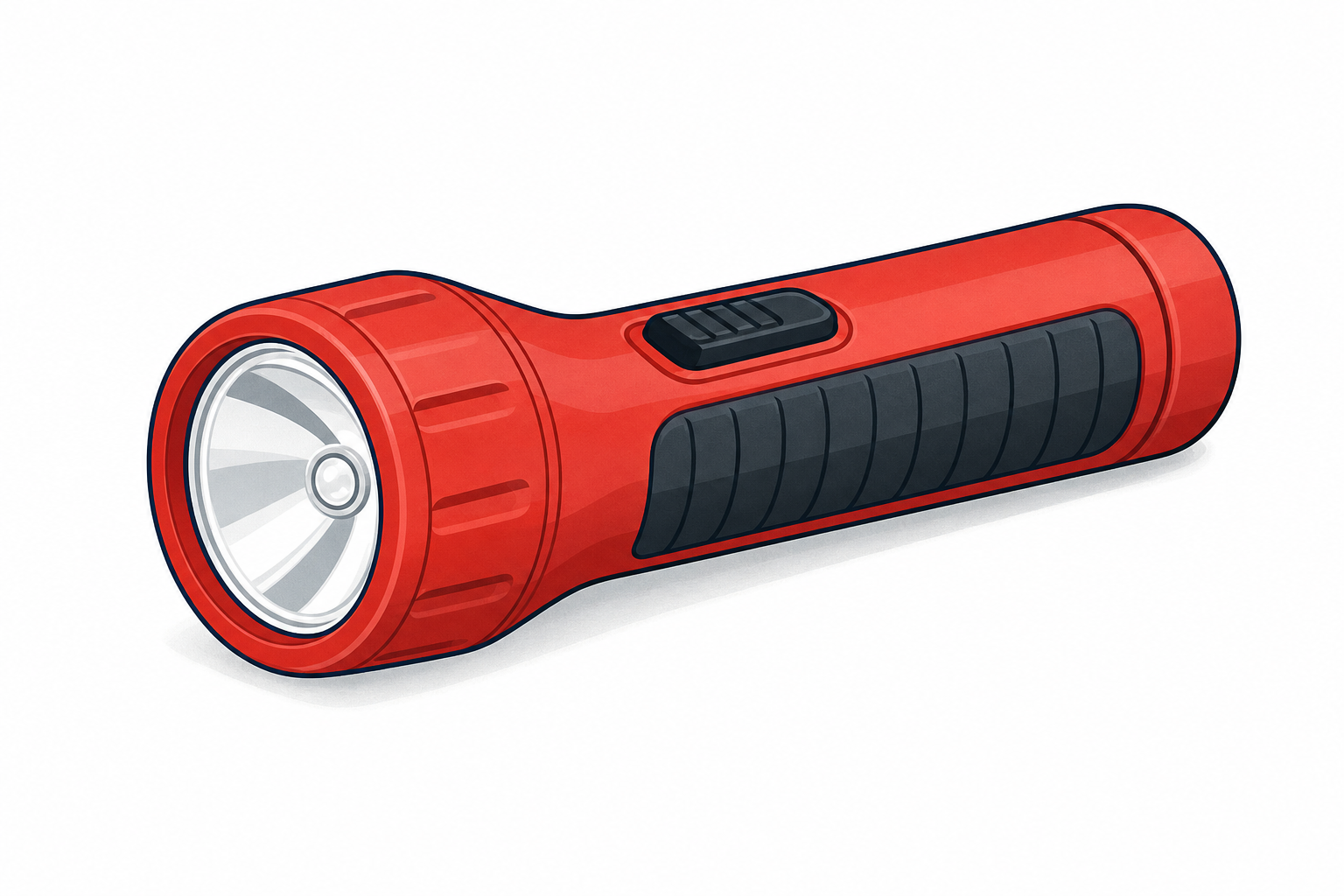
Every technology has all three. Turn to a neighbour and name one part for a torch: what goes in, what it does inside, or what comes out. Be ready to share.
Project only the short board text. Use the table below yourself.
| Concept | Why it matters | Example |
|---|---|---|
| Input — what goes into a technology to start it or feed it | If you miss the input, you cannot explain how the technology begins | Pressing the torch button, or putting bread into a toaster |
| Process — what the technology does with the input | The process is the hidden middle step that turns the input into a result | Electricity goes to the bulb inside; the toaster heats the bread |
| Output — what comes out when the process is finished | The output is the job the technology was made to do | A beam of light from a torch; hot toast from a toaster |
Worked model (say aloud, do not project as a script): I wonder how a pencil sharpener works as a system. I predict: input is the blunt pencil and turning the handle; process is the blades shaving the wood; output is a sharp point and pencil shavings. Point at each part on a real sharpener if you have one.
Misconception to head off: pupils often name only the output ("it makes light"). Gently insist on all three parts every time. Keep process as the internal action only, not the result the user sees. If you need fuller language for yourself, process for a torch is electricity flowing through the circuit to the bulb — keep "circuit" in your talk only, not on pupil cards.
Nature of STEM: technologists use input–process–output to plan a new device or to find where a broken one has gone wrong: is the problem the input, the middle step, or the output?
Look at the three columns on the board: Input, Process, Output.
We will place the cards for a torch together. Call out which column each card belongs in: press the switch, electricity goes to the bulb inside, beam of light.
Drive the flow-builder interactive in explore mode with layout: ipo on the IWB. Pupils do not need devices. Model this whole-class torch map before groups map their own device cards.
Cards on screen (exactly these three for the first map): press the switch, electricity goes to the bulb inside, beam of light.
Then clear and rebuild with a second device if time allows, using cards: bread and push lever, heat browns the bread, hot toast.
Fold the whole class in: Are they right? What would happen if the input never arrived?
Your turn prompts on screen: use the prompts in the interactive to ask where a fault might sit if the torch stayed dark.
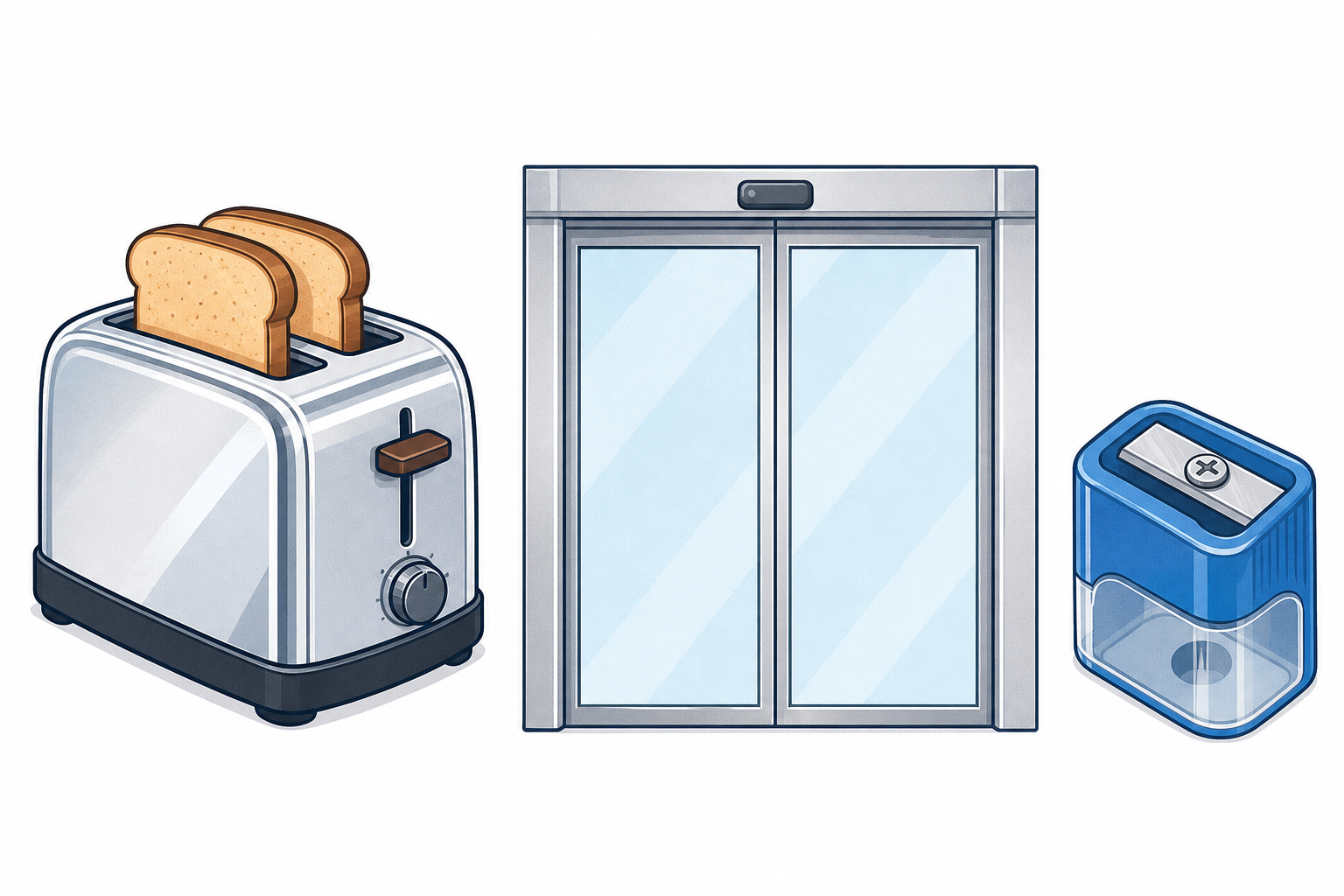
Your group gets one device card: toaster, torch, automatic door or pencil sharpener.
Card A — Toaster: A kitchen toaster. Bread goes in the slots. You push the lever down. Heat browns the bread. Toast pops up.
Card B — Torch: A hand torch. You press the switch. Electricity goes to the bulb inside. A beam of light comes out.
Card C — Automatic door: A shop or school door that opens by itself. A person steps on the mat or walks in front of a sensor. The door motor runs. The door swings or slides open.
Card D — Pencil sharpener: A classroom pencil sharpener. You put in a blunt pencil and turn the handle (or press it in). Blades shave the wood. A sharp point comes out, and shavings collect inside.
Give each group one card and three sticky notes. Groups first agree IPO at their desks. Then invite about two or three groups to the shared floor strip to place notes and stand on Input, Process and Output while they say their three parts. Not every group will stand on the strip in the time — that is fine. Watching groups listen and may be asked: Do you agree? What is the process?
After about eight minutes of planning and sharing, you should have heard two or three groups in full. Correct gently if process and output are swapped.
Differentiation: support groups with sentence stems said aloud — The input is… The process is… The output is… Confident groups can name a second input (e.g. electricity to the toaster as well as bread).
Some groups will become a human machine for one device. One person is the input, one is the process, one is the output. They act the job in order.
If your group is watching, your job is to name all three parts when they finish: input, process and output.
Keep groups of three (a fourth pupil can be the narrator who names each part). Allow two minutes to plan and about one minute per group to perform. Two to four groups is enough; the rest watch and call out the IPO. Make this clear before planning starts so watchers know their job.
Look-fors: clear order (input first), a visible middle action, an obvious output. Celebrate simple, clear mime over long plays.
If a group freezes, offer role cards: Input / Process / Output with one example line each for the toaster.
Peer prompt for watchers: What was the input? What was the process? What was the output?
You're previewing this lesson. Get full access to this lesson and hundreds more — each one ready to teach, with interactive activities, printable resources and pupil progress tracking built in.