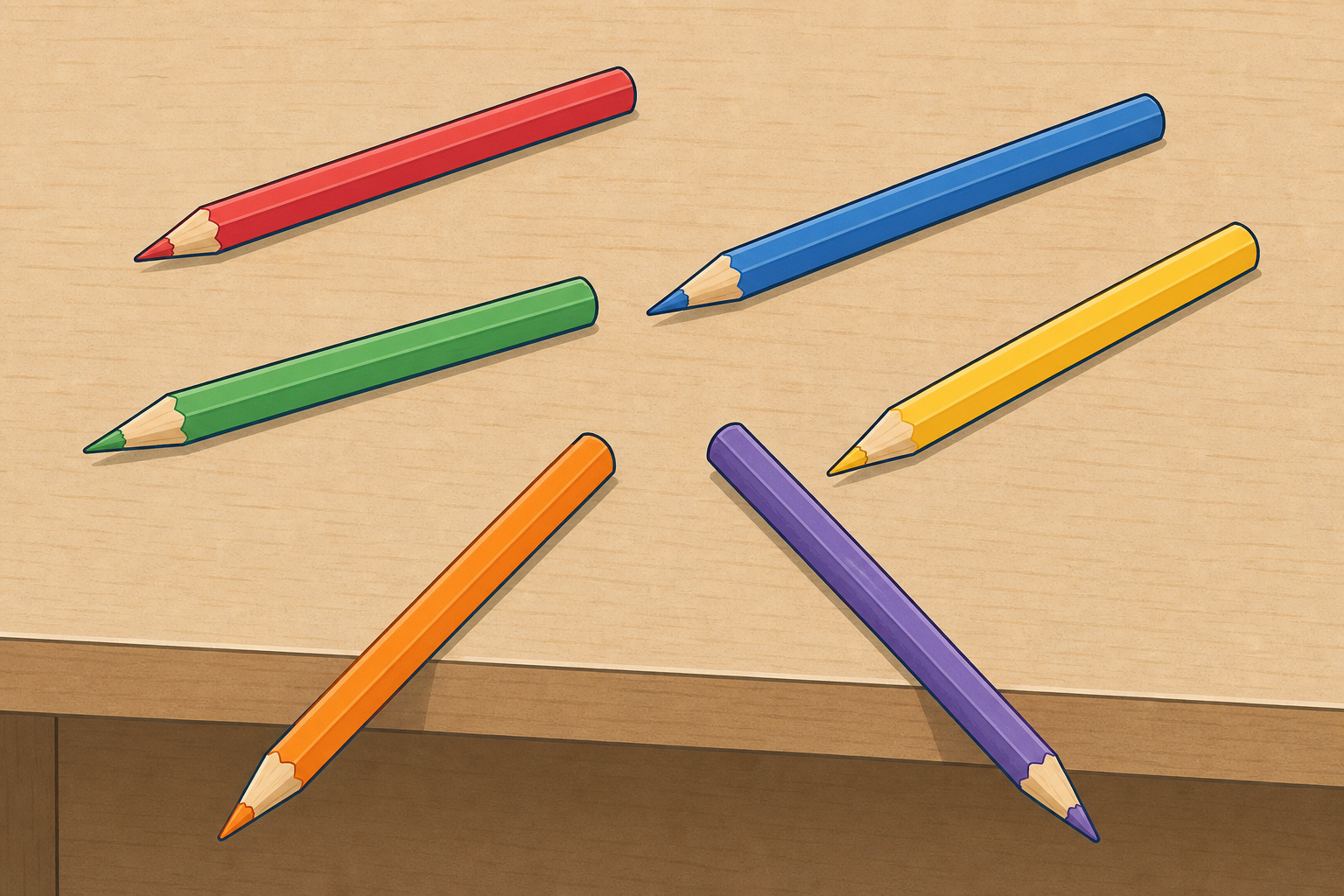
Sam keeps losing pencils under the desk. Who could we help, and what do they need?
Today we will sketch a few ideas, choose one, and draw a clear plan. We will not build today. First we plan, like real makers do.
Keep this light. Hold up a few loose pencils that have rolled onto the floor and name a simple user the class can picture (a classmate, a younger buddy, or a puppet character called Sam). Ask: Who are we helping? What is awkward for them? What does a good helper need to do?
Capture two or three pupil ideas on the board in short phrases (holds pencils, does not tip, easy to make). Do not hand out materials or start drafting yet.
Practice, not project callback: Sam is a simple shared user for this lesson only, so the class can practise drafting and planning. This is not a recap of a previous empathy lesson. Real user and empathy work comes later in the project; today is a standalone skill rehearsal.
STEM eyes: makers try several ideas before choosing one. Link to everyday objects around the room that were planned before they were made (a pencil case, a book stand, a lunchbox lid).
A draft is a quick, rough sketch of one idea.
Watch the board only. I will sketch two ideas and choose one. You do not sketch yet.
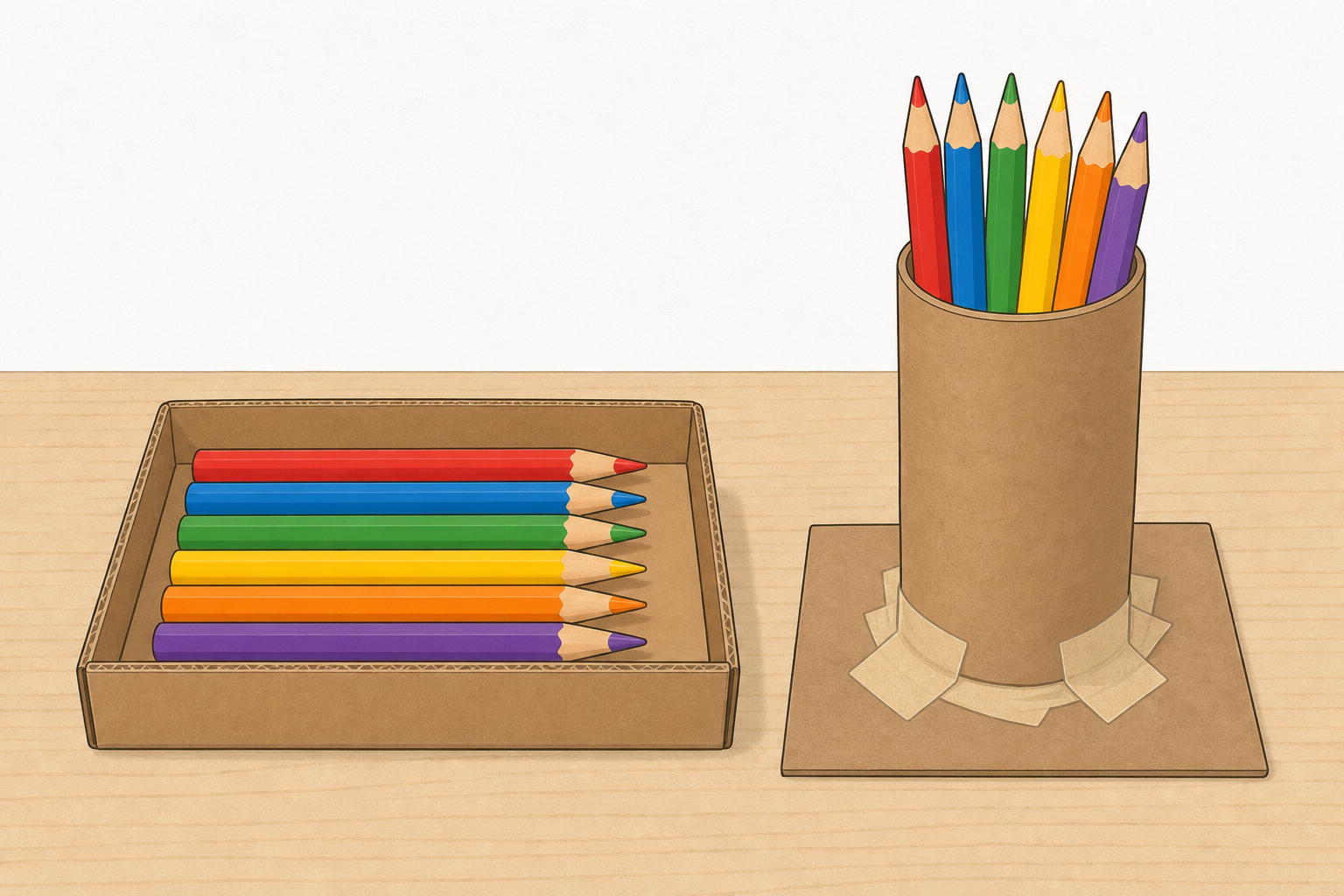
One idea might be a low open tray. Another might be a tall tube stand. We will watch two drafts, then choose.
Reveal board text one short line at a time. Keep pencils and journals away until the later drafting step so children do not start early.
Live model (keep under 5 minutes): sketch two tiny drafts only (an open tray; a tube stand). Think aloud: I wonder if a tall side would stop pencils rolling… I predict a low open tray might be easier to grab from… Point to one good part and one tricky part of each, then circle the tray. Stop there. Do not draw a full labelled plan on the board; pupils do labelling in the next big step.
After the model, reveal briefly: a plan is a clearer labelled drawing of the idea you choose. When we name what we will build with (card, tape, sticks), we just look at the tray and say what we can see. Then ask: Why do makers sketch more than one idea before they choose?
| Concept | Why it matters | Example |
|---|---|---|
| Draft — a quick, rough sketch of one idea, not a perfect picture | Drafts let you try more than one idea fast before you spend time on a careful plan | Two rough pencil sketches of different holders on one page, each taking about a minute |
| Plan — a clearer drawing of the chosen idea with labels for parts and what you will build with | A plan helps you (and a partner) see what the idea is and what you need | A labelled drawing: base, sides, opening; notes saying card and tape |
Misconception to head off: children often think the first idea must be the best, or that a draft must look neat. Praise messy, different ideas. Say: A draft is for thinking, not for hanging on the wall.
In pairs, call out two different ways to help Sam keep pencils tidy on the desk. No bad ideas. We will sketch them next.
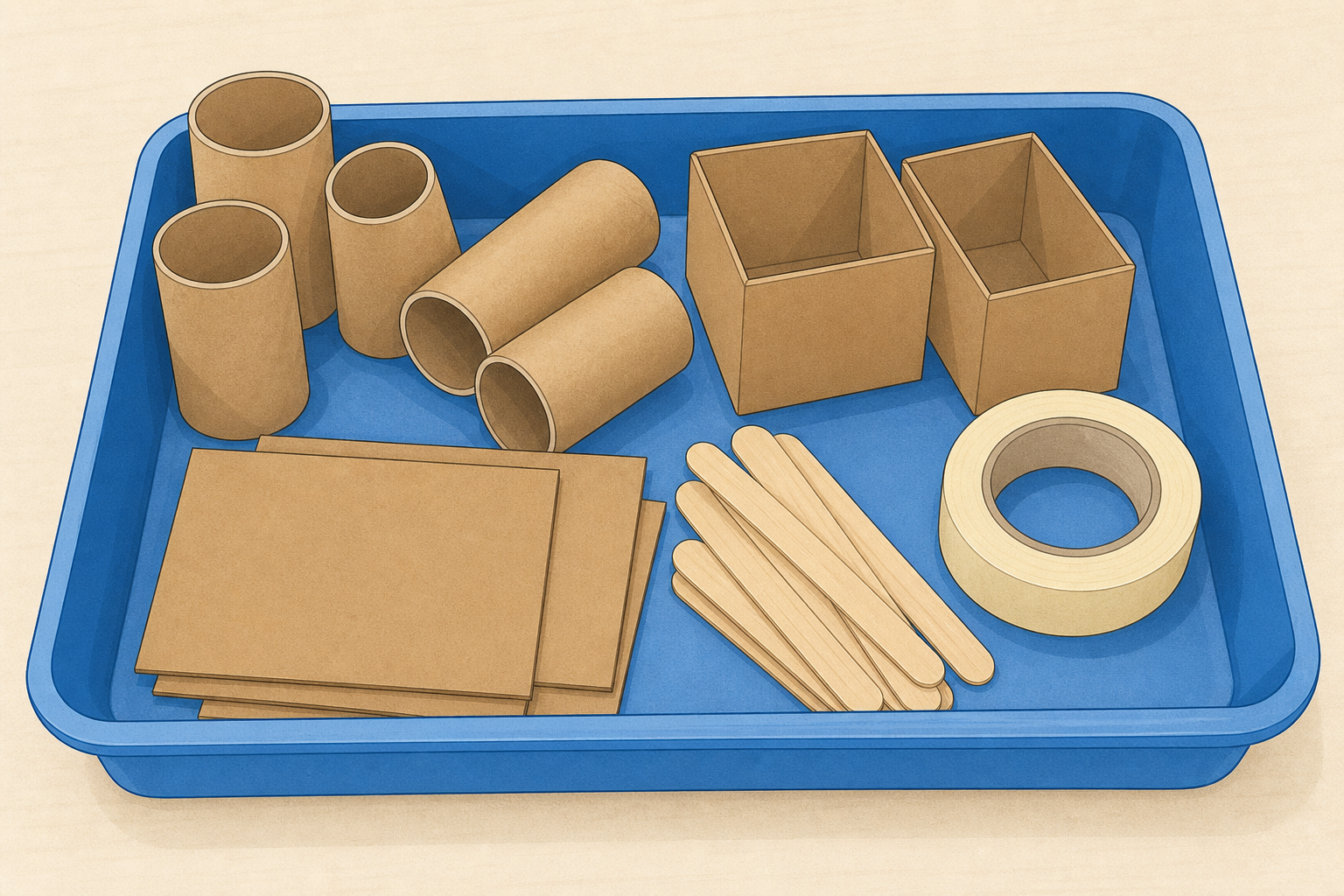
Have the sample materials tray visible but not for building. Children may touch and look so they know what is possible.
Use think-pair-share. Give 30 seconds of quiet think, then about a minute of pair talk, then harvest shapes of ideas on the IWB (open box, tall pot, divided tray, clip-on cup). Keep names simple. If pairs get stuck, offer prompts: Could it stand up? Could it stick to the desk? Could it hold more than pencils?
Look-fors: more than one idea per pair; ideas that match the problem (holding pencils), not unrelated inventions.
Differentiation: some pairs may need a sentence starter said aloud: One idea is… Another idea is… Confident pairs can add who else might use it.
1. On your Investigation Journal page, sketch two quick drafts for Sam's pencil holder.
2. With your partner, say one good part and one tricky part of each draft.
3. Circle the idea you choose.
4. Look at the tray. Draw a clearer plan. Label the parts (for example: base, side, opening) and write what you will build with from the tray.
Each pupil needs their Investigation Journal page, a pencil and coloured pencils. The page (or blank A4 substitute) must leave room for two small drafts and one larger labelled plan so the plan phase is not squeezed. Place one sample materials tray per group so children can look and touch while they choose what to build with (card scraps, paper, masking tape roll, lolly sticks, a small box if you have one). Today is plan only: no building.
Show only the current beat on the IWB, one at a time. Do not leave all four numbers on screen together. When you reach beat 4, add brief part-word examples on the board (base, side, opening) so pupils know what kind of labels to write.
What job must this helper do? Which draft matches the job best? What might tip over? What on the tray is stiff enough?
If a child has only one idea, ask them to change one thing (taller, wider, with a lid) to make a second draft. If labels are missing, point to a part and ask What will you call this bit? What is it made of?
Minimum success bar (whole class): two drafts, a circled choice, and a plan with at least two part labels and two things from the tray named. Neat colouring is not required.
Differentiation: some pupils dictate labels while you or a partner scribes a word or two. Offer spoken sentence starters for good/tricky talk. Others can add a simple note about size (fits five pencils). Do not rely on a separate printed template; support is oral and partner-based.
Nature of STEM: quietly name the habit: makers draft a few ideas, talk them through, then choose before they build. This lesson practises that habit with a simple pencil-holder problem.
Swap plans with a partner. Say one thing you like and one thing you wonder. Then tell the class one thing you might change about your plan.
Keep this oral and kind. Model the sentence stems once: I like… I wonder…
Suggested timing inside this step: about 2 minutes each way for partner feedback (4 minutes), then about 2 minutes for three quick whole-class change shares. Keep class harvest short: one sentence each from three volunteers only.
Look-fors: feedback about the design (shape, what it is made from, how it holds pencils), not about neat colouring. Revoice strong comments: So you noticed the wide base might stop it tipping.
Display-only: nothing is typed. A tiny note on the journal plan is fine if a child wants to star a change; do not require written reflection.
Pupils keep their Investigation Journal pages in their journals as a record of today's planning practice.
You're previewing this lesson. Get full access to this lesson and hundreds more — each one ready to teach, with interactive activities, printable resources and pupil progress tracking built in.