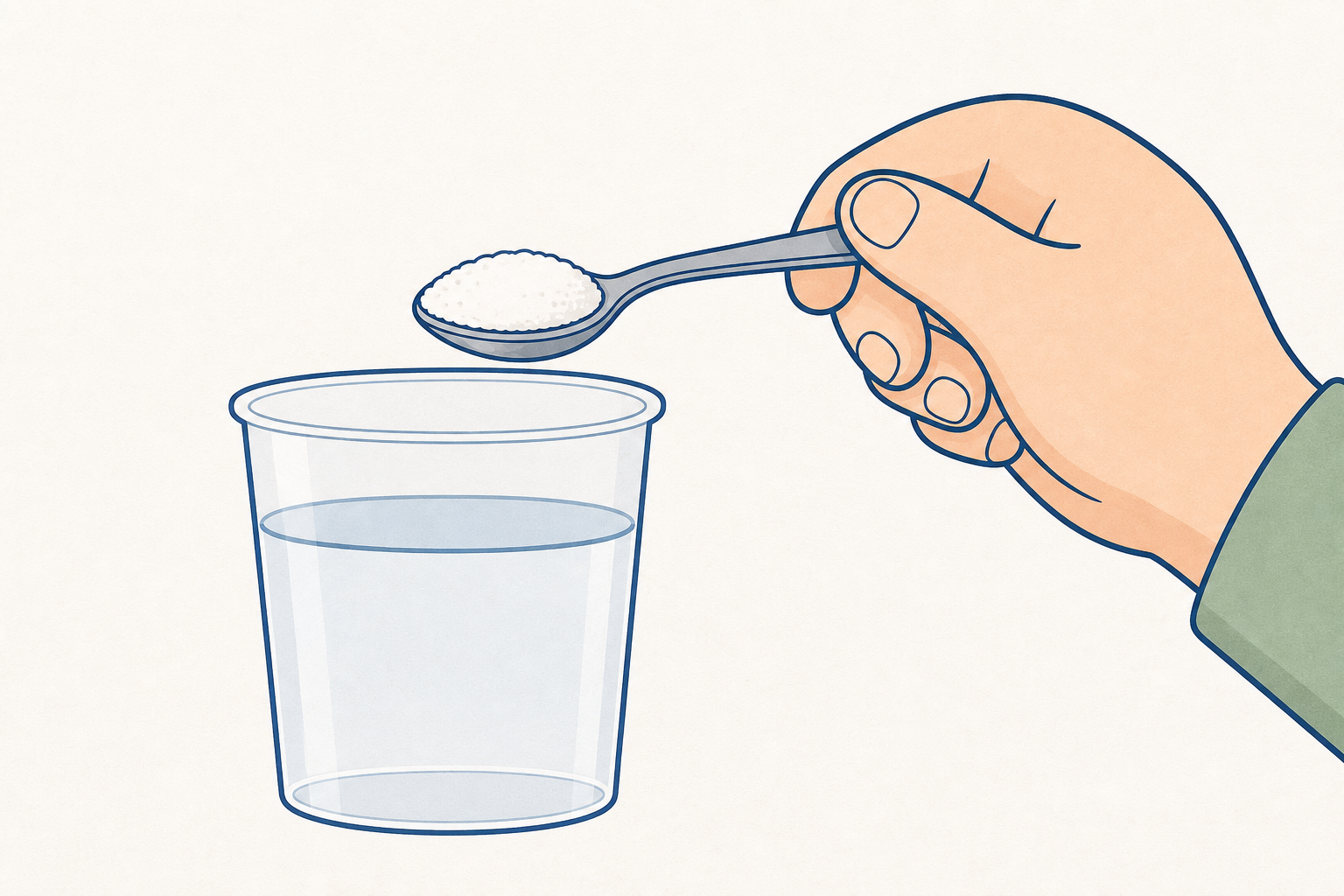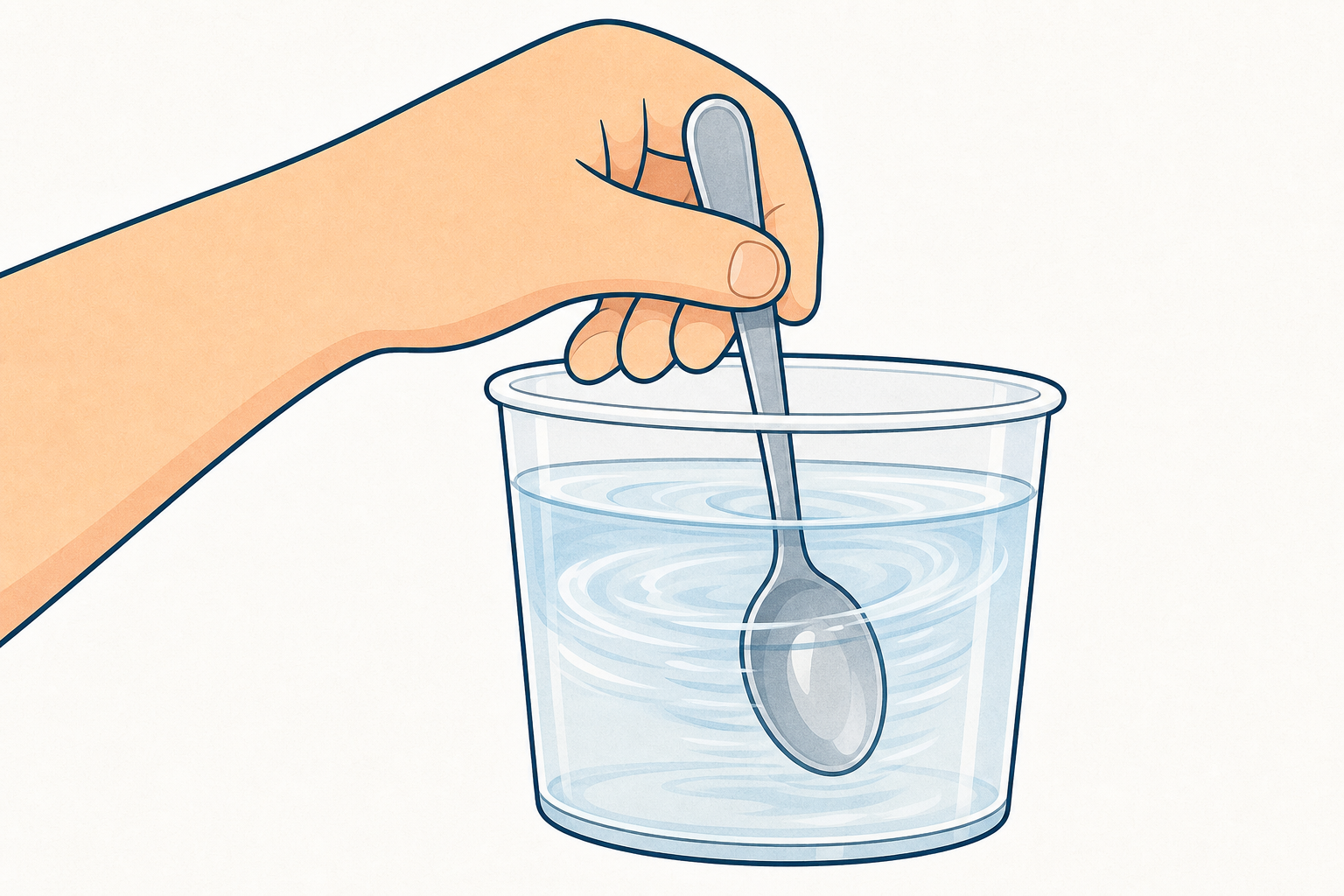
Think about a cup of tea with sugar, or pasta water with a pinch of salt. The sugar or salt seems to vanish. Does it really go away forever, or is it still there somehow?
Today we will test four materials in water and find out which ones dissolve.
Hold up a clear cup of water and a spoon of sugar (or salt). Do not tip it in yet. Ask: Where do you think the sugar goes when we stir it in tea? Take three or four quick ideas. Do not correct them yet.
Keep the hook light: no apparatus layout, no variables list, no vocabulary table. The trays come out in the plan and investigate steps.
Link to everyday life: people in Irish kitchens dissolve salt when cooking and sugar in tea every day. Scientists use the same idea when they make medicines that mix into water.
Our question: Which materials dissolve in water?
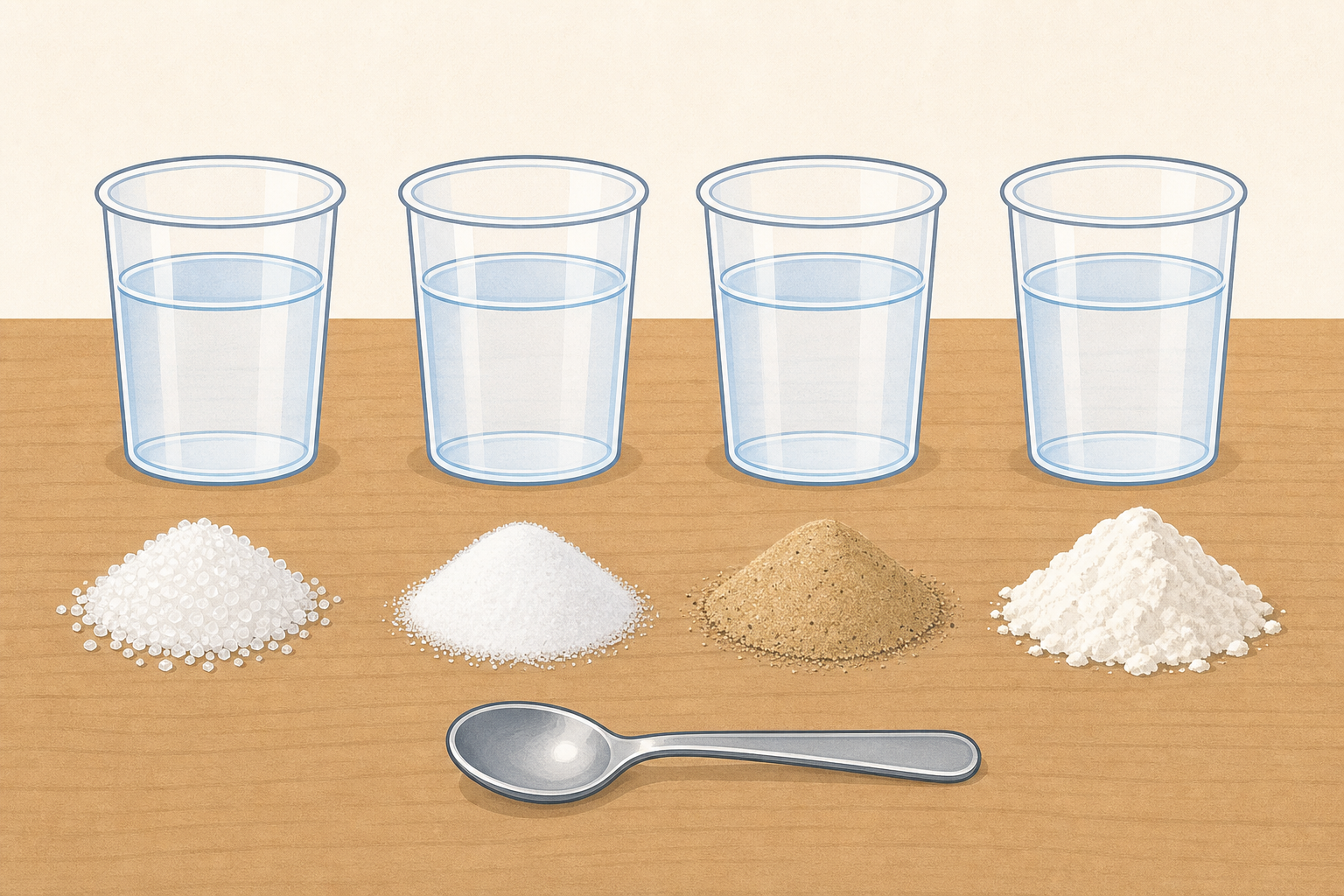
We will try sugar, salt, sand and flour.
Dissolve means a solid mixes into the water so we cannot see the pieces any more.
Which ones do you think will dissolve? Tell a partner why.
| Concept | Why it matters | Example |
|---|---|---|
| Dissolve — when a solid mixes into a liquid so you can no longer see the solid pieces | Helps us understand cooking, cleaning and medicines: the solid is still there, just mixed through the liquid | Sugar stirred into warm tea seems to vanish, but the tea tastes sweet because the sugar is still in it |
| Solution — the mixture you get when a solid has dissolved in a liquid | Naming the mixture helps children separate "gone forever" from "mixed in so we cannot see it" | Salt water is a solution; if the water evaporates later, the salt is left behind |
| Fair test — change only one thing, measure one thing, and keep everything else the same | Without a fair test we cannot trust which material really dissolved | We change only the material. The water, spoonful, cup and stirring stay the same |
Board pace: put the question and four materials up first. Say the short dissolve line once. Move straight to partner predictions. Do not dump solution or fair test on the IWB here; name them lightly if a child uses the idea, then unpack fair test with the cards in the next step and solution when results are clear.
Misconception to head off: children often say dissolving means the solid has "disappeared" or been destroyed. Keep saying: it is still there, mixed into the water. Flour is a common trap: it makes the water cloudy but does not truly dissolve; fine bits stay suspended and may settle.
Worked model (say aloud before groups test — question, prediction and method only; do not give the sugar result or the solution conclusion yet): I wonder which materials will dissolve. I predict sugar will dissolve because I have seen it in tea. I will put one level spoon of sugar into this cup of water, stir twenty times the same way, and look carefully. Then I will record what I see.
Save the observed result and the solution line for the live sugar model in step 4 and the evidence talk in step 6.
Take a quick class vote of predictions for sugar, salt, sand and flour. Predictions are never wrong; they start the science.
Before we test, we plan so the test is fair.
Six cards are on the interactive. Help sort them into three groups: what we change, what we measure, and what we keep the same.
What do we change? What do we measure? What must stay the same?
Six cards appear on screen: the material, does it dissolve? how fast?, amount of water, spoonful of solid, how we stir, and the cup. Read each card aloud as it appears rather than listing them all in one breath on the board.
Narrate each keep-the-same card: If one cup got more water, or a heaped spoon, or more stirring, we would not know whether the material or our method made the difference.
Say aloud that the teacher pours the same warm water for every cup, so water temperature stays the same without needing its own card. Amount of water and teacher-poured water already cover sameness.
Ask: What would make this test unfair? (different water amounts, different spoon sizes, tasting, tipping cups).
Land the phrase fair test here with the cards: change one thing, measure one thing, keep the rest the same.
Do not read out a model prediction that names which materials will dissolve. Collect the class vote from step 2, or invite one pupil stem such as "I think sugar will…", then leave outcomes for the test.
Differentiation: less confident groups call out which bin; more confident pupils justify why a card cannot go in Change.
In your group you have four clear cups and four materials: sugar, salt, sand and flour.
For each material: add one level spoonful to a cup of warm water that your teacher has poured. Stir twenty slow times the same way every time. Watch carefully. Does it dissolve? Use this timing language: quick, a while, or not at all.
After each cup, make a quick tick or word on your Investigation Journal page (or a scrap) before you move to the next material. You will write it up more carefully in a moment.
Do not taste anything. Keep the cups still when you have finished stirring so you can look again.
One teacher with one jug is tight for a full 3rd Class. Use at least one of these levers without changing the fair-test design:
Teacher-poured water from the same source still keeps temperature and amount the same for every cup in a group's set.
One tray per group of about four: four identical clear cups, four labelled pots or piles (sugar, salt, clean play sand, plain flour), four spoons or one shared spoon wiped between materials, paper towels, Investigation Journal pages. You pour the warm water (hand-safe warm from a kettle left to cool, or warm tap water). Same fill line on every cup.
If sugar seems slow: water may be too cool, or the spoon was heaped. Keep calm, rematch the keep-the-sames, try one more level spoon in a fresh cup.
Safety while circulating: no tasting; wipe spills at once; flour can puff — tip gently; stop anyone stirring wildly near faces.
Fold the whole class in: when one group reports, ask the watchers Do you agree? What did your sand do?
Before you write, look at this pair:
On your Investigation Journal page, finish recording each material from the ticks and words you jotted during the test. Did it dissolve? Was it quick, a while, or not at all? Note anything else you noticed, such as cloudy water or bits on the bottom.
Keep what you saw separate from what you think it means.
Pupils use the Investigation Journal page. Put the I saw / I think example on the board and leave it up while they write. Prompt them to complete sugar, salt, sand and flour from their quick jots: dissolves or not, quick / a while / not at all, and a short observation note.
Look-fors:
If a group's sugar did not dissolve, help them check the keep-the-sames rather than forcing the "right" answer onto the page. Unexpected results are still data.
Early finishers: sketch one cup before and after stirring, or write one sentence about which result surprised them (still on the journal page, not a new sheet).
You're previewing this lesson. Get full access to this lesson and hundreds more — each one ready to teach, with interactive activities, printable resources and pupil progress tracking built in.