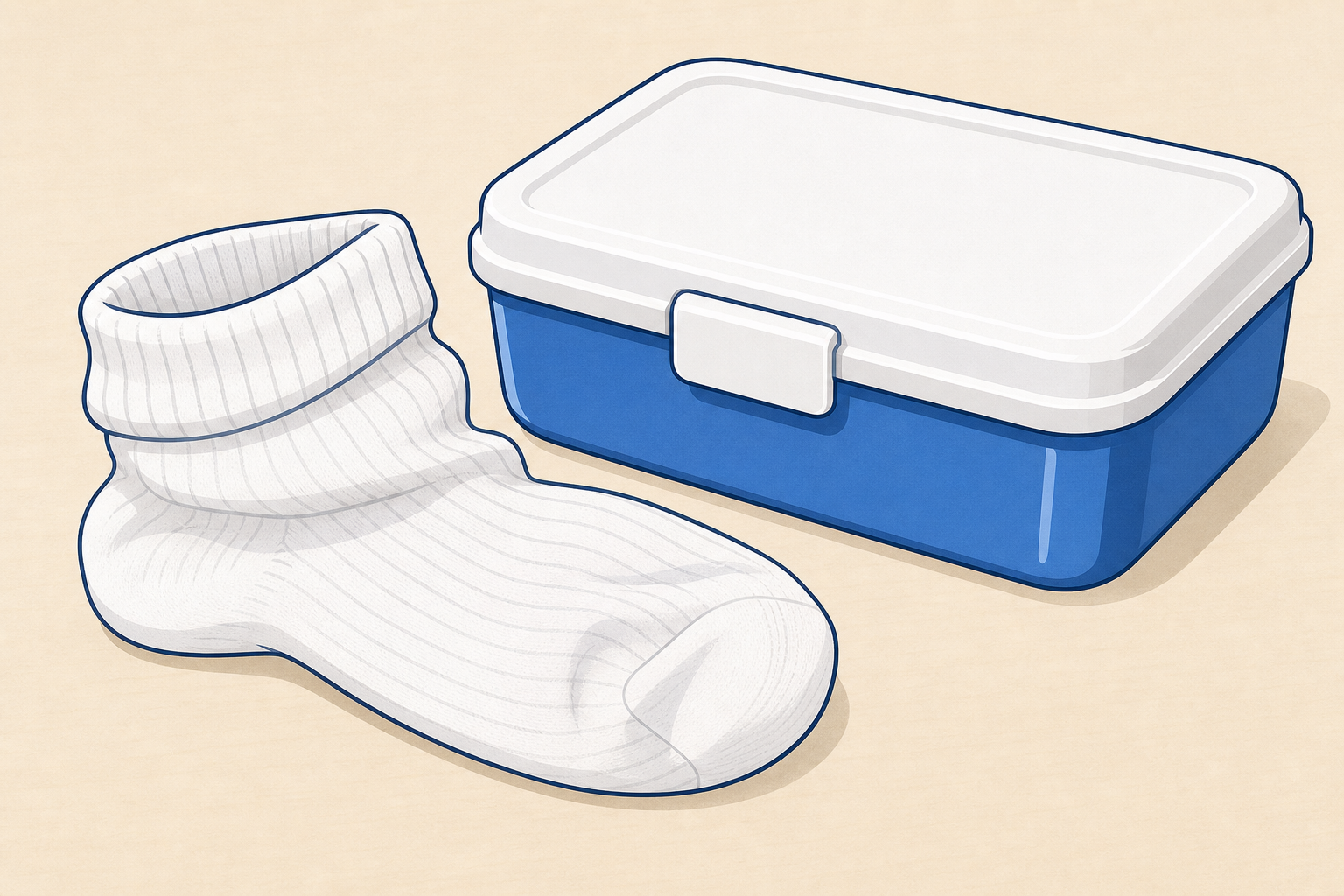
Look at a cotton sock and a plastic lunch box. Which one bends easily? Which one would you use to keep soup inside? Why do you think they are made of different materials?
Hold up one soft everyday item (a cotton sock or tea towel) and one stiff everyday item (an opaque plastic lunch box or bottle). Keep the full materials tray out of sight so the hook stays a curiosity beat, not the investigation.
Key questions: Which one bends? Which one would hold water? Why might the makers have chosen those materials?
Accept every idea. Do not name the full list of properties yet. Move on once curiosity is up.
Today's words: property — what a material is like, such as bendy, see-through or strong. Compare — test the same thing on different materials and notice how they differ.
Think about the sock and the lunch box. Which one do you think would bend more if we tested them the same way?
Board copy stays short. Use the table below as your teaching reference.
| Concept | Why it matters | Example |
|---|---|---|
| Property — what a material is like (bendy, see-through, strong when pulled) | Knowing a property helps us choose the right material for a job, like a soft cloth for wiping or stiff card for a folder | A window needs a see-through material so light can come in; a school bag needs a strong material so books do not tear through |
| Compare — test the same thing on several materials and notice how they are alike or different | Comparing fairly means we hold each sample the same way so the difference we see is about the material, not how we held it | Holding four strips out from the desk edge the same way and measuring how far each tip drops |
Misconception to head off: children may say a material is "better" overall. Guide them to say better for a job or better at bending, not better at everything.
STEM eyes: link back to everyday objects. Why is a raincoat plastic-coated rather than plain cotton? Why is a jumper wool or fleece rather than foil?
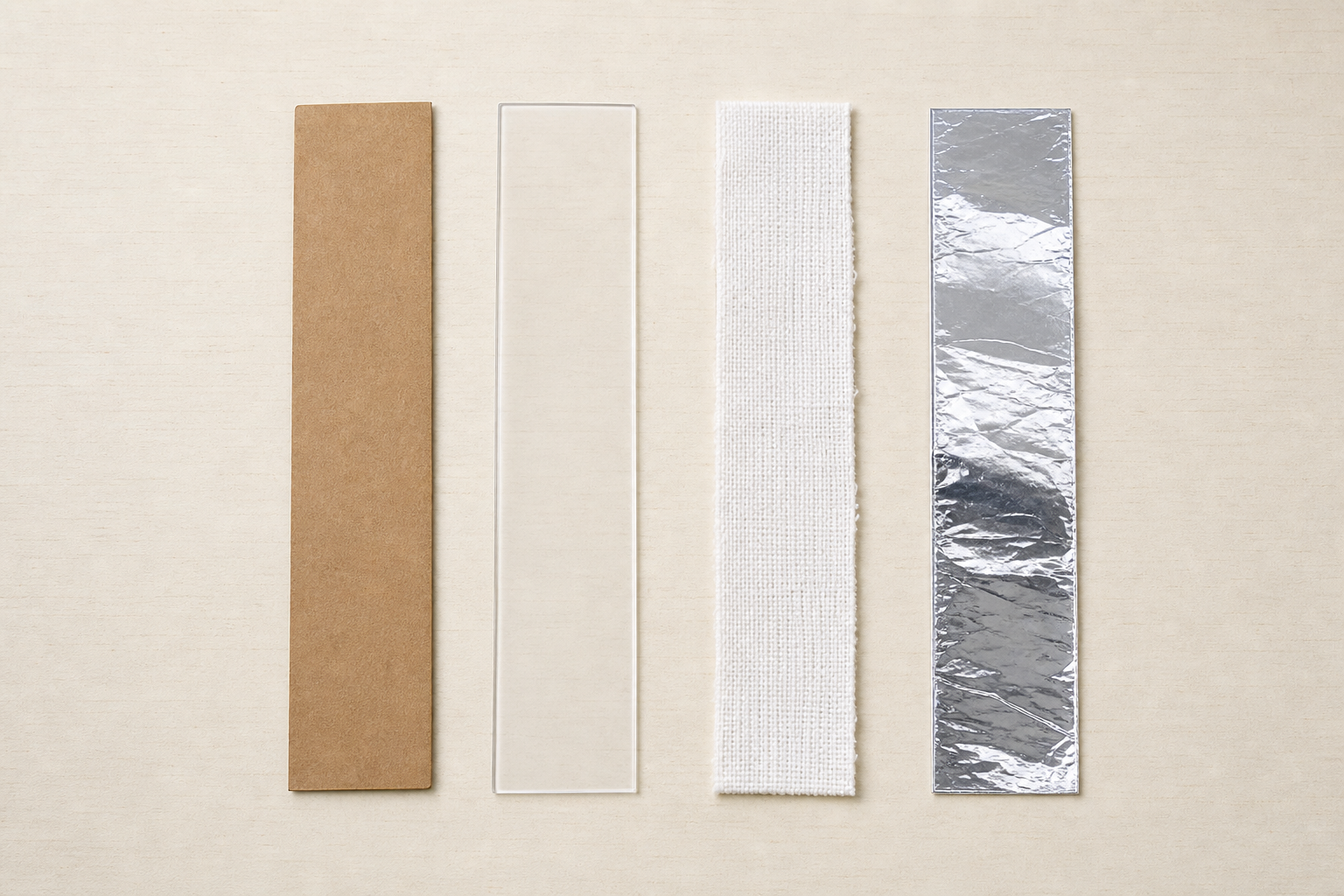
We will test four materials: card, plastic, cotton and foil.
Say your prediction: which material will bend the most, and why?
Show the four labelled samples briefly: card strip, plastic sheet, cotton cloth, aluminium foil.
Lead with the bend prediction on the board. After a few children have shared, add one short spoken line only: card is made from trees (paper and card); cotton comes from a cotton plant; plastic and foil are made by people. Keep the class language as natural and made by people (avoid "synthetic" unless a child offers it). Mention that after the main bend test there will be two very quick look-and-feel checks (see-through and a gentle pull), but do not put those on the pupil screen yet.
Take a few spoken predictions. Predictions are never wrong; they are the start of the science. Note two or three ideas on the board in the children's words.
Suggested prompt stems: I think the … will bend most because… / I think the … will hardly bend because…
If time allows after predictions, you may also ask aloud: which might be most see-through, and which might feel strongest when pulled gently?
In your group, test the four materials the way we showed.
Jot your four bend numbers on the scrap note so your group keeps them. Be ready to share them for the class chart. Talk about what you notice.
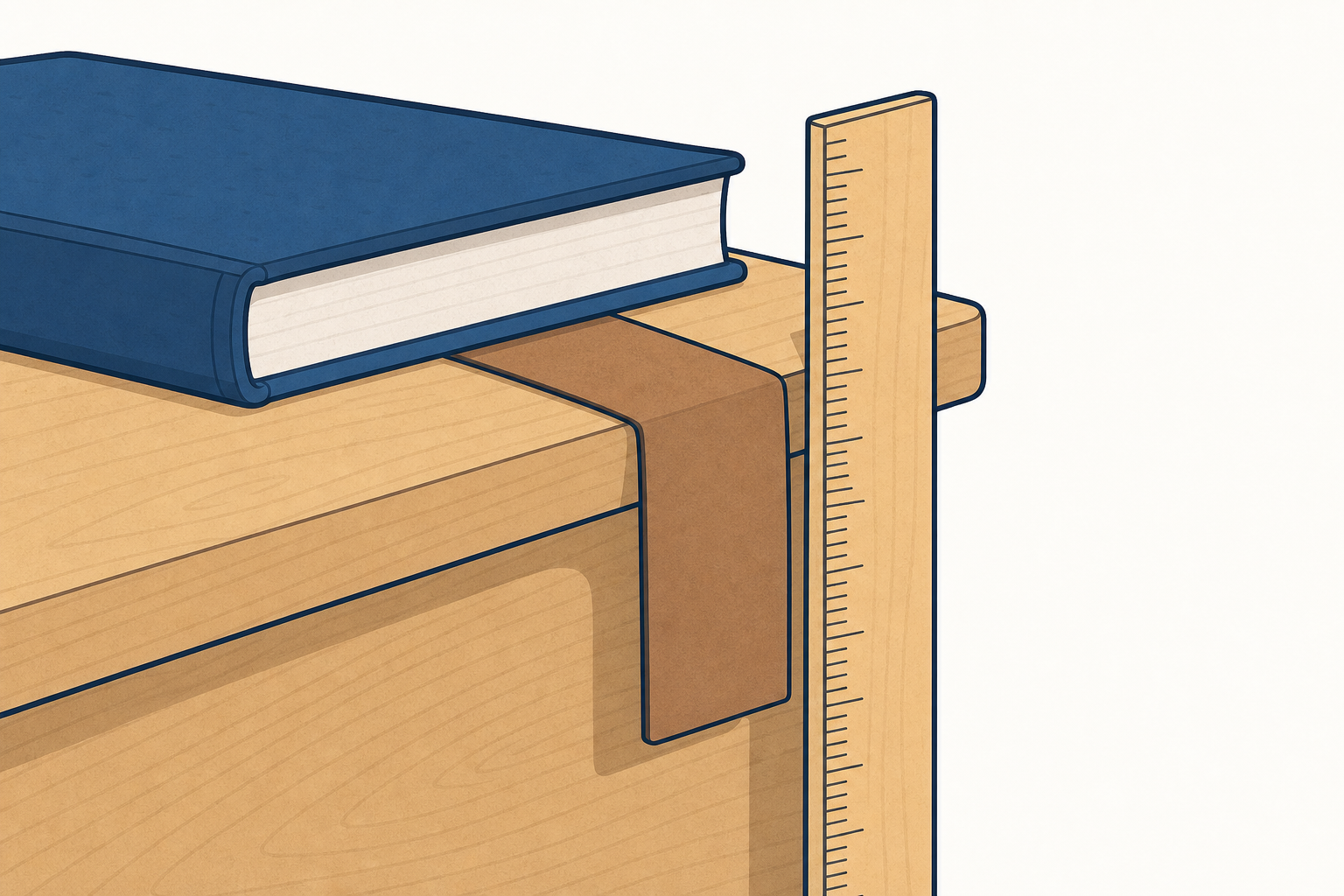
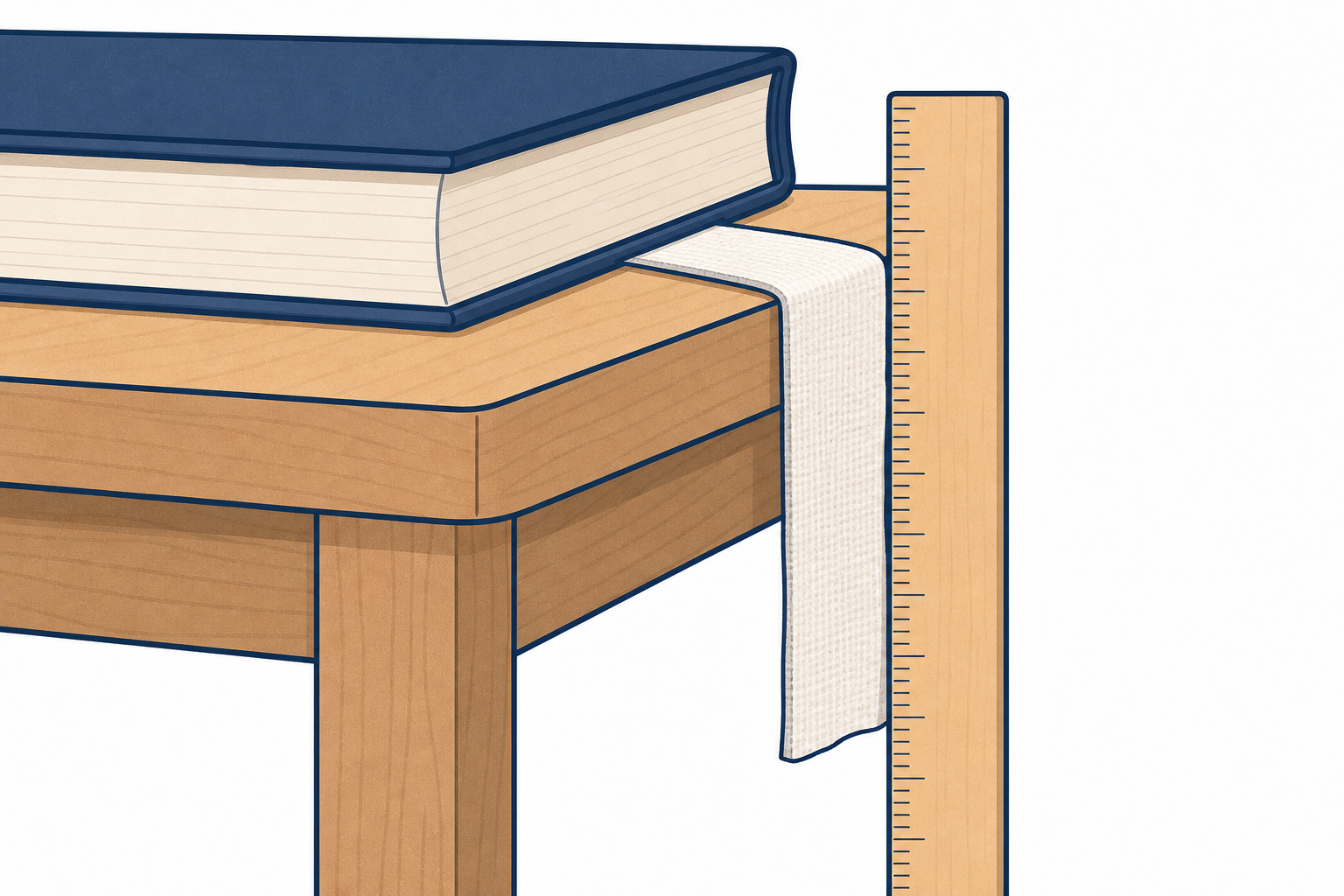
Cut four strips roughly the same size (about 20 cm by 3 cm) for each group: card, plastic from a clear document wallet, cotton cloth, aluminium foil folded once lengthways. Label each strip. Put a ruler, a hardback book, a pencil and one scrap note on each group tray.
Do this live with card and plastic only, thinking aloud:
Point again at the modelled hold and the same free length before groups start. Only then send groups to test all four materials the same way.
If numbers are all the same: the free length is too short. Let more of the strip stick out past the book.
Floppy samples (cotton, often foil): some strips hang straight down and do not give a stable partial droop. That is a real result. Record the drop as the free length in centimetres (the end hangs straight down), or write "hangs fully" on the scrap note. Both are shareable class results; do not force a meaningless mid-air number.
Safety: pull away from faces; no snapping materials toward eyes; paperclips stay in the tray if you add any extras.
Circulate and ask: Did you hold each one the same way? What did you notice about the cotton compared with the foil?
Journal timing: this step is hands-on with a minimal scrap jot of bend numbers only. Physical strips stay for ranking next. All Investigation Journal writing happens in the later record step.
As a group, put the four materials in order from most bendy to least bendy. Be ready to share your top and bottom choice.
If there is time, your teacher will ask you to do a quick order for see-through, then for strength when pulled.
Lead with bend only. Groups lay the four physical strips in a line on the desk: most bendy at one end, least bendy at the other. Keep each group's scrap note of bend numbers with the tray so the figures are still there for the chart next.
Name the property each time you switch. If time allows (about one minute each), add a quick see-through order, then a strength order (strongest to weakest when pulled). Do not rush all three at once if groups are still settling the bend line.
Listen for justification using the tests, not guesses. Spot-check one group: Show me how you know the foil is more bendy than the card.
If two materials seem equal, that is fine. Children can place them side by side and say so.
You're previewing this lesson. Get full access to this lesson and hundreds more — each one ready to teach, with interactive activities, printable resources and pupil progress tracking built in.