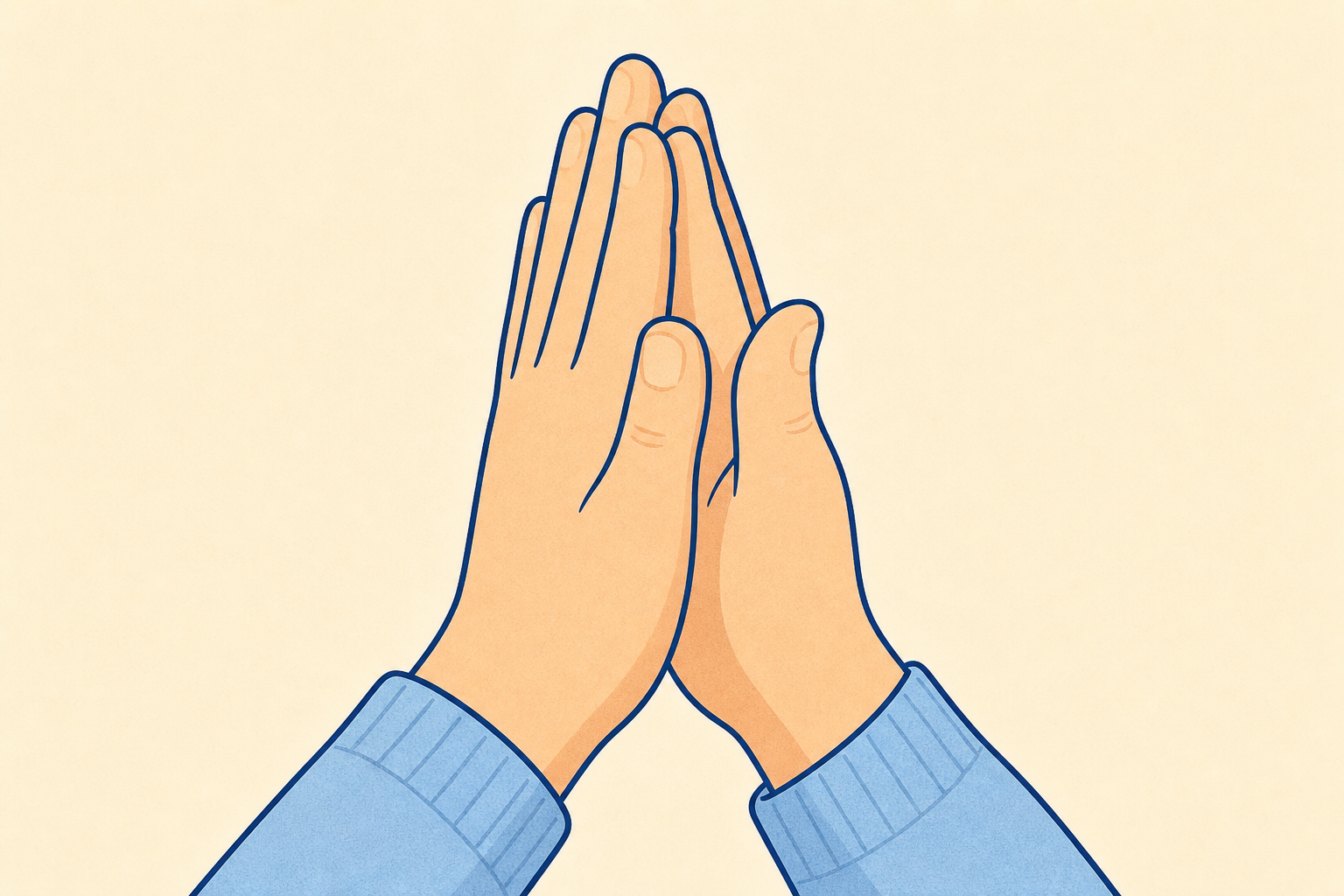
Watch this. I am going to clap my hands. What just happened?
Something made that sound. What do you think made it possible?
Stand where everyone can see you. Clap once, clearly, then pause. Let a few children call out ideas (hands, bang, noise). Do not name energy yet. The clap is the curiosity beat only.
Have ready: nothing beyond your own hands. Keep the picture cards out of sight until step 6.
STEM eyes: energy is already at work in this room. Today we go hunting for it with our eyes and ears.
That clap needed something to make the sound. Scientists call that energy.
Energy is what makes things move, light up, warm up or make a sound.
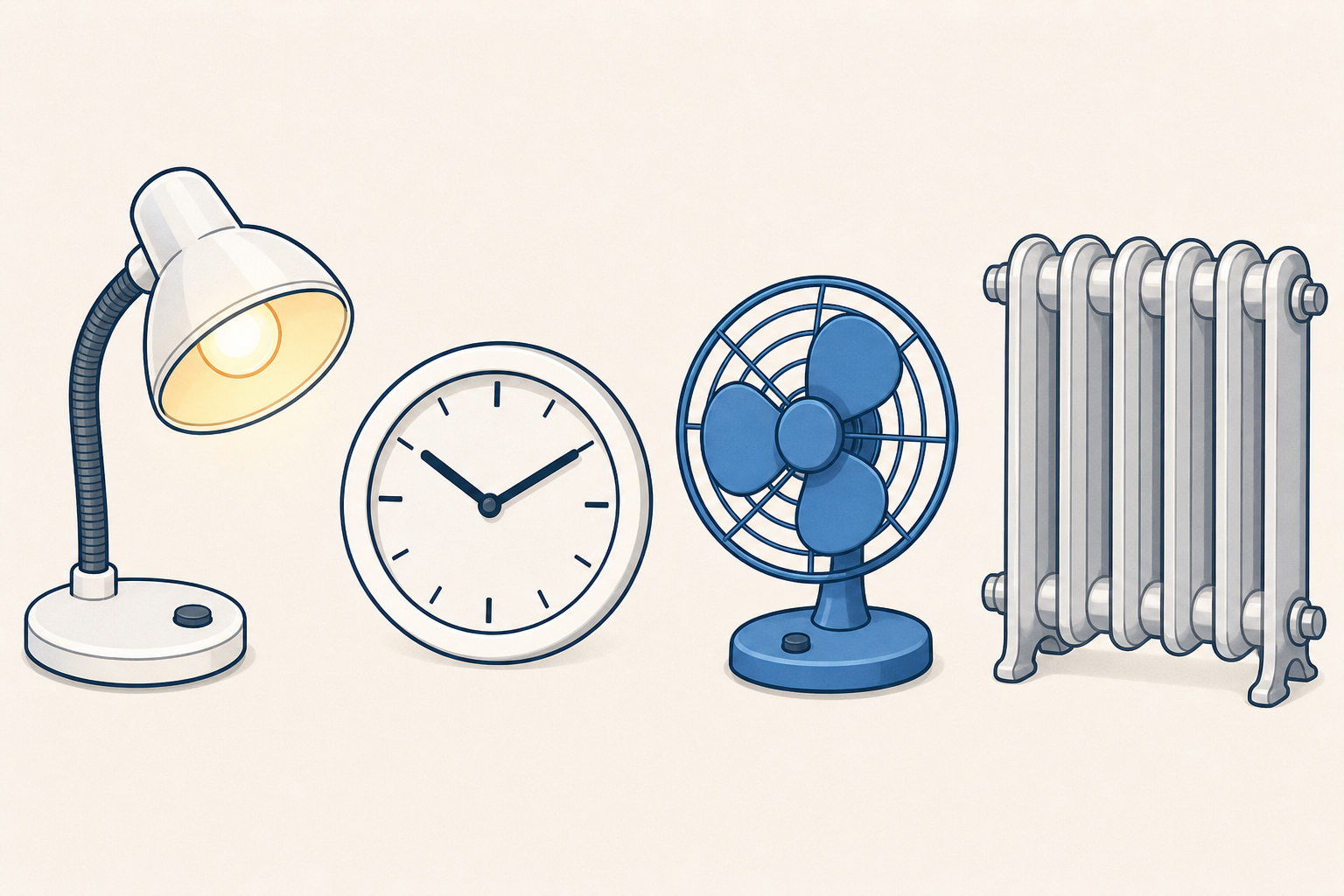
Look around our room. What is using energy right now?
Keep the board short: the three lines above only. Bridge from the clap, then name energy once. Point at one live thing in the room as you say each job (IWB or lamp for light, a clock tick or your voice for sound, a radiator if warm, a child wriggling fingers for move). Do not put food energy on the board yet; that lands after the hunt in step 6.
Teach from the energy row of the table. Food-energy row is for your own prep so you can head off misconceptions gently later.
| Concept | Why it matters | Example |
|---|---|---|
| Energy — what makes things move, light up, warm up or make a sound | Almost everything that does a job in our room needs energy to do it | The classroom lamp or IWB lights up because it is using energy; a still toy car on the shelf is not doing a job with energy right now |
| Food energy — the power our bodies get from food so we can run, play and grow | We are living things that need energy too, and food is how we get it | A good lunch helps you run in the yard and think hard in class |
Light aside on the still-car contrast: Energy is not the car; it is what the car needs when it actually does a job. Keep the focus on using and doing, not on objects "having" energy as stuff.
Misconception to head off later: children may think only machines or plugs have energy. After the hunt, revoice with bodies and food cards.
Do not talk about calories or numbers. Keep later food talk to power for play, learning and growing.
We are going on an energy hunt around our classroom. What do you think we will find that uses energy to move, light up, warm up or make a sound?
Whisper one idea to the person beside you.
Display-only talk. Take three or four ideas aloud and hold them without judging. Typical predictions: lights, the interactive board, the heater, a clock, ourselves, a fan if you have one. Nudge at least one body idea ("us") so food energy has somewhere to land later.
Picture cards (print one set for the class, for step 6):
Card A — Fan: a fan spinning and moving the air.
Card B — Lamp: a lamp giving out light.
Card C — Radiator: a radiator keeping a room warm.
Card D — Clapping hands: hands clapping and making a sound.
Card E — Children playing: children running and playing in a yard.
Card F — Eating lunch: a child eating food that gives the body power.
Predictions are never wrong. They are the start of the science. Note two ideas on the board to revisit after the hunt.
Walk quietly around our classroom with your group of three. Find things that use energy. Point and say the energy job: does it move, light up, warm up or make a sound?
Try to notice your own body using energy too.
When I clap, freeze. Some groups will act out one find while the rest watch and name the energy job.
Before groups move, model one full noticing cycle out loud at the front using kit that is definitely there:
Then add one body model: clap once or jog on the spot and say, My body is using energy too — to move and make a sound.
Send groups off. Keep groups small and moving slowly. You lead from the middle of the room.
Safety: walk, do not run. Do not touch hot radiators, hot lamps or plug sockets. Do not put fingers near a spinning fan if one is present. Stay inside the classroom.
Differentiation: less confident children can stick with you and point while you name the energy job. Confident groups can try to find one room example and one body example.
On your Investigation Journal page, draw one thing you found that uses energy. Show what it does. If you can, add a short label such as moves, lights up, warms up or makes a sound.
This is the paper recording beat and must happen in the lesson so every child has a drawing for the step-6 share. Pupils use the Investigation Journal page. Circulate and ask each child to tell you what their drawing is doing with energy.
Look-fors:
If a child draws something that is not using energy (a closed book on a shelf), ask gently: is it moving, lighting, warming or making a sound right now? Help them pick a live example.
Sentence starter to say aloud for children who want words: This uses energy to…
You're previewing this lesson. Get full access to this lesson and hundreds more — each one ready to teach, with interactive activities, printable resources and pupil progress tracking built in.