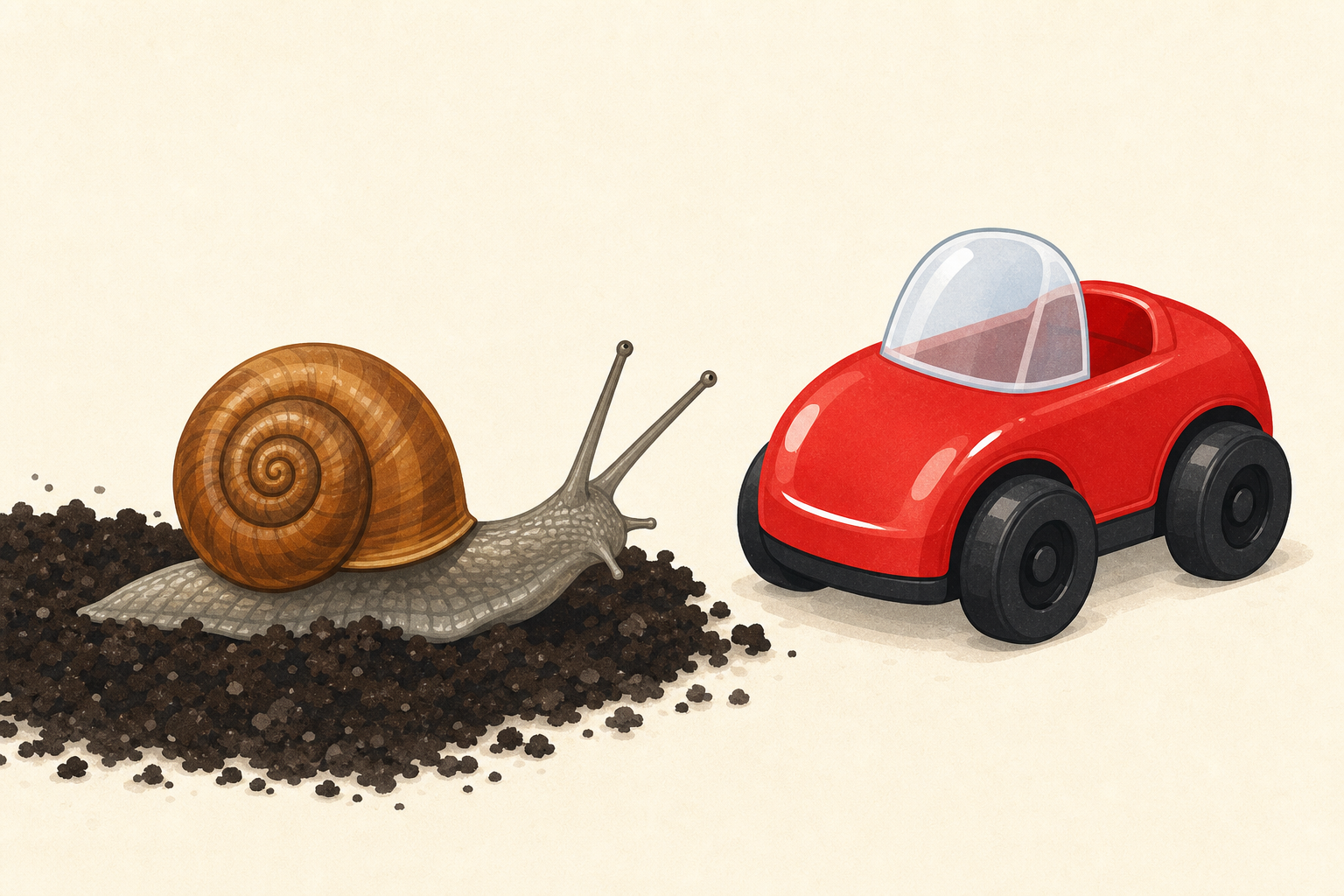
Look at this little snail and this toy car. Which one is alive? What do you think the living one can do that the toy never can?
Have the snail (or woodlouse) tub and one non-living object ready to show, but keep the full station kit covered until step 3. Take two or three quick ideas only. Do not list the full set of living actions yet; that comes after the stations.
Key question: What can a living thing do that a toy cannot?
Our question today: what can a living thing do that a toy or other object never can? Whisper one idea to your partner.
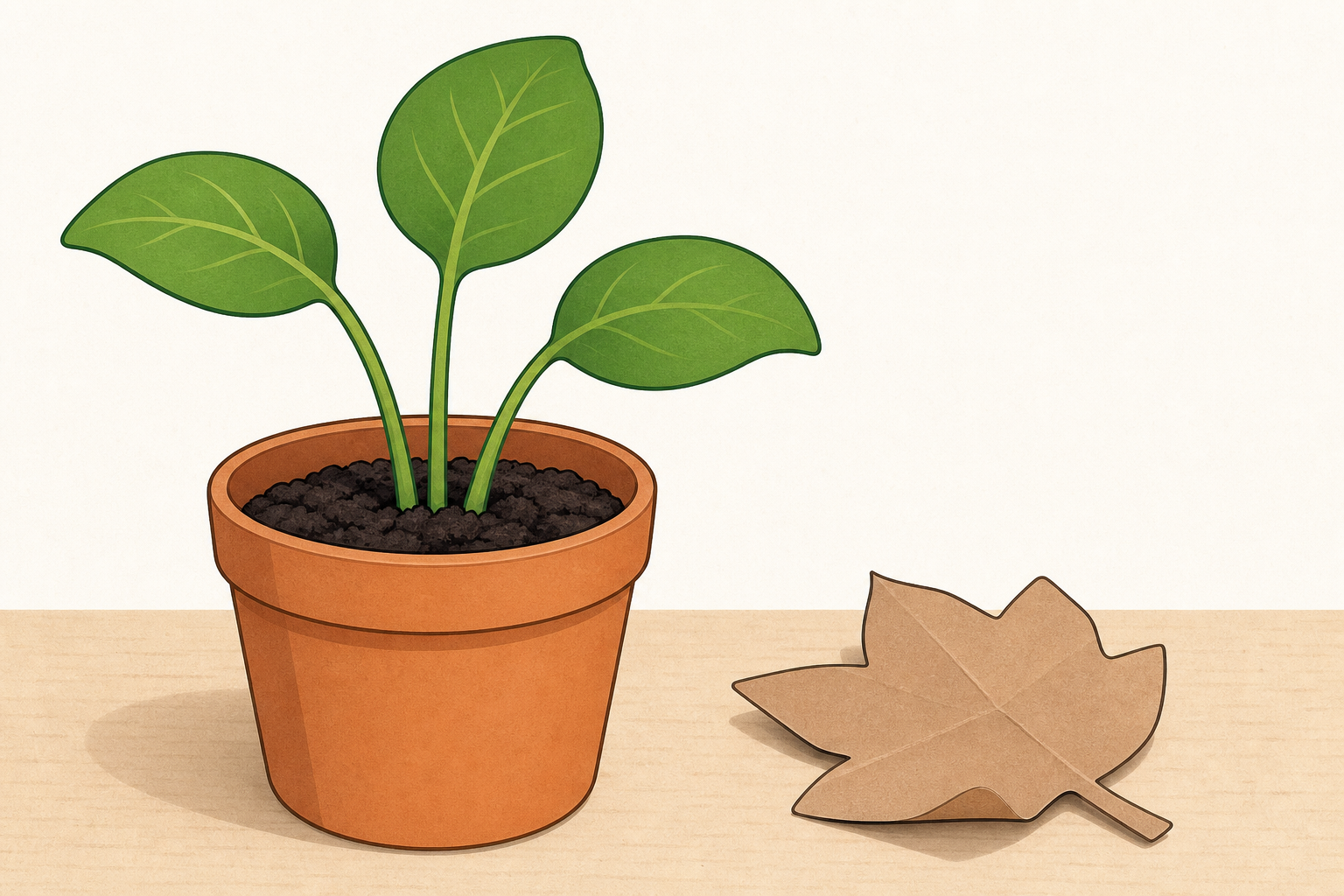
Lead a short whole-class talk, still grounded in the snail and toy from the hook. Revoice pupil ideas into simple actions: grow, need food or water, move by themselves, change. Predictions are the start of the science, never wrong. Do not ask children what they will watch for at stations yet; stations are revealed in the next step.
Sentence stems: I think living things… / I think the toy will never…
Misconception to head off: some children say a toy is living because it can move. A toy only moves when a person pushes it; a living thing can move or change on its own.
Your group will look at one place, then swap and look at the other. At each place, watch the living thing beside the object. Notice something real you can see now: damp soil or a green stem beside a dry paper leaf, or feelers, legs or a shell beside a still toy. Stay gentle. Use quiet eyes and quiet hands. If you are in the watching ring, listen for your name and share what you notice.
Model one full look first (about 2 minutes): I wonder if the snail will move. I predict it might creep. I watch… it slowly moves its feelers. The toy car stays still unless I push it. I think the living one can move by itself.
Two-ring pattern (run this before the clock starts on each look): Split the class into two halves, one half per station. At each station, only a small inner ring (about 4–6 children) stands at the table so everyone there can see. The rest of that half stands in an outer watching ring. After about 2 minutes, swap inner and outer rings so the watchers get a turn at the table. Fold the outer ring in by name with short questions: What did you notice? Did it need anything? Did it change? After about 4 minutes total at Station A / Station B, swap the two halves of the class and repeat the same inner/outer pattern at the other station (about 4 minutes).
Talk and notice only at the stations. Writing happens in the Investigation Journal step later. Lids stay on the minibeast tub unless you open it briefly yourself. Children do not handle the creature.
What to expect (and what to say when pupils think nothing is happening): A four-minute look will not show growth or feeding. Living clues are often slow or already there. For the potted plant: damp soil, a green stem or leaves, any new leaves already on the plant, or a stem that leans toward the window. For the minibeast: feelers, legs or a shell, a damp body, slow movement, or staying still but looking different from the toy. The object stays dry, still and the same unless a person moves it. If pupils say “it’s doing nothing,” reply: Look again at what is already there — damp soil beside dry paper, feelers or a shell beside a still toy. That is still a living clue we can compare.
If you must use a cut leaf in water (last resort only): do not claim growth or self-movement. Steer talk to needing water and staying green beside a dry paper leaf or fabric scrap.
Teacher aside (plants vs animals): Keep pupil language simple (need water or food). Quietly match the specimen: animals take in food; plants take in water (and light) to stay well. If a child looks for the plant “eating,” revoice to water and staying green.
Safety: handle minibeasts gently; lids stay on unless you open them; return creatures outdoors after the lesson; do not eat plant material; wash hands after the stations.
Help sort these action cards into two piles: Living things can… or Needs a person… Listen as each card is read, then call out which pile it belongs in.
On the board or floor, make two groups: Living things can… and Needs a person…. Use the action cards below. Read each card aloud clearly before the class calls where it goes. Correct gently and revoice.
Card A — Grow: gets bigger over days and weeks.
Card B — Need water or food: must take in water or food to stay well. (Teacher aside: animals take in food; plants take in water and light.)
Card C — Move by itself: can creep, wriggle or turn without a person pushing it.
Card D — Change as it lives: a young plant grows new leaves; a young animal grows older.
Card E — Stay the same size: never grows on its own.
Card F — Only moves when pushed: needs a hand, wind or motor from outside.
Living pile: A–D. Needs a person pile: E–F (and any similar pupil suggestions).
Look-fors: children name grow, need food or water, move or change for living things; they do not call a toy living just because it has eyes or can roll.
On your Investigation Journal page, draw or write one living thing and one object you watched. Record one clear difference: what the living one does that the object never does.
This is the paper recording beat. Pupils record on the Investigation Journal page only; nothing is typed into the platform.
Support writers with the stem: The living thing can… The object never… Early finishers add a second difference or draw plant leaves or snail feelers carefully.
Success look-fors: names a real action (grows, needs water, moves, changes) rather than only colour or size; links the difference to living versus non-living.
You're previewing this lesson. Get full access to this lesson and hundreds more — each one ready to teach, with interactive activities, printable resources and pupil progress tracking built in.