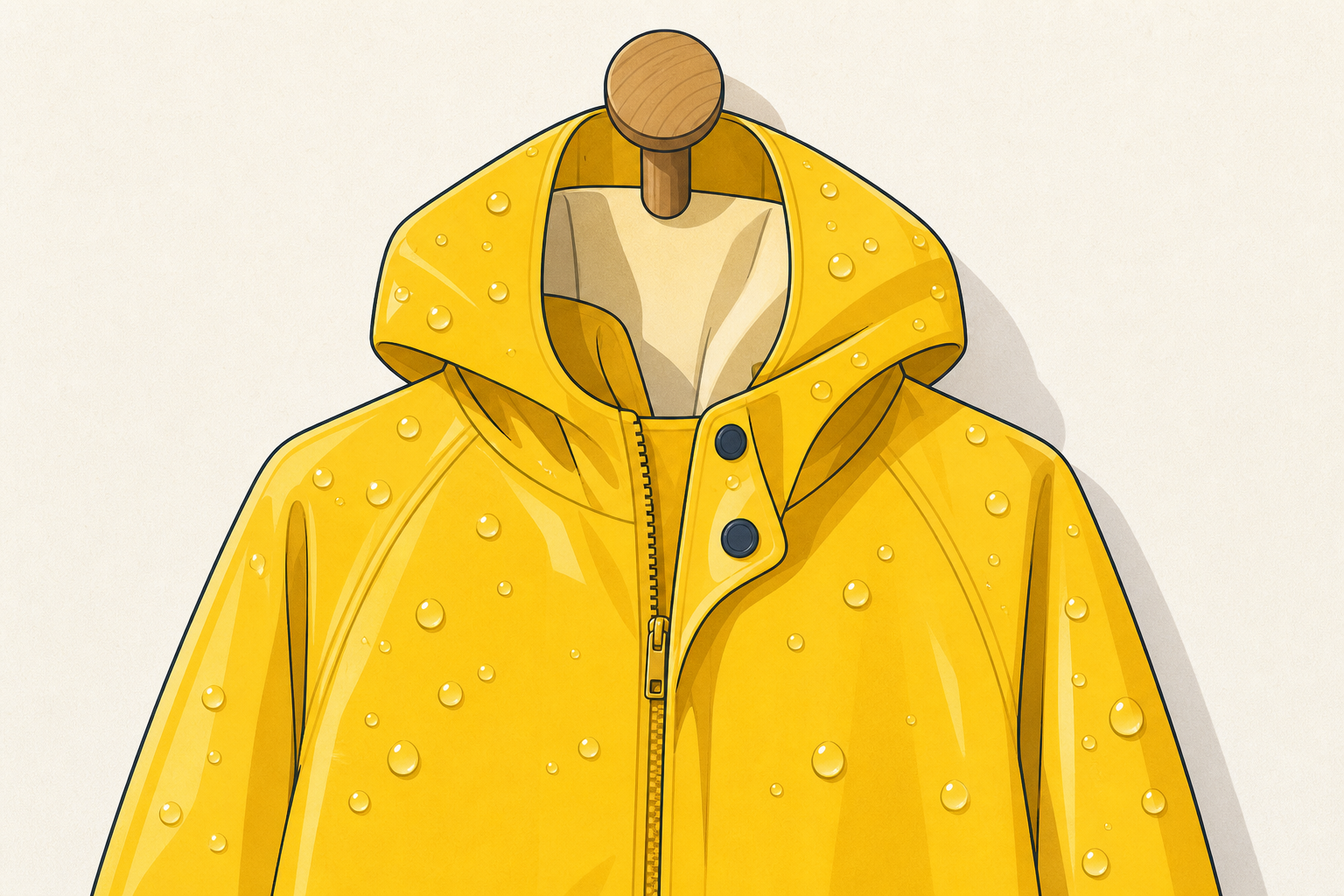
It rains a lot in Ireland. When you wear a coat in the rain, do you stay dry inside, or do you get wet?
What do you think the coat is made of that helps keep the rain out?
Keep this beat light and oral. Hold up a child’s raincoat or a picture of one if you have it nearby, but do not lay out the drip trays yet.
Ask: When it rains on your coat, does the water go through or sit on top? Take two or three ideas. Do not correct wrong guesses.
Who helps us: gently name that a coat-maker chooses special material so Irish rain stays outside. You will return to this at the end.
Before the lesson: cut small squares (about hand-sized) of fabric, paper, kitchen foil and plastic (from a clear document wallet or clean plastic bag), plus spare dry sets for each group; fill a jug with cold water; set one shallow tray, dropper or spoon, and towel per group ready to bring out for the drip stations; print one Investigation Journal page per child.
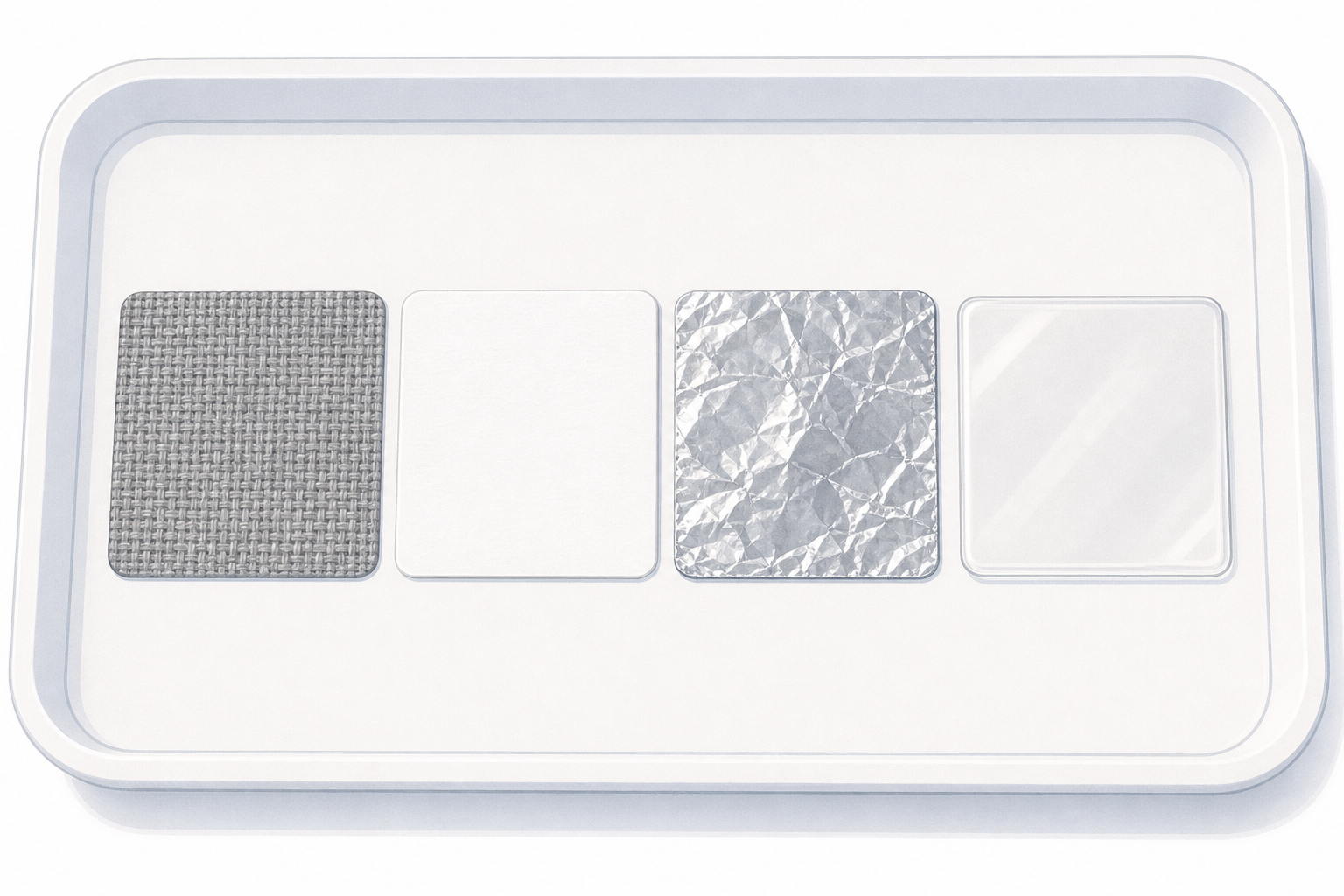
Look at our four dry squares: fabric, paper, foil and plastic.
Which ones do you guess will keep the water out? Show me thumbs up if you guess it will keep water out. Show me thumbs down if you guess water will go through.
Show the four dry squares on the IWB tray or hold them up one by one: fabric, paper, kitchen foil, plastic. Children only look and guess. No dripping yet.
Say the two short word meanings yourself while you hold the squares, without packing them into the children’s board text: Waterproof means the water stays on top and does not go through. Some materials let water through and get wet. Keep it light; you will echo the words again after the live paper model.
| Concept | Why it matters | Example |
|---|---|---|
| Waterproof — a material that keeps water out so drops sit on top | Coats, bags and wellies need waterproof material so we stay dry in Irish rain | Kitchen foil and plastic keep water sitting on top in little beads |
| Lets water through — a material that soaks water up or lets it drip to the other side | Paper and many fabrics get wet quickly, so they are not good for a rainy coat | A paper square darkens and the drip goes through onto the tray |
Thumbs up if they guess a square will keep water out; thumbs down if they guess it will let water through. Guesses are never wrong. Keep this beat short: look at the four squares, thumbs only. The live drip model comes next.
Misconception to head off: children may say “thick things keep water out” or “all shiny things do”. Foil and plastic often work; thick fabric often does not. Stay with what they see.
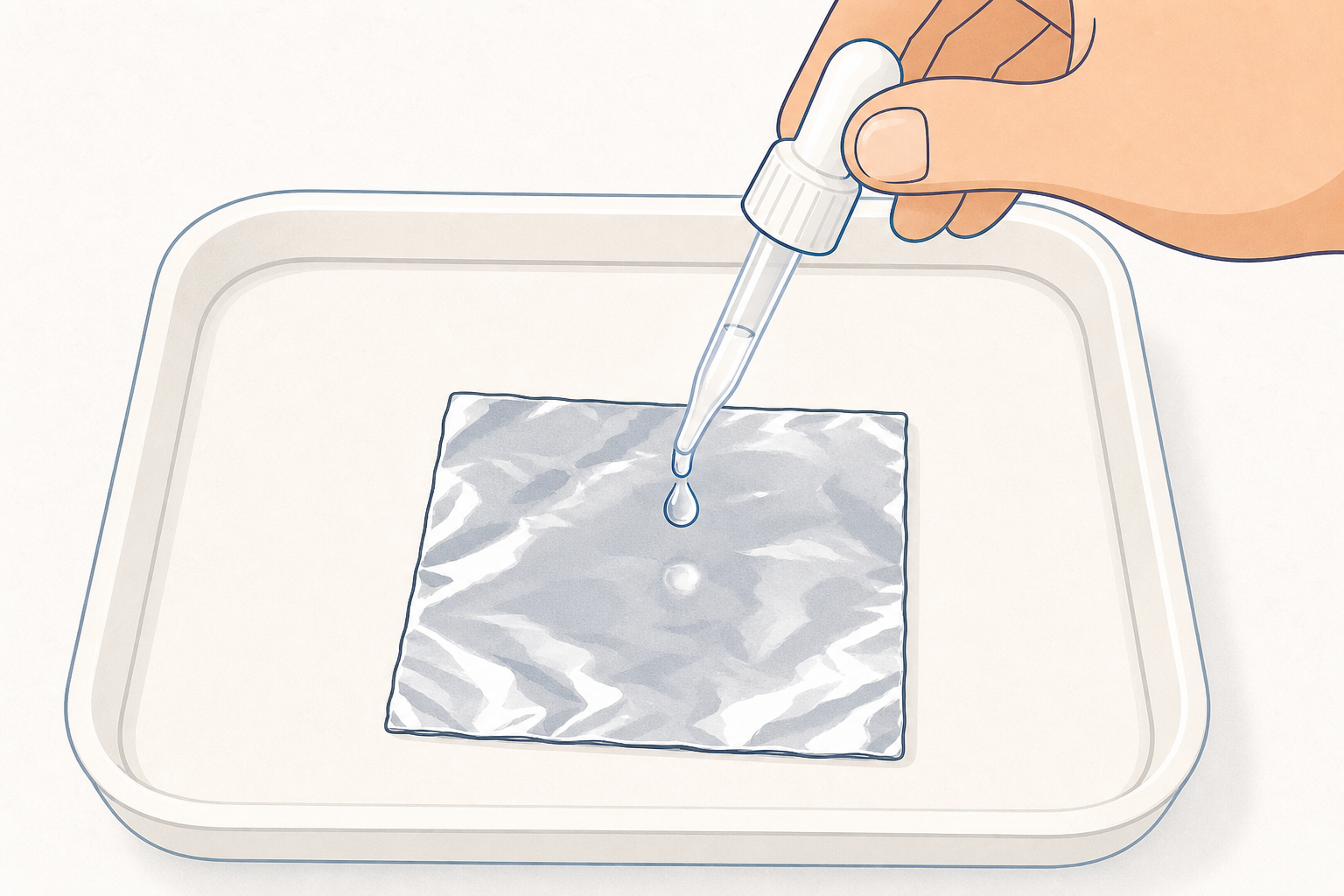
Watch how we test. First we guess. Then we drip a little water. Then we look: does the water stay on top, or go through?
Modelled cycle (you do this out loud with ONE square only — the paper):
After the model, echo the two words with what they just saw: Waterproof means water stays on top. Lets water through means it soaks or drips to the other side, like this paper.
Keep the model unhurried. Children watch only; they will drip their own squares next. Point to the underside so they know what “through” looks like.
At your tray, take turns. Choose one dry square. Say your guess first. Drip a little water on the middle. Watch. Does the water stay on top, or go through?
Try each square. Wipe tiny spills with your towel.
Send groups to stations you have already set. One tray per group with the four dry squares, a dropper or teaspoon, a little water in a cup, a towel, and a small spare dry set nearby. Roll sleeves up first.
Short turns: one child drips, the others watch and say what they see. Prompt: Say your guess before the drip. One small drip or spoonful is enough. Use a spare dry square if one gets soaked early so the group can keep going.
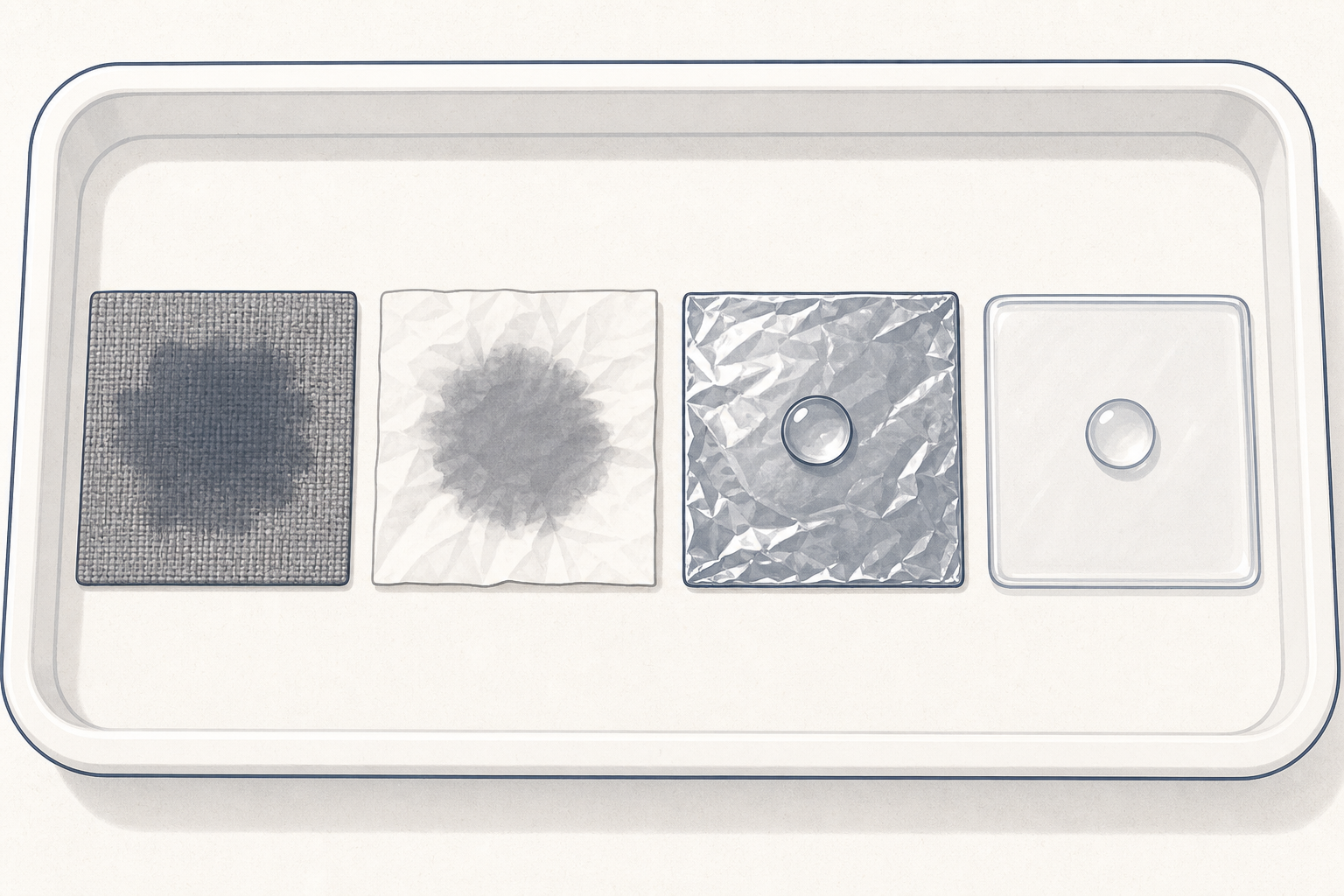
What to expect: paper usually soaks and lets water through; many fabrics soak; kitchen foil and plastic usually keep water on top. If foil has creases, water may pool in a dip but still stay on top.
If it misbehaves: too much water floods everything — switch to one tiny drip. If plastic is a thin bag with a hole, swap it for a square from a document wallet.
Key questions while you circulate: Where is the water now? Is the underside dry or wet? Was your guess the same as what happened?
Differentiation: less confident children drip with you and only try two squares; confident pairs can try a second fabric from the scrap box and say if it was the same or different.
Look at your wet squares. Which ones kept the water on top? Which ones got wet and let water through?
Tell your group one thing you noticed.
Still at the trays for about two minutes, then bring eyes to you. Groups hold up a square that kept water out and a square that let water through.
Listen for: “The water stayed in little drops on the plastic.” “The paper went dark.” “The fabric felt soggy.” Revoice scientific language gently: That one is waterproof. That one lets water through.
Surprises: name one surprise out loud (often fabric feels thick but still soaks). This stops the class inventing a “thick equals waterproof” rule.
Senses: mainly sight and careful touch of the underside with a fingertip. No tasting. Wipe fingers on the towel.
You're previewing this lesson. Get full access to this lesson and hundreds more — each one ready to teach, with interactive activities, printable resources and pupil progress tracking built in.