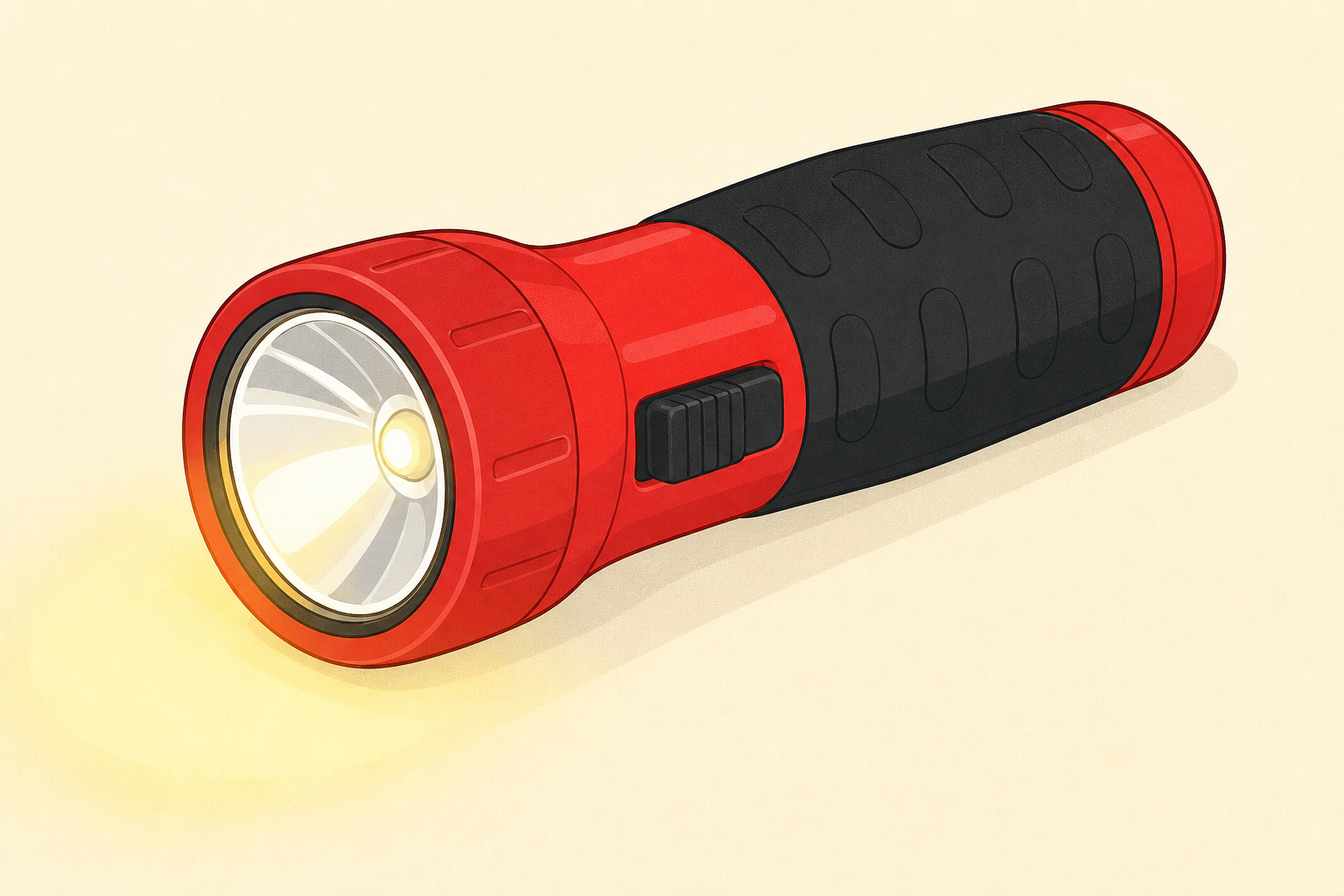
Look at this torch. Click. Light!
What job does this help us do? Who might need it?
Today we will find technology that helps people cook, see in the dark, and tidy up.
Have one sealed-battery torch ready to click on for the hook only. Keep the rest of the helper tray out of sight until the explore step.
Accept every idea about who needs light (a doctor at night, a farmer checking animals, someone looking under a bed). Guesses are the start of the fun, never wrong.
Key question: What job does this help us do?
That torch is a helper. A helper is a tool (a kind of technology) that makes a job easier.
Can you name one helper you use at home?
Keep the board to the one short idea above, anchored on the torch from the hook. Use the table below yourself while you talk; do not put the full table on the board.
| Concept | Why it matters | Example |
|---|---|---|
| Helper — a tool or machine (technology) that makes a person's job easier | Children meet helpers every day at home and school, so naming them helps them notice tools all around them | A torch is a helper because it helps us see when it is dark |
Model noticing and miming only with the wooden spoon (do not hand out the tray yet, and do not sort yet):
Leave the first spoken sort reason until the hoops and labels are in front of the children in the sort step.
Misconception to head off: children may think technology only means screens and phones. Gently widen it: a spoon, a brush and a torch are helpers too because they help people do jobs.
Invite one or two quick home examples from the class (a toothbrush, a kettle, a brush), then move on. Protect the three-minute slot.
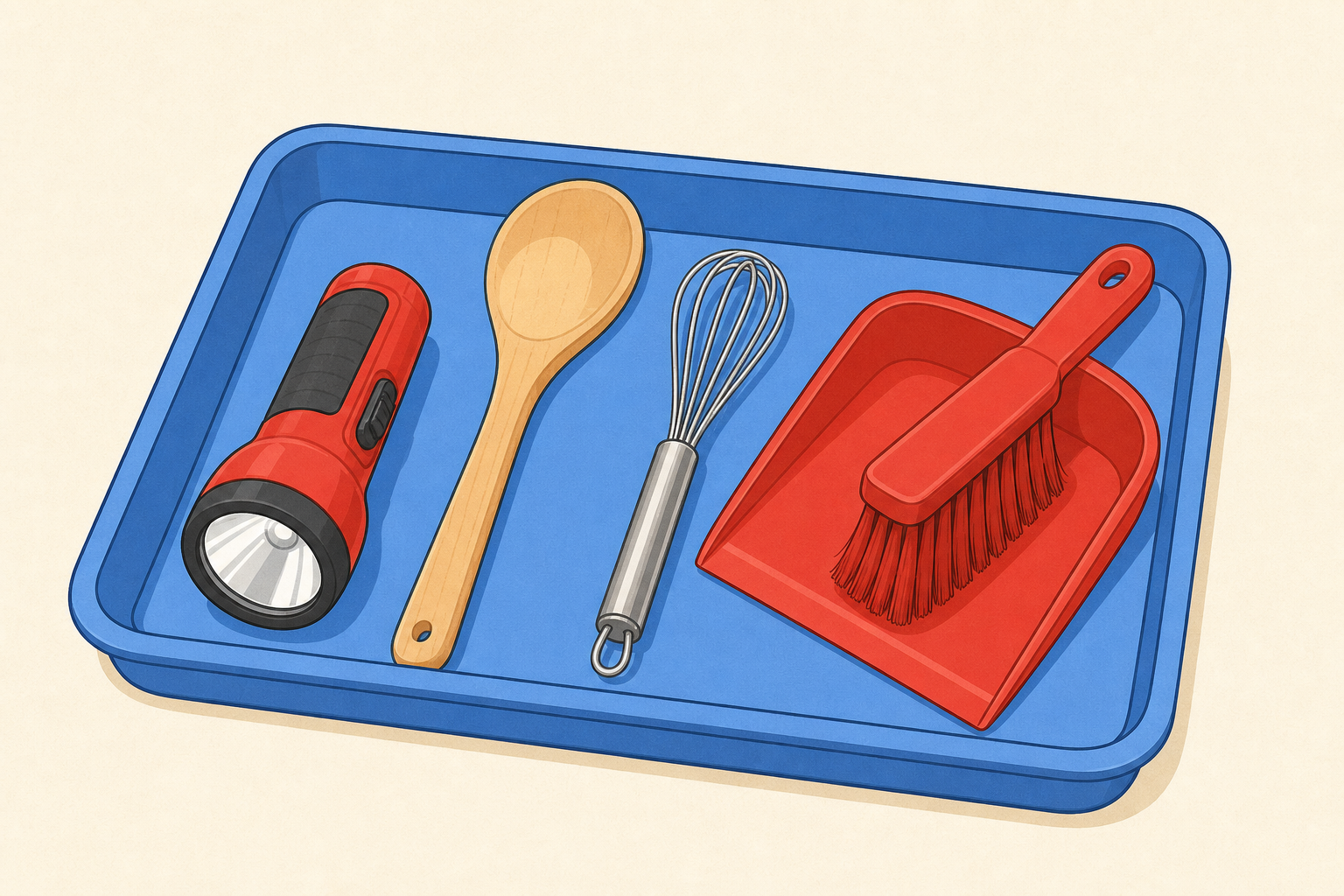
Your group has a tray of helpers. Pick one up. Feel it. Put it back on the tray.
Now act out the job with empty hands. Can your friends guess which helper you chose?
Before handling starts, form the groups and place one tray in the middle of each group table or carpet spot. Name the groups clearly so every child knows where to sit.
Whole-class fallback (fewer kits or only one or two sealed torches): keep one shared tray on the carpet and pass objects around under teacher control, or set two explore stations and rotate groups. Keep any scarce torch as a class object you hold or pass with close supervision rather than leaving a group without a clear way to join in. The explore still runs if trays are not identical.
Model the full beat once before groups begin: pick up a helper, feel it, put it back on the tray, then mime the job with empty hands so the class can guess the object. Children then take turns the same way: one object at a time, object returned to the tray before the mime, friends guess which helper it was. Circulate and prompt: Who might use that? How does it help them?
Look-fors:
Differentiation: less confident children pair with a friend and choose together; confident pairs try two helpers and compare the jobs.
Keep torches pointed at the floor or under tables, never at eyes.
Three sort spots: helps us cook, helps us see in the dark, helps us tidy.
Put each helper on a spot. Say your reason out loud: It goes here because…
Use three labelled shallow trays or three sheets of paper on the table or floor as sort spots. Hoops are fine if you have space, but trays or paper spots are the default so the footprint stays small.
Put one printed label card at each sort spot.
Card A — Helps us cook: Helps us cook. (Picture cue: a pot being stirred.)
Card B — Helps us see in the dark: Helps us see in the dark. (Picture cue: a torch beam.)
Card C — Helps us tidy: Helps us tidy. (Picture cue: a brush and dustpan.)
Expect the dark-helpers group to have only one object. That is fine; say so briefly if children notice, so the small group still feels real.
If a group places the colander with tidy helpers, ask When do we use a colander? and let them revise. More than one sensible reason can be discussed; the goal is a spoken reason about the kind of job, not a perfect match first time.
Keep this step on kind of job only (cook / see in the dark / tidy). Save bakers, doctors and farmers for the later talk step.
Model once at the front: hold up the cloth. I think this helps us tidy, because we wipe a table with it. Place it on the tidy spot.
Every child should place at least one object and say a short "because…" reason.
Here is your drawing page. Draw one helper from your sort.
If you like, tell your teacher who it helps.
Hand out the Investigation Journal page now and name it in plain words ("your drawing page"). Children draw one helper from their sort. The main ask is the drawing of the object; who it helps and how it helps can be a short spoken sentence with you, not three ideas forced into one picture.
Sit with children who need a sentence starter said aloud: This is a… It helps a… to…
What good looks like at this age: a recognisable drawing of one object. A clear idea of who is helped (a cook, a person tidying, someone in the dark) may be spoken rather than drawn. Labels may be a first letter, a copied word, or pure drawing.
Early finishers may draw a second helper from a different sort spot on the same page if space allows, or tell a partner about it.
This drawing stays in the lesson. Do not set it as homework.
You're previewing this lesson. Get full access to this lesson and hundreds more — each one ready to teach, with interactive activities, printable resources and pupil progress tracking built in.